
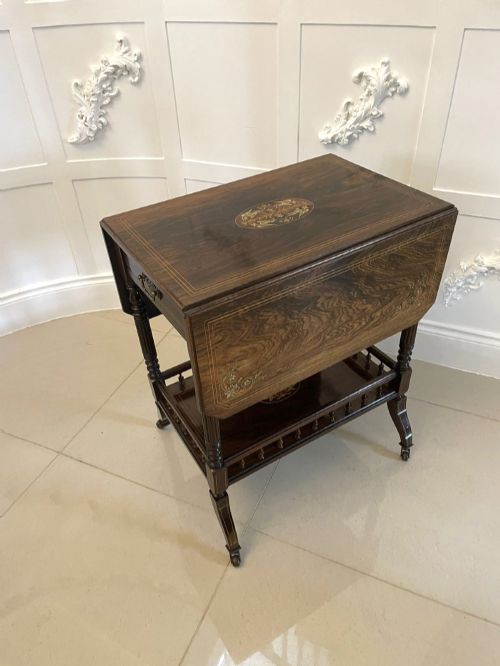
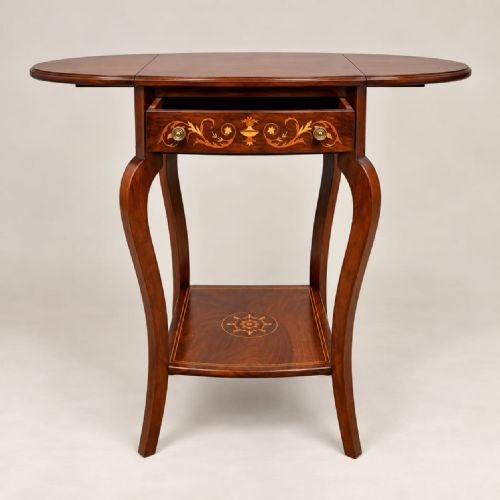
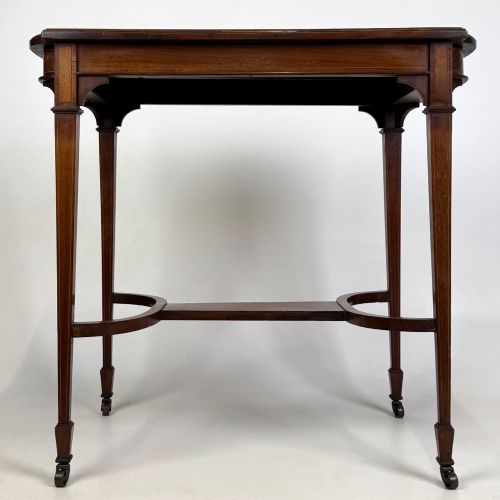
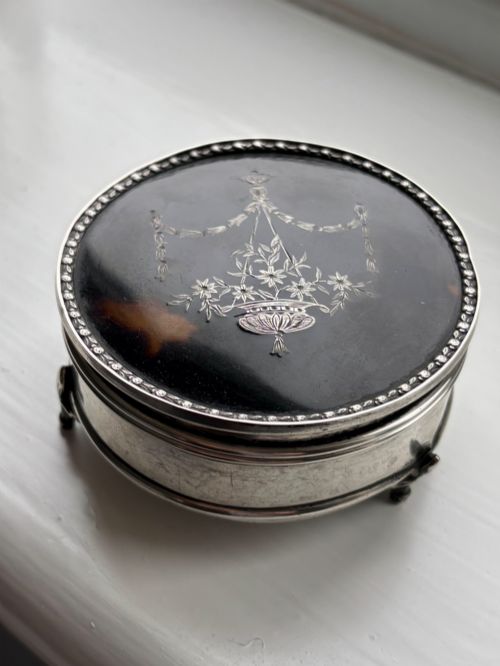



Edwardian Inlay Work Table
An edwardian inlay work table brings refined mahogany or satinwood surfaces and fitted internal compartments into a period interior.
Edwardian Inlay Work Table
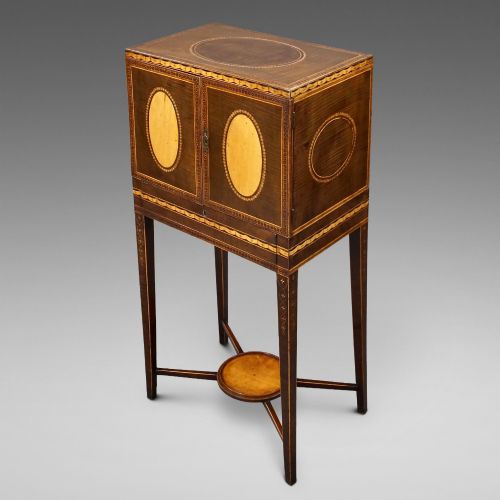
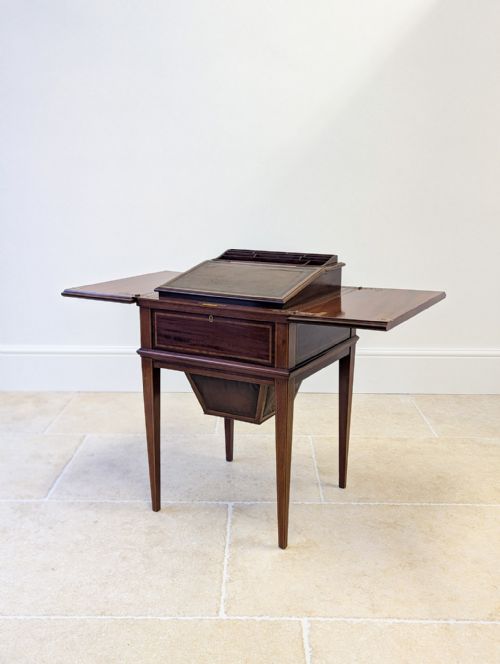
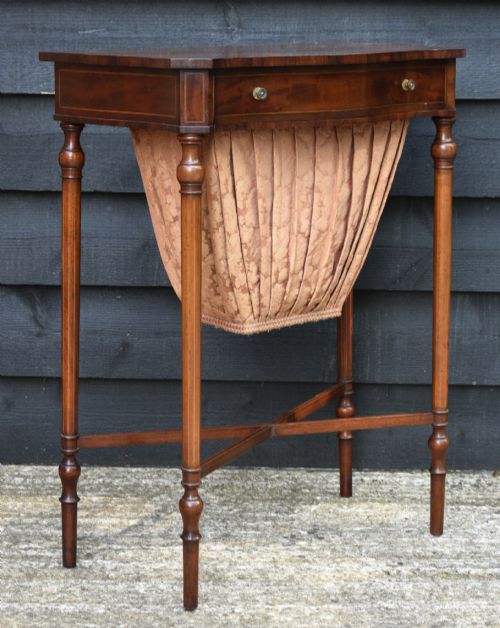
When searching for an edwardian inlay work table, a buyer encounters pieces designed primarily for sewing, needlework, and writing tasks. These tables typically feature lift-up tops, fitted interiors, and hanging silk baskets or storage wells beneath the main surface.
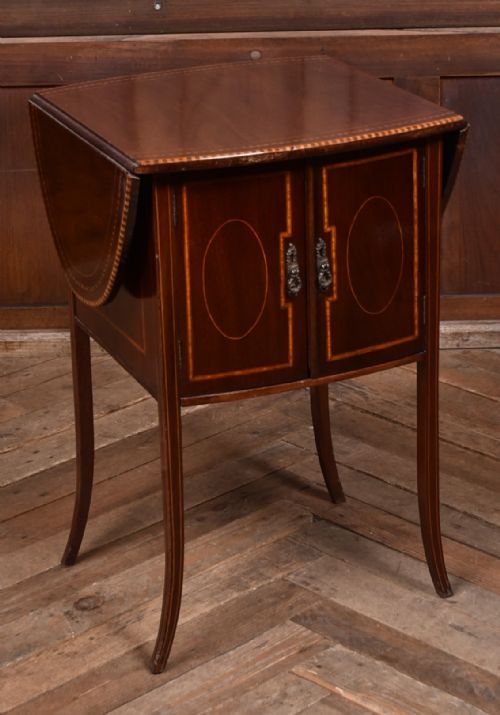
While many examples originate from the Edwardian era, the selection also includes Victorian pieces and Sheraton Revival interpretations from around nineteen hundred. Common forms range from octagonal and kidney-shaped occasional pieces to drop-leaf and trumpet sewing tables.
Materials and Technique
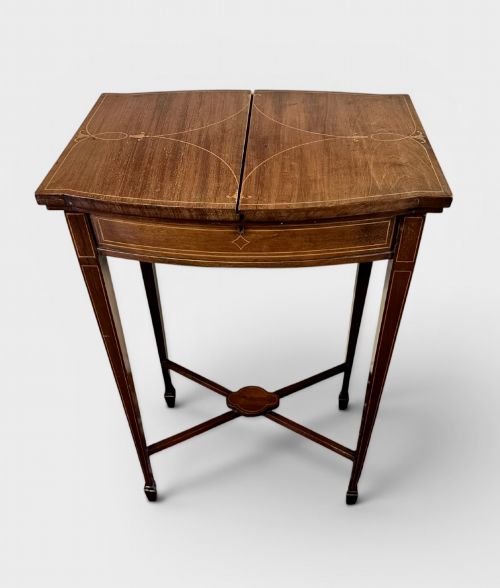
Cabinet makers utilised dense timber foundations such as mahogany, rosewood, satinwood, and walnut, often applying contrasting boxwood and brass stringing. Marquetry ornamentation adorns the tops and surfaces of finer examples.
Internal compartments require precise joinery to house sewing implements, while drop leaves and hinged lids depend on sturdy internal framing and metal hinges to function smoothly.
Table forms span from drop-leaf sewing stands to kidney-shaped writing surfaces.
Judging Quality
The standard of an edwardian inlay work table rests on the crispness of the marquetry and the choice of primary timber veneers. Sharply defined boxwood lines and richly figured burr walnut or satinwood elevate a piece significantly.
Interior execution also separates standard production from superior work. Fully fitted wooden compartments inside the lift-up top indicate greater care than simpler open wells.
Ollivant and Botsford·Asprey and Co
The Edwardian Inlay Work Table Glossary
- Inlay
- A technique where contrasting materials are inserted into recessed portions of a timber base to form a decorative pattern. This method defines the surface decoration on many period sewing tables.
- Marquetry
- Elaborate veneer patterns applied to furniture surfaces to create pictorial or geometric designs. It appears frequently on Victorian and Edwardian occasional tables.
- Satinwood
- A durable, yellowish timber prized for its lustrous grain and smooth finish. Cabinet makers used it extensively during the Edwardian and Sheraton Revival periods.
- Drop-leaf
- A hinged table leaf that folds down when not in use to save space. This mechanism occurs on several occasional and sewing tables in the selection.
- Trumptable
- A freestanding sewing table featuring an octagonal body that flares outward toward the base. These pieces often conceal a fabric basket beneath.
Edwardian Inlay Work Table: Frequently Asked Questions
What is an edwardian inlay work table used for?
These tables served primarily as compact desks or specialised stands for needlework, holding threads, fabrics, and small tools within fitted internal compartments.
Today, buyers utilise them as decorative occasional pieces or bedside tables that offer concealed storage within a compact footprint.
What is the difference between a work table and a side table?
A work table specifically includes internal storage, such as a lift-up lid revealing divided compartments or an attached fabric basket underneath for sewing items.
A standard side table lacks these internal fittings, providing only a flat surface and occasional drawers for general display or writing.
How do I care for inlaid wood surfaces?
Keep inlaid tables away from direct sunlight and heat sources to prevent the delicate boxwood and satinwood veneers from drying out and lifting.
Apply a traditional beeswax polish sparingly and buff with a soft cloth to maintain the timber's natural lustre without harming the fine stringing.