



Edwardian Inlaid Music Stand
An edwardian inlaid music stand brings refined domestic harmony to a room, holding scores while adding structured elegance.
Edwardian Inlaid Music Stand
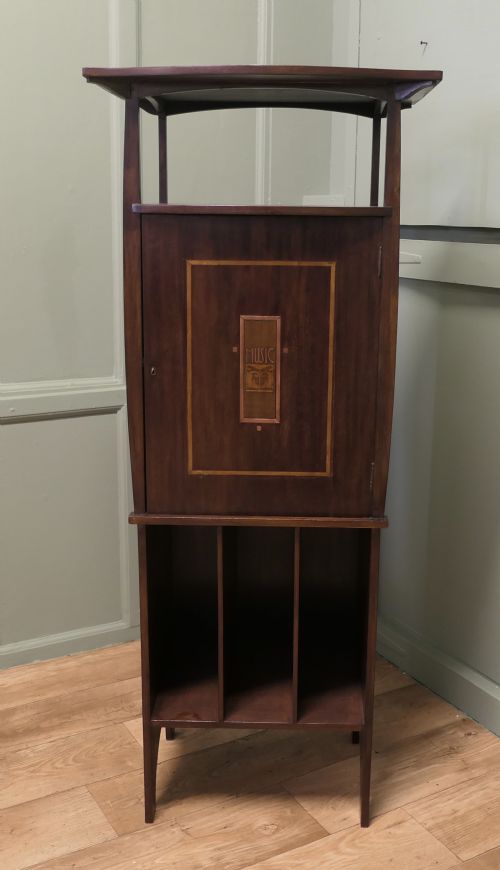
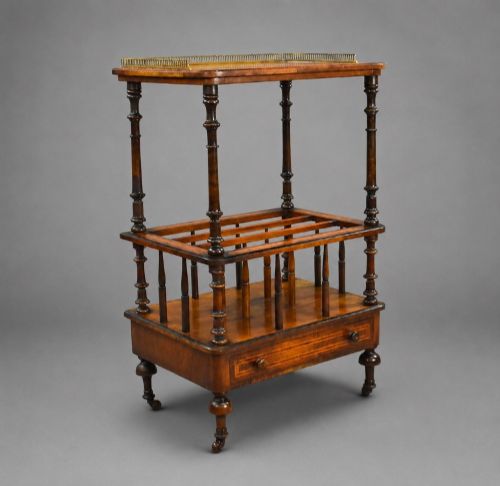
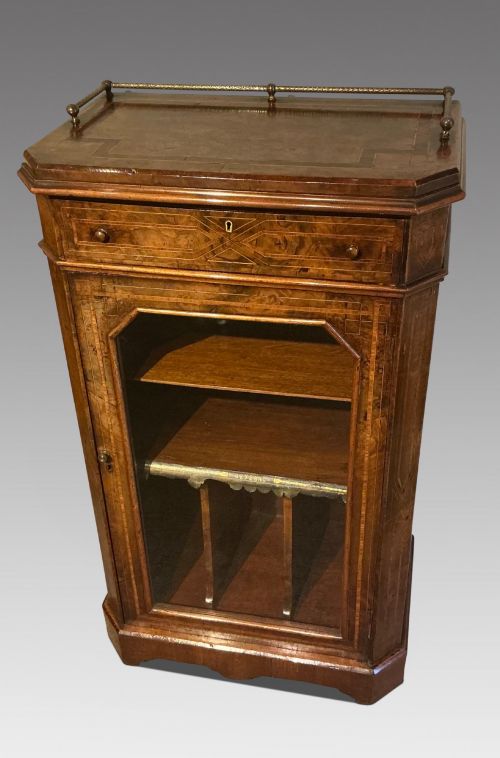
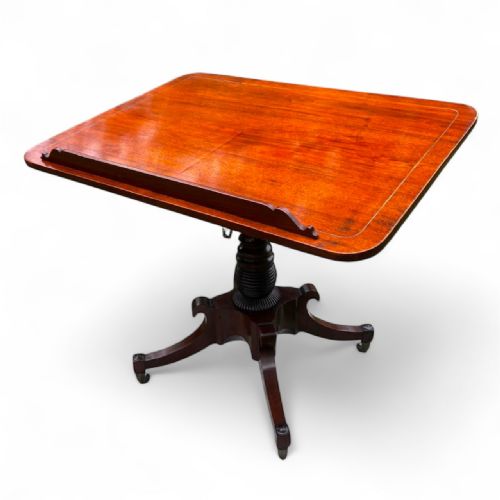
The edwardian inlaid music stand search phrase encompasses standing cabinets, canterburys, and reading tables designed to store sheet music and scores. The most frequent iteration met on this page is the Edwardian mahogany music cabinet, often dating from around nineteen hundred.
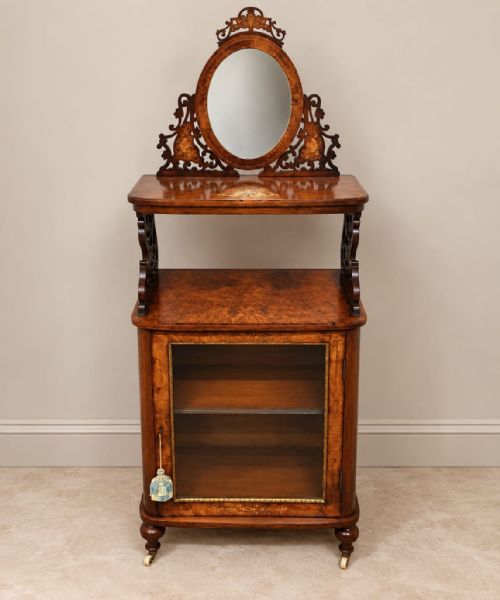
Makers and designers of the period adapted earlier Victorian forms, producing specialised pieces in burr walnut, rosewood, and satinwood alongside the dominant mahogany. Surviving examples reflect the domestic musical pursuits of the late nineteenth and early twentieth centuries, spanning the Victorian, Edwardian, and Arts and Crafts eras.
Materials and Technique
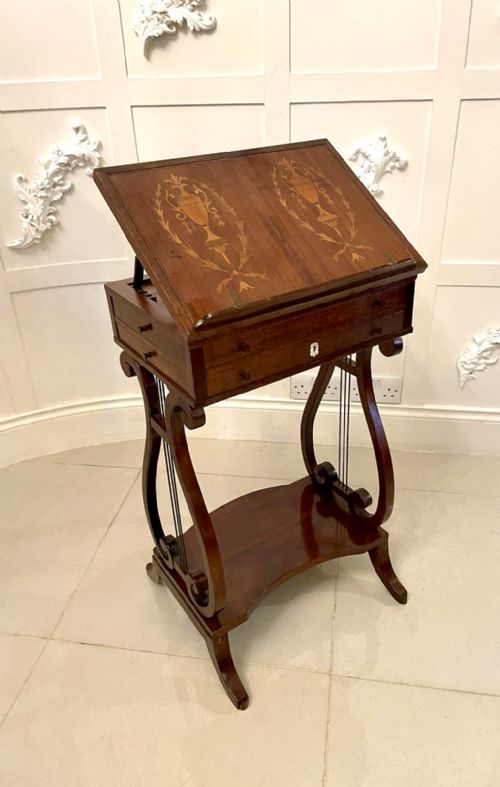
Construction relies heavily on timbers such as mahogany, burr walnut, and rosewood, shaped into cabinets, reading tables, and canterburys. Cabinetmakers employed contrasting wood veneers and delicate satinwood inlay to ornament the surfaces of these standing pieces.
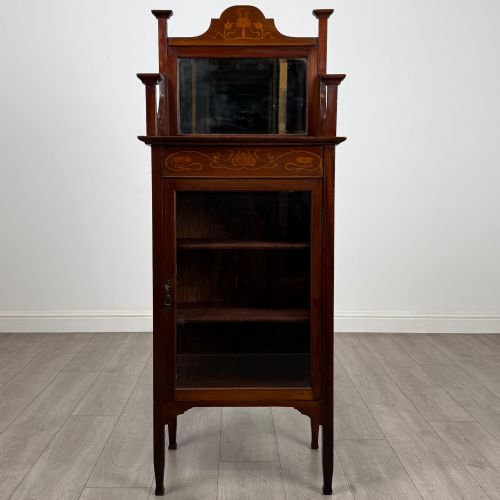
Functional metal elements such as brass appear alongside glass panels in display variations, while internal divisions accommodate sheets and volumes. Marquetry techniques provide decorative floral or geometric motifs across drawer fronts and doors.
Listings span multiple decades from the Victorian era into the 1920s, showing a transition from heavy burr walnut to lighter mahogany and satinwood.
Distinctions in Execution
The hierarchy of execution rests on the crispness of the marquetry and the choice of timber figure, such as richly grained burr walnut or select mahogany. Well-realised pieces demonstrate precise cabinetmaking joints and harmonious proportions, whereas simpler examples rely on basic applied veneers.
Signed works from notable workshops or specific designers demonstrate superior joinery and more ambitious forms, elevating them above standard commercial production.
GM Elwood·JS Henry·Collinson and Lock London
The Edwardian Inlaid Music Stand Glossary
- Canterbury
- A low stand fitted with upright partitions for holding sheet music, magazines, or books, often incorporating a drawer beneath. They appear in Victorian and Edwardian iterations.
- Marquetry
- The art of forming decorative patterns by fitting together veneer pieces of different woods, metals, or other materials. It defines much of the surface ornament on Edwardian pieces.
- Upstand
- A low raised barrier at the back or sides of a cabinet top or table, sometimes carved with shell motifs. It prevents items from sliding off the surface.
- Whatnot
- An open set of standing shelves used for displaying ornaments or holding books and papers, frequently combined with a cabinet base in nineteenth-century examples.
Edwardian Inlaid Music Stand: Frequently Asked Questions
What is an edwardian inlaid music stand used for?
These pieces were built to organise and store sheet music, songbooks, and scores for domestic piano and instrumental practice. The internal compartments kept loose pages flat and accessible near the parlour instrument.
Over time, owners adapted the cabinets to hold magazines, records, and general paperwork while retaining the decorative presence of the original design.
How do I tell Victorian from Edwardian pieces?
Victorian examples tend to utilise heavy burr walnut and feature darker, denser timber tones with robust proportions and marquetry details. They frequently appear as canterburys or whatnots dating back to the mid-nineteenth century.
Edwardian pieces often display lighter mahogany or satinwood surfaces with refined inlay work, reflecting a shift towards brighter, airier domestic interiors around the turn of the twentieth century.
Where should I place a music stand in a modern room?
These compact cabinets fit easily beside a desk, reading chair, or piano where their surface top can hold a lamp or small objects. The enclosed shelves provide functional storage for modern notebooks and documents.
Avoid placing them in areas subject to direct sunlight or rapid temperature shifts, which can affect the delicate veneer and timber surfaces.