

Edwardian Inlaid Mahogany Vitrine
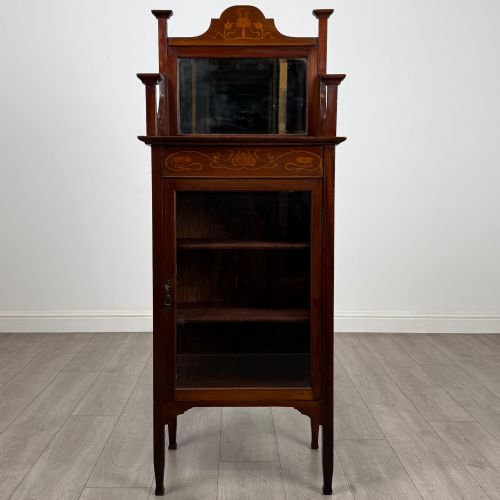
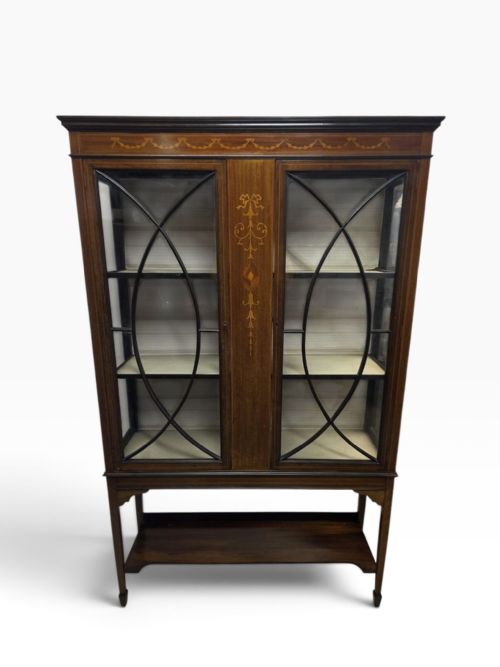
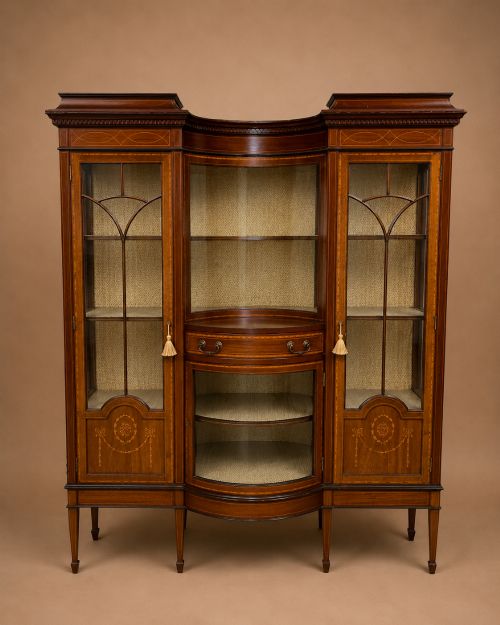
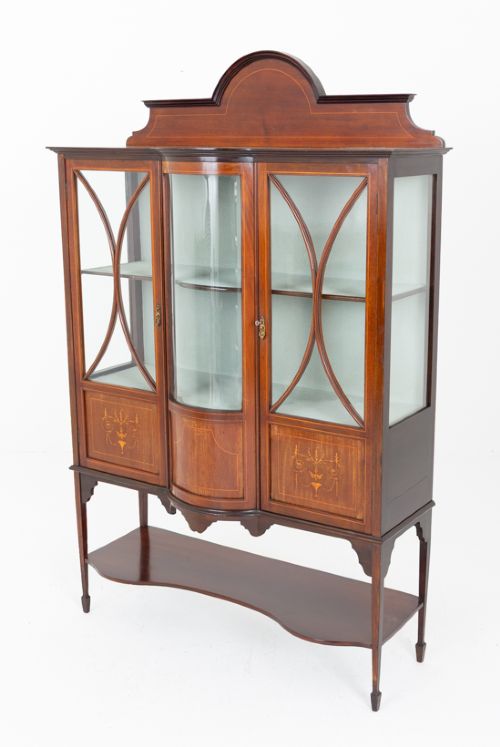
An edwardian inlaid mahogany vitrine brings together delicate glass framing and warm timber to show off treasured objects.
Edwardian Inlaid Mahogany Vitrine
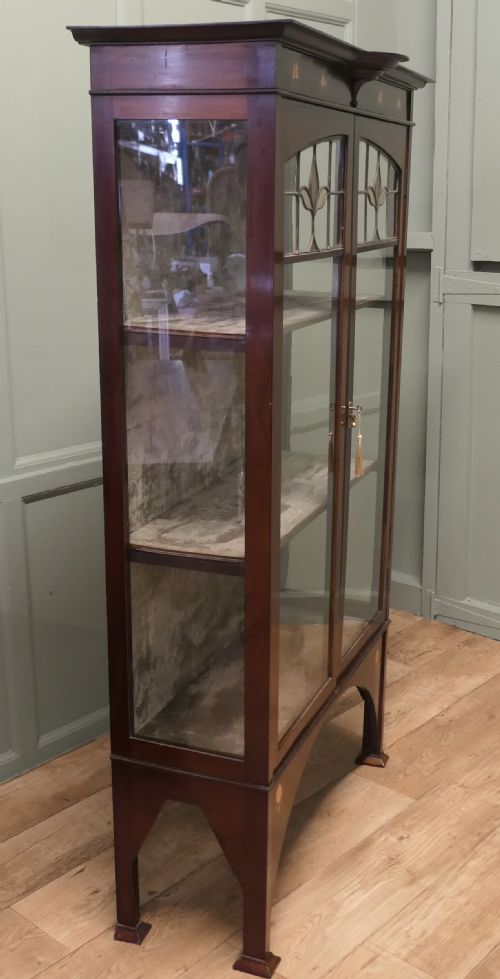
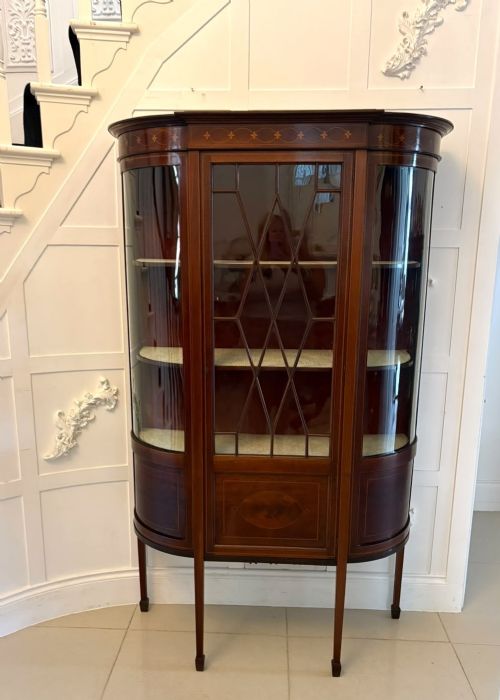
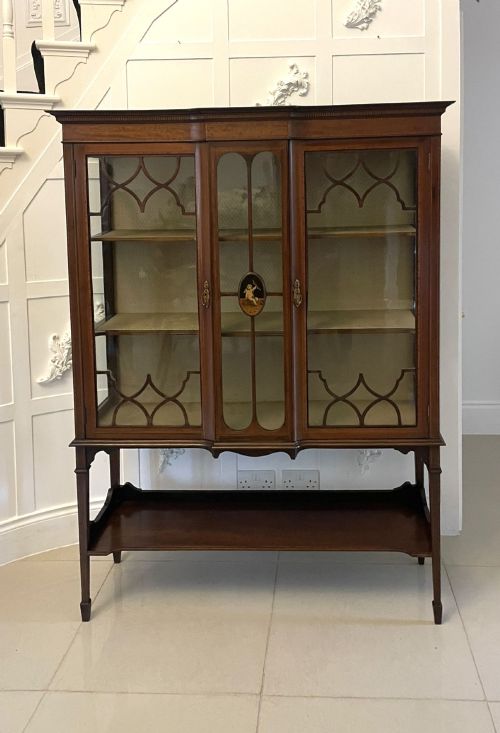
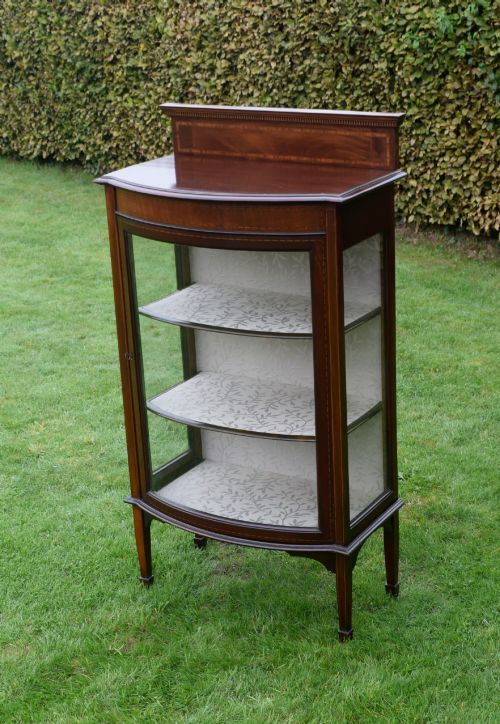
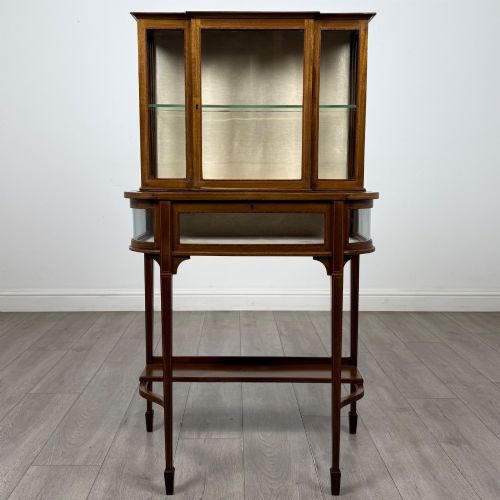
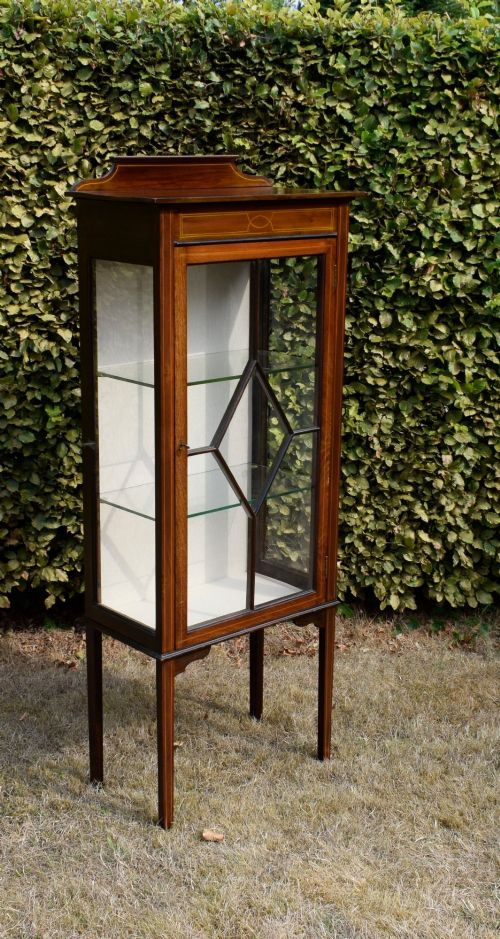
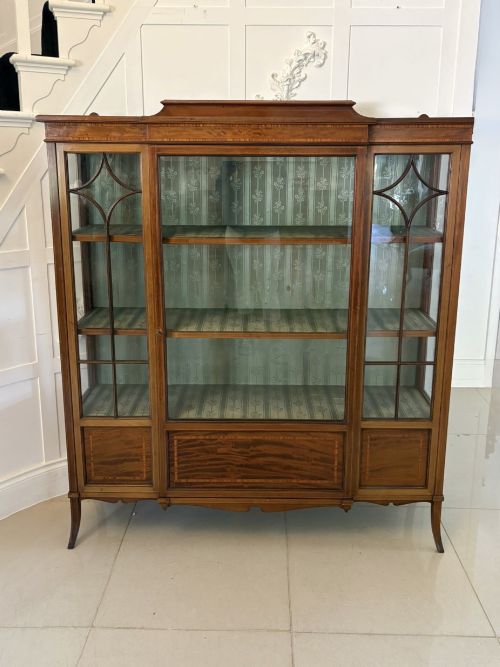
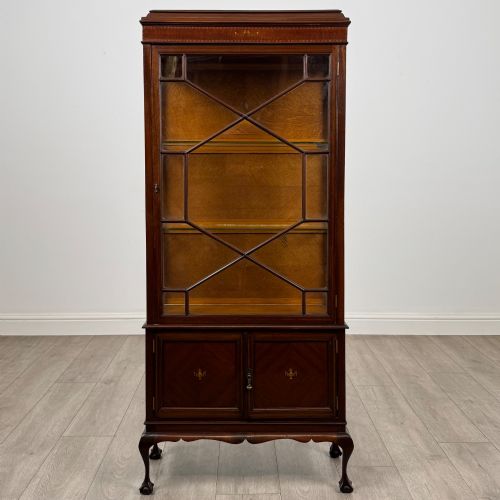
An edwardian inlaid mahogany vitrine stands as a refined display piece designed to protect and exhibit collectibles, curios, and fine porcelain behind glass panels. These cabinets emerge predominantly from the Edwardian era and the late nineteenth century, taking the form of upright freestanding display cabinets, corner units, and low bijouterie tables.
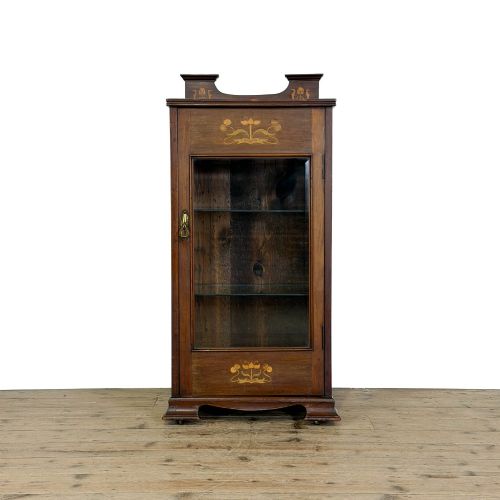
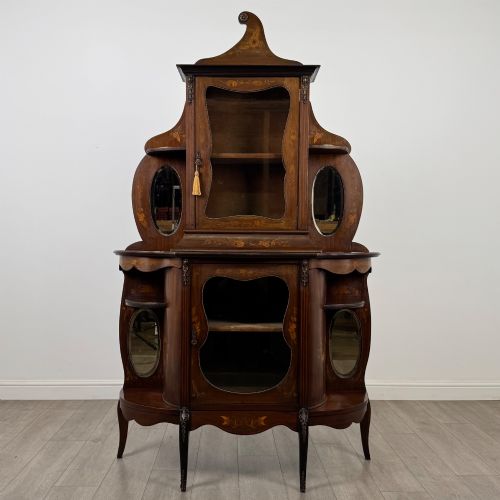
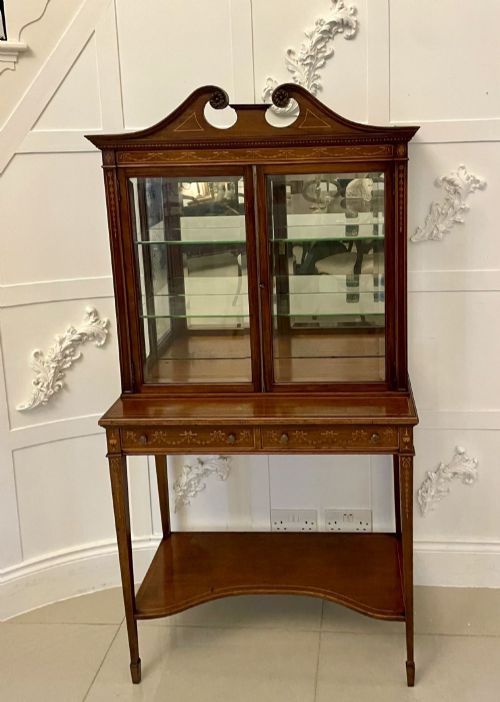
The pieces on this page draw heavily on Sheraton Revival and Art Nouveau design vocabularies, often combining structured geometry with flowing floral marquetry. Makers of the period produced both tall two-part storage cabinets and intimate tabletop vitrines intended for drawing rooms and parlours.
How They Were Made
Cabinet makers constructed these pieces using solid and veneered mahogany, frequently enriched with contrasting satinwood inlay and complex floral marquetry. Glass panels, sometimes held by delicate astragal glazing bars, allow light to enter the interior display space from multiple angles.
Structural elements integrate brass fittings and occasionally mirrored backs to amplify ambient light within the cabinet. Joinery techniques from the period support both tall standing forms and curved bow-fronted or kidney-shaped display tables.
Design influences span Sheraton Revival symmetry, late Victorian craftsmanship, and flowing Art Nouveau floral marquetry.
What Varies in Quality
The sophistication of the marquetry and the precision of the satinwood inlay set finer examples apart from simpler production pieces. Crispness in the timber carving and the delicacy of the glazing bars reflect the level of workshop skill involved in construction.
Proportion and silhouette also dictate the calibre of a piece, with serpentine fronts, breakfront profiles, and well-balanced proportions commanding greater attention. The integration of secondary timbers and the original condition of the glass further distinguish standard items from exceptional ones.
Edwards and Roberts·Shapland and Petter
The Edwardian Inlaid Mahogany Vitrine Glossary
- Vitrine
- A glass-fronted cabinet or table designed for displaying fine objects and curiosities. These pieces often feature glazed doors and sides to maximise visibility.
- Marquetry
- Decorative woodwork where pieces of veneer are fitted into a ground material to form intricate patterns or floral pictures. This technique defines much of the surface ornamentation on Edwardian cabinetry.
- Astragal
- A small moulding profile used to divide glass panes within a door or window frame. In display cabinets, these bars form geometric or intersecting lattice patterns.
- Bijouterie
- Small decorative items, jewellery, or trinkets housed within a specialised low display table or cabinet with a glass top. Such tables bring items up to a comfortable viewing height.
- Satinwood
- A hard, durable timber with a characteristic golden-yellow sheen used extensively for contrasting inlay work. It provides striking visual definition against darker mahogany surfaces.
Edwardian Inlaid Mahogany Vitrine: Frequently Asked Questions
What is an edwardian inlaid mahogany vitrine used for?
These cabinets served primarily to display porcelain, silver, and treasured curiosities while protecting them from dust in the formal rooms of the home.
Today, they perform the exact same function in domestic settings, offering a structured way to showcase personal collections.
How do I identify an Edwardian vitrine?
Edwardian pieces typically date from the period around nineteen hundred, showing lighter proportions and refined classical revivals compared to heavy Victorian furniture.
Look for characteristic satinwood inlay, mahogany carcases, and stylistic influences drawn from the Sheraton and Art Nouveau movements.
Where should I place a display table in a room?
Bijouterie tables and low vitrines work best in drawing rooms or reception spaces where natural light can strike the glass top and illuminate the contents.
Position them away from direct sunlight to protect sensitive fabrics or paper items kept inside the display compartment.