

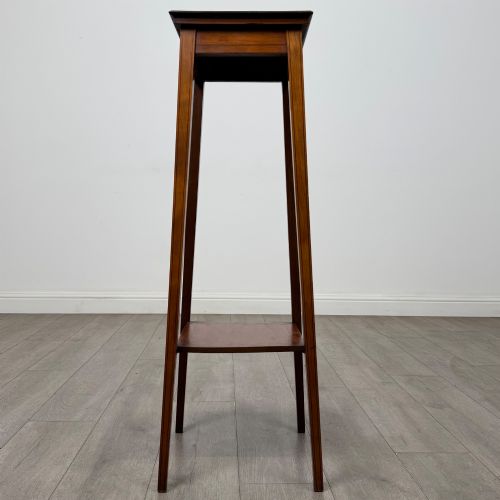
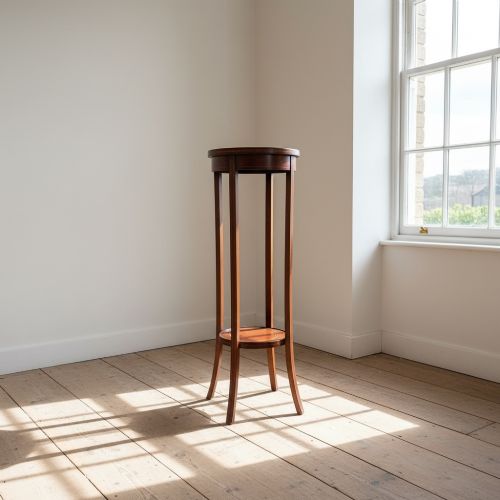
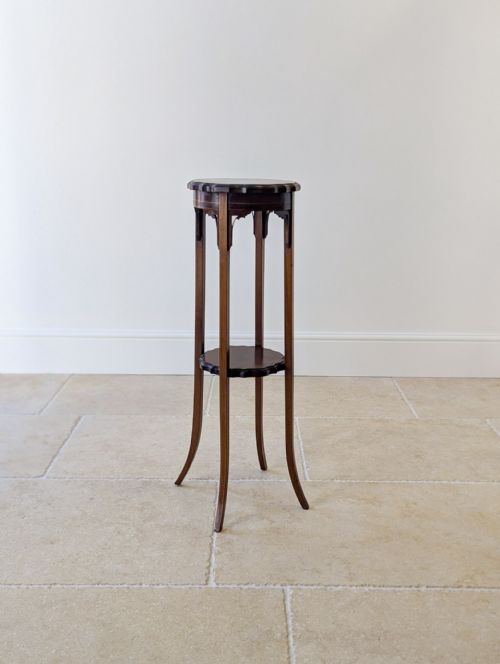


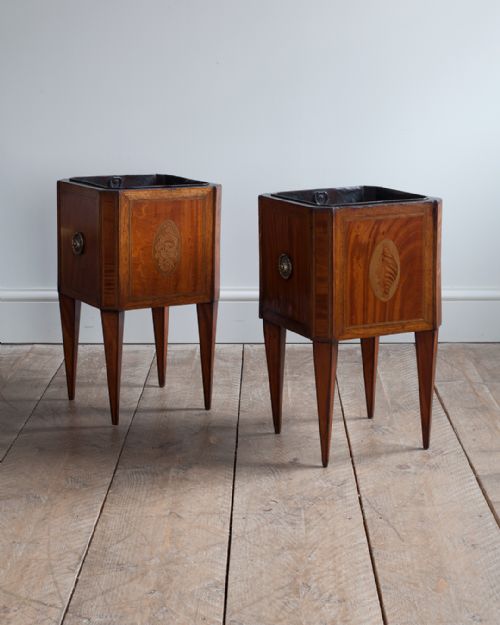
Edwardian Inlaid Jardiniere
An Edwardian inlaid jardiniere brings botanical display into the parlour with refined cabinet-making.
Edwardian Inlaid Jardiniere
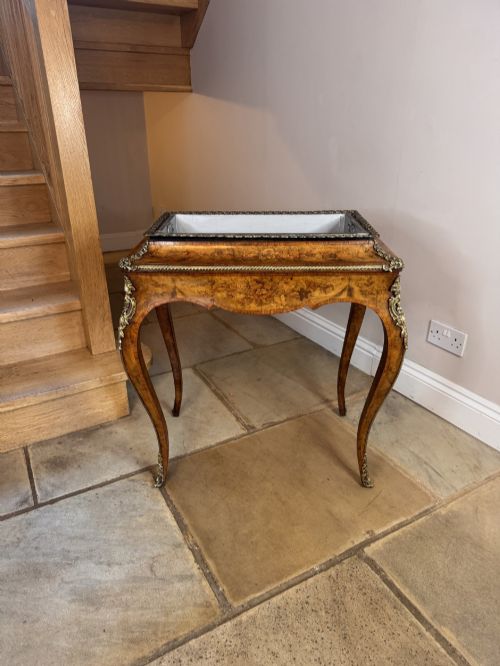
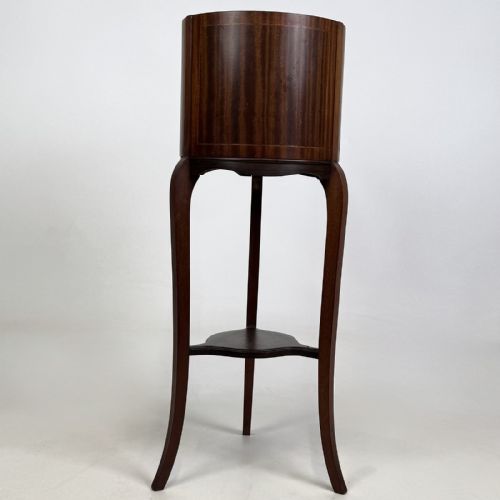
An edwardian inlaid jardiniere serves as a decorative plant stand, planter, or pedestal designed to hold potted plants within domestic interiors. When searching for this phrase, buyers encounter pieces spanning the Edwardian period, nineteen-hundred, and the nineteenth century.
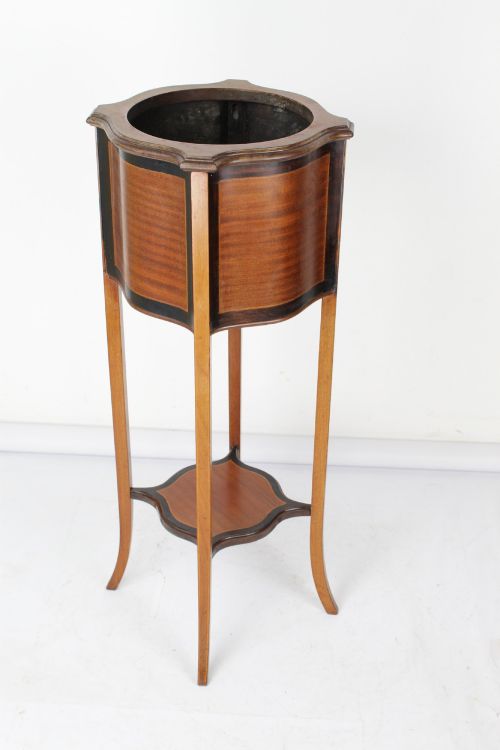
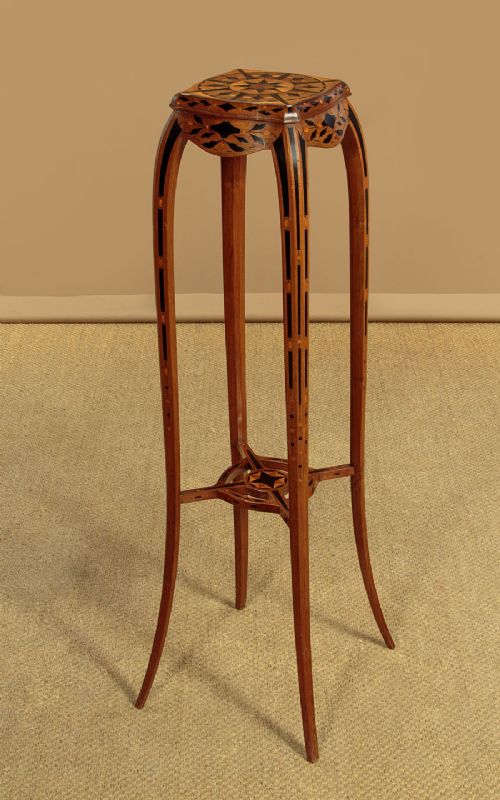
The most common forms on this page include mahogany plant stands, jardinieres with liners, and two-tier plant tables. Makers utilised satinwood, boxwood, and ebony inlay alongside brass fittings to elevate the simple plant stand into a polished decorative object.
How They Were Made
Cabinet-makers constructed these pieces primarily using solid mahogany and flame mahogany veneers, applying delicate satinwood and boxwood inlay to create linear borders and classical motifs. Brass liners and banding protected the wood from moisture while adding a metallic contrast to the dark timber.
Construction techniques include tapering square supports, multi-tiered shelving, and integrated metal or ceramic liners designed to hold soil and water safely. Ebonised details often provide sharp definition against the lighter inlay woods.
Edwardian Inlaid Jardiniere Retail Price Guide 2026
Typical asking prices for edwardian inlaid jardiniere among the pieces listed under this phrase on Sellingantiques today, from the lower quarter to the upper quarter. They describe what is for sale here now, not the wider market.
Some versatile examples served double duty as tea stoves, knitting baskets, and peat buckets alongside standard plant display.
What Varies in Quality
The fineness of the inlaid decoration largely distinguishes standard production pieces from finer examples, particularly where boxwood and satinwood form intricate stringing or floral patterns. Timber selection also matters, as flame mahogany veneers and matched specimen woods display greater grain movement and visual depth.
Structural complexity influences value, separating simple single-tier plant stands from elaborate two-tier tables and tapered jardinieres fitted with original brass liners. The crispness of the joinery and the preservation of the polished finish determine the overall integrity of the piece.
The Edwardian Inlaid Jardiniere Glossary
- Jardiniere
- An ornamental pot or stand for holding plants and flowers. These containers often featured waterproof metal liners to protect the surrounding wooden structure.
- Torchere
- A tall, slender stand designed to support a lamp or decorative plant. In this context, the term overlaps with traditional plant stands.
- Inlay
- A technique where contrasting pieces of wood such as satinwood, boxwood, or ebony are inserted into recesses in a mahogany carcase to form decorative patterns. This ornament defines Edwardian cabinet-making.
- Liner
- A removable metal or brass container placed inside the jardiniere to hold earth and water. Original liners significantly add to the utility and completeness of the piece.
- Stringing
- A thin, narrow strip of contrasting wood inlaid into the surface in linear patterns. It frames panels and edges on Edwardian furniture.
Edwardian Inlaid Jardiniere: Frequently Asked Questions
How do you use a jardiniere stand?
These stands hold potted plants, ferns, or floral arrangements within living spaces and hallways. The protective metal liner catches excess water when plants are watered.
They also function independently as decorative pedestals or display tables.
Did all jardinieres include liners?
Many Edwardian jardinieres incorporated removable brass or metal liners to protect the mahogany wood from moisture damage. Surviving original liners remain an important detail for collectors.
Some plant stands and torchere forms were built strictly for display without internal liners.
What woods were used in these pieces?
Mahogany and flame mahogany serve as the primary structural and visual timbers across these listings. Satinwood, boxwood, and ebony appear specifically within the inlaid decorative details.
Specimen woods and ebonised highlights also contribute to the patterned surfaces.
How do I care for inlaid wood?
Keep inlaid wooden furniture away from direct sunlight and sudden temperature changes to prevent veneer lifting. Regular dusting with a soft cloth maintains the polished surface.
Avoid placing leaking pots directly onto the wood without using a proper waterproof liner.