
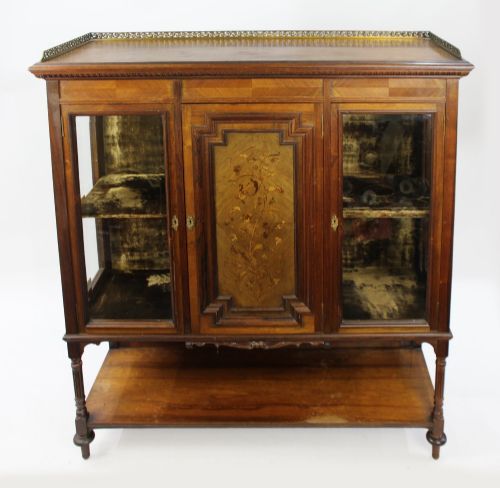
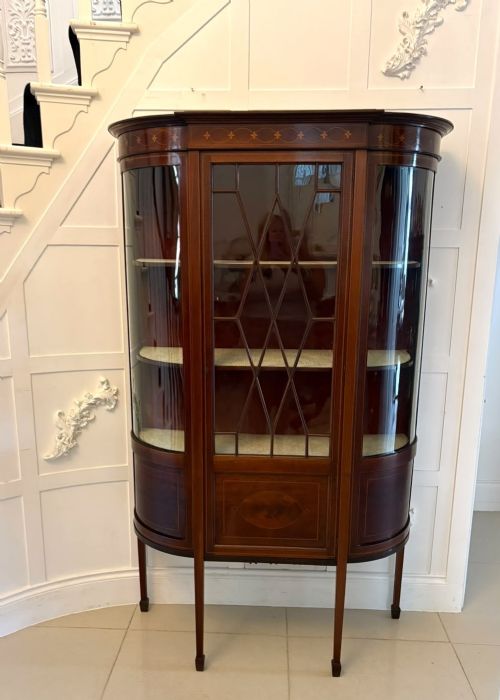
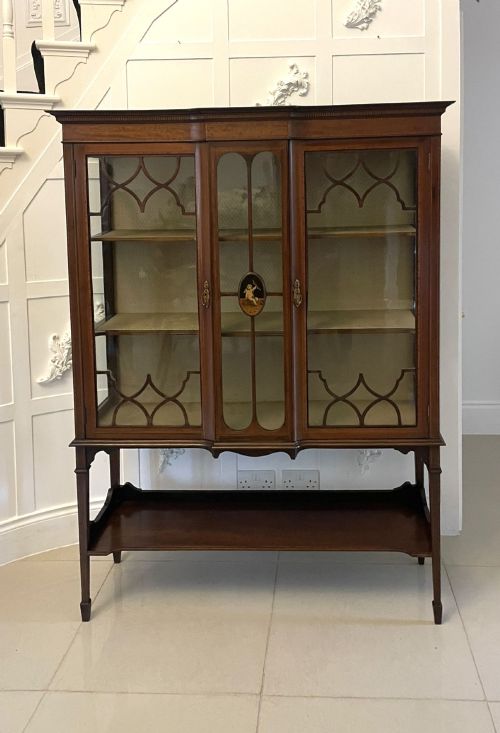
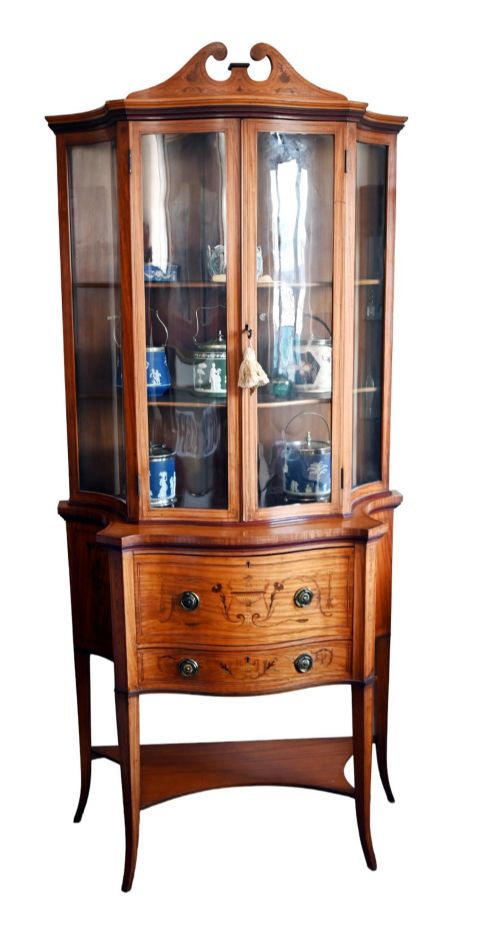
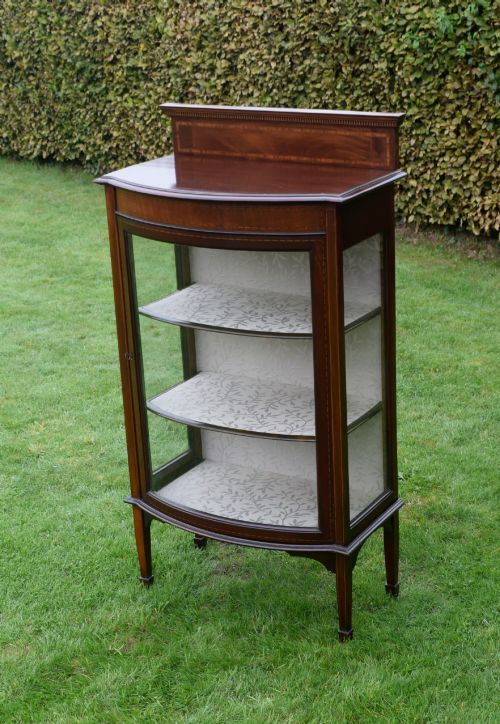
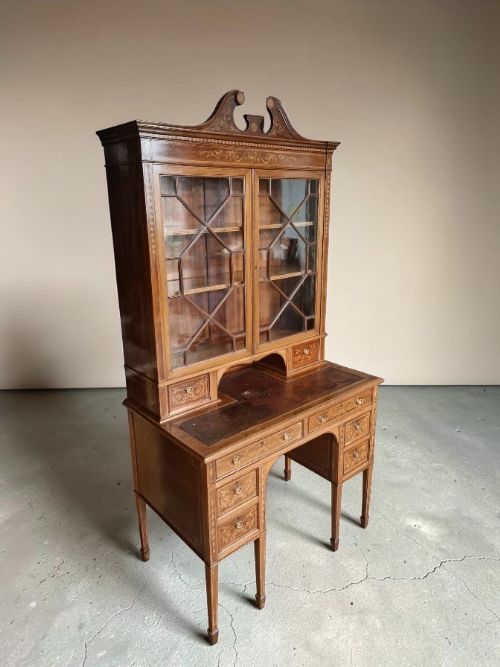
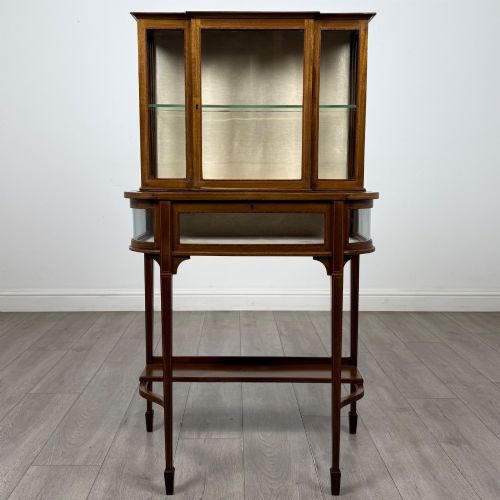
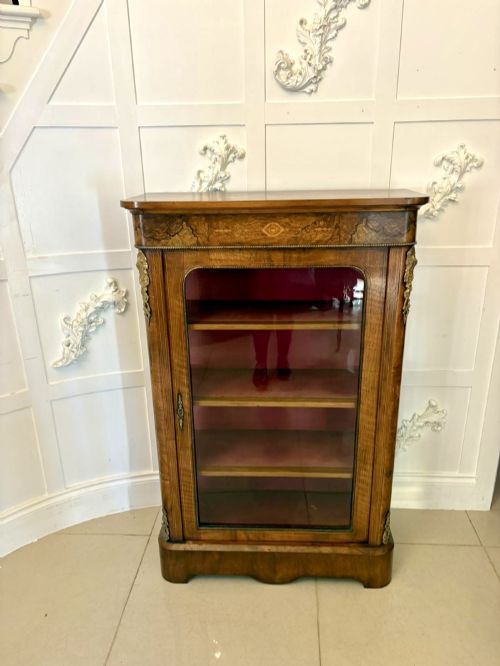
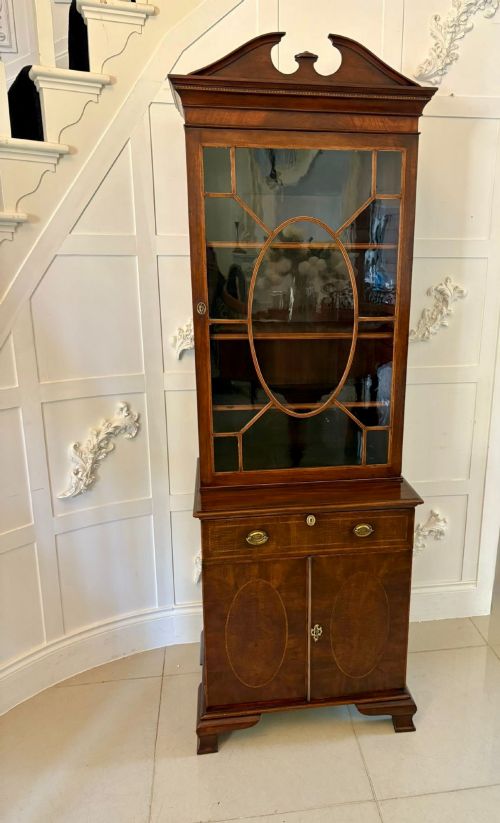
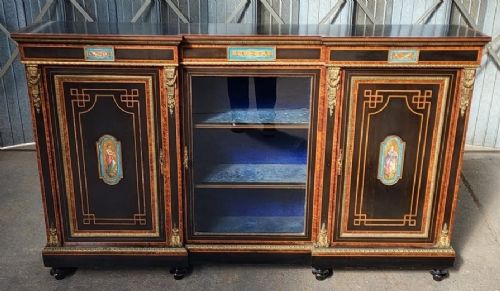


Edwardian Inlaid Glazed Bookcase
When you search for an Edwardian inlaid glazed bookcase, you encounter refined display furniture built to showcase leather-bound volumes and prized ceramics behind clear glass.
Edwardian Inlaid Glazed Bookcase
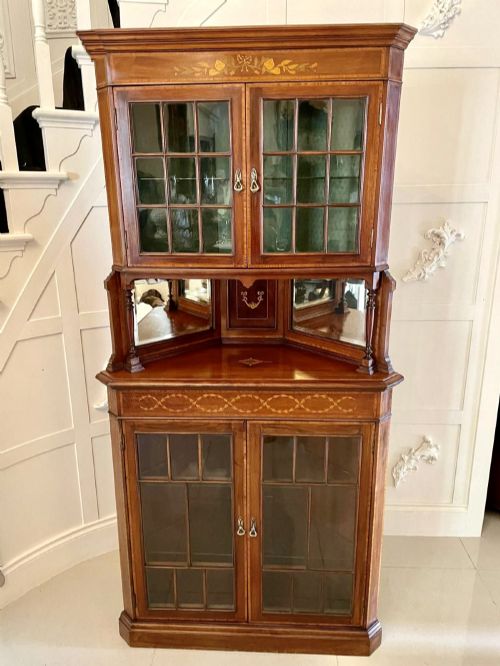
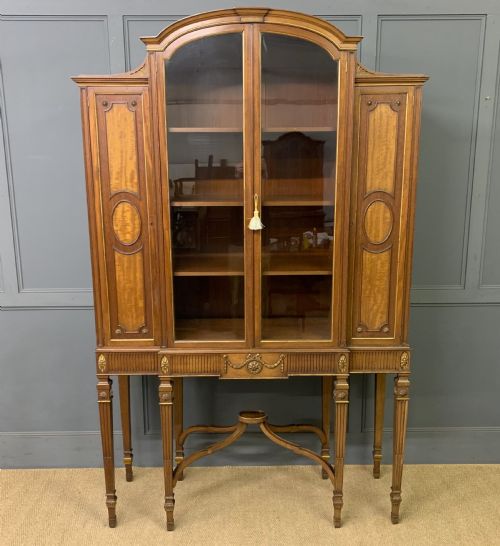
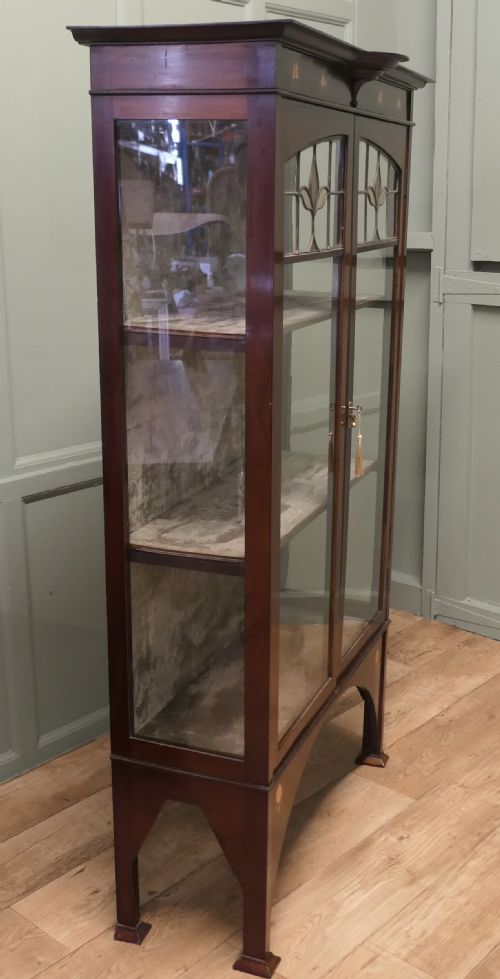
An edwardian inlaid glazed bookcase combines functional book storage with visible display, taking the form of freestanding cabinets, corner units, and two-part breakfront pieces. You meet these primarily in Edwardian and late Victorian iterations, spanning the late nineteenth and early twentieth centuries.
Makers of the period often employed Sheraton Revival and Arts & Crafts vocabularies alongside traditional Georgian forms. These pieces serve as both practical libraries and decorative focal points within a room, keeping volumes protected from dust while presenting them clearly.
The objects listed here range from compact corner cupboards to expansive triple-door cabinets and bureau bookcases. The predominant format utilises mahogany carcases fitted with delicate contrasting wood details and glazed doors.
Construction and Materials
Makers constructed these cabinets using solid timber carcases and fine veneers of mahogany, satinwood, and walnut. Glass panels are set into framed doors, sometimes secured with brass hardware and interior fabric linings.
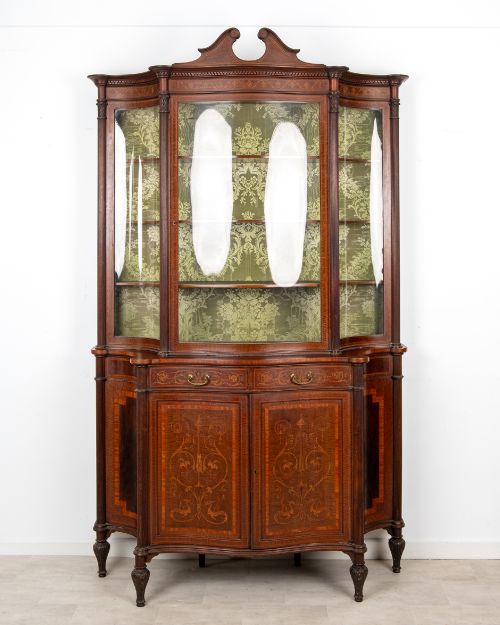
Decoration relied heavily on satinwood inlay and marquetry, creating floral or geometric motifs across the cornices, friezes, and drawer fronts. Cabinet makers also incorporated mirrors and ormolu mounts on select luxury examples from the period.
The archive and active listings show a strong preference for mahogany carcases enriched with satinwood inlay and floral marquetry.
Distinctions in Quality
Quality rests in the precision of the marquetry work and the selection of figured timber veneers. Finer pieces demonstrate crisp botanical or neoclassical inlay without gaps or filler, whereas simpler versions rely on painted decoration or minimal banding.
Structural heft and glass clarity further separate standard production from exceptional workshops. Well-made examples feature substantial mahogany frames, tight cabinet joinery, and well-proportioned astragal bars holding the window panes.
Edwards & Roberts·Maple & Co
The Edwardian Inlaid Glazed Bookcase Glossary
- Astragal
- The thin wooden moulding that divides panes of glass within a cabinet door. These bars create geometric or Gothic patterns across the front of the bookcase.
- Marquetry
- The art of forming decorative patterns using fitted pieces of coloured wood veneer. Craftsmen arrange these thin wooden sheets into floral, ribbon, or urn motifs.
- Satinwood
- A lustrous tropical hardwood native to India and Ceylon with a golden yellow sheen. It serves as a contrasting inlay material against darker woods like mahogany.
- Breakfront
- A cabinet design where the central section projects forward from the flanking wings. This architectural arrangement adds depth and shadow to large library pieces.
- Pier Cabinet
- A narrow display piece traditionally designed to fit the wall space between windows. These upright cabinets typically feature a single glazed door and velvet-lined interior shelves.
Edwardian Inlaid Glazed Bookcase: Frequently Asked Questions
What is an Edwardian glazed bookcase?
These pieces are timber library and display furniture produced around the turn of the twentieth century. They feature glass doors designed to keep dust away from books while allowing them to be seen.
Most examples use mahogany or satinwood with delicate marquetry inlay. They range from small corner cupboards to large breakfront library pieces.
How do I style a glazed bookcase?
Arrange leather-bound books vertically alongside small ceramics and decorative objects behind the glass doors. Keep the interior lighting in mind so the displayed items remain visible.
Allow the timber grain and inlaid details to complement existing period furniture in the room. Avoid overcrowding the shelves so the individual bindings stand out.
How do I tell Edwardian from Victorian pieces?
Edwardian furniture generally exhibits lighter timbers, airier proportions, and a revival of neoclassical Sheraton motifs. Cabinet makers of this era favoured bright satinwood inlay and refined, slender uprights.
Victorian pieces tend to be heavier in build with darker mahogany or burr walnut surfaces. They often display more robust moulding and denser carvings rather than delicate floral marquetry.
Were these bookcases built in sections?
Larger library cabinets and bureau bookcases were constructed in two distinct parts to facilitate transport and placement. The upper glazed section rests securely upon a lower base or cupboard.
Smaller display cabinets and pier units are built as single rigid carcases. Even freestanding glazed bookcases often separate into a top display housing and a lower wooden cabinet.