


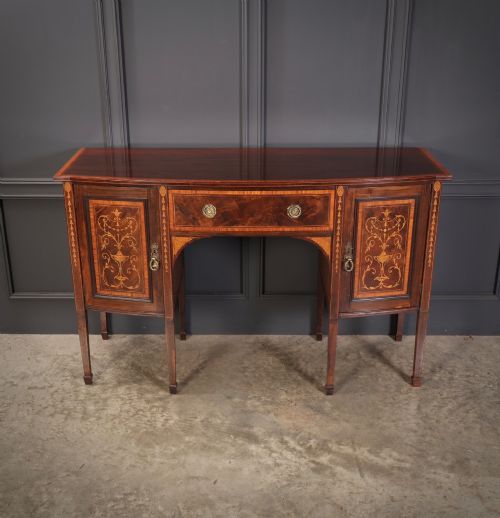
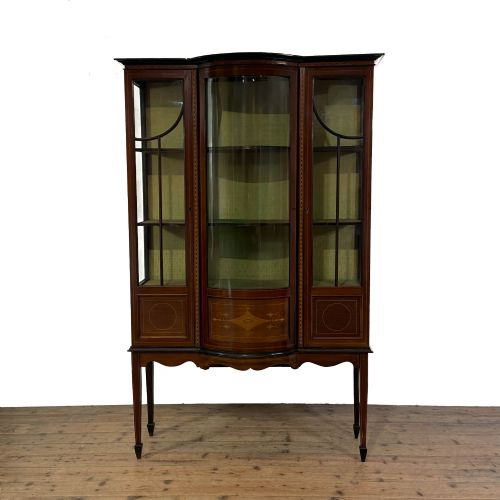
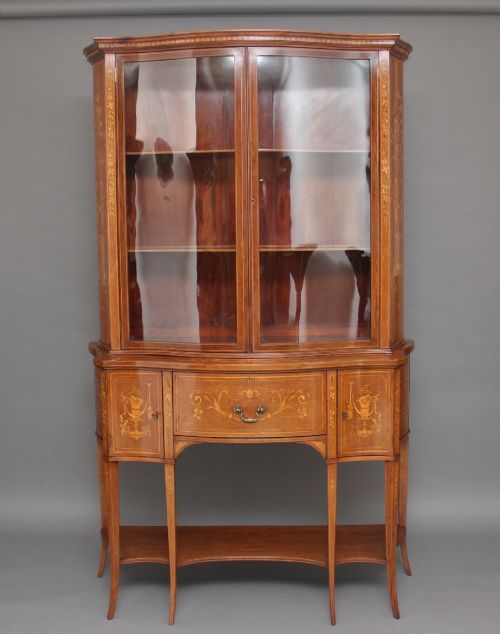
Edwardian Inlaid Bow Front Cabinet
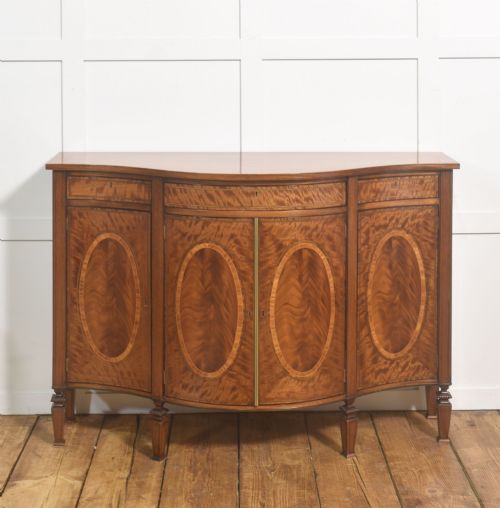
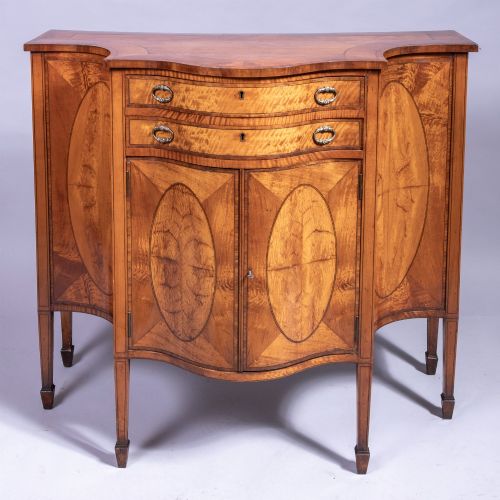
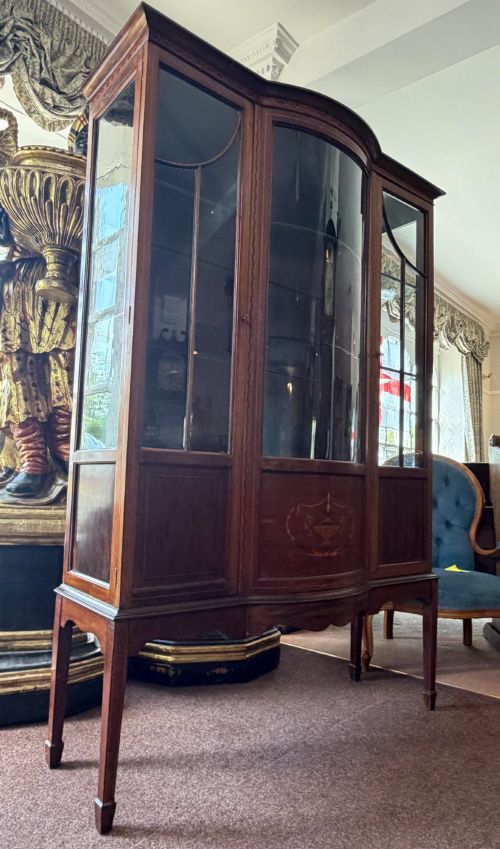
An edwardian inlaid bow front cabinet brings together sweeping curves and crisp stringing from the early twentieth century.
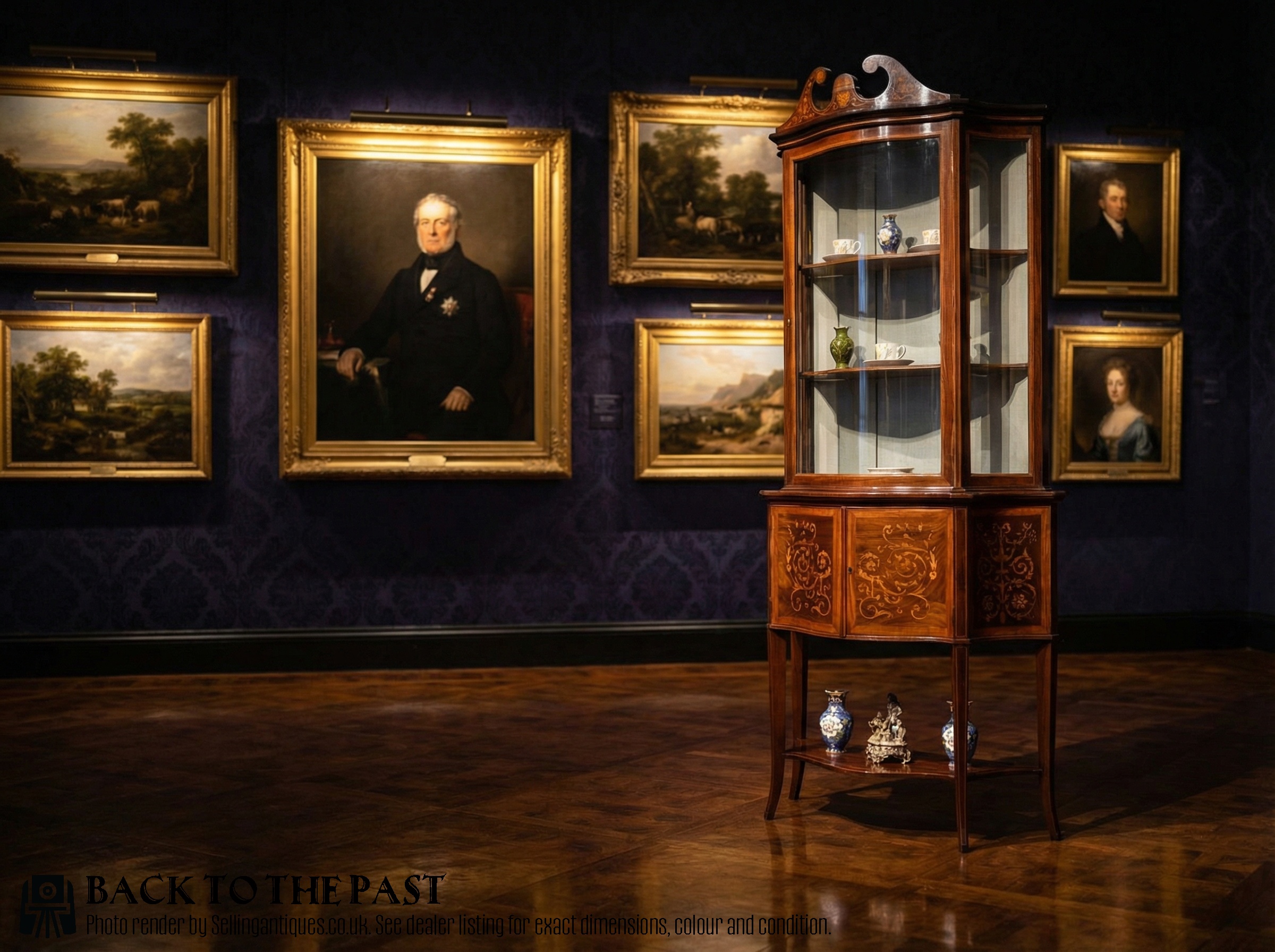
Edwardian Inlaid Bow Front Cabinet
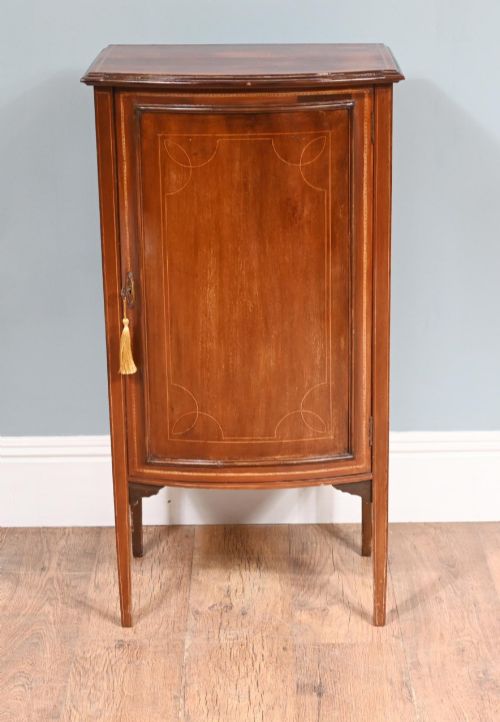
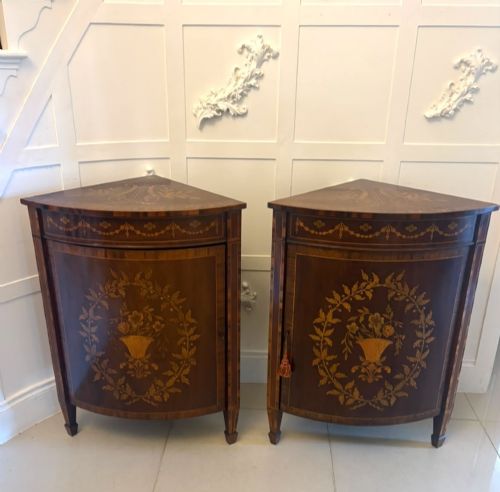
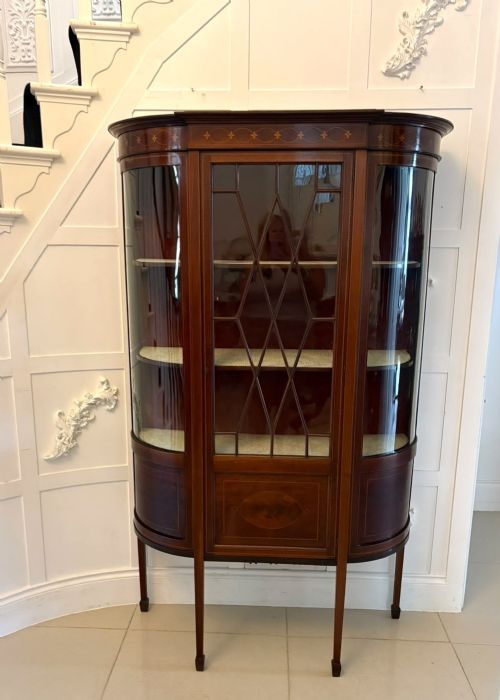
An edwardian inlaid bow front cabinet combines the curved facade of the late nineteenth and early twentieth centuries with delicate contrasting wood details. These pieces serve primarily as display furniture, sideboards, or compact corner units designed to soften the corners of a room.
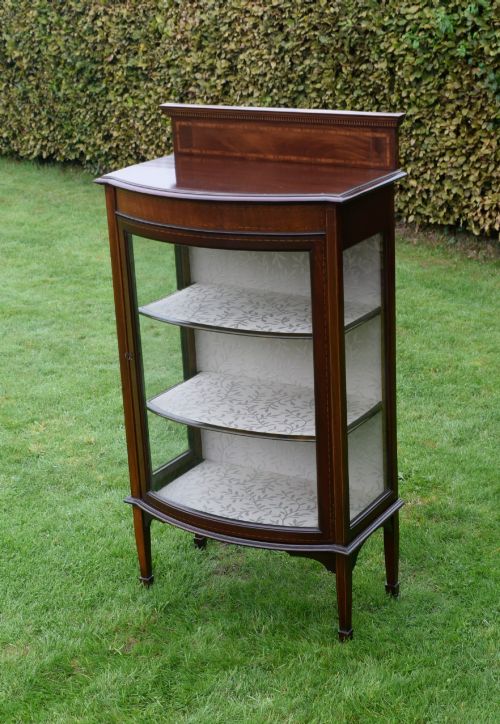
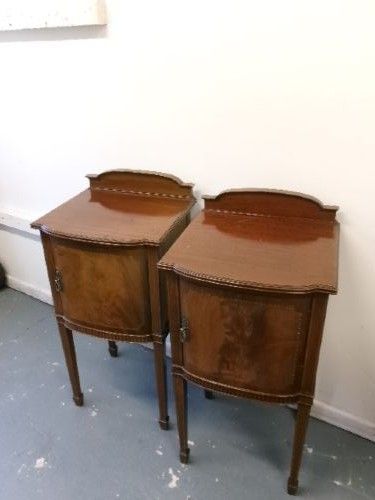
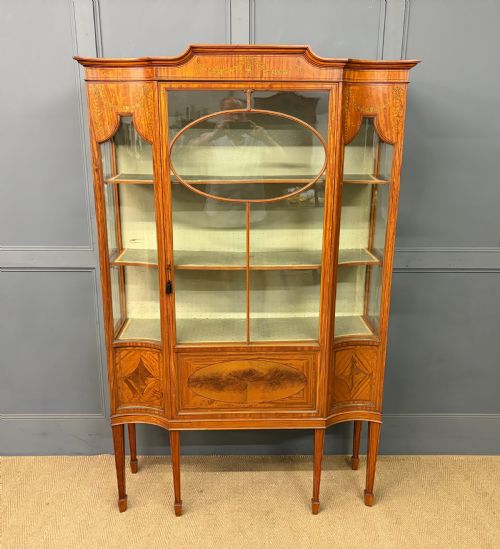
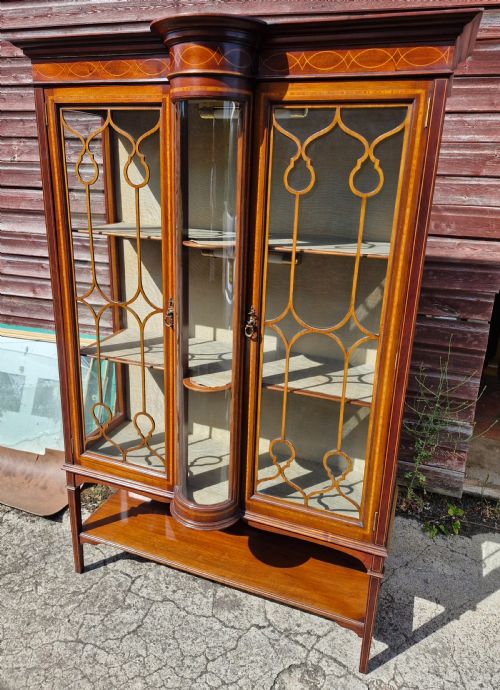
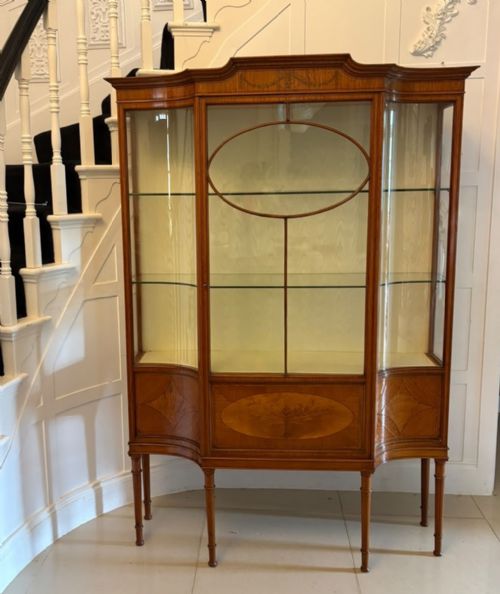
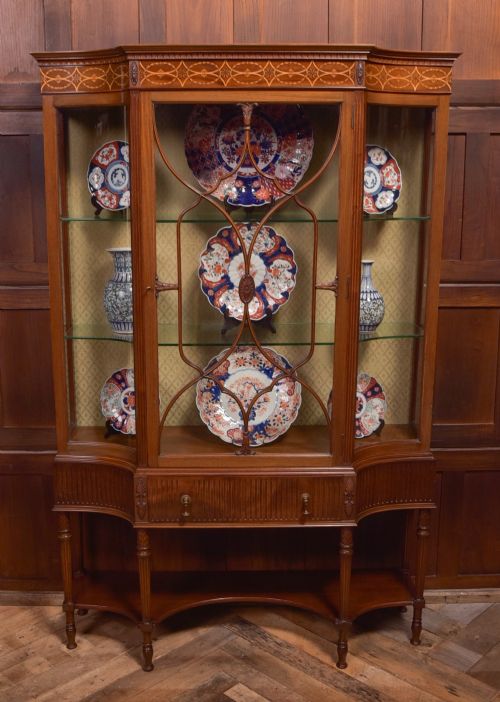
The most common version met on this page is the Edwardian display or side cabinet, constructed in mahogany with lighter wood lines tracing the curved doors and top edges.
Makers of the period drew heavily on eighteenth-century Georgian and Sheraton precedents, creating lighter, more decorative interpretations that survive in significant numbers today.
Materials and construction
Cabinet makers built these pieces using solid mahogany and mahogany veneers over secondary timbers, shaping the prominent curved front through steam-bending or multi-layer laminating techniques.
Decorative surfaces rely on fine inlay and marquetry, utilising contrasting timbers such as satinwood, boxwood, and fruitwood to form geometric stringing, fan motifs, and scrolling foliage.
Glass panels, brass handles, and occasionally fabric-lined interiors complete the construction, bringing transparency and textural contrast to the dark grain of the primary wood.
Edwardian Inlaid Bow Front Cabinet Retail Price Guide 2026
Typical asking prices for edwardian inlaid bow front cabinet among the pieces listed under this phrase on Sellingantiques today, from the lower quarter to the upper quarter. They describe what is for sale here now, not the wider market.
One surviving cabinet bears old perfume brand names sign-written on the glass, recording its past life as a shop display.
Judging the standard
Quality rests in the precision of the timber matching and the crispness of the inlay work, where superior examples show seamless joints between contrasting woods without visible gaps or filler.
The choice of primary timber dictates much of the visual weight, with dense, deeply figured mahogany and richly patinated satinwood elevating a piece well above plain commercial utility builds.
Structural integrity in the curved doors and delicate legs separates workshop-made items from mass-produced factory output, ensuring the doors hang true and the frame remains rigid.
Maple & Co·Edwards and Roberts
The Edwardian Inlaid Bow Front Cabinet Glossary
- Bow Front
- A convex curved front facade that projects outward in a smooth arc. This shape softens the profile of a room and requires advanced woodworking skill to construct.
- Inlay
- A technique where pieces of contrasting timber are set into recesses flush with the surrounding wood surface. It creates decorative lines and motifs across doors and panels.
- Satinwood
- A pale, lustrous timber native to India and Ceylon, prized for its golden colour and reflective grain. It appears frequently in stringing and panel fields.
- Sheraton Revival
- A late nineteenth and early twentieth century style emulating the neoclassical furniture of Thomas Sheraton. Pieces feature light proportions, tapering legs, and delicate marquetry.
- Bijouterie Cabinet
- A display case featuring a glazed glass top and upper section designed specifically for showcasing small valuables, medals, or jewellery. These rest at a height convenient for viewing.
Edwardian Inlaid Bow Front Cabinet: Frequently Asked Questions
What is an edwardian inlaid bow front cabinet used for?
These cabinets were originally designed to display fine china, glassware, or decorative objects while adding a refined focal point to a drawing room or dining space.
Today, they function well for similar display purposes in modern homes, offering enclosed storage that keeps dust away from delicate collections.
Are these cabinets fragile?
While built to last, the curved glass doors and slender legs require careful handling during placement and moving.
Keeping them out of direct sunlight protects the mahogany finish and prevents the delicate boxwood or satinwood inlay from drying out.
Where should I place a corner cabinet?
Corner models fit snugly into room angles, making efficient use of otherwise neglected spaces in hallways, dining rooms, or living areas.
Their curved glazed doors allow light to reflect into the corners, brightening darker parts of a room.