




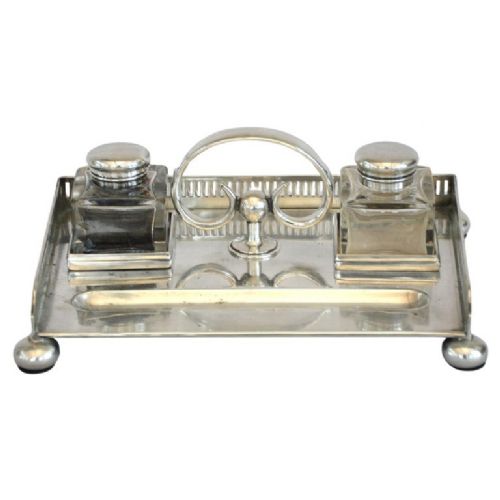


Edwardian Inkstand
An Edwardian inkstand brings order to a desk, holding ink and pens in sterling silver, brass or oak.
Edwardian Inkstand
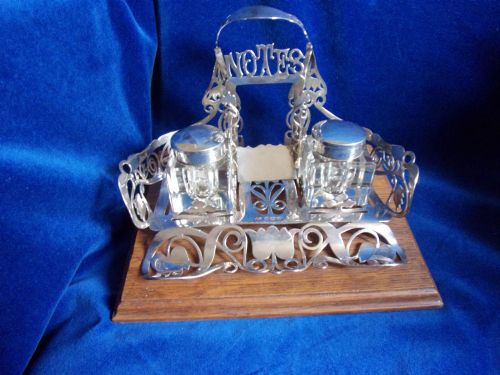
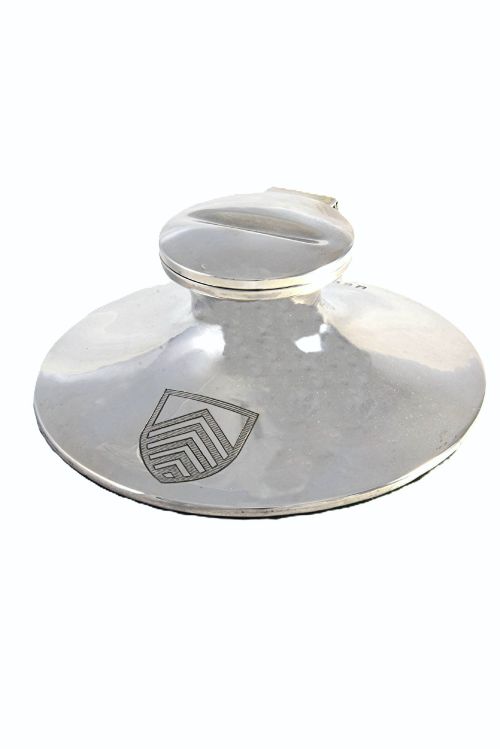
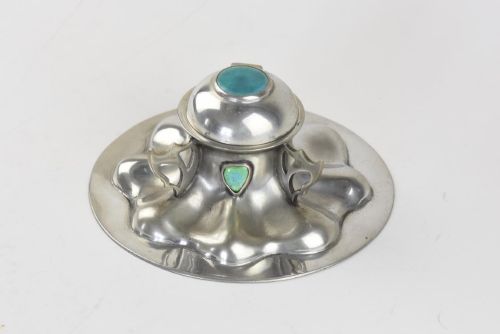
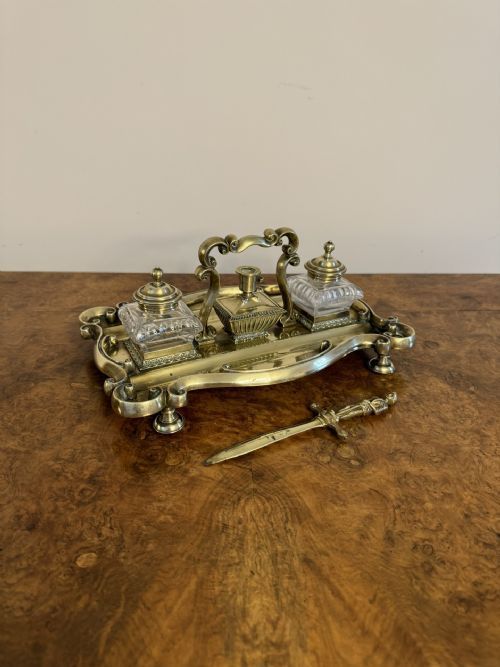
An edwardian inkstand is a desk accessory designed to hold one or more inkwells alongside pen trays or candle holders. The pieces on this page span the early twentieth century, alongside Victorian and nineteenth-century examples.
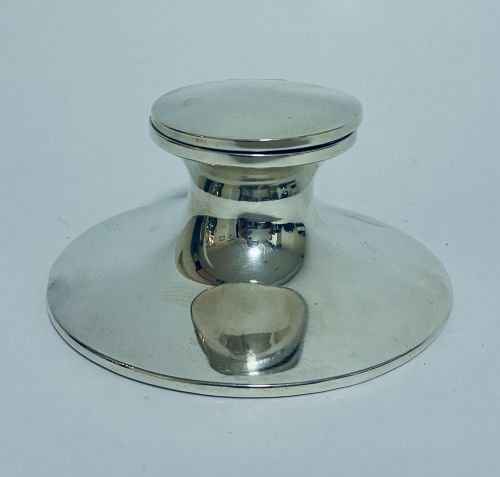
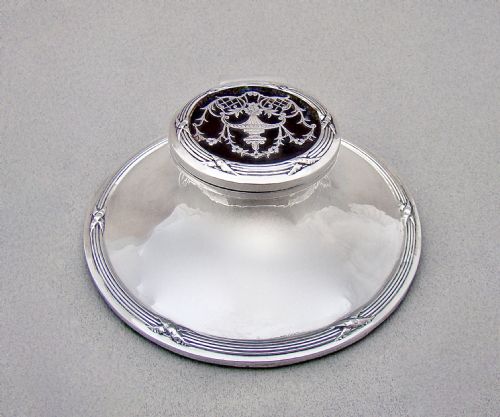
The most common formats include round capstan shapes, silver-mounted glass bottles set into wooden bases, and ornate metal stands with fitted drawers. Many incorporate silver plate, cut glass, or tortoiseshell panels.
Desks of the period relied on these stands for daily correspondence, ranging from simple brass ink pots to large country house silver double inkstands.
Materials and construction
Metals dominate the construction, utilising sterling silver, silver plate, brass, copper, and pewter shaped through casting, hand-fretting, and repoussé work. Silver components carry hallmarks indicating assay offices and dates.
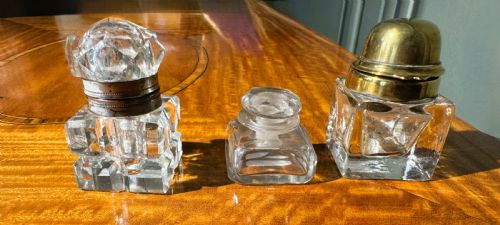
Glass vessels feature heavy cut crystal or plain blown forms, often fitted with hinged silver collars and lids. Organic materials such as oak, tortoiseshell, onyx, lapis lazuli, and horn provide contrasting bases and bodies.
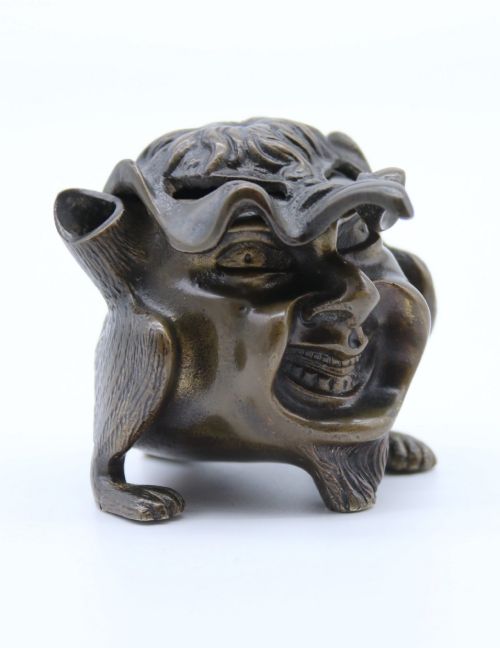
Specialist techniques include guilloche enamel medallions, cold-painted bronze for novelty animal figures, and ceramic inserts from continental factories.
Edwardian Inkstand Retail Price Guide 2026
Typical asking prices for edwardian inkstand among the pieces listed under this phrase on Sellingantiques today, from the lower quarter to the upper quarter. They describe what is for sale here now, not the wider market.
Judging quality
The distinction between ordinary and superior pieces rests on the weight of the metal, the thickness of the glass, and the precision of the joinery. Solid silver stands carry heavy gauge walls, whereas lesser items rely on thin silver plate over base metal.
Design complexity and maker attribution separate standard desk accessories from elite examples. Pieces bearing stamps from renowned workshops or incorporating luxury details like built-in pocket watches and enamel panels command greater attention.
Henry Matthews·Walker And Hall·William Hutton·Tiffany And Co
The Edwardian Inkstand Glossary
- Capstan inkwell
- A desk inkpot shaped like the nautical drum used for hauling anchors, tapering inward toward the top.
- Standish
- A portable desk stand or tray fitted with inkwells, pen holders, and sometimes a sand shaker or bell.
- Guilloche
- A decorative engine-turned engraving technique producing intricate geometric patterns beneath translucent enamel.
- Pounce pot
- A small shaker used to sprinkle resin powder over rough paper to prevent ink from blotting.
- Hallmark
- A series of stamped official marks on precious metals guaranteeing purity, origin, and year of assay.
Edwardian Inkstand: Frequently Asked Questions
How do I clean tarnished silver on an inkstand?
Use a soft microfiber cloth and a mild silver dip or paste designed for antiques, taking care to avoid getting moisture into hinges or fitted glass collars.
Keep cleaning agents away from organic elements like tortoiseshell, enamel, or wood bases to prevent permanent surface damage.
What is the difference between an inkstand and an inkwell?
An inkwell is a single vessel designed solely to contain liquid ink for a pen.
An inkstand, or standish, is a larger desk tray that holds one or more inkwells alongside spaces for pens, wafers, or sand pots.
How can I date an edwardian inkstand?
Examine the silver hallmarks on the mounts or collars, which record the assay office city and a specific date letter.
Stylistic cues such as art nouveau curves or arts and crafts hand-beating also point to the manufacturing decade.
Are antique inkstands still usable for writing?
Many glass and ceramic ink inserts remain watertight and functional for fountain pens or dip pens.
Check for hairline cracks in the glass liners and ensure hinged metal lids seal correctly before filling them with ink.