


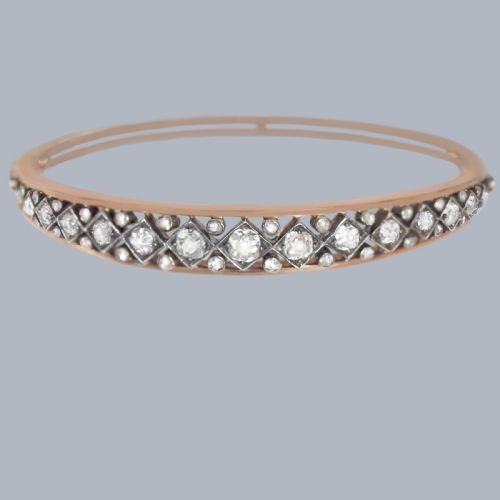


Edwardian Hinged Bangle
These edwardian hinged bangle pieces offer secure fastening alongside period charm, making them enduring favourites for daily wear.
Edwardian Hinged Bangle
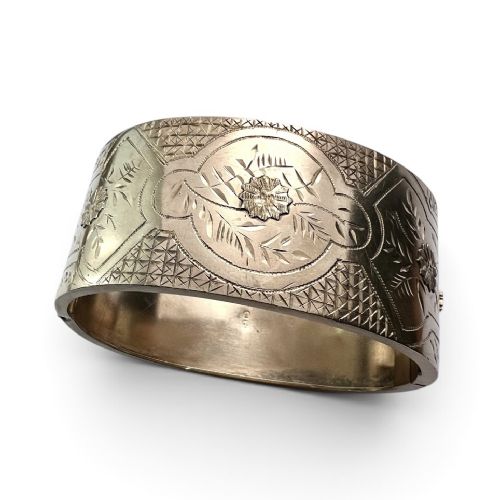
An edwardian hinged bangle provides a rigid wrist ornament that opens via a concealed hinge and fastens securely with a clasp. The selection on this page centres on pieces created during the Victorian and Edwardian periods, stretching into the early twentieth century.
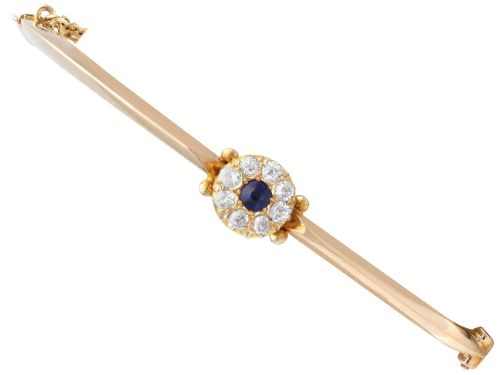
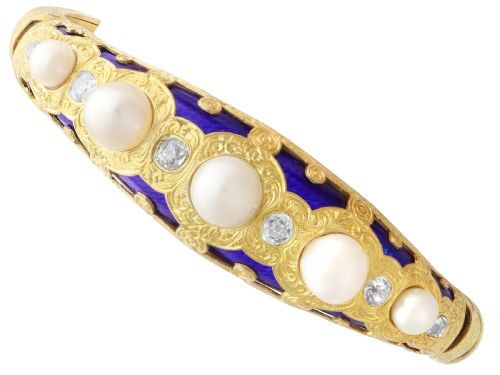
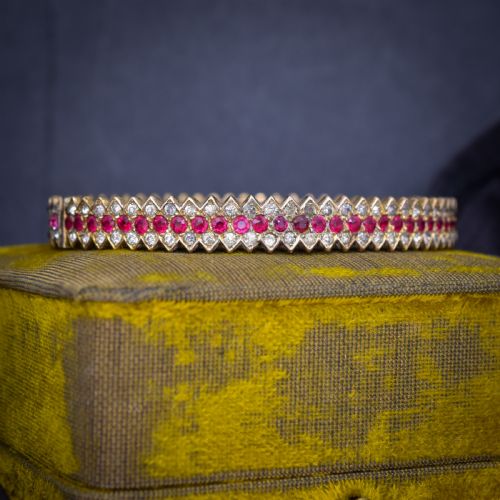
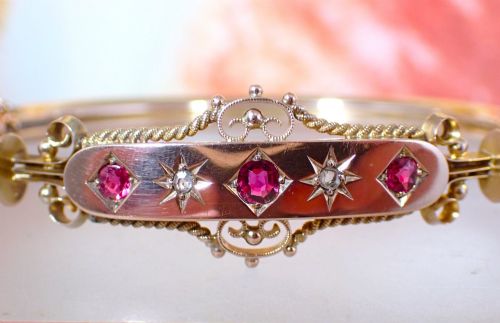
Buyers encounter forms executed in various purities of gold, including nine carat, fifteen carat, and eighteen carat, alongside sterling silver. Many examples incorporate gemstones such as diamonds, rubies, sapphires, seed pearls, and amethysts.
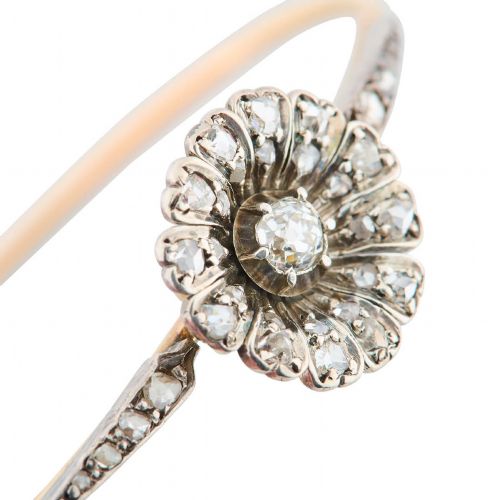
The primary designs span from plain cuffs to gem-set floral motifs and double heart arrangements. These bracelets reflect the aesthetic preferences of eras that valued both delicate gemstone settings and substantial metalwork.
Materials and construction
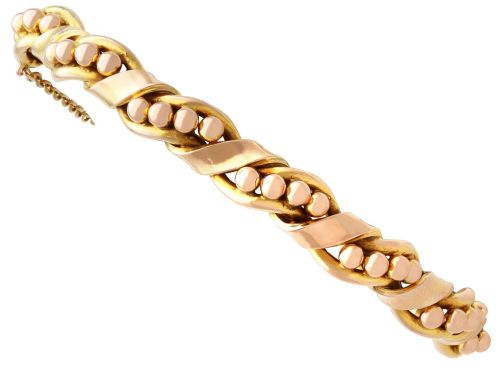
Goldsmiths utilised yellow gold, rose gold, and white gold alongside sterling silver to form the rigid structure of each bracelet. Precious stones including diamonds, rubies, and seed pearls were hand-set into the metal mounts.
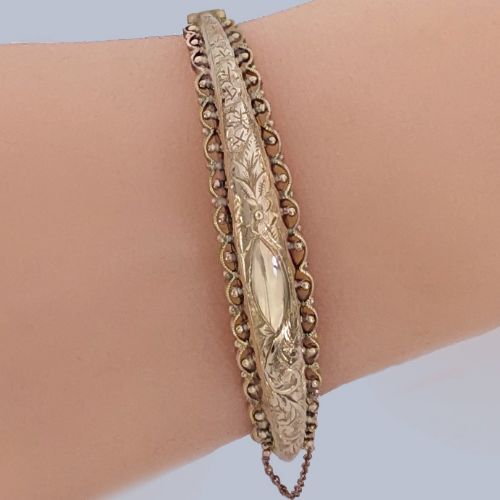
The characteristic hinge mechanism allowed the bangle to open smoothly and fit closely to the wrist. Artisans employed techniques such as chasing, engraving, and cluster mounting to embellish the surface metals.
Edwardian Hinged Bangle Retail Price Guide 2026
Typical asking prices for edwardian hinged bangle among the pieces listed under this phrase on Sellingantiques today, from the lower quarter to the upper quarter. They describe what is for sale here now, not the wider market.
The listings show materials ranging from nine carat gold and silver to platinum, alongside gemstones including diamonds, rubies, sapphires, amethysts, and seed pearls.
Distinguishing quality in these bangles
The calibre of workmanship in the metalwork and stone settings determines the standing of an individual piece. Heavier gauge gold and intricate hand-engraving separate superior examples from standard production.
The structural integrity of the hinge and the security of the clasp mechanism influence daily wearability. Pieces retaining their original matched gemstones and robust structural joints command greater attention.
The Edwardian Hinged Bangle Glossary
- Hinged bangle
- A rigid circular bracelet joined by a pivoting hinge to allow easy placement on the wrist. This design relies on a clasp to remain secure during wear.
- Seed pearl
- A very small natural or cultured pearl, often unperforated or half-drilled, used closely set in clusters or floral patterns. They are characteristic of Victorian and Edwardian jewellers.
- Old mine cut
- An early diamond cut featuring a near-square girdle, high crown, and large open culet. This facet arrangement preceded modern brilliant cuts.
- Rose cut
- A gemstone cut characterised by a domed top covered in triangular facets and a flat base. It produces a soft, translucent glow rather than sharp brilliance.
- Sterling silver
- An alloy consisting of silver and other metals, typically copper, standardised for durability and lustre. It forms the base for numerous antique cuffs.
Edwardian Hinged Bangle: Frequently Asked Questions
How do I wear a hinged bangle?
Open the bracelet via its side hinge and slide it gently over your wrist before securing the clasp. Ensure the safety chain, if present, is fastened to prevent accidental loss.
Wear the piece alone as a statement or pair it with other antique bracelets for a layered effect.
Are these bangles suitable for daily wear?
Solid gold and silver construction makes many of these bracelets robust enough for regular use. However, delicate gem settings like seed pearls require careful handling to avoid damage.
Remove your jewellery before engaging in strenuous physical activities or housework to preserve the metal and stones.
How do I identify the period?
Examine the materials, gemstone cuts, and overall stylistic motifs to gauge the era of manufacture. Hallmarks stamped inside the band often provide definitive clues to the assay office and date.
Characteristics like old mine cut diamonds and seed pearl clusters frequently point toward late nineteenth or early twentieth-century workshops.