

Edwardian Hat Rack Stand
An edwardian hat rack stand is a practical entranceway piece designed for coats, hats, and umbrellas, offering period charm for the hallway.
Edwardian Hat Rack Stand
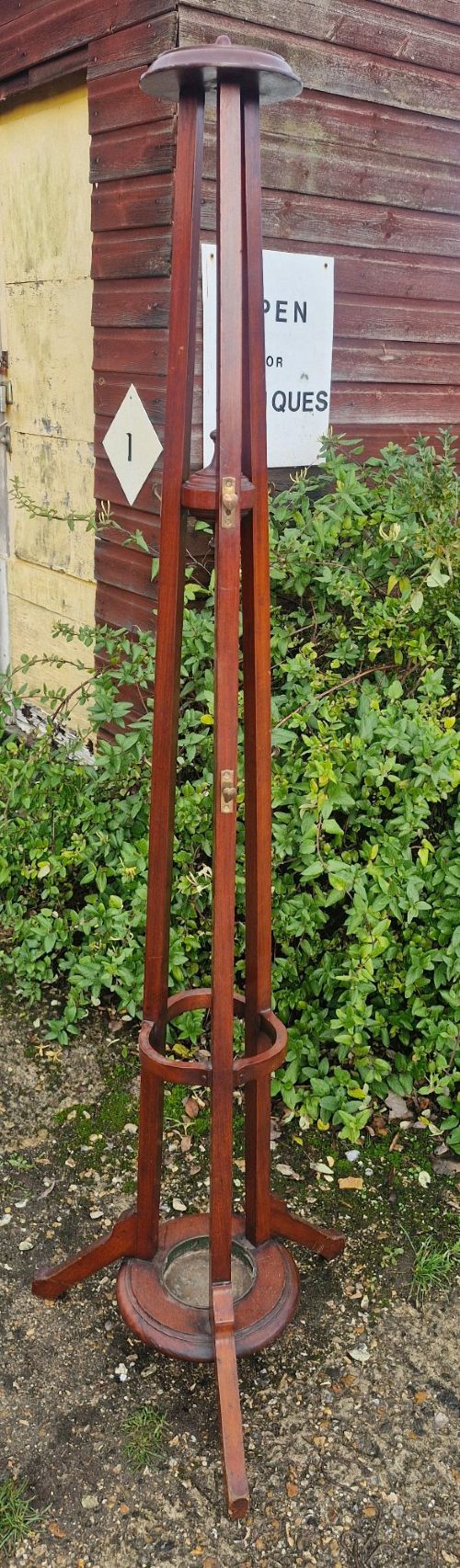
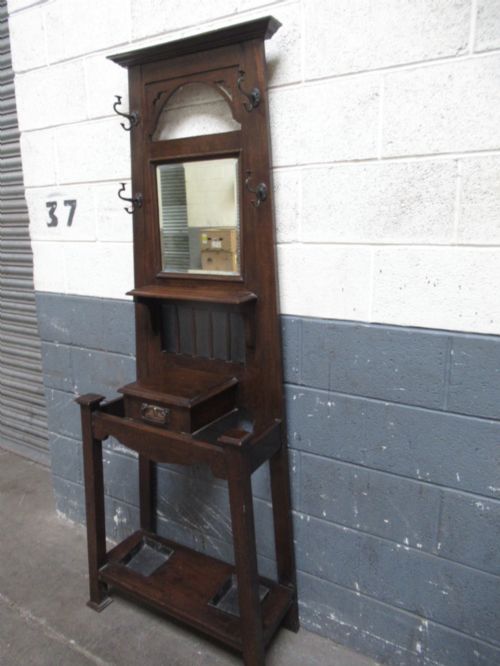
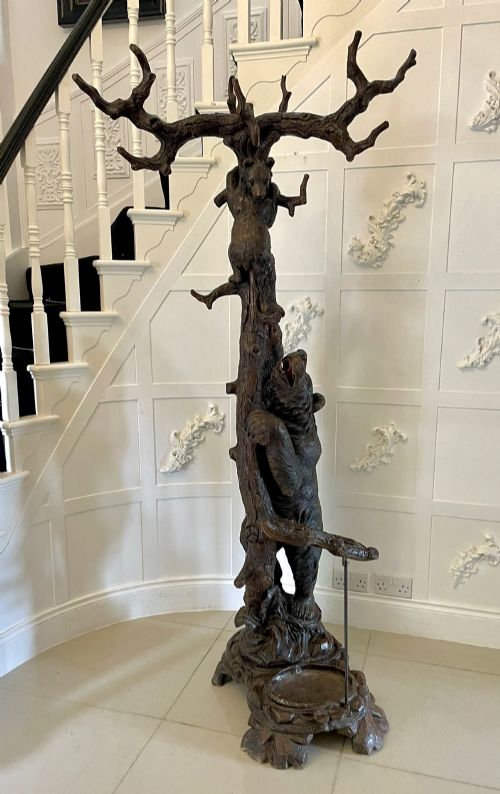
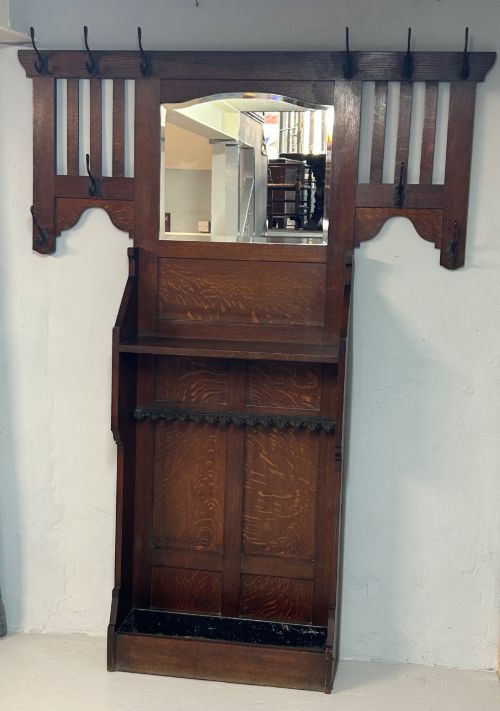
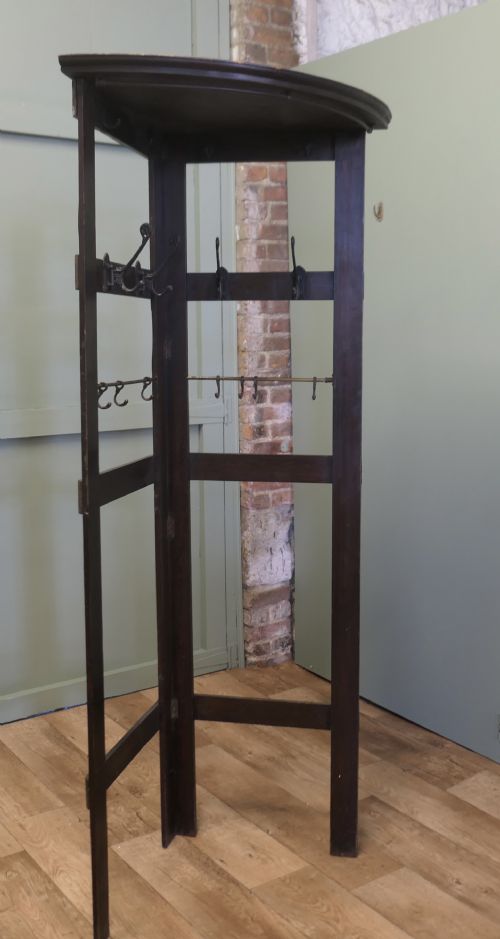
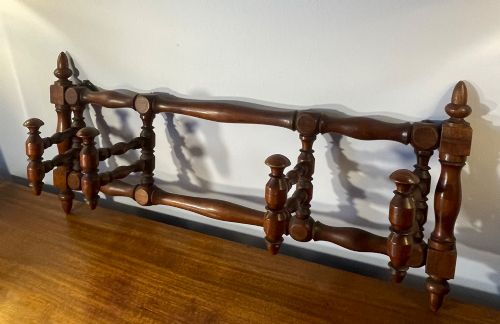
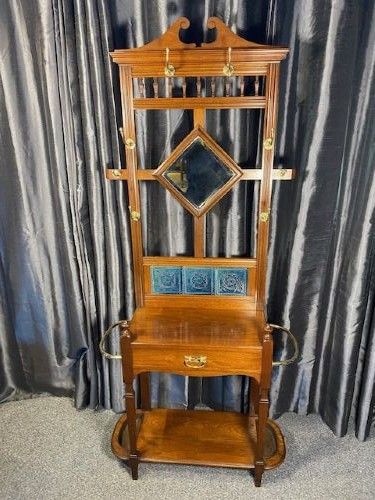
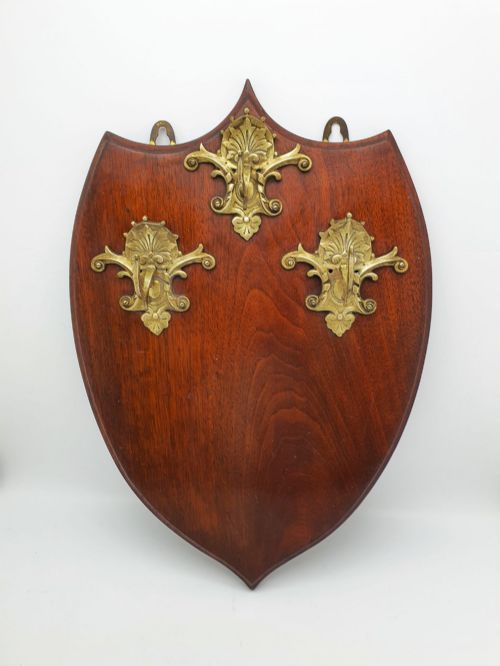
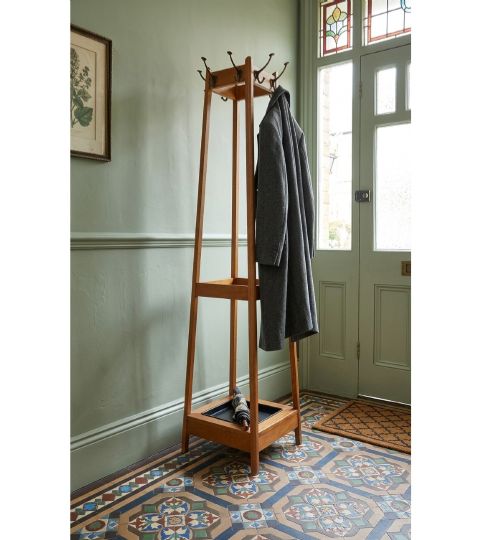
When searching for an edwardian hat rack stand, buyers encounter entranceway furnishings spanning the late nineteenth and early twentieth centuries. These pieces encompass various forms including wall-mounted racks, revolving stands, and large hall trees fitted with mirrors and umbrella holders.
The versions most commonly met on this page date from the Edwardian period and the early twentieth century, alongside Victorian precursors and Arts and Crafts examples. Oak, mahogany, and bentwood dominate the material record of these domestic furnishings.
Materials and Technique
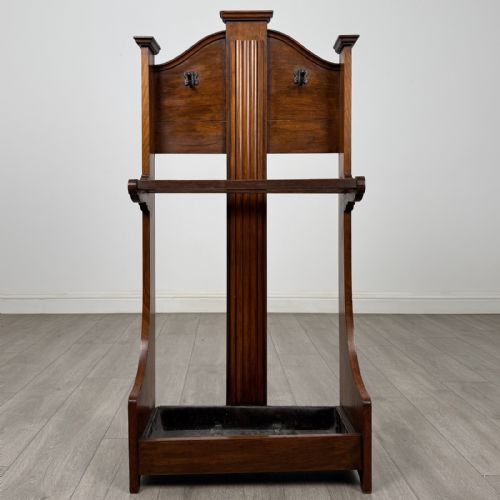
Makers utilised solid timbers such as oak, walnut, and mahogany, often combining them with brass hooks and glass or metal drip trays for wet umbrellas. Structural integrity relied on traditional joinery for wooden hall stands and steam-bent beech for lightweight bentwood designs.
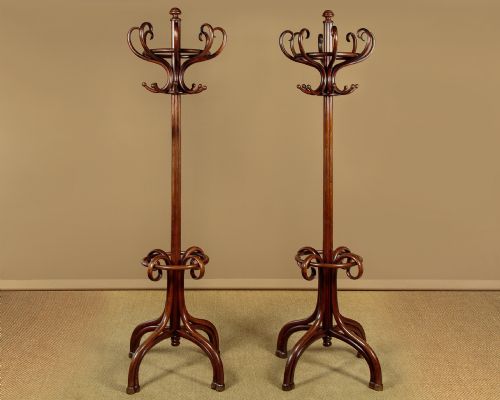
Surface treatment varied according to style, ranging from carved oak details and inlaid mahogany to the distinctive fluid curves of Art Nouveau and Thonet bentwood production.
Edwardian Hat Rack Stand Retail Price Guide 2026
Typical asking prices for edwardian hat rack stand among the pieces listed under this phrase on Sellingantiques today, from the lower quarter to the upper quarter. They describe what is for sale here now, not the wider market.
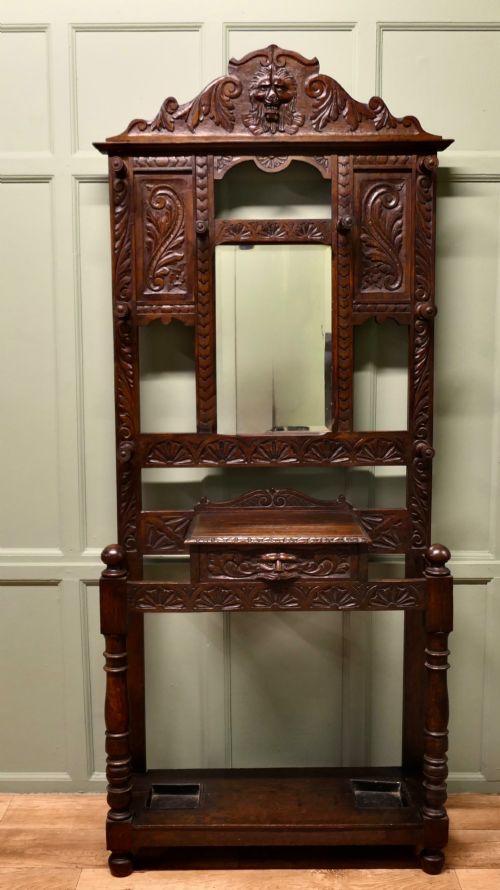
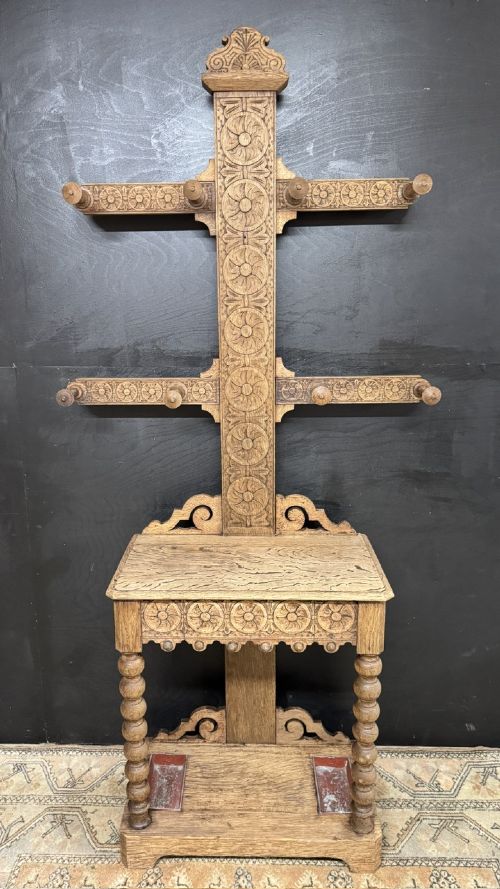
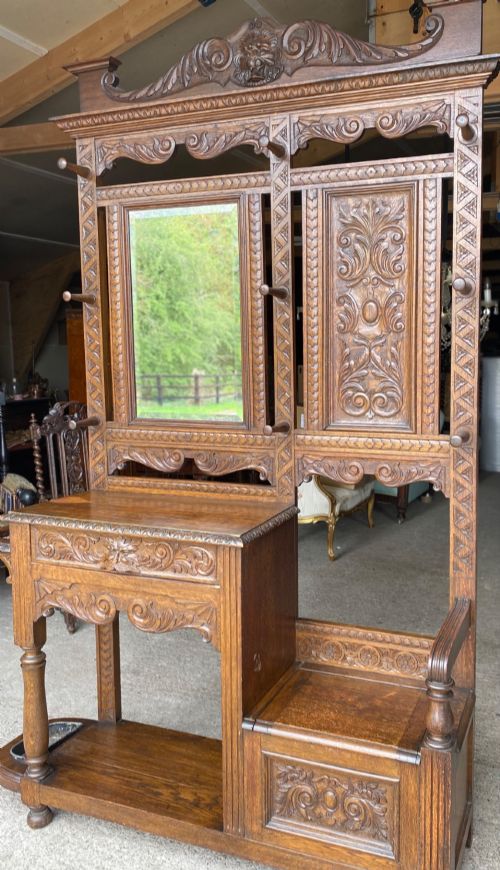
Several oak stands incorporate fierce Green Man carvings to watch over your guests' wet umbrellas.
Assessing the Pieces
The distinction between standard domestic items and superior examples lies in the robustness of the construction and the refinement of the timber. Heavier, solid oak or walnut frames with original brass hardware and intact mirrors represent the upper tier of the range.
Design complexity further separates the pieces, distinguishing straightforward utility stands from those featuring intricate carved details, such as Green Man motifs, or sophisticated revolving mechanisms.
Thonet·J Parker Of Woodstock·Jas Shoolbred
The Edwardian Hat Rack Stand Glossary
- Bentwood
- Wood that has been shaped by heating it in steam, allowing makers to create curved structural members without joints. This technique defines many coat and hat stands produced by Thonet.
- Hall tree
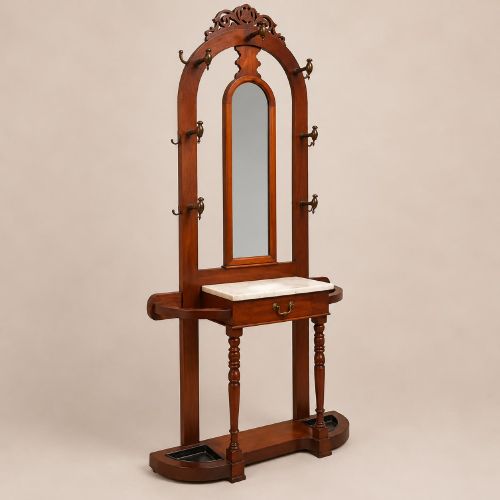
- A freestanding piece of furniture designed for entranceways, combining coat hooks, hat pegs, a mirror, and umbrella storage. These items often include drip trays at the base to catch water.
- Demi lune
- A half-moon shape used for furniture designed to stand flush against a wall. This profile appears frequently in hall stands and coat racks.
- Revolving
- A construction feature allowing the upper portion of a hat and coat stand to turn independently on a central axis. This mechanism provides easier access to garments in narrow hallways.
- Aesthetic Movement
- A late nineteenth-century design style emphasising visual beauty over narrative content. Pieces from this movement often utilise materials like bamboo and lightweight frames.
Edwardian Hat Rack Stand: Frequently Asked Questions
What is an edwardian hat rack stand?
An edwardian hat rack stand is a functional piece of entranceway furniture designed to hold outdoor garments, headwear, and umbrellas.
These pieces range from compact wall-mounted wooden racks to large freestanding hall trees featuring mirrors and storage trays.
How were these stands used?
Households placed these stands in entrance halls to receive coats, hats, scarves, and walking sticks as people entered the home.
The inclusion of brass hooks, umbrella holders, and drip trays kept wet garments and accessories organised near the front door.
How do I identify a bentwood stand?
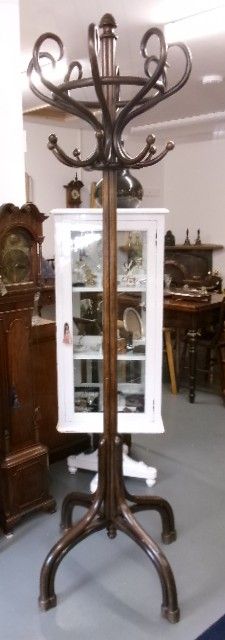
Bentwood stands are recognised by their curved wooden components, created through steam-bending techniques rather than carved or joined timber.
These lightweight pieces often feature circular or semi-circular bases and revolving upper sections designed for hats and coats.
What woods were used for hall stands?
Makers constructed hall stands primarily using hardwoods such as oak, mahogany, and walnut, alongside steam-bent beech for lighter designs.
Some examples also incorporated alternative natural materials like bamboo within specific nineteenth-century stylistic movements.