


Edwardian Harbour Painting
When you seek an edwardian harbour painting, you encounter coastal watercolours and oils capturing bustling British ports and quiet fishing coves.
Edwardian Harbour Painting
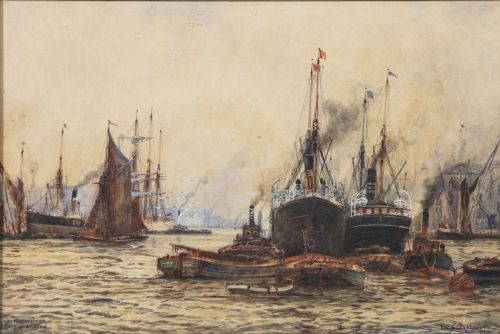
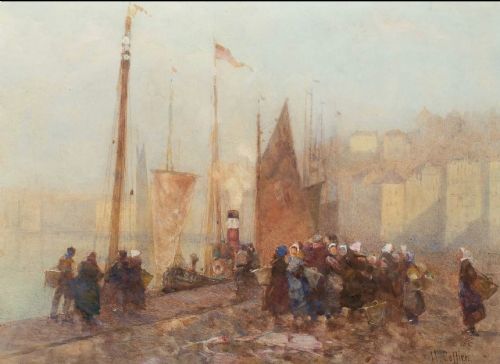
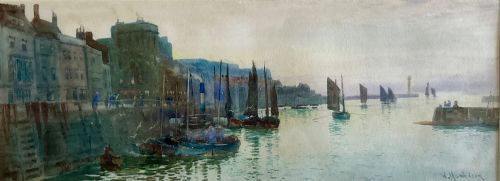
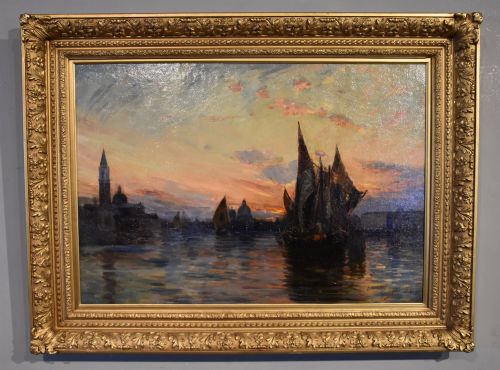
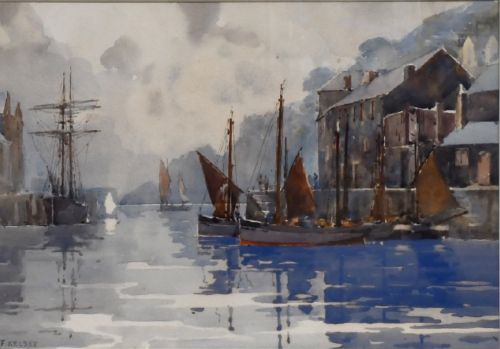
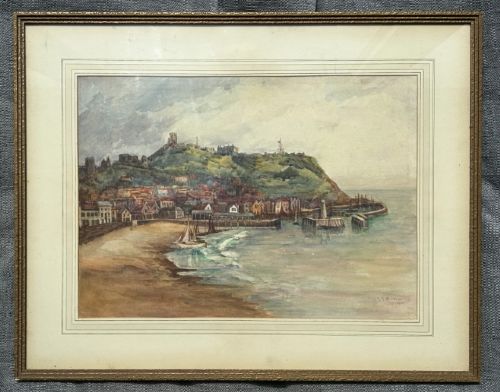
An edwardian harbour painting portrays maritime life, coastal architecture, and fishing vessels along British and European shores during the early twentieth century. You frequently encounter depictions of Yorkshire and Cornish ports, such as Whitby, St Ives, and Polperro, rendered with characteristic atmospheric light.
The selections on this page span watercolours on paper and oil paintings on canvas or board, reflecting the favoured mediums of the period. Artists recorded working docks, moored luggers, and tidal inlets with a keen eye for regional topography and maritime activity.
Most examples originate from the Edwardian decade and surrounding years, incorporating Victorian survivals and later 1920s or 1930s interpretations. These works capture a transitional era in British fine art, bridging traditional marine documentation and impressionistic coastal observations.
How They Were Made
Watercolour pigment applied to heavy paper forms the foundation of many pieces, often enhanced with subtle pencil underdrawing to define rigging and stone quays. Artists utilised transparent washes to capture shifting coastal light and the reflective surfaces of tidal water.
Oil paintings in the collection employ oil on canvas or board, allowing for heavier impasto and richer textures on depictions of choppy seas and wooden hulls. Glazes and layered brushwork build depth in skies and surrounding cliffs.
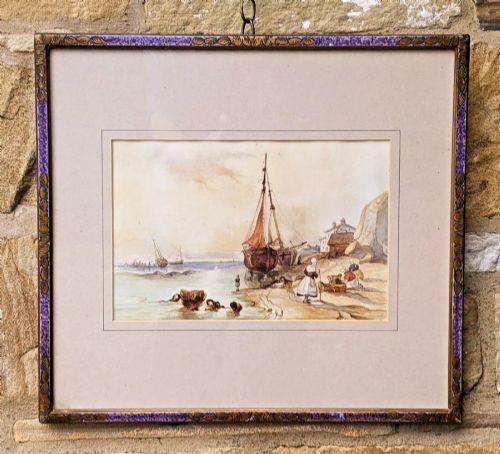
Framing typically involves gilt wood surrounds and protective glass for works on paper, preserving the delicate pigments from atmospheric moisture and handling.
Materials recorded across the inventory include paper, watercolour pigment, wood, glass, oil paint, and gilt wood.
What Varies in Quality
The strength of composition and spatial handling distinguishes accomplished works from simpler topographical records, particularly in how artists manage complex arrangements of masts, rigging, and architecture. Superior pieces demonstrate a confident control of tone that conveys the weight of stone piers and the movement of water.
Atmospheric depth and the rendering of natural light set apart finer examples, where subtle colour gradations evoke morning mist or evening shadows on a harbour wall. Weaker executions rely on rigid outlines and flat washes without capturing the specific maritime environment.
The preservation of the paper or canvas significantly influences the visual impact, as clean, unblemished surfaces allow the original brilliance of the pigments to endure.
Frank William Scarbrough·Hector Caffieri·William Matthison·Thomas Hodgson Liddell·Frank Kelsey·F A Roylance·George F Pennington·Alfred George Morgan·Richard Harry Carter·Tom Clough·Stanley Leader·Fred Waugh·John Bell·James Webb·James Thomas Watts·Ernest F Hill·Frederick Stuart Richardson·Alfred Robert Quinton·Percy Brooke·William Lambert Bell·Ralph Todd·William Kay Blacklock·Rowland Henry Hill·Harry Wanless·H Hadfield Cubley
The Edwardian Harbour Painting Glossary
- Lugger
- A traditional two-masted or three-masted fishing vessel rigged with standing lugsails. These boats dominate the coastal scenes of West Country ports.
- Impasto
- Paint applied thickly to a canvas or board, standing visibly above the surface. This technique creates texture in depictions of turbulent waves and stormy skies.
- Wash
- A thin, fluid layer of watercolour pigment spread evenly across paper. Artists use washes to establish luminous skies and transparent water.
- Woodblock print
- An image printed from a carved block of wood, representing alternative graphic techniques alongside unique paintings.
- Gilt wood
- Timber frames finished with a thin layer of gold leaf or metallic gilt paint. These traditional surrounds often complement marine oil paintings and watercolours.
Edwardian Harbour Painting: Frequently Asked Questions
What subjects appear in these paintings?
The works predominantly feature British and European coastal scenes, focusing on working harbours, fishing fleets, and tidal rivers. Popular locations include Yorkshire fishing ports and Cornish coves filled with moored vessels and local figures.
Artists also recorded urban waterfronts, such as the Pool of London, alongside continental European views. These compositions document maritime trades and coastal topography before rapid industrial modernisation altered the waterfronts.
How should I display watercolour works?
Watercolours require careful placement away from direct, strong sunlight to prevent the fading of delicate pigments on paper. Framing behind glass with conservation-grade mounts protects the surface from atmospheric pollutants and humidity.
Maintaining stable indoor temperatures helps preserve both the paper support and the traditional wooden frame. Proper positioning ensures the subtle washes remain vibrant for years to come.
How do I distinguish watercolours from oils?
Watercolours are executed on paper under glass, showing translucent pigment layers where the white of the paper often provides highlights. They present a flat, smooth surface beneath the protective glazing.
Oil paintings utilise canvas or wooden boards, displaying textured brushwork and impasto that sits proud of the support. Oils do not require glass protection and generally exhibit a rich, glossy or satin varnish finish.
Are these paintings signed by the artists?
Many examples in this selection bear visible signatures, monograms, or contemporary inscriptions by the artist, often placed near the lower corners. These signatures frequently accompany dated compositions from the early twentieth century.
Unsigned works still attribute to specific regional schools and stylistic periods through technical execution and subject matter. Documentation and framing styles often provide additional context regarding the origin of the piece.