

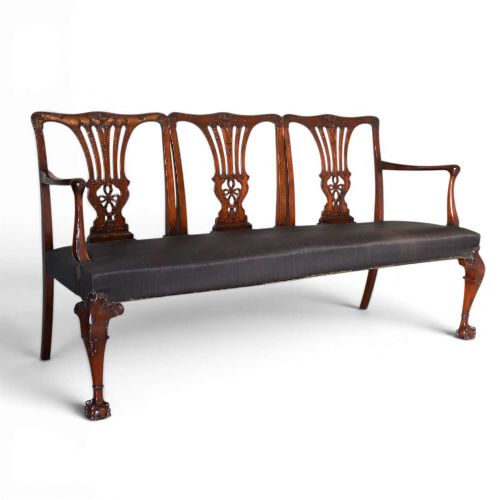


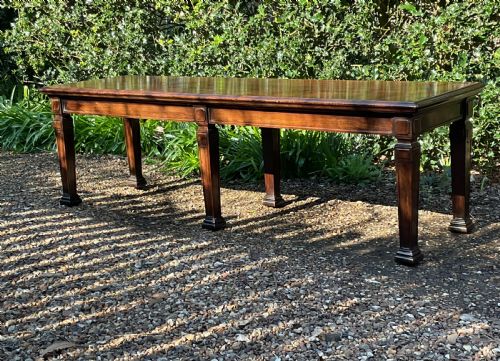
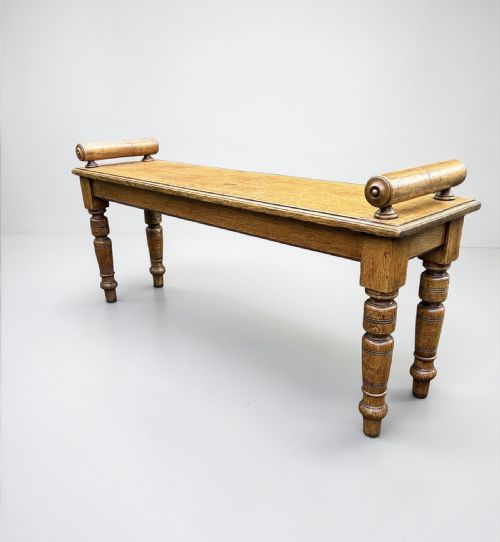
Edwardian Hallway Seat
An Edwardian hallway seat provides a practical perch for pulling on shoes while setting a hospitable tone in an entrance.
Edwardian Hallway Seat
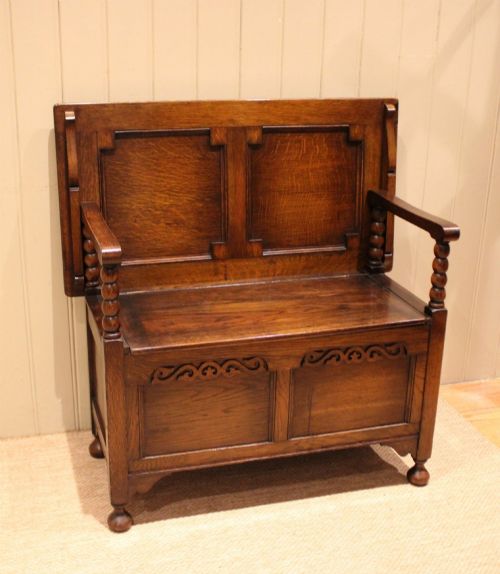
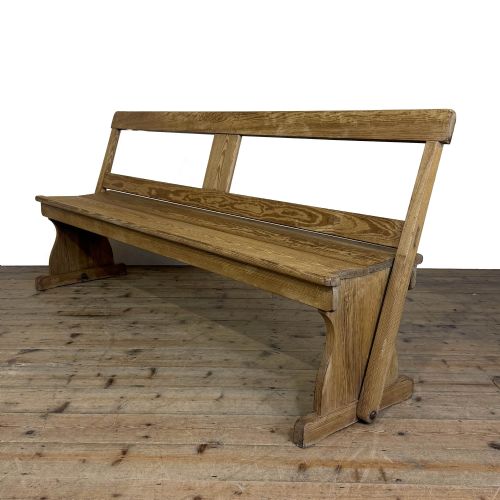
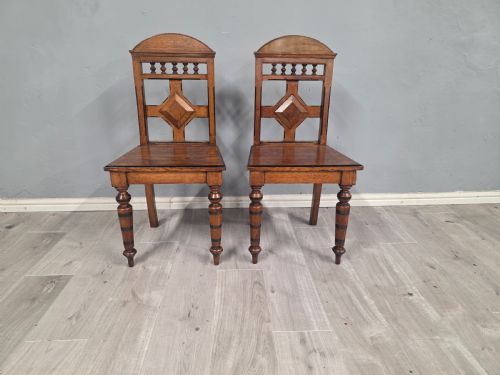
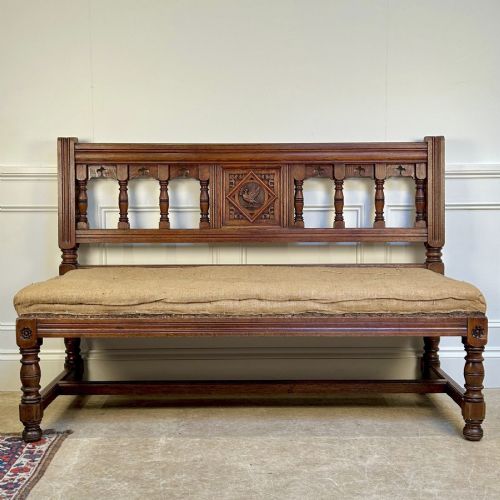
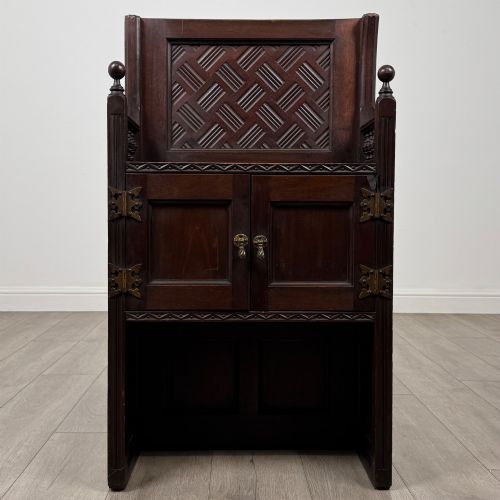
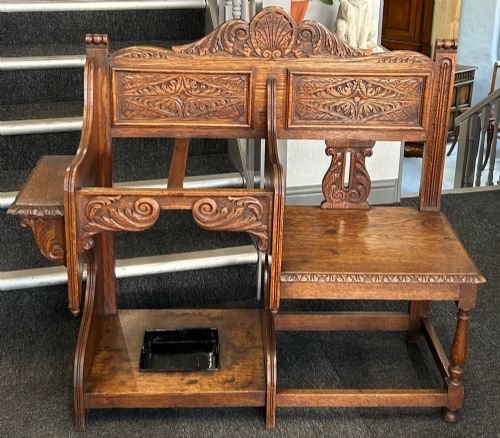
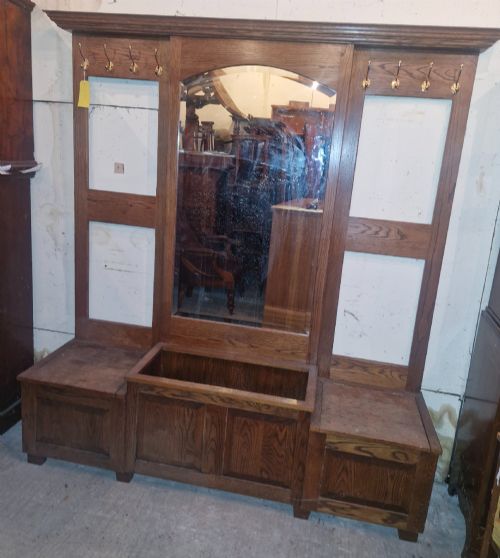
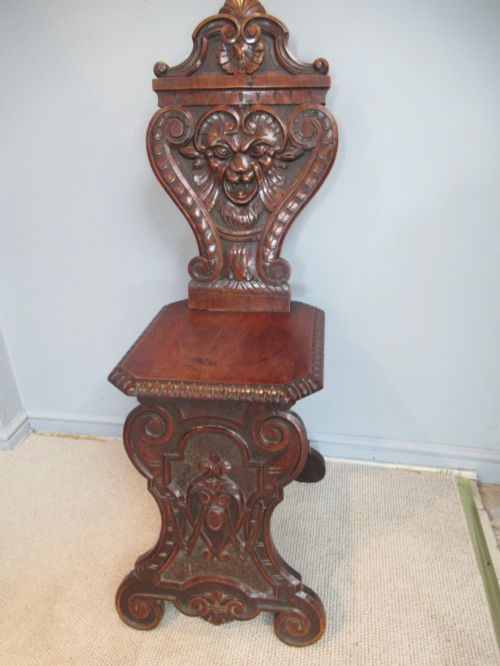
An edwardian hallway seat encompasses sturdy benches, carved settles, upholstered window seats, and combination stands designed for the entrance of a home. These functional pieces merge seating with practical elements like stick stands, mirrors, or storage compartments.
The version most commonly met on this page is constructed from oak or mahogany, often featuring carved details, inlaid woodwork, or fabric upholstery. They reflect the domestic priorities of the early twentieth century, combining utility with formal reception areas.
Materials and Technique
Makers relied predominantly on solid hardwoods such as oak, mahogany, walnut, ash, and elm to build the structural frames of these entrance benches. These durable woods were selected to withstand the heavy wear expected in high-traffic hallways.
Construction techniques involved traditional joinery augmented by decorative applications such as floral carving, marquetry inlay, and turned woodwork. Brass and iron hardware frequently supplemented the wooden framework to hold umbrella rings, hooks, or hinged storage lids.
Edwardian Hallway Seat Retail Price Guide 2026
Typical asking prices for edwardian hallway seat among the pieces listed under this phrase on Sellingantiques today, from the lower quarter to the upper quarter. They describe what is for sale here now, not the wider market.
Listings feature woods spanning oak, mahogany, walnut, ash, elm, and iron hardware elements.
Quality Variations
The distinction between tiers of quality rests upon the crispness of the hand-carving and the selection of timber figures. Pieces displaying deep relief floral motifs or finely executed inlay work exhibit a higher degree of artisan skill than plain utilitarian examples.
Structural integrity and the integration of multi-functional elements also dictate the standing of a piece. Integrated mirrors, intact brass umbrella holders, and cleanly fitted storage compartments separate standard hallway furniture from finer atelier-made items.
Gillows·Jas Shoolbred·Wylie Lockhead Manufacturers·Thonet·James Shoolbred & Co
The Edwardian Hallway Seat Glossary
- Settle
- A wooden bench featuring a high back to block drafts and solid arms. They frequently incorporate a hinged seat hiding a box for storage.
- Marquetry
- The art of applying pieces of veneer to a structure to form decorative patterns. This technique frequently defines the surfaces of inlaid mahogany pieces.
- Arts and Crafts
- A design movement prioritising traditional craftsmanship and simple forms. Pieces from this aesthetic often showcase honest construction and minimal ornamentation.
- Gothic Revival
- An architectural and decorative style drawing on medieval forms. Furniture in this vein displays pointed arches, tracery, and heavy carved oak.
- Stick Stand
- An upright fixture integrated into hallway furniture to hold walking canes and umbrellas. They typically include a metal drip tray at the base.
Edwardian Hallway Seat: Frequently Asked Questions
What is an edwardian hallway seat?
An edwardian hallway seat is a piece of entrance furniture designed for sitting while managing footwear. They range from simple wooden benches to elaborate combinations featuring mirrors and coat hooks.
Many examples incorporate clever storage solutions beneath the seat or integrated troughs for walking sticks. They serve both a utilitarian purpose and a decorative function in a home's reception area.
How were these seats used?
These pieces were positioned in entrance halls to provide a convenient place for putting on or removing outdoor boots and shoes. Visitors and residents used them momentarily upon entering or leaving the house.
Combination stands additionally kept outerwear, umbrellas, and walking sticks organised near the front door. The central cupboard or under-seat box stored small accessories out of sight.
How do I live with one?
Integrate an edwardian hallway seat into a modern entrance by using it as a practical spot for daily footwear. The surface handles everyday use well when paired with appropriate floor protection.
Keep wooden surfaces conditioned and upholstered pads clean depending on the material construction. The built-in storage compartments or hooks manage clutter efficiently in smaller entryways.
How do I distinguish periods?
Distinguishing periods relies on observing the decorative motifs, wood choices, and construction methods present on the frame. Victorian and early pieces often show heavier proportions and Gothic or Jacobean revival carving.
Edwardian items frequently utilise lighter mahogany frames with delicate inlay or simpler Arts and Crafts lines. Mid-century additions can be identified by simpler modern joints and alternative finish treatments.