





Edwardian Gong
An Edwardian gong brings a resonant call to the table, pairing polished brass with sturdy oak to summon guests in style.
Edwardian Gong
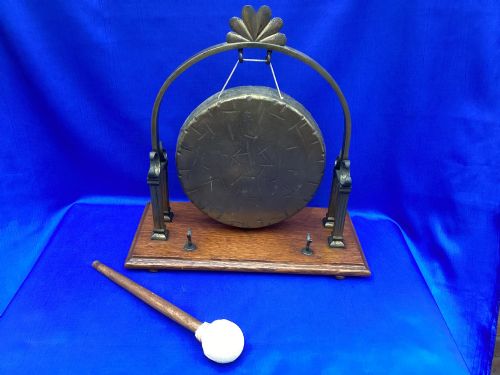
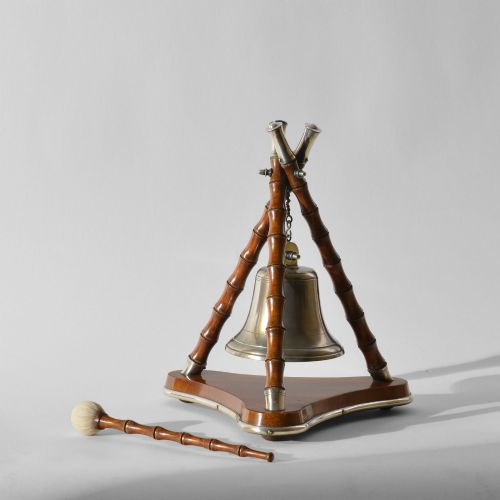
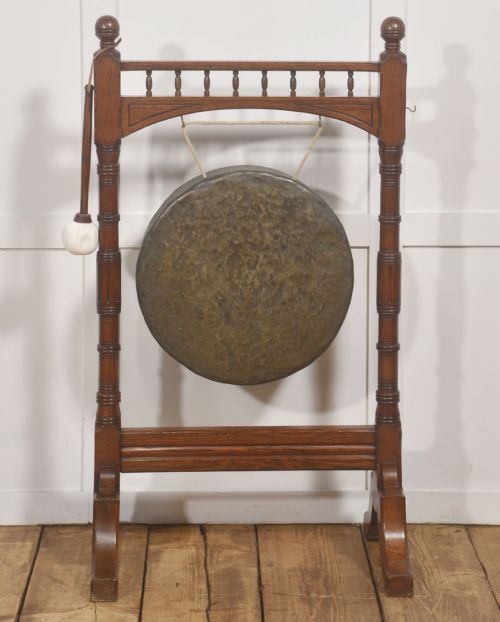
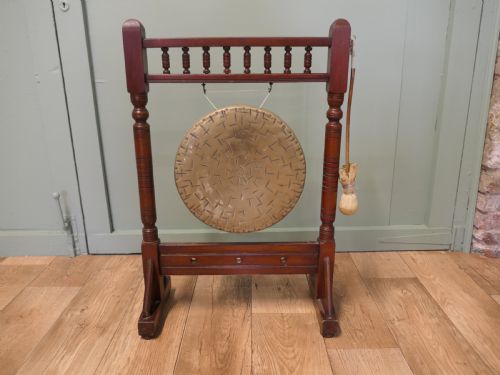
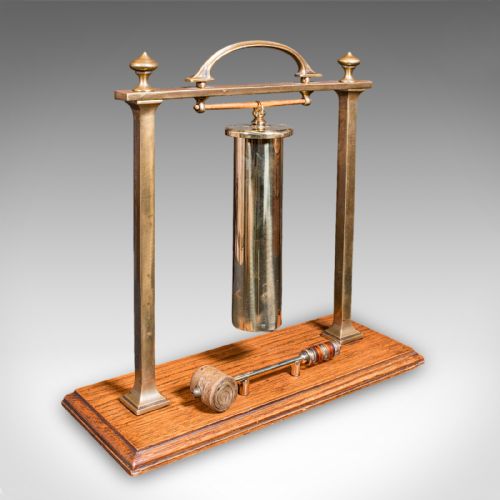
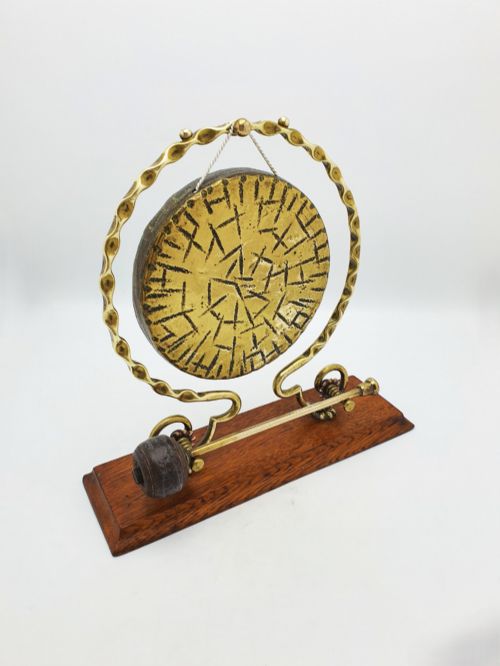
An edwardian gong serves as a striking focal point, designed originally to announce dinner or afternoon tea in substantial households. These pieces combine a suspended metal bell or disc with a wooden or metal frame, often equipped with a handheld striker.
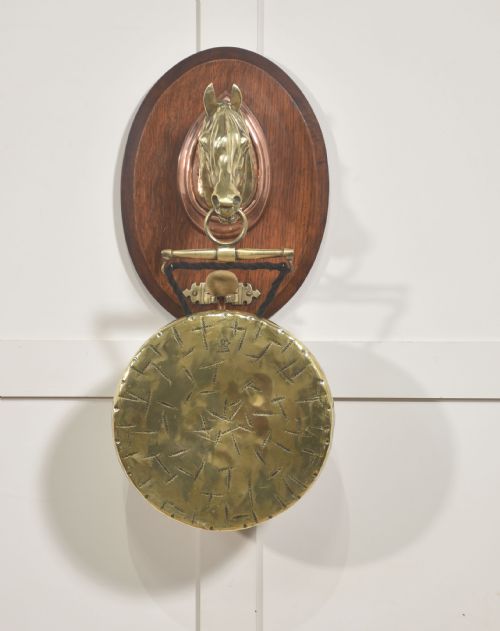
The versions most commonly found here pair an oak base or stand with a brass bell, spanning periods from the late nineteenth century into the early twentieth century. Formats range from compact tabletop pieces to wall-hanging arrangements and floor-standing designs.
Makers drew on diverse design vocabularies, producing examples in Arts and Crafts, Gothic Revival, Art Nouveau, and Japonisme styles. Alongside standard dinner gongs, related forms include table bells, supper bells, and occasional hall furniture.
Materials and construction
Makers relied heavily on oak and mahogany for the supportive frames and stands, frequently employing carved details, wall mounts, or horse head motifs. Brass, bronze, and silver plate form the primary resonance components, suspended by cords or mounted within iron and wooden structures.
Alternative materials introduce distinct textures, including cattle horn, walnut, and wrought iron, while specific pieces incorporate engraved brass surfaces or carved stands influenced by oriental design. Assembly combined carpentry for the wooden frames with metalcasting for the gongs, bells, and hardware.
Edwardian Gong Retail Price Guide 2026
Typical asking prices for edwardian gong among the pieces listed under this phrase on Sellingantiques today, from the lower quarter to the upper quarter. They describe what is for sale here now, not the wider market.
Markers of quality
Quality rests in the substance of the framing and the resonance of the metal, where dense carved oak and heavy bronze or brass create a clearer, deeper tone than lighter substitutes. Superior examples display thoughtful integration between the hanging mechanism and the supporting stand.
Artistic execution separates standard production from finer work, visible in crisp hand-engraving on the brass, purposeful carving on the wooden mounts, and the balance of proportion between the gong and its frame.
The Edwardian Gong Glossary
- Dinner Gong
- A suspended metal disc or bell struck with a mallet to summon people to a meal. They became household fixtures in the Victorian and Edwardian eras.
- Table Gong
- A smaller version designed to sit on a dining or side table rather than hang from a wall or stand on the floor. These operate on the same acoustic principle as larger floor-standing models.
- Striker
- The mallet or beater used to hit the gong, typically featuring a wooden handle and a padded, leather, or metal head. The material of the striker alters the tone produced by the bell.
- Gothic Revival
- A design style drawing on medieval architectural motifs, frequently seen in the pointed arches and heavy carved woodwork of nineteenth-century gongs.
- Japonisme
- The influence of Japanese art and aesthetics on Western makers, reflected in oriental motifs, carved stands, and bronze bells associated with tea ceremonies.
Edwardian Gong: Frequently Asked Questions
How were dinner gongs used?
These pieces were placed in hallways or dining rooms to signal the start of meals, afternoon tea, or gatherings.
Servants or hosts struck the suspended metal disc with a mallet, sending a clear tone through the house to gather residents.
What materials make up these gongs?
Frames are predominantly constructed from oak or mahogany, occasionally utilising walnut, wrought iron, or carved wood.
The striking elements consist of brass, bronze, silver plate, or cattle horn, often suspended by sturdy cords.
How do I distinguish Edwardian from Victorian pieces?
Victorian examples frequently lean towards heavy Gothic Revival or ornate aesthetic styles with dense carving and dark finishes.
Edwardian pieces often display cleaner Arts and Crafts lines, lighter oak tones, or simpler brass mountings.
Can I still ring a vintage gong?
Most surviving examples retain their structural integrity and produce a full, resonant tone when struck gently with the proper mallet.
Care should be taken to check the suspension cord and frame stability before testing the sound.