

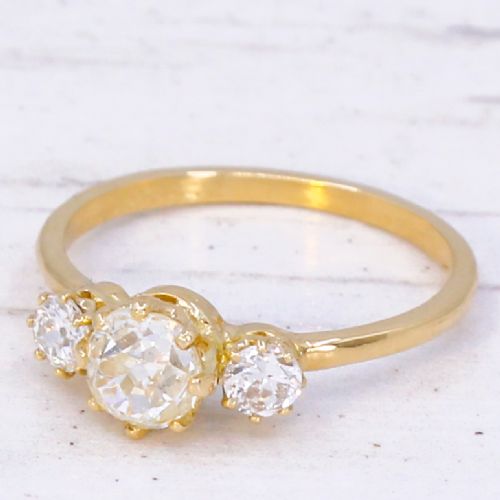
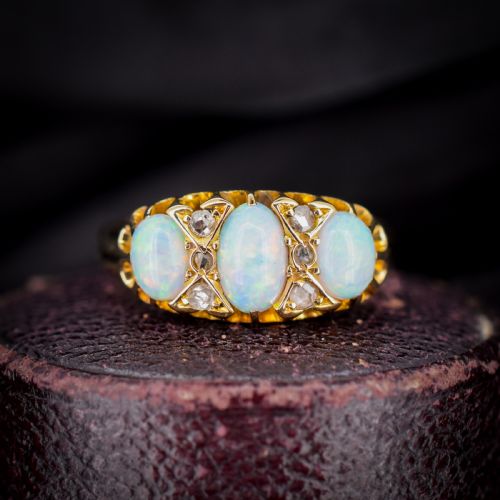

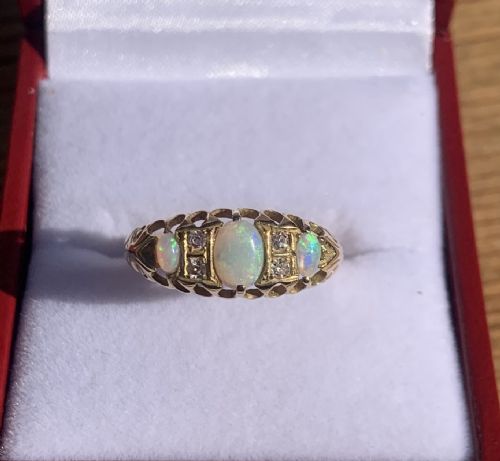


Edwardian Gold Trilogy Ring
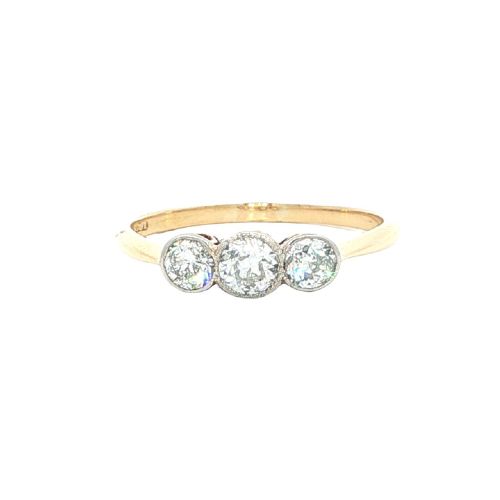
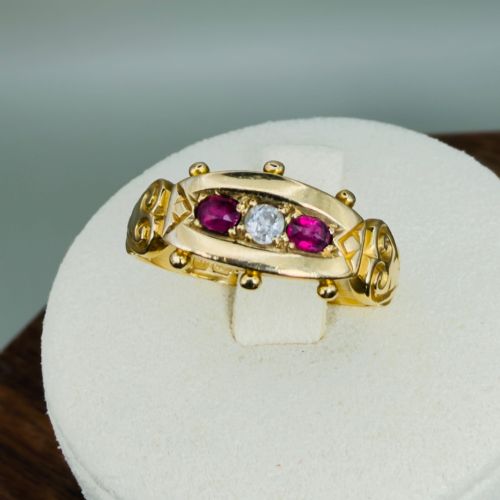
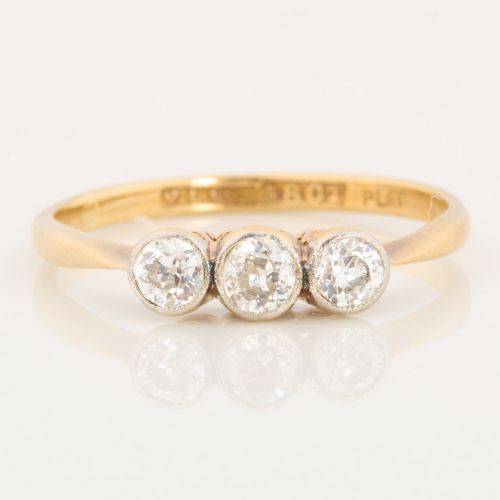
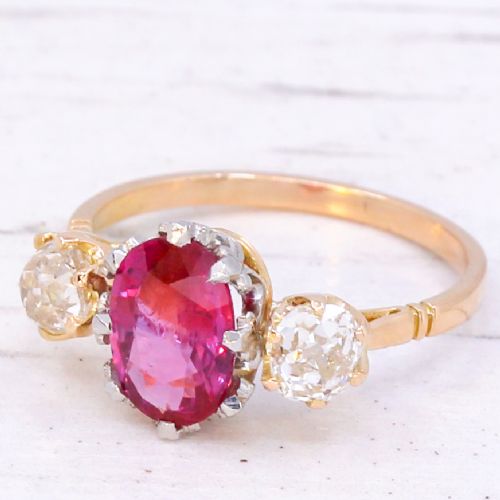
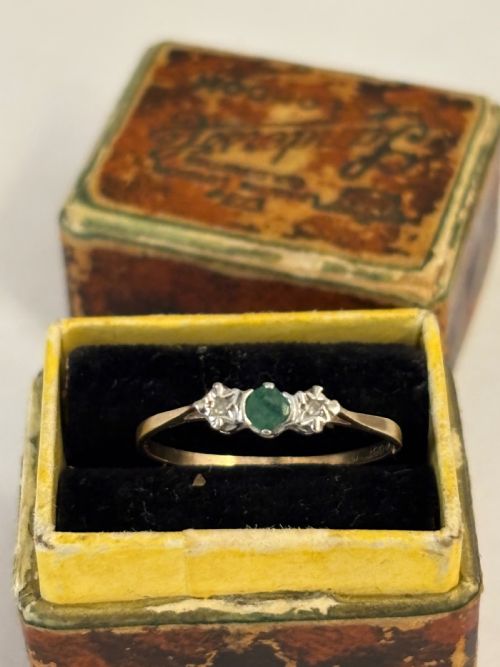
An edwardian gold trilogy ring brings together three stones symbolising past, present and future, fashioned in yellow gold and platinum.
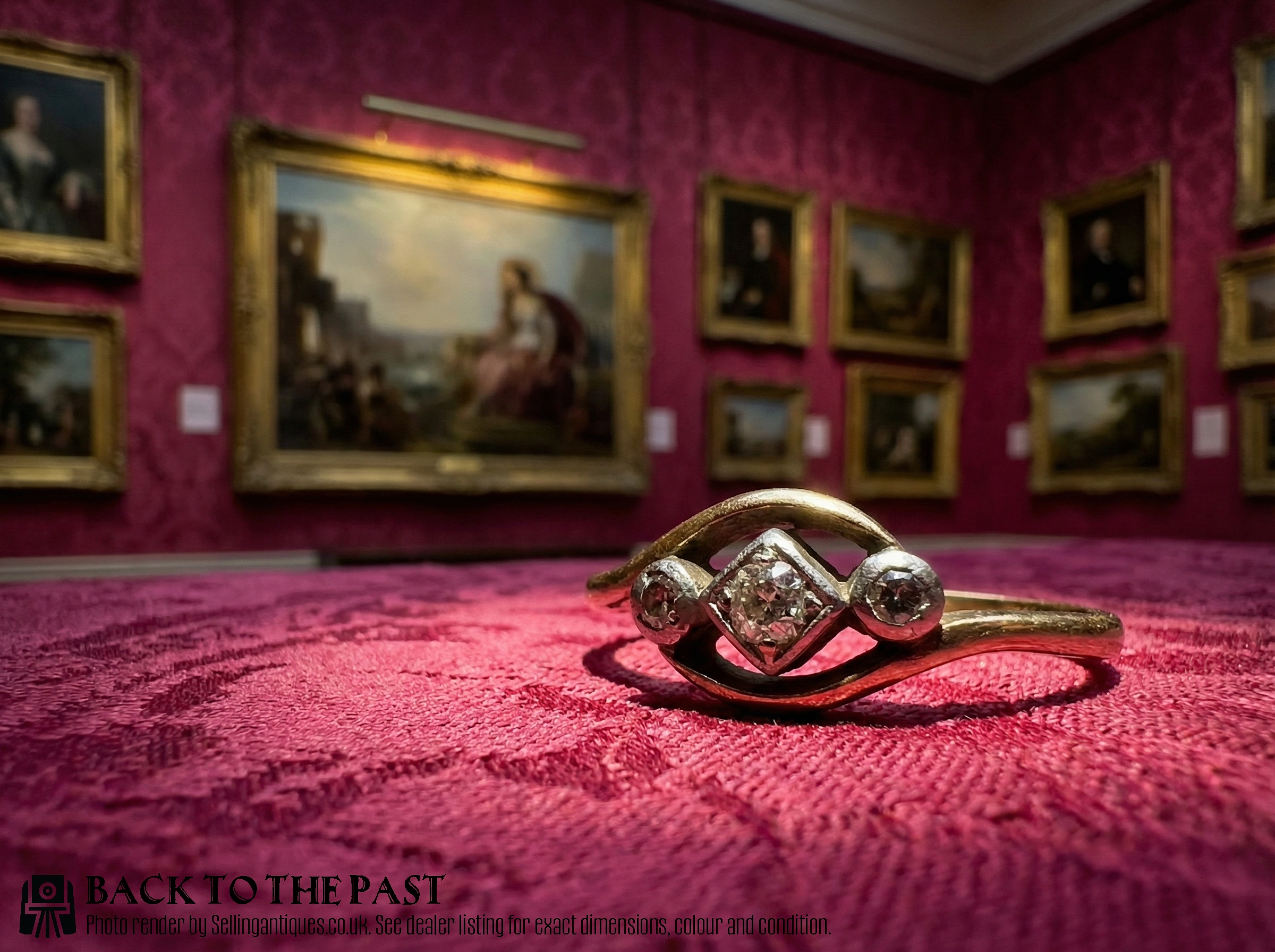
Edwardian Gold Trilogy Ring
The form spans the Edwardian period alongside late Victorian and Art Deco eras, capturing a distinct evolution in mounting stones securely while maximising light.
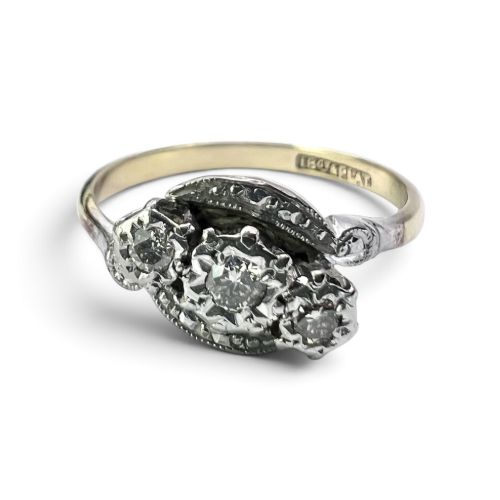
Collectors encounter traditional straight three-stone arrangements as well as twist or crossover designs that gently curve the stones along the band.
How they were made
Goldsmiths utilised 18ct yellow gold for the shank and body, frequently pairing it with platinum settings on the upper face to securely grip the gemstones in minimal metal.
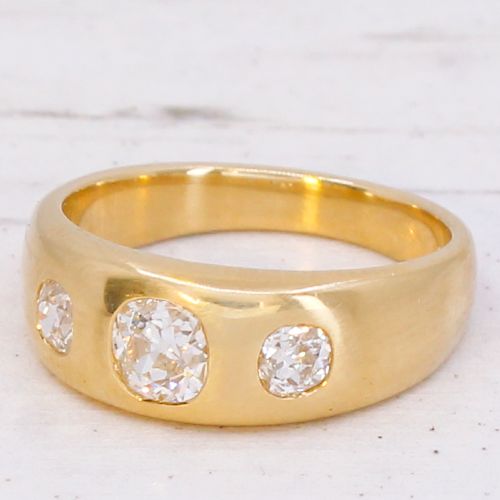
Stones such as old cut diamonds, sapphires and rubies were hand-set into claws or starburst gypsy flush mountings that showcase the natural brilliance of each gem.
Some Edwardian rings tucked tiny diamonds into starburst engravings so the metal itself twinkled like a miniature night sky.
What varies in quality
The standard of an edwardian gold trilogy ring rests upon the matching, cut and clarity of the three central gems, where uniform size and colour elevate the overall harmony of the design.
Craftsmanship in the claw or platinum setting work dictates refinement, ensuring the metalwork holds each stone securely without overwhelming the delicate profiles characteristic of the period.
The Edwardian Gold Trilogy Ring Glossary
- Trilogy ring
- A ring set with three stones, traditionally representing the past, present and future. This layout remains a popular choice for engagement and commemorative jewellery.
- Old cut diamond
- A hand-faceted diamond cut before modern machinery standardised proportions, featuring a smaller table and a higher crown that catches candlelight warmly. These stones display distinct artisanal character.
- Gypsy setting
- A mounting style where the gemstone is flush-set directly into the thick gold band, leaving the surface smooth around the stone. This technique offers robust daily wear.
- Twist ring
- A ring design where the metal bands and stones crossover or curve around one another in a gentle spiral. The style adds fluid movement to the finger.
- Platinum
- A dense, durable white metal frequently utilised in Edwardian jewellery to fabricate fine, strong settings for diamonds without adding yellow colour reflections.
Edwardian Gold Trilogy Ring: Frequently Asked Questions
What does an edwardian gold trilogy ring symbolise?
The three stones traditionally represent the past, present and future of a relationship, making them enduring choices for engagement rings.
This romantic meaning gained immense popularity during the Edwardian era and continues to resonate with modern collectors.
How do I care for an opal in an antique ring?
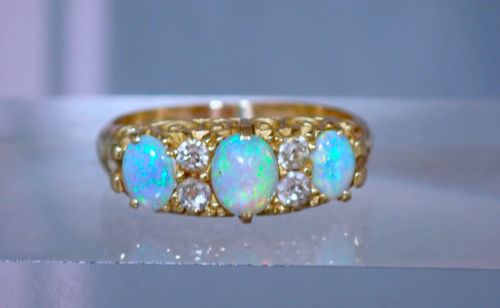
Opals contain natural water content and require gentle handling, meaning they should be kept away from harsh chemicals, ultrasonic cleaners and extreme temperature shifts.
Removing the ring before washing hands or engaging in heavy tasks protects the softer stone from accidental knocks.
Are old cut diamonds different from modern stones?
Old cut diamonds are shaped by hand rather than by automated laser precision, resulting in smaller tables, open culets and deeper pavilions.
This historical cutting style produces a softer, more intimate sparkle that performs exceptionally well under candle or low light.
Can I wear a trilogy ring every day?
Many people wear these rings daily, provided the setting is secure and the gold shank retains sufficient thickness after decades of use.
Visiting a jeweller periodically to check the claw integrity ensures the stones remain firmly anchored during regular wear.