



Edwardian Gold Curb Bracelet
An Edwardian gold curb bracelet brings unmistakable wrist presence, combining the tactile weight of interlocking links with period fastenings.
Edwardian Gold Curb Bracelet
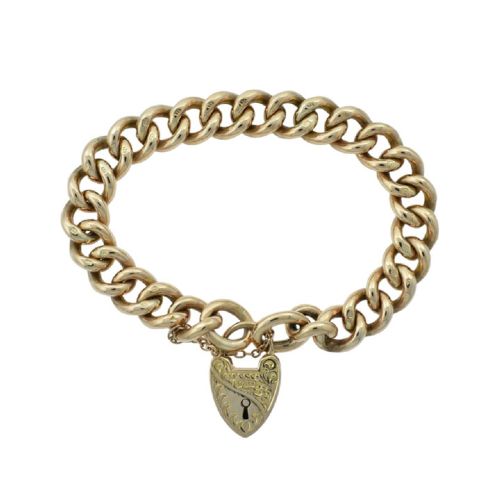
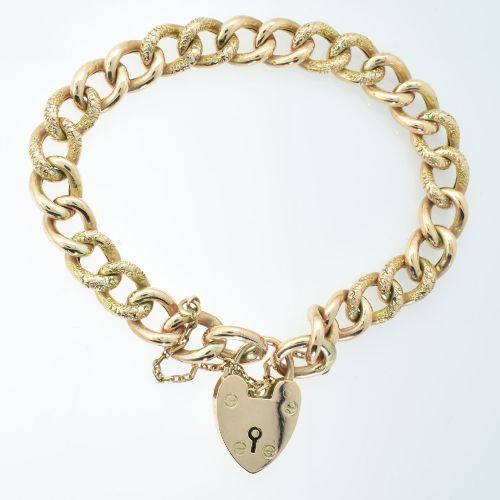
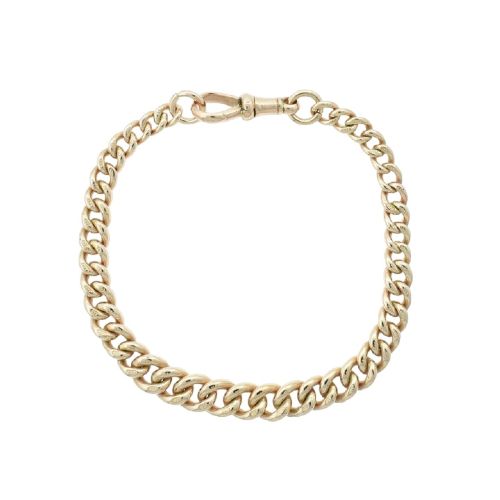
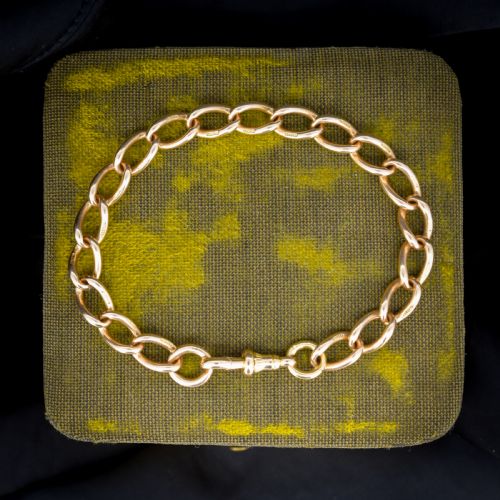
An edwardian gold curb bracelet is a substantial arm ornament defined by interlocking metal links that sit flat against the wrist. These pieces stem primarily from the Edwardian era and Victorian periods, carrying the hallmarks of late nineteenth and early twentieth-century jewellery design.
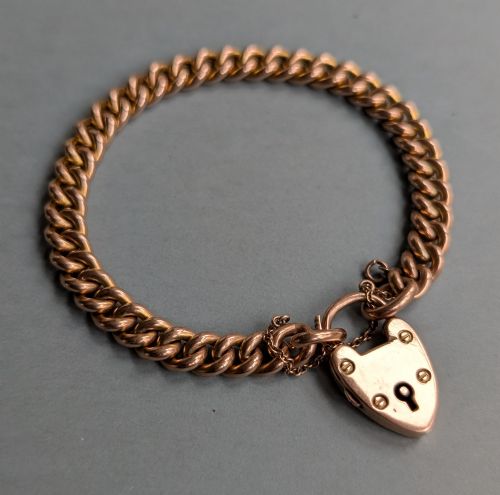
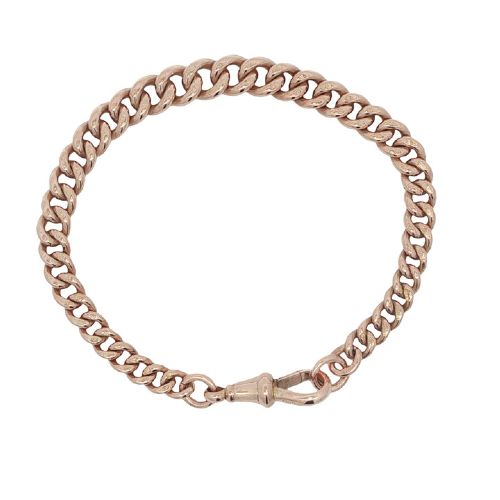
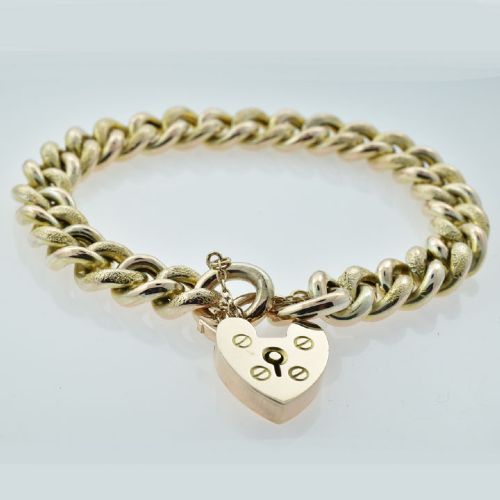
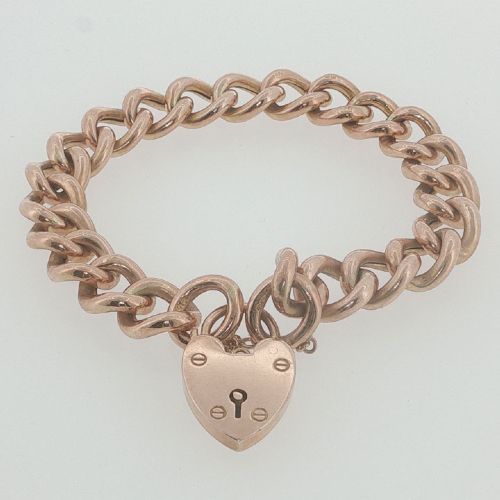
The versions most commonly met on this page are fashioned from nine-carat rose gold or yellow gold, alongside occasional fifteen-carat and eighteen-carat examples. Many incorporate distinct fastenings such as dog clips, heart padlocks, or concealed clasps, reflecting the utilitarian origins of watch chains adapted for personal adornment.
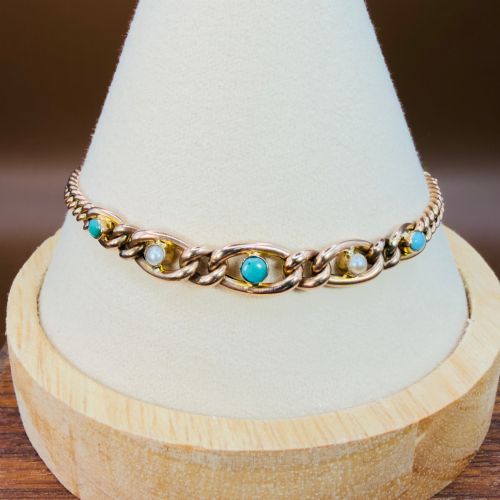
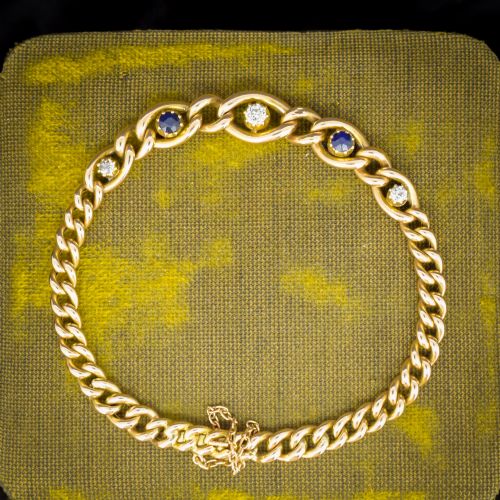
Certain examples feature decorative embellishments including half-engraved patterns, seed pearls, turquoise stones, or central rock crystal and diamond charms. Lengths typically range around seven to eight inches, providing a secure and comfortable fit for daily wear.
How they were made
The foundational structure of an edwardian gold curb bracelet relies on hollow or solid gold links soldered together to form a flexible chain. Goldsmiths utilised varying purities of gold, notably nine-carat rose gold, nine-carat yellow gold, fifteen-carat gold, and eighteen-carat yellow gold.
Surface decoration often involved hand engraving, where artisans etched floral or geometric motifs onto the upper faces of alternating links. Gemstones such as turquoise and seed pearls were subsequently flush-set or mounted in claw settings to accent padlocks and central links.
Edwardian Gold Curb Bracelet Retail Price Guide 2026
Typical asking prices for edwardian gold curb bracelet among the pieces listed under this phrase on Sellingantiques today, from the lower quarter to the upper quarter. They describe what is for sale here now, not the wider market.
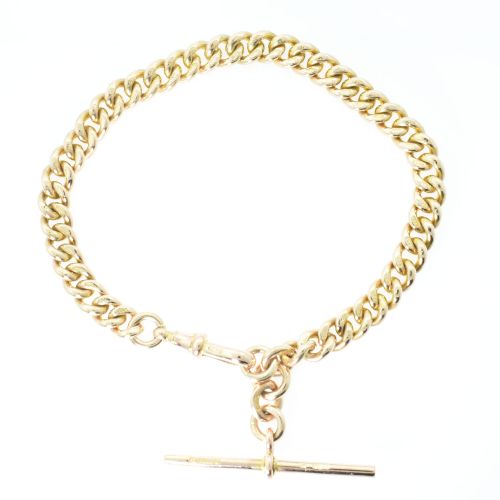
Some bracelets still wear their watch chain ancestry proudly, complete with functional T-bars ready to anchor waistcoats that vanished a century ago.
What varies in quality
The standard of an edwardian gold curb bracelet depends heavily on the gauge of the gold and the integrity of the link construction. Heavier variants maintain structural rigidity and resist denting far better than lighter, hollow-formed alternatives.
Clasp functionality and originality dictate much of the distinction across the range, with secure dog clips and stamped padlocks providing reliable fastening. The crispness of hand engraving on half-engraved links also marks the division between standard production and superior artisan output.
The Edwardian Gold Curb Bracelet Glossary
- Curb link
- A type of chain link that has been twisted and flattened so that it lies uniform and smooth against the skin. This style provides the primary structural framework for the bracelet.
- Dog clip
- A spring-loaded swivel fastening commonly utilised on watch chains and heavy bracelets for secure attachment. It allows the clasp to rotate freely without twisting the chain.
- T-bar
- A transverse metal bar attached to a short length of chain, originally designed to slip through a waistcoat buttonhole. In bracelet conversions, it remains as a decorative hanging element.
- Heart padlock
- A heart-shaped locking mechanism used as both a functional clasp and a decorative centrepiece on many period chains. These padlocks frequently bear hallmarks and makers' marks.
- Albert bracelet
- A heavy chain style adapted from nineteenth-century pocket watch attachments designed for the Prince Albert. These pieces often incorporate graduated links and substantial padlocks.
Edwardian Gold Curb Bracelet: Frequently Asked Questions
How do I wear an edwardian gold curb bracelet?
These bracelets are robust enough for daily wear on their own or stacked alongside other wristwear. Ensure the safety chain, if present, is fastened securely alongside the main padlock or dog clip.
Take care to remove the bracelet during heavy manual tasks to prevent undue wear on the links and clasps.
What is the difference between a dog clip and a padlock?
A dog clip uses a spring-loaded gate to hook onto a ring or loop, offering a swivel function that prevents the chain from twisting. A heart padlock operates as a spring-loaded snap clasp that fastens onto a dedicated ring.
Both were standard fastenings during the period, though padlocks often served as decorative focal points with engraved surfaces.
Are these bracelets solid or hollow gold?
The listings include both solid gold links and hollow-formed chains designed to offer substantial visual weight without excessive mass. Heavier examples generally indicate solid construction, while lighter pieces often utilise hollow tube links.
Examining the weight specifications in relation to the physical dimensions helps determine the internal structure.
How do I tell Victorian from Edwardian styles?
Victorian pieces often feature deeper yellow gold hues, elaborate hand engraving, and heavy heart padlocks with rich ornamentation. Edwardian items frequently showcase rose gold tones, lighter geometric layouts, and refined stone settings like turquoise or seed pearls.
Overlaps occur around the turn of the twentieth century, blending characteristics from both eras.