


Edwardian Gold and Opal
Edwardian gold and opal pieces combine colourful play-of-colour gemstones with warm precious metals to create distinctive period jewellery.
Edwardian Gold and Opal
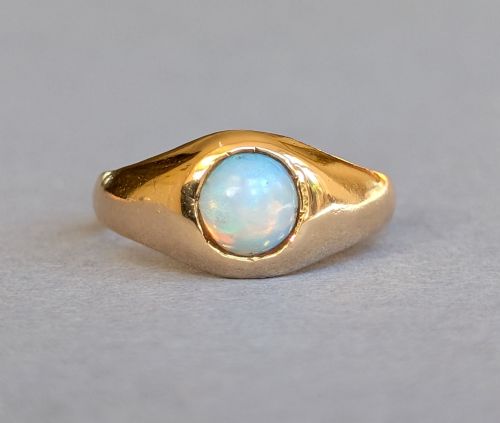
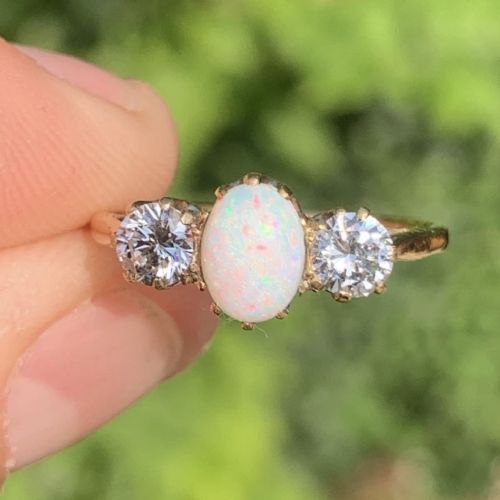
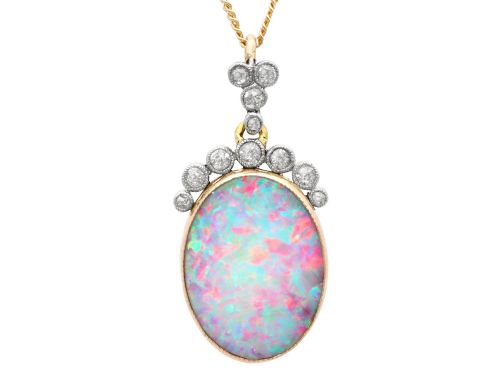
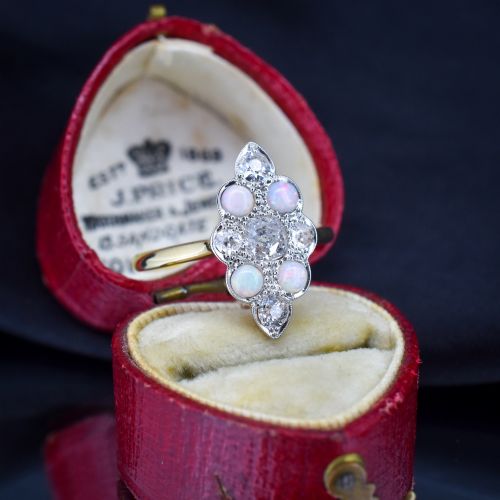
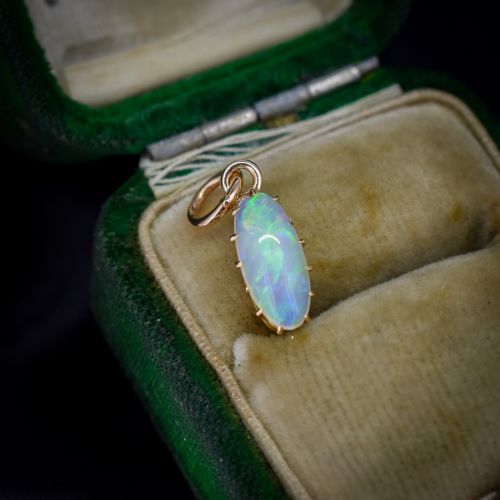
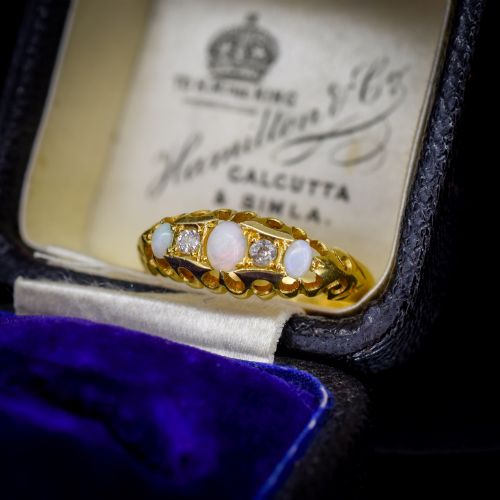
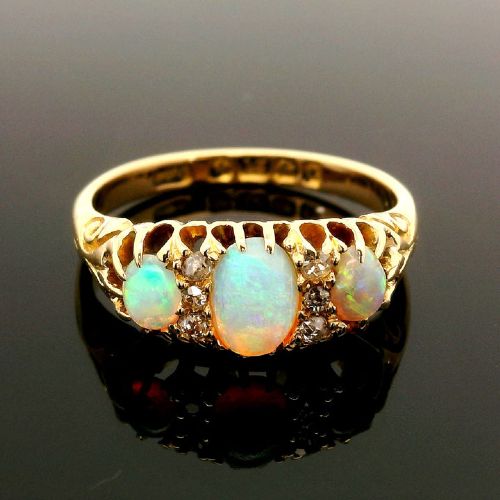
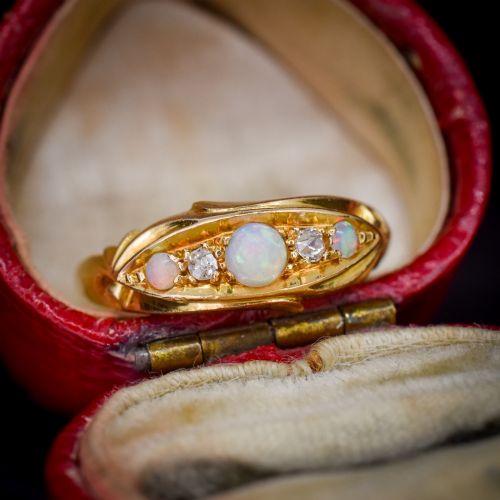
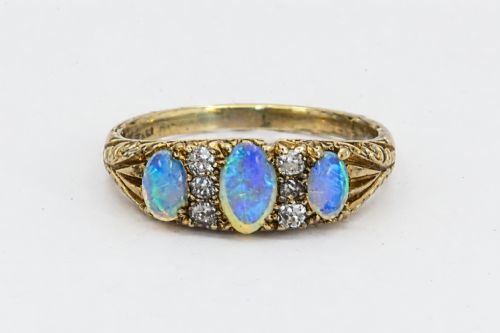
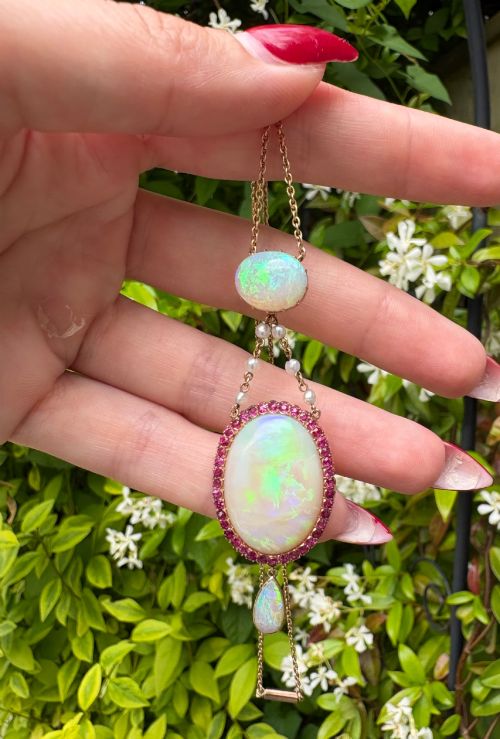
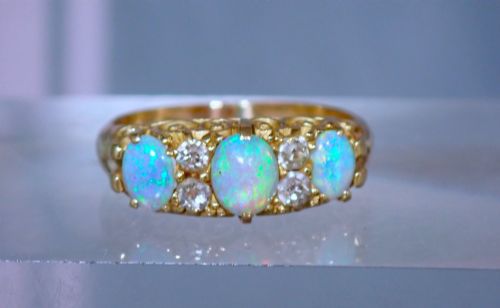
You are most likely to meet boat rings and cluster rings featuring central opals flanked by old cut diamonds, set in eighteen carat yellow gold or platinum. Pendant necklaces and bar brooches also appear frequently, often combining opals with pearls or rubies.
The objects span periods from the nineteenth century through to the nineteen fifties, reflecting enduring design themes in British and continental workshops. These pieces demonstrate how jewellers balanced delicate metalwork with vibrant gemstone displays.
Materials and construction
Goldsmiths utilised nine carat, fifteen carat and eighteen carat gold, alongside silver and platinum, to mount the gemstones securely while maintaining delicate proportions. Yellow gold and rose gold provide warm backgrounds for the stones, whereas white gold and platinum offer cooler contrast.
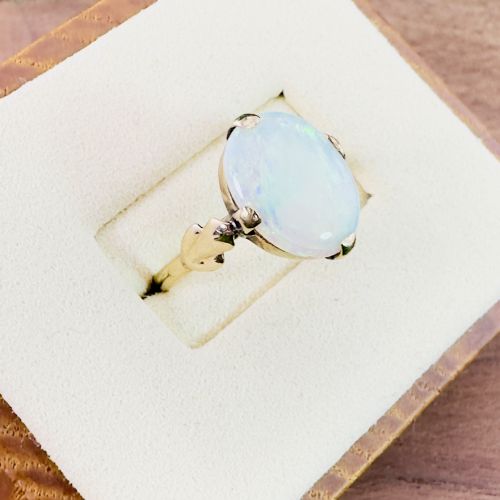
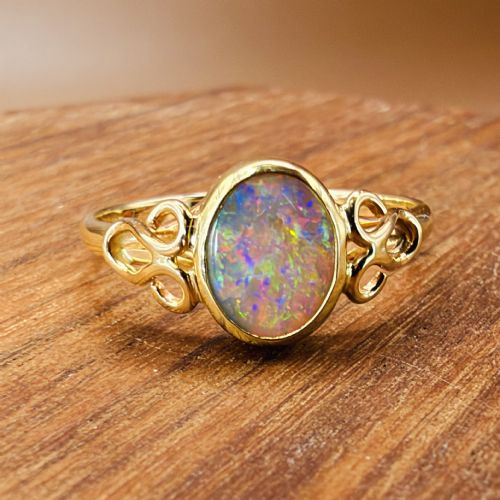
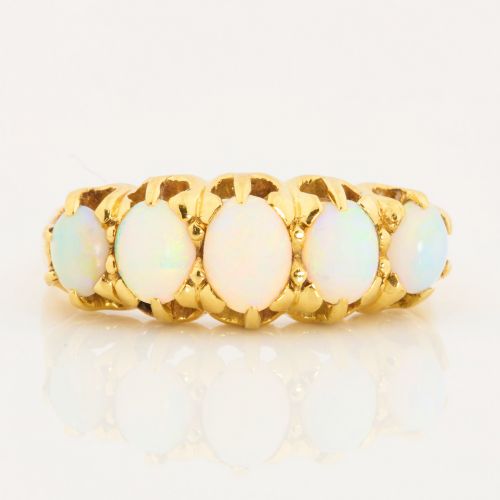
Opals are shaped into cabochons or navette forms to maximise their internal colour flashes, frequently accompanied by small old cut diamonds, seed pearls, rubies or garnets. Prong settings, bezel settings and platinum-topped gold techniques keep the stones firmly in place while minimising visible metal.
Edwardian Gold and Opal Retail Price Guide 2026
Typical asking prices for edwardian gold and opal among the pieces listed under this phrase on Sellingantiques today, from the lower quarter to the upper quarter. They describe what is for sale here now, not the wider market.
Listings feature items from the Victorian period through to the nineteen fifties, with the Edwardian era strongly represented by gold and opal rings.
Distinctions in quality
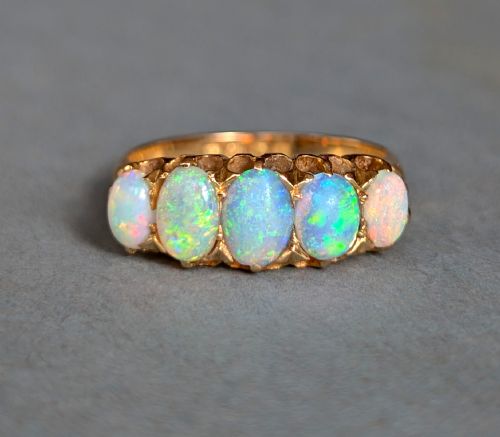
Quality rests on the optical vibrancy and structural stability of the opal, as stones displaying strong multi-coloured flashes command greater appreciation. The depth of the play-of-colour across the cabochon surface distinguishes superior specimens from muted stones.
The finesse of the surrounding metalwork and the matching of secondary stones, such as well-proportioned old cut diamonds, separate master workshops from standard production. Intricate pierced galleries and secure, clean claw settings indicate higher standards of period craftsmanship.
Knoll And Pregizer
The Edwardian Gold and Opal Glossary
- Cabochon
- A gemstone shaped and polished with a smooth, rounded surface rather than faceted. This style of cutting allows opals to display their internal play-of-colour to maximum effect.
- Navette
- A boat-shaped or pointed oval gemstone setting. This silhouette appears frequently in cluster rings from the Edwardian period.
- Boat ring
- A ring featuring a gently curved horizontal row of stones resembling the hull of a vessel. These arrangements often alternate opals with diamonds.
- Play-of-colour
- The optical phenomenon where spectral colours shift and flash across an opal as the viewing angle changes. It forms the primary aesthetic appeal of these gemstones.
Edwardian Gold and Opal: Frequently Asked Questions
What is an edwardian gold and opal ring?
An edwardian gold and opal ring is a piece of antique finger jewellery featuring natural opals set in gold, often accented with small diamonds.
These pieces typically date from the early nineteen hundreds and reflect the delicate, refined aesthetic popular during the Edwardian era.
How do I care for antique opals?
Antique opals require gentle handling because they contain natural water content and possess a softer structure than diamonds or sapphires. Avoid exposing them to harsh chemicals, ultrasonic cleaners, and sudden temperature changes.
Store them separately in lined boxes to prevent scratches from harder gemstones.
Are these opals natural?
The listings on this page feature natural solid opals rather than synthetic or imitation alternatives. Many originate from historical sources and display distinctive play-of-colour patterns unique to natural formation.
Assay marks and material tests help confirm the authenticity of the surrounding gold mounts.
How do I identify an Edwardian piece?
Edwardian jewellery is distinguished by light, airy metalwork, frequently utilising platinum-topped gold or yellow gold to create lace-like motifs. Designs often incorporate floral elements, garlands, and symmetrical geometric clusters.
Maker marks, hallmarks, and the presence of old cut diamonds further assist in confirming the period.