
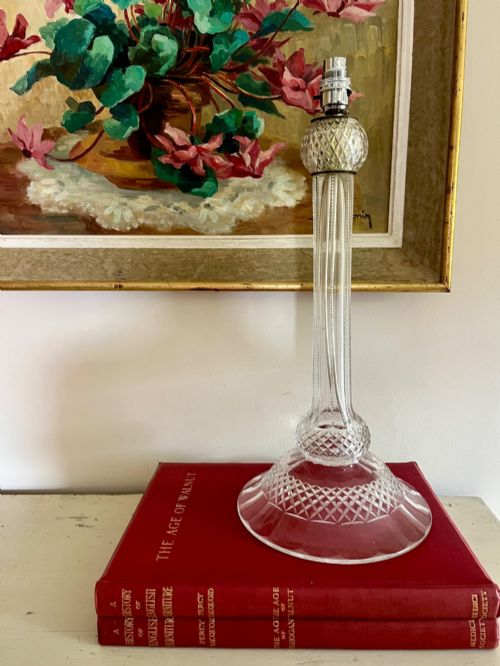


Edwardian Glass Lamp Bases
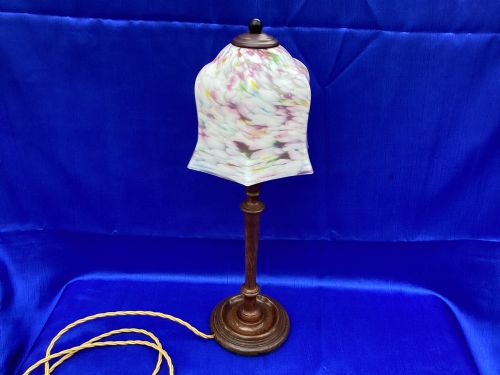
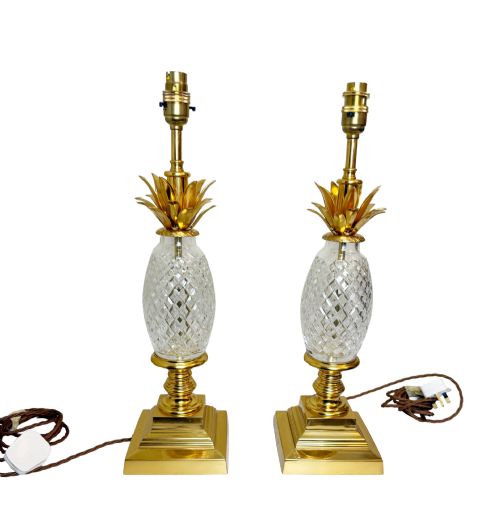
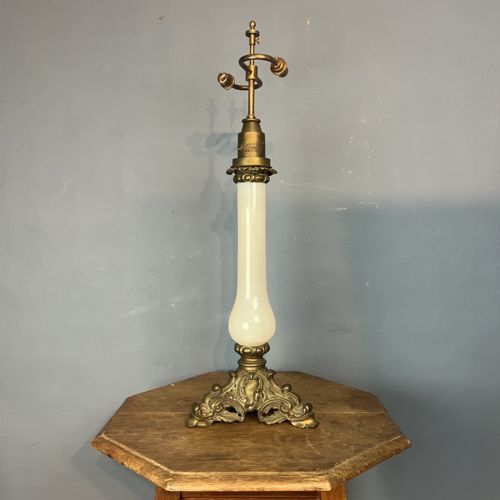
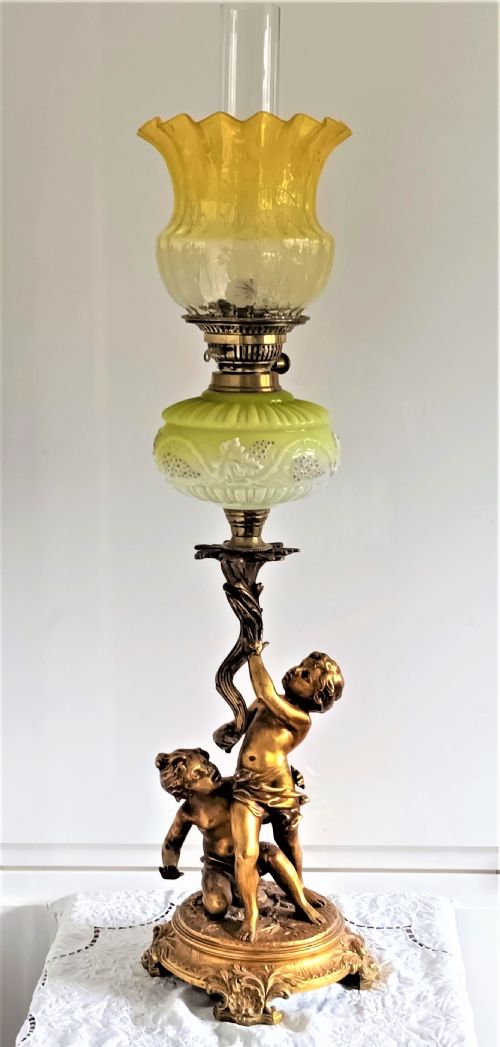
Edwardian glass lamp bases bring a warm, decorative glow to a room, pairing cut crystal and opaline with heavy brass mounts.
Edwardian Glass Lamp Bases
When searching for edwardian glass lamp bases, buyers encounter a mix of table lamps, oil lamps, and adjustable reading lights produced around the turn of the twentieth century. These pieces combine glass bodies with brass and gilt bronze fittings, reflecting the domestic lighting styles of the period.
The selections available range from simple opaline cylinders to elaborate cut crystal and gilt bronze pineapple lamps, alongside converted oil lamps that once burned paraffin. Most examples integrate brass components, often taking the form of Corinthian columns or adjustable desk stands.
Materials and construction
The construction relies heavily on combinations of glass and cast brass, utilising cut crystal, opaline, and cranberry glass alongside metal mounts. Makers shaped the glass bodies through blowing and pressing, then mounted them onto heavy brass bases to provide stability for lighting fixtures.
Many pieces incorporate gilt bronze, electroplate, or cast brass details, securing the glass elements with threaded rods or collars. Converted oil lamps retain their original burners and fonts, whilst others were manufactured specifically to house electrical fittings.
Listings feature brass, glass, cut crystal, opaline glass, cranberry glass, oak, fabric flex, and gilt bronze across the selection.
Judging quality and craftsmanship
Quality rests in the depth and crispness of the glass cutting, the weight of the brass castings, and the integrity of the original gilt finishes. Finer examples display sharp facet cutting on crystal bodies and substantial, well-finished metal mounts rather than light stamped brass.
The distinction between standard domestic lighting and finer pieces also shows in the complexity of the brass work, such as detailed Corinthian capitals or functional adjustable mechanisms that retain smooth movement over time.
Mc Garys Patent
The Edwardian Glass Lamp Bases Glossary
- Opaline glass
- An opaque, milky-white glass often used for Victorian and Edwardian lamp bases and shades. It diffuses light softly and takes tinting well.
- Cranberry glass
- A rich pinkish-red glass created by adding gold chloride to the molten batch. It frequently appears in shades and fonts on period lamps.
- Corinthian column
- A classical architectural column style featuring an ornate capital decorated with acanthus leaves. This motif is popular in heavy brass table lamps.
- Gilt bronze
- Bronze that has been coated with a thin layer of gold or gold-coloured alloy to give a rich metallic sheen. It resists tarnishing better than raw brass.
Edwardian Glass Lamp Bases: Frequently Asked Questions
What is an edwardian glass lamp base?
These pieces are functional lighting fixtures created during the early twentieth century, combining glass reservoirs or columns with metal stands.
They range from converted oil lamps to dedicated electric table lamps featuring cut crystal or opaline components.
How do I use an antique lamp safely?
Many period lamps are designed for modern electrical wiring and standard bulbs, though older fittings should be inspected by a professional before use.
Flexible cords and plugs can be updated while retaining the original brass and glass structure of the lamp base.
Were these lamps originally electric?
A large portion of these pieces started as oil or paraffin lamps before being converted to electricity during the twentieth century.
Conversion often involved replacing the burner mechanism with a lamp holder while keeping the original glass font and metal base intact.
How do I distinguish Edwardian from Victorian lamps?
Edwardian designs tend to favour lighter neoclassical forms, such as slender Corinthian columns and clean glass cutting, alongside emerging Art Nouveau curves.
Victorian pieces often display heavier proportions, bolder brass castings, and intense colours like cranberry and opaline.