





Edwardian Glass Flacon
An edwardian glass flacon is a small glass vessel for perfume, prized for its delicate metal mounts and cut crystal bodies.
Edwardian Glass Flacon
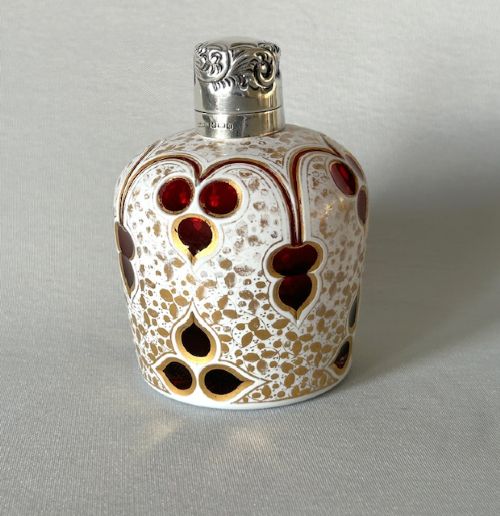
When you search for an edwardian glass flacon, you find scent bottles spanning the late nineteenth and early twentieth centuries, with Edwardian examples forming a core part of the selection. These pieces range from simple silver collared vessels to elaborate overlaid and enamelled designs.
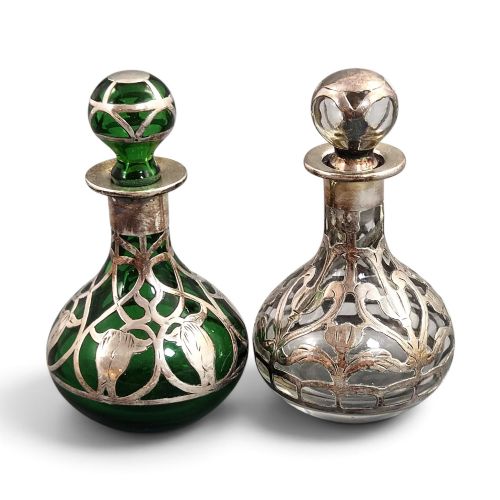
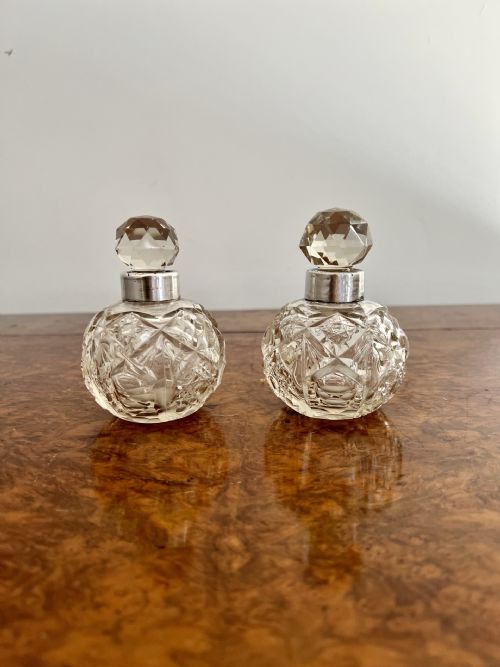
The versions you are most likely to meet on this page feature cut glass or crystal bodies fitted with silver mounts, often bearing hallmarks from Birmingham or London. Alongside these, distinct Art Nouveau and Art Deco forms appear, reflecting the stylistic shifts of the period.
Materials and Manufacture
Makers shaped the bodies from cut glass, lead crystal, and coloured glass such as ruby and cranberry, often applying overlay techniques or gold leaf for decorative depth. Bohemian and English workshops utilised these glass-working methods to create heavy, faceted surfaces.
Silversmiths then fitted the glass vessels with collars, caps, and intricate sterling silver overlays or guilloche enamel work. Birmingham and London assay offices recorded much of this metalwork during the early twentieth century.
Edwardian Glass Flacon Retail Price Guide 2026
Typical asking prices for edwardian glass flacon among the pieces listed under this phrase on Sellingantiques today, from the lower quarter to the upper quarter. They describe what is for sale here now, not the wider market.
Some bottles hide tiny glass stoppers deep inside their silver caps, ensuring your best lavender water stays put while travelling.
Judging Quality
Quality rests on the depth of the glass cutting and the crispness of the silver mounts. Finer pieces display sharp facets in the crystal and precise chased or pierced work on the metal collars.
The integration between glass body and metal mount distinguishes superior examples. Well-made flacons show secure, flush fittings where the silver meets the glass, alongside intact stoppers and clear hallmarks.
Gorham·Rene Lalique
The Edwardian Glass Flacon Glossary
- Flacon
- A small stoppered bottle for perfume or scent. These vessels often double as decorative dressing table items.
- Guilloche enamel
- Decorative enamel worked with precise engine-turned geometric patterns under a translucent coloured surface. This technique appears frequently on high-grade twentieth-century pieces.
- Sterling silver overlay
- Silver decoration bonded directly to the exterior of the glass body. Silversmiths pierced and chased these metal skins into intricate floral or abstract designs.
- Cut crystal
- High-clarity lead glass shaped with deep geometric facets. The cutting refracts light and gives the vessel considerable weight.
Edwardian Glass Flacon: Frequently Asked Questions
What is an edwardian glass flacon?
An edwardian glass flacon is a decorative scent bottle made primarily during the early twentieth century, combining glass bodies with precious metal mounts.
These vessels served both practical and aesthetic purposes on dressing tables, holding liquid perfumes securely beneath fitted stoppers.
How were these bottles used?
Owners filled them with liquid scents and colognes for daily personal grooming. The stopper kept the volatile perfumes from evaporating.
Many remained on dressing trays as ornamental objects rather than portable accessories.
How do I care for silver and glass?
Clean the glass body gently with warm soapy water while keeping moisture away from any inner cork or paper liners. Polish the silver mounts sparingly with a soft cloth to avoid touching the glass surface.
Store the bottles upright and handle stoppers carefully to prevent chipping the delicate glass necks.
How are periods identified?
Makers marks and silver hallmarks provide direct dates and assay locations, such as Birmingham or London stamps from the Edwardian era. Stylistic indicators like Art Nouveau curves or Art Deco geometry also point to specific decades.
Glass cutting styles and colour palettes further help separate Victorian precursors from later twentieth-century designs.