




Edwardian Gentleman Chair
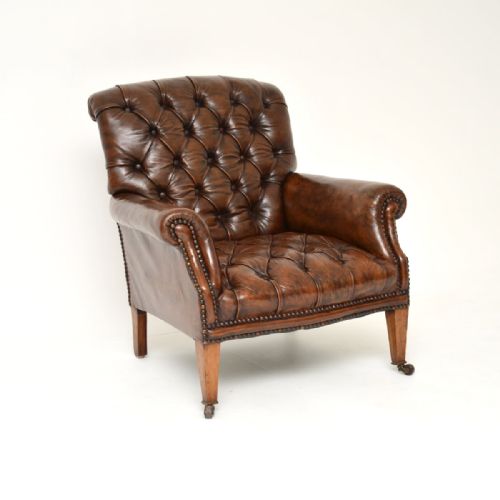
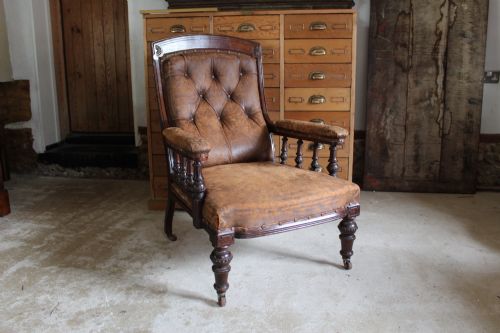
An Edwardian gentleman chair offers deep-sprung seating and robust timber framing, bringing stately comfort and period character to a traditional study or fireside.
Edwardian Gentleman Chair
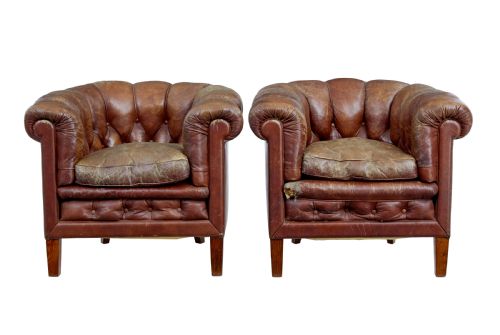
An edwardian gentleman chair is a substantial seating form typically designed with a low seat and supportive upholstered arms, frequently appearing alongside matching lady's chairs in drawing room suites. These pieces emerge across periods from the mid nineteenth century through to the early twentieth century, spanning Victorian, Edwardian, and Art Deco styles.
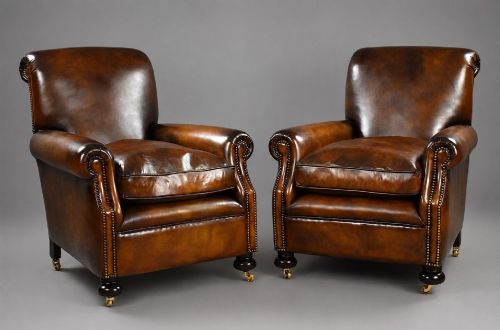
The versions most commonly met on this page include mahogany and walnut framed fireside armchairs, alongside leather club and lounge armchairs from the early twentieth century. Makers such as Morison and Co and Hindley and Sons represent the higher end of workshop production found within these listings.
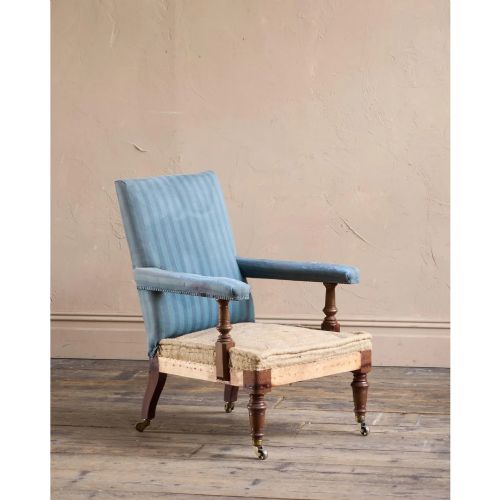
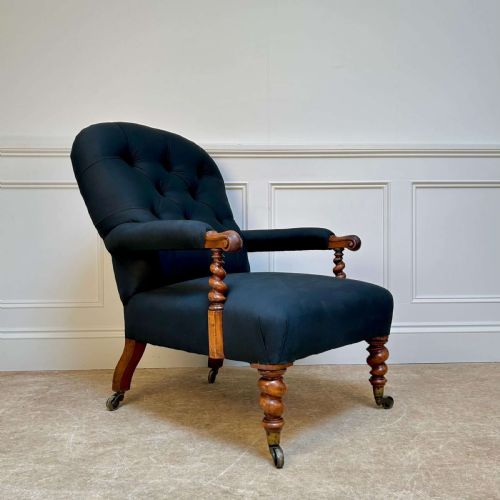
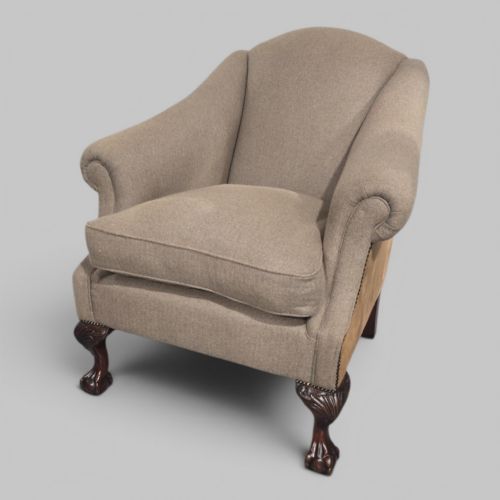
Makers utilised resilient timbers like mahogany, walnut, and oak to construct the supportive frames, often incorporating carved details, cabriole legs, or barley twist turnings. Upholstery choices vary from original leather and velvet to plain calico ready for recovering.
How They Were Made
Makers constructed the primary frames of these armchairs using dense hardwoods like mahogany, walnut, and oak, ensuring structural integrity for heavy use. Carpenters shaped components with hand tools, executing carved ornaments, turned legs, and barley twist members directly into the timber.
Upholstery techniques combined robust internal webbing and heavy spring systems with horsehair or similar stuffing to achieve a firm yet resilient seat. Coverings of leather, velvet, and fabric were then secured with brass tacks or piped finishing to complete the exterior.
Gentlemen required proper seating for contemplation, resulting in sturdy armchairs built to withstand decades of fireside newspapers and pipe smoke.
What Varies in Quality
The distinction between standard commercial seating and exceptional workshop pieces lies in the crispness of the timber carving and the calibre of the underlying frame construction. Chairs bearing the stamp or attribution of known makers like Morison and Co or Hindley and Sons demonstrate superior joinery and more ambitious proportioning.
Materials dictate the character and standing of a piece, with finely figured walnut and substantial mahogany frames commanding greater presence than standard utility timbers. Furthermore, the retention of period leather or high-grade fabric significantly influences the integrity of the surviving armchair.
Morison and Co·Hindley and Sons
The Edwardian Gentleman Chair Glossary
- Cabriole leg
- A furniture leg that curves outward and then tapers inward, mimicking an animal limb. This form appears frequently on Victorian and Edwardian mahogany and walnut frames.
- Barley twist
- A cylindrical furniture member carved into a helical spiral resembling twisted barley sugar. It is a common decorative turning seen on Victorian upholstered armchairs.
- Drawing room suite
- A matched set of seating furniture, often comprising a sofa and multiple armchairs for formal entertaining. These groups sometimes include paired ladies and gentleman chairs.
- Open armchair
- A seat featuring unpadded or partially upholstered wooden armrests, allowing for a lighter profile. These frames expose the carved mahogany or walnut structure.
- Calico
- A plain-woven cotton fabric used as a foundational upholstery layer. Antique chairs occasionally retain this base material awaiting final decorative covering.
- Valet chair
- A specialised seat designed to hold clothing and accessories, featuring tailored compartments. These forms occur in mahogany during the Edwardian period.
Edwardian Gentleman Chair: Frequently Asked Questions
What defines an edwardian gentleman chair?
An edwardian gentleman chair is typically a sturdy, upholstered seat designed with generous proportions and robust wooden framing. These pieces often feature low profiles suitable for fireside placement.
They appear in walnut and mahogany, frequently accompanied by matching ladies' chairs within drawing room suites or as standalone lounge seating.
How do I distinguish victorian from edwardian examples?
Victorian iterations generally display heavier carving, darker polished timbers, and more exuberant profiles such as balloon or cameo backs. Walnut and mahogany predominate in these mid to late nineteenth-century pieces.
Edwardian alternatives often present lighter framing, simpler lines, and occasional influences from revival styles like Chippendale. Leather club variations also emerge strongly toward the turn of the century.
Where were these chairs placed originally?
These armchairs served primarily in formal drawing rooms, libraries, and private studies as comfortable seating for male occupants. Their sturdy construction made them suitable for daily fireside use.
Pairs were often arranged near hearths or as part of larger drawing room suites alongside complementary smaller seating for female guests.
What materials should I expect to find?
Frames are constructed predominantly from hardwoods such as mahogany, walnut, and oak. These timbers provide the structural strength necessary for heavy armchair designs.
Upholstery materials range from durable leather and velvet to decorative fabrics and basic calico. Brass details and turned wooden legs frequently accent the primary materials.