




Edwardian Gemstone Link Bracelet
An edwardian gemstone link bracelet brings together period goldwork and coloured stones, offering a classic piece of early twentieth-century wristwear.
Edwardian Gemstone Link Bracelet
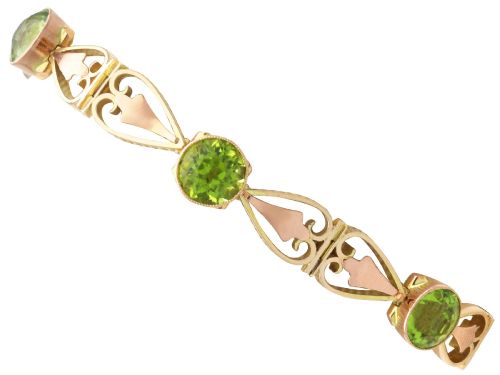
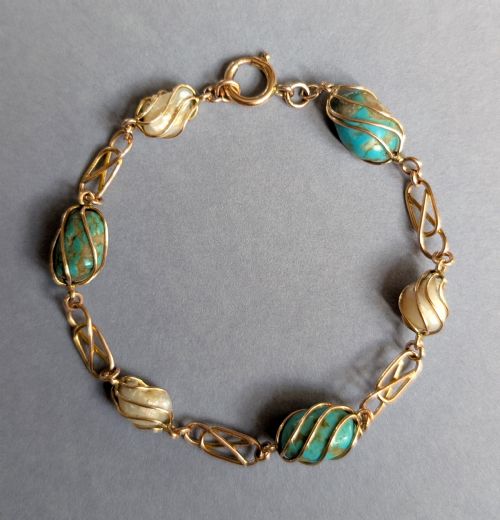
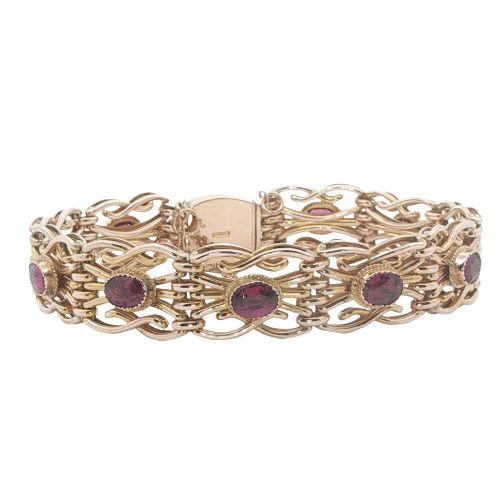
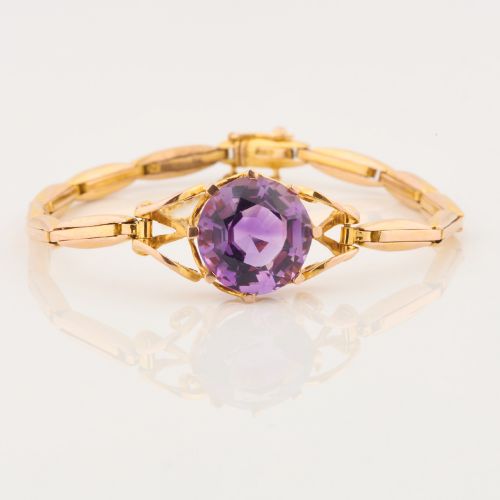
An edwardian gemstone link bracelet consists of interconnected metal segments set with various stones, originating primarily from the early decades of the twentieth century. These pieces combine gold bases with gemstones such as sapphire, amethyst, garnet, moonstone, and diamond, often arranged in repeating geometric or symbolic patterns.
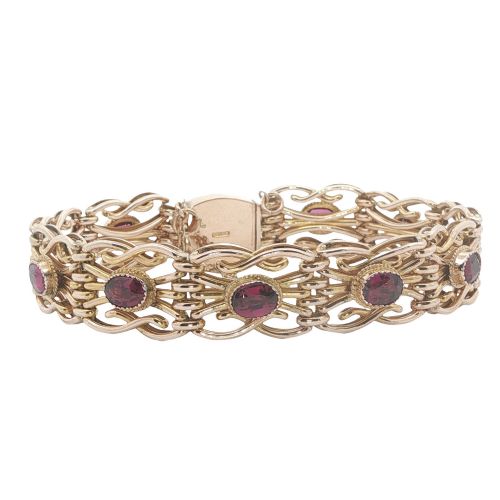
The version most commonly met on this page is the 9ct rose gold bracelet set with stones like almandine garnet, amethyst, or turquoise and pearl, reflecting the prevailing preferences of the era. Alongside these, examples in 15ct yellow gold, platinum, and higher carat gold appear, occasionally featuring graduating stones or heart padlocks.
While many pieces align with the Edwardian period and adjacent years like 1910 and 1920, the selection also includes items spanning Victorian and Art Deco styles. These variations in form demonstrate the transition of design motifs from the turn of the century into the interwar years.
Factors of Quality
The distinction between tiers of quality rests upon the selection and carat weight of the gemstones, alongside the purity of the precious metal used for the links. Heavier gold weights, such as 15ct or 18ct settings, and substantial diamond or sapphire carat totals elevate a piece above standard 9ct alternatives.
Execution and stone matching determine the refinement of the link structure, where uniform gradation, secure stone placement, and intricate metalwork like lovers knots or heart padlocks demonstrate superior workshop skill. Pieces exhibiting complex multi-stone compositions or platinum framing reflect a higher grade of period manufacture.
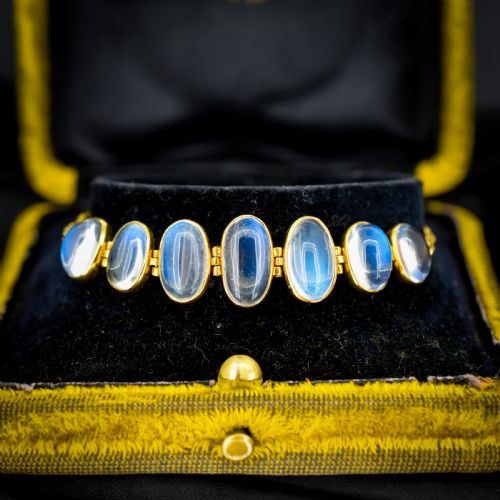
Gemstones recorded across the current pieces include almandine garnet, amethyst, sapphire, diamond, moonstone, peridot, opal, and aquamarine.
The Edwardian Gemstone Link Bracelet Glossary
- Edwardian
- Pertaining to the reign of King Edward VII from 1901 to 1910, though the style extends slightly beyond these exact dates in jewellery production. This era is known for delicate platinum and gold work.
- Almandine garnet
- A variety of garnet characterised by its deep red or brownish-red hue. It appears frequently in early twentieth-century gold cluster and link bracelets.
- Padlock clasp
- A functional fastening shaped like a miniature padlock, often secured to a safety chain on period bracelets. They frequently incorporate hallmarks and matching gemstone settings.
- Split pearl
- A small pearl cut in half or naturally hemispherical, used extensively for mounting in closed-back gold settings. These pearls contribute a soft lustre to coloured stone clusters.
- Platinum
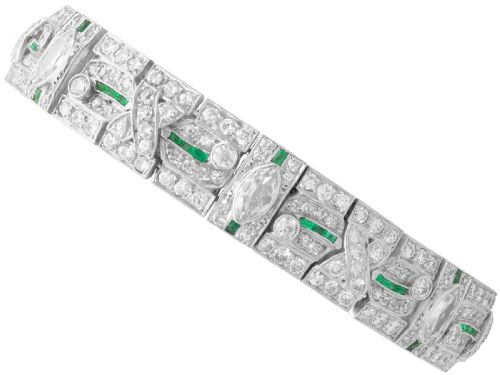
- A dense, durable white metal utilised in jewellery manufacturing during the Edwardian and Art Deco periods. Its strength allowed makers to create fine, lace-like settings for diamonds and sapphires.
Edwardian Gemstone Link Bracelet: Frequently Asked Questions
How do I wear an edwardian gemstone link bracelet daily?
These bracelets suit daily wear when treated with care, particularly regarding softer stones like pearls, opals, and moonstones which require protection from knocks. Fastening the safety chain alongside the primary clasp ensures the piece remains secure on the wrist throughout the day.
Store the bracelet flat in a dedicated jewellery box away from harder items to prevent scratching the gold links and gemstone facets. Regular inspection of the claw settings by a jeweller helps maintain the security of each stone.
What periods are represented in these bracelets?
The selection spans the Edwardian era, the late Victorian period, and extends into the 1920s and 1930s with Art Deco examples. Most pieces cluster around 1900 to 1920, capturing the aesthetic shifts of those decades.
Items dated around 1910 display classic Edwardian lightness, while those marked 1920 and 1930 often incorporate platinum framing and geometric diamond arrangements. Hallmarks and stylistic markers help distinguish between these overlapping periods.
How can I tell the gold carat of my bracelet?
Makers typically stamped gold purity marks directly onto the clasp, reverse of the links, or the loop of the padlock. Common stamps for these bracelets include 9ct, 15ct, and 18ct, indicating the proportion of pure gold in the alloy.
When a hallmark is absent, the colour and weight of the metal offer clues, though professional testing provides certainty. Rose gold hues appear frequently in Edwardian 9ct pieces, while higher carats often present a richer yellow tone.