

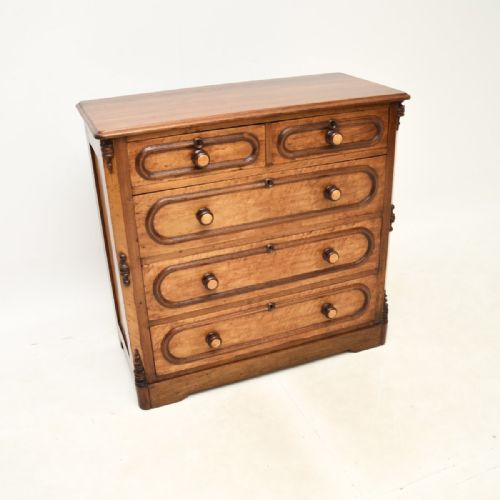

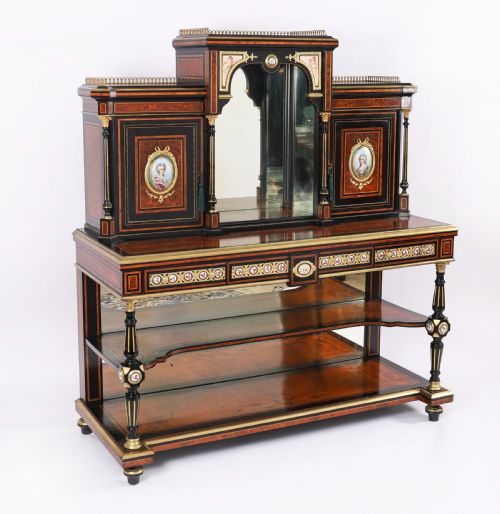


Edwardian French Bureau
An edwardian french bureau brings continental elegance and refined writing storage into a room, favoured for its delicate proportions and decorative craftsmanship.
Edwardian French Bureau
When you search for an edwardian french bureau, you encounter a selection of writing desks, bonheur du jours, and cabinets that borrow heavily from continental revival styles. The pieces on this page span the Victorian and Edwardian eras, reaching back to nineteenth-century interpretations of French design.
The dominant forms are compact writing desks and ladies writing cabinets, often featuring fitted interiors, small drawers, and slanted writing flaps or lift-up lids. Rosewood, walnut, and mahogany form the primary carcasses of these desks, frequently decorated with contrasting wood marquetry.
Revival aesthetics such as Louis XV, Louis XVI, and French Rococo shape the curves and mounts of these items. Buyers frequently choose these desks for drawing rooms and studies where a full-sized partner desk would overwhelm the floor plan.
How they were made
Cabinet makers utilised dense hardwoods like rosewood, walnut, mahogany, amboyna, and kingwood as the structural foundation for these desks. Marquetry inlay work creates pictorial or geometric patterns across the writing surfaces and cabinet doors using contrasting timbers.
Ormolu mounts, cast and gilt bronze, edge the curves, corners, and legs of the more ornate pieces, complemented by cast brass handles and key escutcheons. Leather insert panels often line the top of writing tables and desks to provide a smooth surface for correspondence.
Edwardian French Bureau Retail Price Guide 2026
Typical asking prices for edwardian french bureau among the pieces listed under this phrase on Sellingantiques today, from the lower quarter to the upper quarter. They describe what is for sale here now, not the wider market.
Listings incorporate walnut, rosewood, mahogany, kingwood, and amboyna veneers alongside brass and ormolu mounts.
What varies in quality
The refinement of the cabinet work dictates the grade of the piece, visible in the precision of the marquetry and the tightness of the timber joints. Hand-cut dovetails within the small drawers and the weight of the cast ormolu mounts signal superior workshop production.
Makers identified with specific workshops, such as Edwards & Roberts, demonstrate a higher tier of craftsmanship through balanced proportions and select veneer choices. The crispness of the gilt bronze mounts and the subtlety of the floral or geometric inlay separate standard production from exceptional furniture.
Edwards & Roberts·Robert Strachan and Co
The Edwardian French Bureau Glossary
- Bonheur du jour
- A small light lady's writing desk featuring a small cabinet or set of drawers superstructure on top of the writing surface. This French form gained immense popularity during the Victorian and Edwardian periods.
- Bureau plat
- A flat-topped freestanding writing table, usually fitted with drawers across the frieze. It is finished on all sides so it can sit in the centre of a room rather than against a wall.
- Ormolu
- Gilded bronze mounts applied to the corners, legs, and aprons of furniture for decorative effect. The technique involves applying a gold amalgam to cast bronze before firing.
- Marquetry
- Decorative veneer patterns arranged in wooden mosaics on the surface of furniture. Cabinet makers use various tinted woods to build up floral or geometric pictures.
- Tambour front
- A flexible shutter made of narrow vertical strips of wood glued to a canvas backing, allowing it to slide smoothly around a curved track to enclose a desk interior.
Edwardian French Bureau: Frequently Asked Questions
Where should I place an edwardian french bureau?
These compact desks suit reception rooms, studies, or bedrooms where floor space is limited. Their finished backs often allow them to sit away from the wall in a room.
Keep them out of direct sunlight to protect delicate rosewood and walnut veneers from fading over time.
How do I distinguish a bonheur du jour from a standard desk?
A bonheur du jour incorporates a raised cabinet superstructure complete with small drawers, pigeonholes, or a small cupboard directly above the writing platform. Standard writing desks and tables provide only a flat surface with frieze drawers beneath.
This superstructure was specifically designed for writing letters and storing stationery.
What is the difference between walnut and rosewood models?
Walnut desks tend to feature rich brown tones with intricate grain figures, often enhanced by burr walnut panels or delicate inlay. Rosewood versions display a deeper, darker reddish-brown colour with distinct black grain markings.
Both timbers were favoured for high-status revival furniture in the nineteenth and early twentieth centuries.