


Edwardian Floral Jewellery
Edwardian floral jewellery brings together delicate diamond cluster rings, seed pearl pendants and enamelled brooches from the turn of the twentieth century.
Edwardian Floral Jewellery
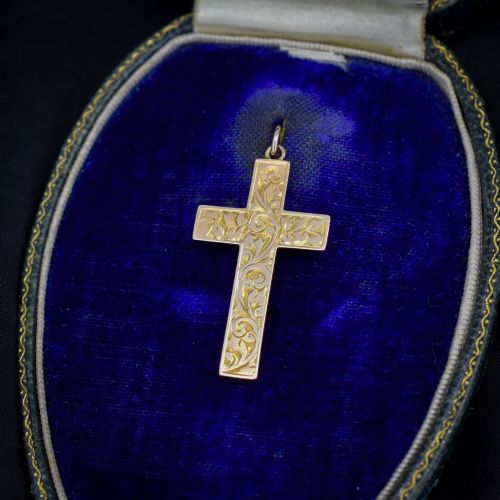
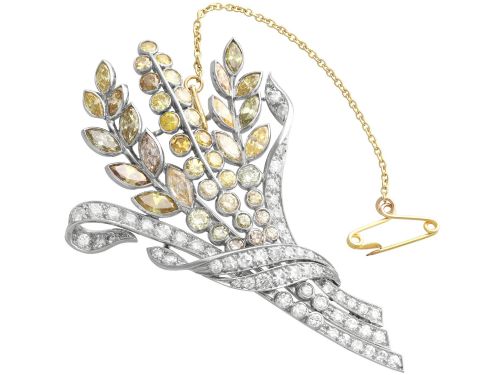
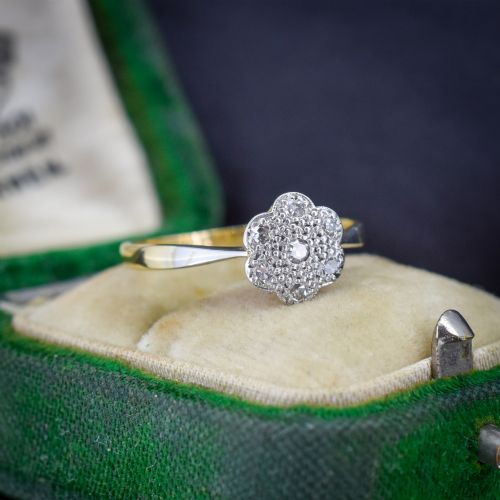
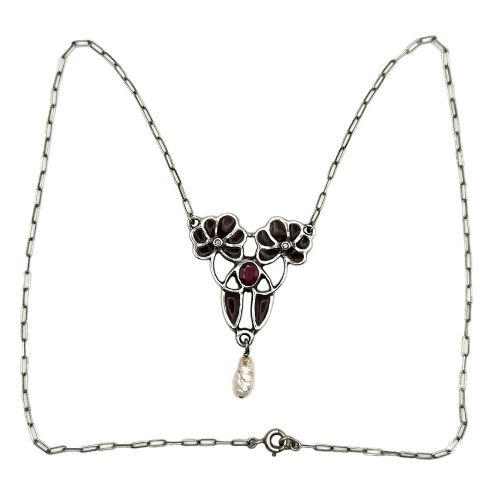
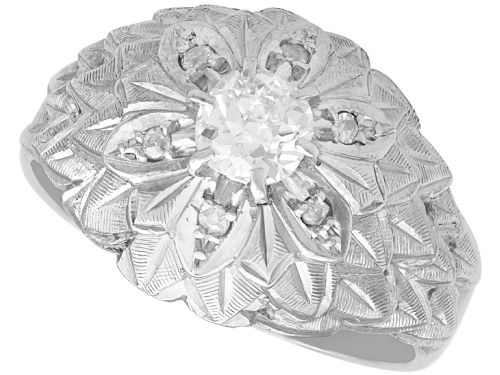
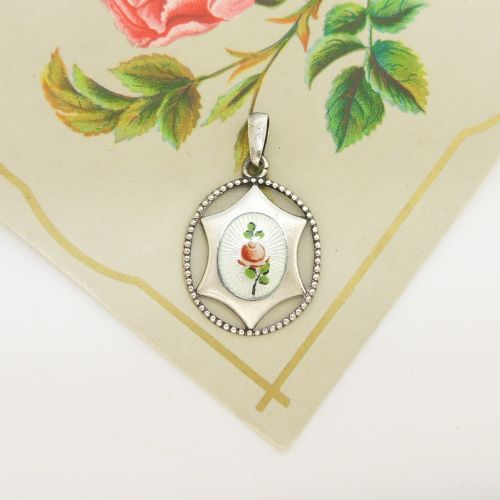
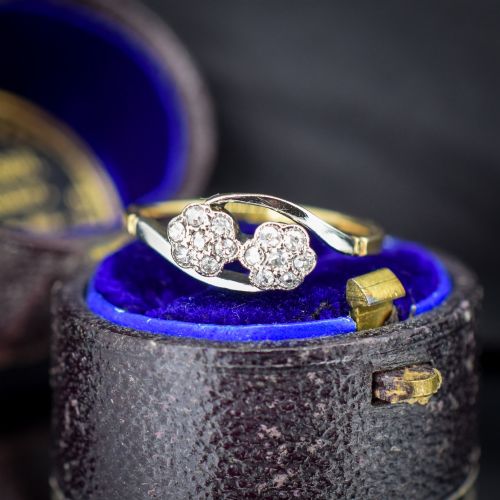
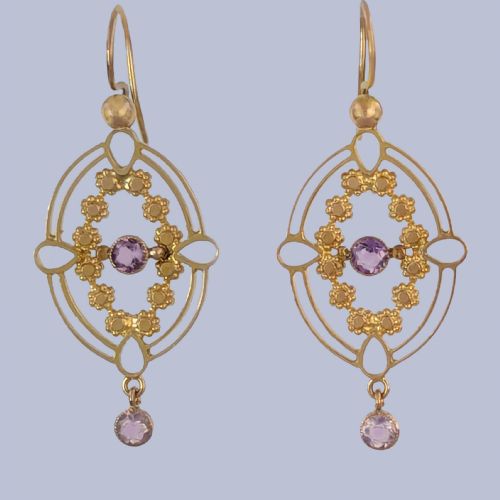
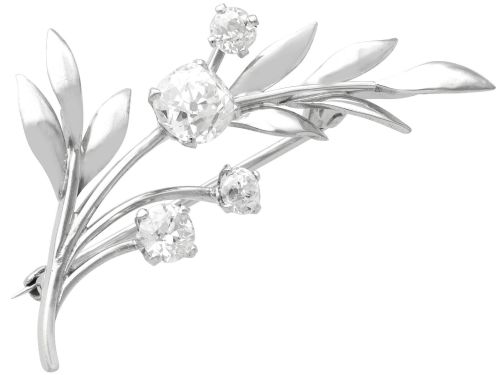
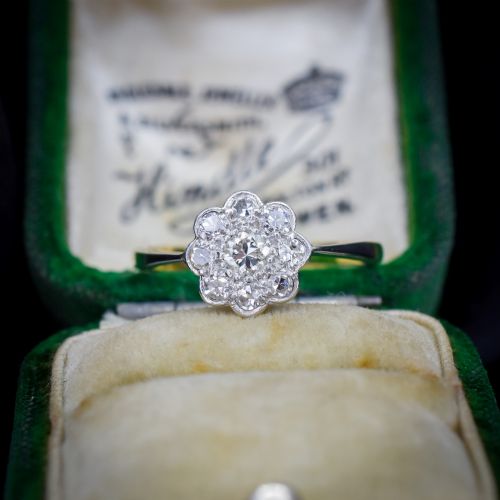
Edwardian floral jewellery encompasses rings, brooches, pendants and earrings created around the early twentieth century. Pieces frequently take the form of daisy clusters, flower sprays and openwork floral drops.
While strictly Edwardian pieces form the core of this selection, the listings extend across adjacent periods including late Victorian, Art Nouveau and the 1920s. Buyers will regularly encounter yellow gold, white gold and sterling silver settings combined with coloured stones.
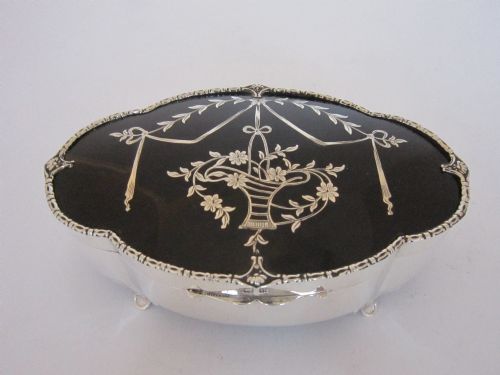
The objects range from everyday dress rings and charm pendants to substantial diamond brooches and multi-stone fringe necklaces. Each item reflects a period fascination with botanical motifs rendered in precious metals.
How they were made
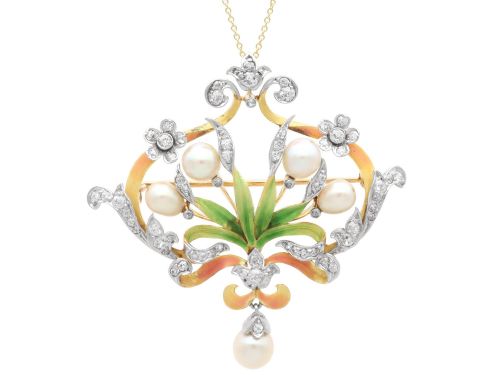
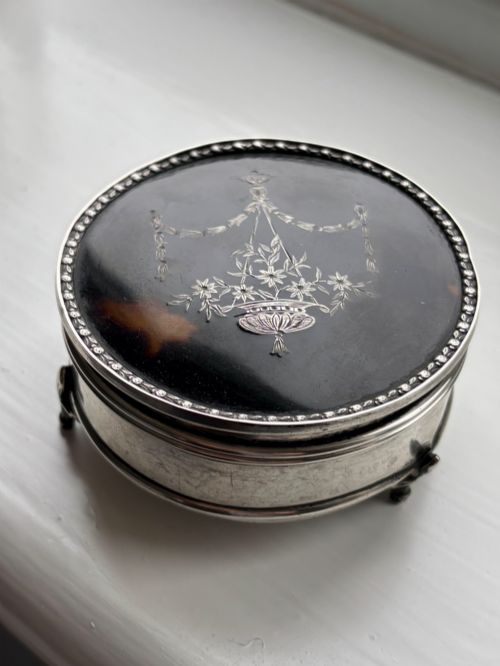
Goldsmiths and jewellers utilised 9ct and 18ct gold alongside platinum, silver and palladium to construct these delicate mountings. Gemstones such as diamonds, amethysts, turquoise, rubies and sapphires were set alongside natural saltwater pearls and seed pearls.
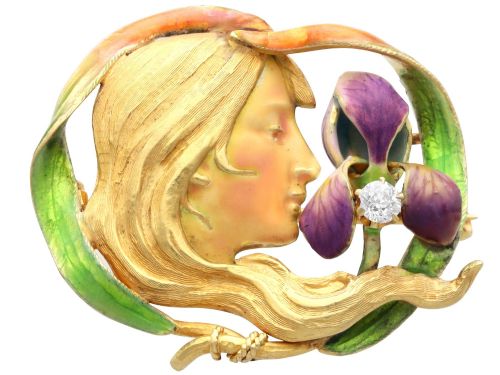
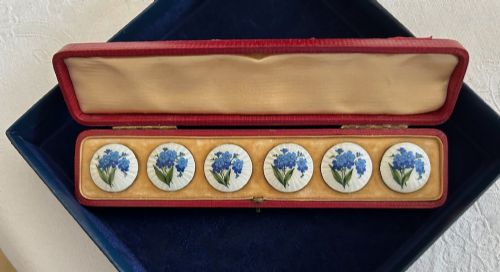
Enamel work appears frequently, ranging from opaque finishes to translucent guilloche and plique-à-jour techniques that let light pass through the colour. Metal components were often hand-carved, pierced in openwork patterns or cast as intricate flower heads and leaves.
Edwardian Floral Jewellery Retail Price Guide 2026
Typical asking prices for edwardian floral jewellery among the pieces listed under this phrase on Sellingantiques today, from the lower quarter to the upper quarter. They describe what is for sale here now, not the wider market.
Listings feature items spanning the Victorian, Edwardian, Art Nouveau, Arts and Crafts and Art Deco periods, created in gold, silver, platinum and palladium.
What varies in quality
Quality rests in the precision of the lapidary work and the delicacy of the metal wirework. Hand-pierced openwork and well-matched diamond or pearl clusters command higher regard than heavier, simpler castings.
The preservation of enamel surfaces and the integrity of original clasps, pins and settings determine the standing of an individual piece. Finer items integrate multiple contrasting materials, such as platinum-topped gold or complex multi-coloured enamel.
Charles Horner·Ollivant and Botsford
The Edwardian Floral Jewellery Glossary
- Daisy cluster
- A ring design featuring a central gemstone encircled by a ring of smaller stones, resembling the petals of a flower. This form dominates early twentieth-century ring production.
- Plique-à-jour
- An enamelling technique where enamel is applied to a cellular metal frame without a backing, creating a stained-glass effect. It is characteristic of high-grade Art Nouveau pieces.
- Guilloche
- A decorative mechanical engraving technique applied to metal beneath a translucent layer of enamel. It produces repeating geometric patterns that catch the light.
- Seed pearl
- Very small natural pearls, often drilled and strung on silk or mounted in clusters to form floral petals and leaves. They are typical of Edwardian and late Victorian jewellery.
Edwardian Floral Jewellery: Frequently Asked Questions
What defines edwardian floral jewellery?
Edwardian floral jewellery is defined by its botanical motifs, utilising diamonds, seed pearls and coloured gemstones set in yellow gold, white gold, platinum or silver. These items capture the lighter, airier aesthetic that followed heavy Victorian styles.
Common forms include daisy cluster rings, openwork pendants and delicate drop earrings produced around the turn of the twentieth century.
Are these pieces made of solid gold?
The listings include items fashioned from solid 9ct gold, 15ct gold, 18ct yellow gold and 18ct white gold. Hallmarks and metal tests indicate the specific purity standard used by the maker.
Many Edwardian pieces also combine gold with platinum or silver to provide a bright, durable mounting for gemstones.
What is plique-à-jour enamel?
Plique-à-jour is an enamelling method where the enamel is fired within open metal cells without a solid backing plate. This lets light shine directly through the coloured glass.
It appears on pieces from the Art Nouveau period, giving flowers and wings a translucent, stained-glass appearance.