






Edwardian Fishing Painting
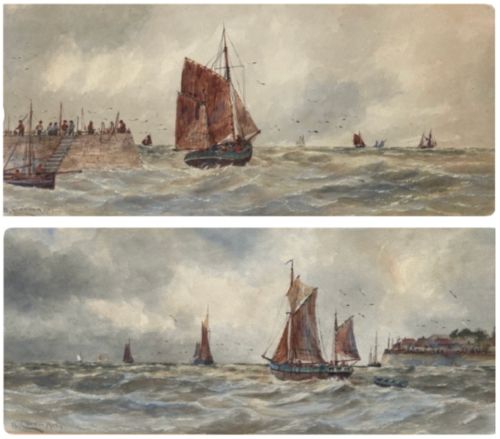
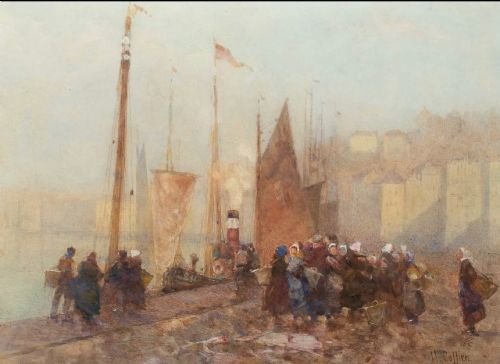
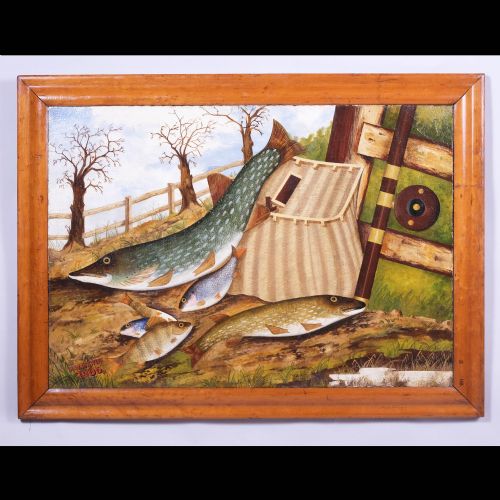
An edwardian fishing painting captures maritime life and riverbanks through the brush of artists working at the turn of the twentieth century.
Edwardian Fishing Painting
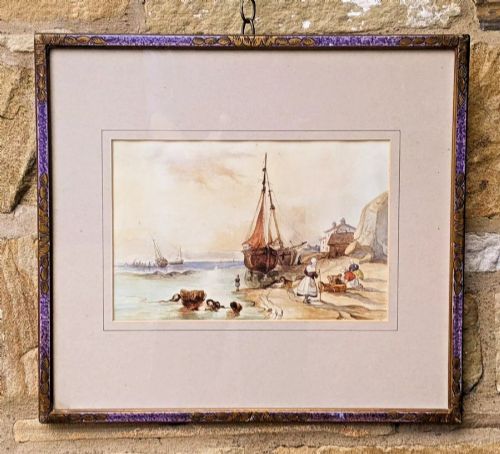
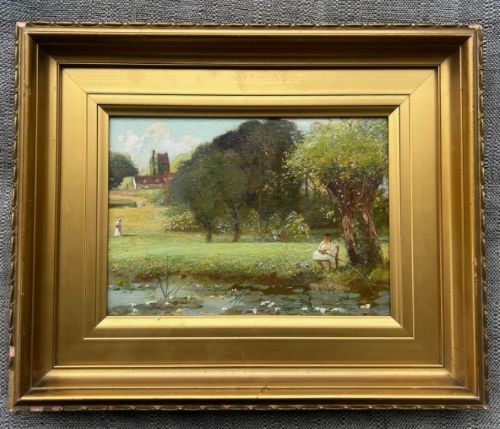
When you search for an edwardian fishing painting, you encounter framed watercolours and oil paintings depicting coastal harbours, boats, and river landscapes. The selection spans the nineteenth century through to the nineteen-thirties, with a strong representation of Edwardian and Victorian visual arts.
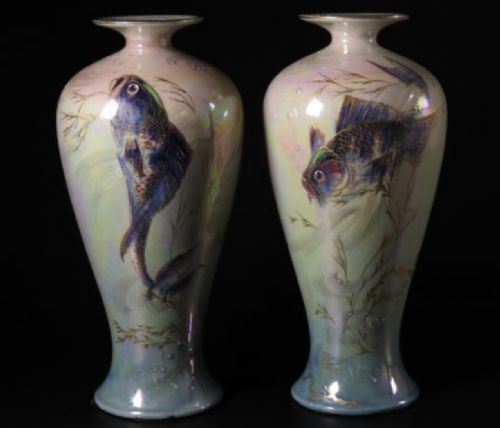
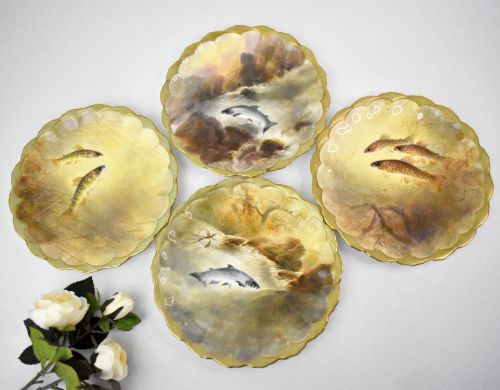
You meet watercolours on paper and oils on canvas, board, or wood panel. Alongside paintings, related ceramic pieces such as porcelain cabinet plates and lustre vases bearing fish designs appear in the records.
The subjects range from British seascapes and Cornish marine views to quiet inland streams where children fish. Staithes, Whitby, and Mousehole feature among the specific coastal locations recorded.
Materials and Techniques
Artists utilised watercolour pigment on paper or applied oil paint to canvas, wood panel, and board. Works on paper often required protective glass framing, whilst oil paintings on canvas relied on woven textile supports stretched over wooden frames.
Ceramic pieces incorporate porcelain and earthenware bodies painted with detailed fish motifs, utilising specialised enamel colours fixed by kiln firing. Lustre finishes add metallic sheens to specific pottery items.
Edwardian Fishing Painting Retail Price Guide 2026
Typical asking prices for edwardian fishing painting among the pieces listed under this phrase on Sellingantiques today, from the lower quarter to the upper quarter. They describe what is for sale here now, not the wider market.
Periods represented span from the nineteenth century through the Edwardian era into the nineteen-thirties.
Distinctions in Quality
The standard of an edwardian fishing painting depends upon the dexterity of brushwork and the artist's ability to render light, movement in water, and atmospheric conditions on the coast or river. Named artists with documented exhibition histories achieve greater recognition than anonymous works.
Condition plays a role, with watercolours retaining their original pigment vibrancy without excessive fading or foxing, and oil paintings maintaining stable paint surfaces free from significant craquelure or later restoration.
William Cannon·Hector Caffieri·Walter Slater·Joseph Birbeck Senior·Alfred George Morgan·Charles Napier Hemy·Sir David Murray·Pieter Cornelis Dommersen·Tom Clough·John Bell·Ernest F Hill·Harry Davis·Royal Worcester·Percy Brooke·William Lambert Bell·Willem E Roelofs Jr·Fred Mayor·Henry Sykes·Walter Sweet·Henry John Sylvester Stannard·Royal Doulton·Royal Crown Derby·George Marks
The Edwardian Fishing Painting Glossary
- Watercolour pigment
- A water-soluble paint medium applied to paper supports, favoured by Edwardian artists for capturing coastal light and transparency.
- Oil paint
- A slow-drying paint made with pigments suspended in drying oils, typically applied to canvas, board, or wood panel.
- Marine painting
- Artwork depicting ships, shipping, harbours, and coastal views.
- Cabinet plate
- A decorative porcelain plate intended for display on a wall or in a cabinet rather than for table service.
- Lustre
- A type of pottery ceramic glaze that produces a metallic or iridescence sheen.
Edwardian Fishing Painting: Frequently Asked Questions
What subjects do these paintings show?
The works depict coastal scenes, harbour docks, fishing boats at sea, and river landscapes with figures fishing. Locations such as Whitby, Staithes, and Mousehole appear frequently.
Many pieces focus on maritime labour, capturing the return of the fishing fleet or boats navigating choppy seas.
How should I frame a watercolour?
Watercolours on paper require framing behind glass with a mount that keeps the paper from touching the glazing. This prevents moisture damage and preserves the pigment.
Keep such works away from direct sunlight to avoid fading the delicate watercolours.
Are all these pieces from the Edwardian period?
Whilst the core of the selection spans the Edwardian era, the records include Victorian works, nineteenth-century pieces, and items from the nineteen-twenties and thirties.
Styles range from traditional marine painting to British Impressionism and Edwardian Realism.
What is the difference between oil and watercolour?
Watercolour uses water-soluble pigments on paper, offering a luminous and direct quality. Oil paint uses a slow-drying oil binder on canvas, wood, or board, allowing richer texture and deeper colour.
Oils are generally heavier and require a sturdy wooden frame without necessarily needing glass protection.