

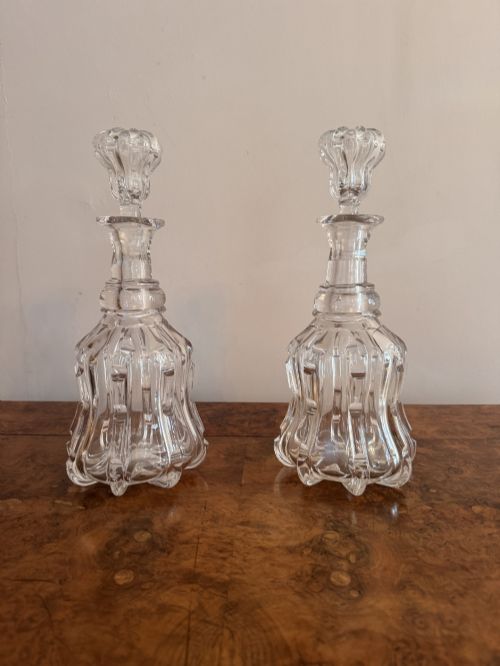
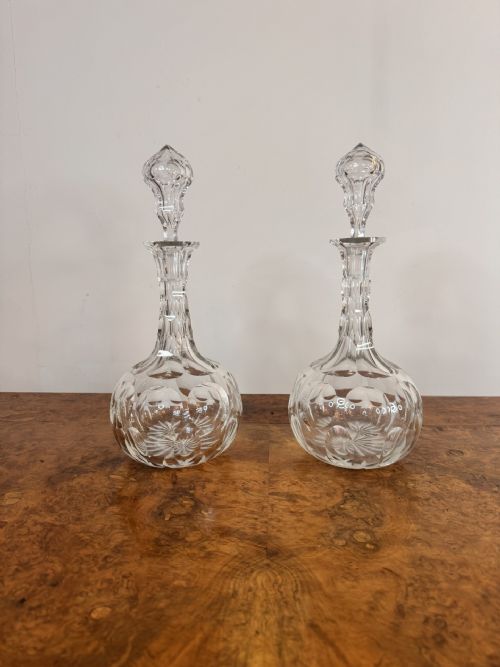
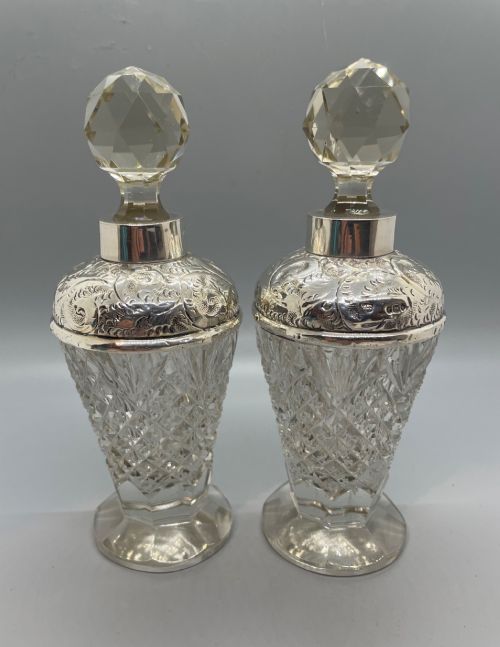


Edwardian Faceted Glass Decanter
These Edwardian faceted glass decanters catch the light wonderfully and bring genuine elegance to any sideboard.
Edwardian Faceted Glass Decanter
An Edwardian faceted glass decanter is a traditional drinks vessel designed to hold spirits, wine or whisky with considerable style. When browsing this selection, you will encounter various forms ranging from bell-shaped vessels and spirit decanters to ewers and scent bottles.
The objects span primarily the Edwardian period alongside examples from Victorian, George V and Art Deco eras. Buyers often find single pieces as well as matched pairs or trios.
Originating predominantly from English workshops, these pieces include functional barware items fitted with sterling silver collars or locking mechanisms. Each vessel displays the characteristic facets that define the style.
Quality Variations
The clarity and weight of the crystal or lead crystal distinguish finer vessels from standard production pieces. Superior examples feature crisp, deep cutting across the facets that remain sharp to the touch.
The presence of hallmarked sterling silver collars or complex locking hardware elevates the sophistication of certain decanters. Additionally, matching pairs demonstrate a higher degree of initial craftsmanship than standalone items.
Edwardian Faceted Glass Decanter Retail Price Guide 2026
Typical asking prices for edwardian faceted glass decanter among the pieces listed under this phrase on Sellingantiques today, from the lower quarter to the upper quarter. They describe what is for sale here now, not the wider market.
The listings on this site feature glass, cut crystal and lead crystal materials combined with sterling silver mounts across the Edwardian, Victorian and Art Deco periods.
Hukin and Heath
The Edwardian Faceted Glass Decanter Glossary
- Faceted glass
- Glass shaped with multiple flat surfaces or planes that reflect light from various angles. This technique was standard for enhancing the visual brilliance of drinks vessels.
- Lead crystal
- Glass containing metallic oxide that increases the weight, refractive index and overall brilliance of the material. It allows for deeper and sharper cutting than standard glass.
- Sterling silver collar
- A band of silver fitted around the neck of a decanter, often bearing hallmarks that indicate the assay office and year of manufacture. It provided both structural reinforcement and decoration.
- Ewer
- A large jug with a wide spout and handle, historically used for water or wine. In this context, it refers to pouring vessels associated with decanter sets.
Edwardian Faceted Glass Decanter: Frequently Asked Questions
What were Edwardian decanters used for?
These vessels were utilised in homes for serving spirits, whisky and wine during social gatherings and formal dinners. They kept beverages ready on sideboards or trays for guests.
Their decorative faceted surfaces also served to display the wealth and taste of the household through sparkling crystal tableware.
How do I clean an old decanter?
Cleaning requires warm water and mild detergent, avoiding harsh abrasives that might scratch the delicate glass or dull the facets. Bottle brushes with soft bristles help reach interior residue safely.
Silver collars need careful polishing with a suitable cloth to prevent tarnishing while protecting the adjacent glass.
Can I use these decanters daily?
Many buyers incorporate these sturdy lead crystal and glass vessels into everyday dining or barware setups. Their solid construction makes them fully functional for holding modern spirits.
Care must be taken when handling pieces with delicate sterling silver mounts or historical stoppers during regular use.
How are Edwardian pieces dated?
Dating relies heavily on hallmarks stamped onto silver collars, which reveal the exact year and location of assay. Stylistic details such as the depth of the cut glass facets also indicate the manufacturing era.
Comparing the overall shape and proportions against documented pieces helps confirm whether an item belongs to the Edwardian period.