

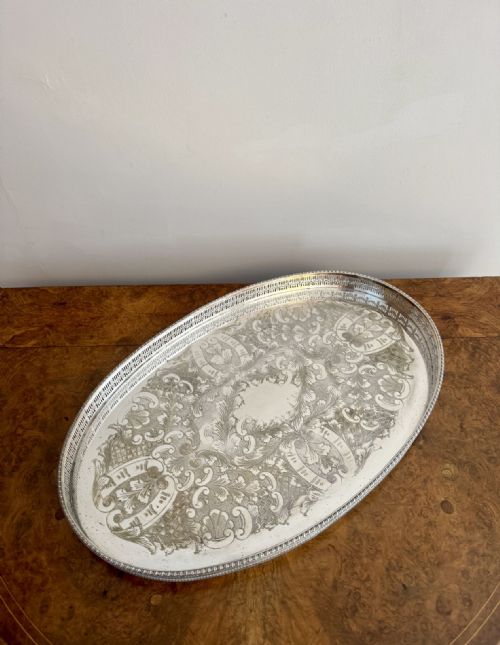


Edwardian Engraved Gallery Tray
An edwardian engraved gallery tray brings practical elegance to a room, offering a raised border to keep decanters and tea services secure.
Edwardian Engraved Gallery Tray
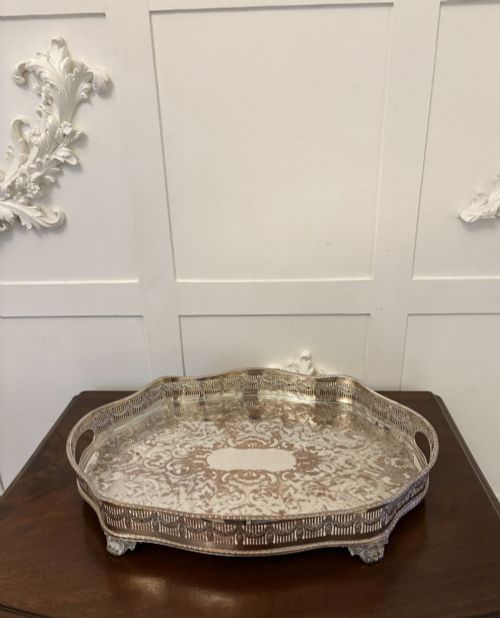
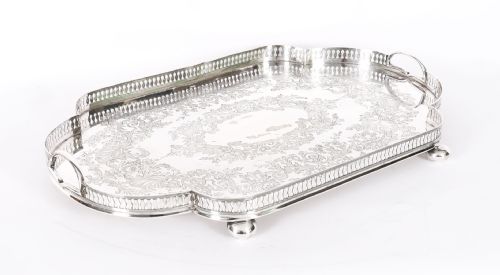
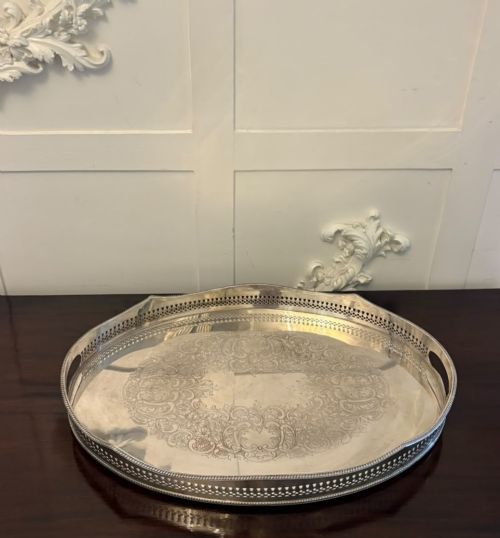
An edwardian engraved gallery tray is primarily a serving piece designed for tea, drinks, or decanter sets. These items bring functional surface area and a defined perimeter to a table or sideboard.
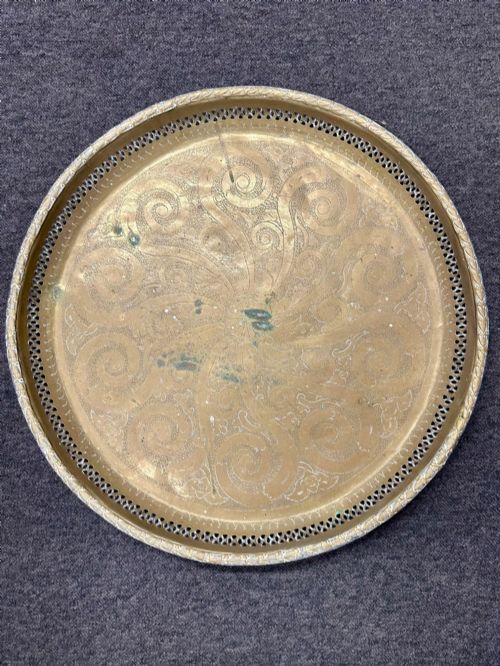
The pieces appearing on this page belong mainly to the Edwardian period and the late nineteenth century. Makers applied detailed surface decoration alongside pierced or solid raised borders.
Forms range from smaller tea serving trays to pieces of large proportions and decanter drinks sets. Buyers encounter formats intended for hospitality and display within domestic interiors.
How they were made
Makers utilised silver plate and electroplated nickel silver over base metal or copper foundations. This technique provided the appearance and lustre of solid silver at a more accessible cost for the Edwardian household.
Surface decoration relies on hand or machine engraving to create scrolling foliage, geometric motifs, and central medallions. Pierced galleries were worked into the raised edges to form openwork patterns.
Edwardian Engraved Gallery Tray Retail Price Guide 2026
Typical asking prices for edwardian engraved gallery tray among the pieces listed under this phrase on Sellingantiques today, from the lower quarter to the upper quarter. They describe what is for sale here now, not the wider market.
Listings span the nineteenth century and the Edwardian era, incorporating silver plate, electroplated nickel silver, copper, and cut glass.
What varies in quality
Quality rests upon the crispness of the engraving and the weight of the metal used in the foundation and the gallery. Finer examples display deep, sharp chasing that remains clear across the entire surface.
The construction of the raised gallery and handles indicates the standard of manufacture. Well-made pieces demonstrate secure joints and substantial proportions that withstand regular use.
James Deakin·Mappin And Webb
The Edwardian Engraved Gallery Tray Glossary
- Gallery tray
- A serving tray featuring a raised metal border or railing around its edge. This prevents glasses, bottles, and tea wares from sliding off during transit.
- Electroplated nickel silver
- A method of depositing a layer of silver onto a nickel silver base metal via electrical current. This process became the standard industrial technique for durable tableware.
- Pierced gallery
- A raised border cut through with decorative openwork patterns. This design lightens the visual weight of the metal edge while retaining its function.
- Base metal
- The underlying alloy, such as copper or brass, used as a foundation for silver plating. Over decades of polishing, this metal may show subtly through the worn silver layer.
Edwardian Engraved Gallery Tray: Frequently Asked Questions
What is an edwardian engraved gallery tray used for?
These trays served primarily for carrying tea services, serving drinks, or organising decanter sets upon a sideboard.
Their raised borders kept glassware and china secure when moved from room to room by domestic staff.
How do I clean a silver plated gallery tray?
Clean the surface gently using a soft cloth and a specialised silver polish formulated for plated items.
Avoid harsh scrubbing or abrasive cleaners that might wear away the thin silver layer over the base metal.
What materials are these trays made from?
Most examples utilise silver plate, electroplated nickel silver, or copper across the foundation and gallery.
Manufacturers applied a thin layer of silver over a durable base metal to achieve a bright finish.
How can I tell if a tray is Edwardian?
Edwardian pieces typically date from around 1901 to 1910, reflecting the aesthetic tastes of the reign of Edward VII.
They often combine late Victorian manufacturing techniques with lighter, more refined engraved patterns.