



Edwardian Enamel Pin
An Edwardian enamel pin brings delicate colour and period craftsmanship to a lapel, offering wearable miniature art from the early twentieth century.
Edwardian Enamel Pin
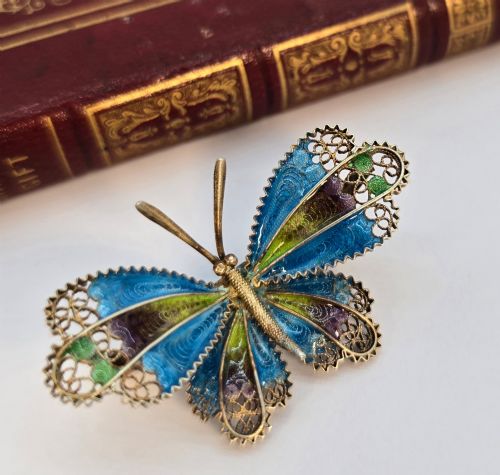
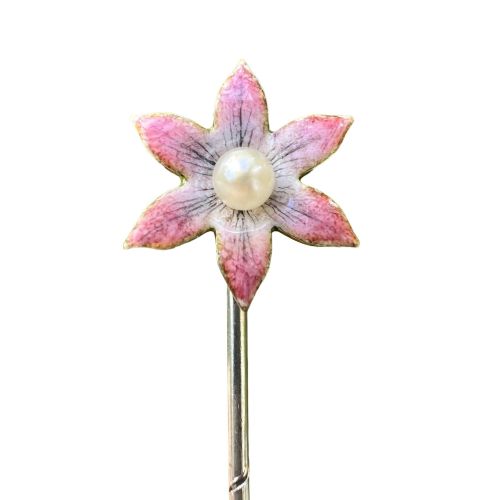
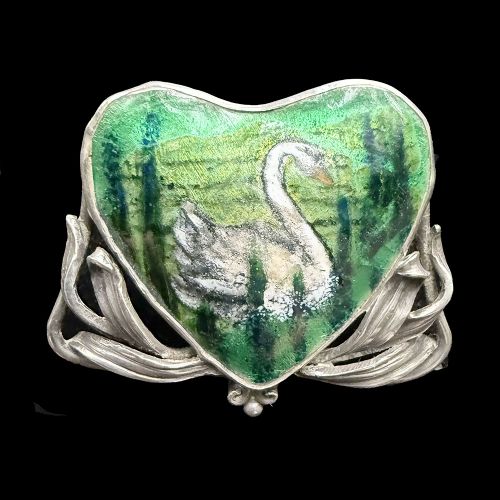
Motive work spans naturalistic subjects like butterflies, swans, ducks, flowers, pansies, and cockerels alongside symbolic hearts, bows, and religious icons. Silver, silver gilt, and yellow gold in 14ct and 15ct provide the primary metal foundations for these varied forms.
Judging quality in enamel jewellery
Quality rests upon the precision of the enamel application and the complexity of the underlying metalwork. Finer examples display smooth, evenly fired vitreous enamel free of damage, integrated securely with hand-set stones like diamonds and natural pearls.
Design ambition separates standard production from superior pieces, particularly where plique-a-jour lets light through translucent cells or where makers utilise multiple coloured enamels to render naturalistic subjects.
Design styles span the Edwardian period, Art Nouveau, Art Deco, Arts and Crafts, and the nineteenth century.
Murrle Bennet & Co
The Edwardian Enamel Pin Glossary
- Guilloche enamel
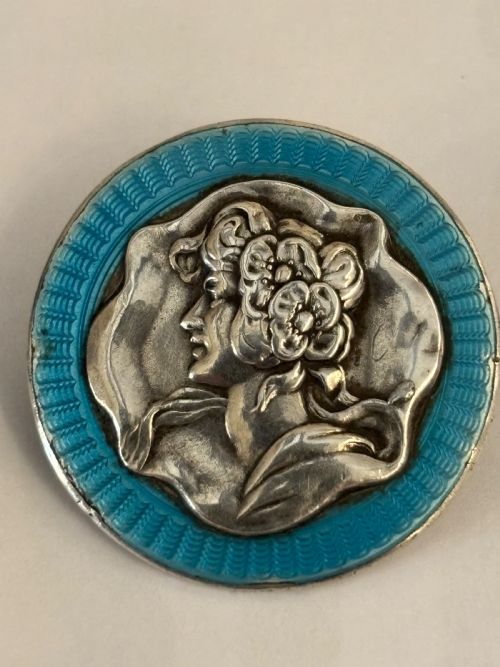
- Enamel applied over a metal surface that has been machine-engraved with a repetitive geometric pattern. This technique creates shimmering, light-reflecting depth beneath the translucent glass layer.
- Plique-a-jour
- An enamelling technique where enamel is applied within a cellular metal frame without a backing, resembling miniature stained glass. Light passes directly through the transparent or translucent material.
- Silver gilt
- Silver that has been coated with a thin layer of gold on its exterior surface. This treatment offers the warm appearance of gold while utilising a silver base.
- Bar brooch
- A slender horizontal metal rod forming the primary structure of a brooch, frequently mounted with central motifs. These pieces often incorporate safety catches or pin stems typical of early twentieth-century jewellery.
Edwardian Enamel Pin: Frequently Asked Questions
How do I wear an antique enamel pin?
These pieces function well secured to coat lapels, scarves, or heavy knitwear using their original pin stems and catches. Pairing a brooch with simple fabrics allows the coloured enamel work to stand out clearly.
Care should be taken with older pins to avoid bending the stem or striking the glass enamel against hard surfaces. Storing them in dedicated boxes protects the delicate surface details from scratching.
What materials are used in these pins?
The listings combine silver, silver gilt, yellow gold, and platinum with vitreous enamel coatings. Gemstones such as diamonds, pearls, moonstones, amethysts, and rubies frequently accent the metal designs.
Enamel types vary from opaque green and black varieties to translucent guilloche and plique-a-jour techniques. Each combination reflects the stylistic preferences of the Edwardian, Art Nouveau, and Arts and Crafts periods.
How do I date an Edwardian enamel pin?
Dating relies on stylistic markers associated with specific design movements like Art Nouveau, Arts and Crafts, and Art Deco alongside the Edwardian era. Motif choices, such as floral sprays or insects, often align with early twentieth-century aesthetics.
Metal purity marks and construction methods also help place an item within the broader span of the nineteenth and early twentieth centuries. Comparing the specific clasp and pin mechanics provides additional chronological context.
What subjects are common in these brooches?
Natural motifs dominate the selection, including butterflies, dragonflies, ducks, swans, cockerels, and pansies. Hearts, bows, and religious figures like the Madonna and Child also appear frequently.
These subjects reflect the Victorian and Edwardian fondness for symbolic jewellery and naturalistic representation. Each motif was translated into metal and enamel by period craftsmen.