



Edwardian Dressing Case
An edwardian dressing case is a fitted travelling box or table accessory designed for personal grooming and valuables, combining fine leather and silver.
Edwardian Dressing Case
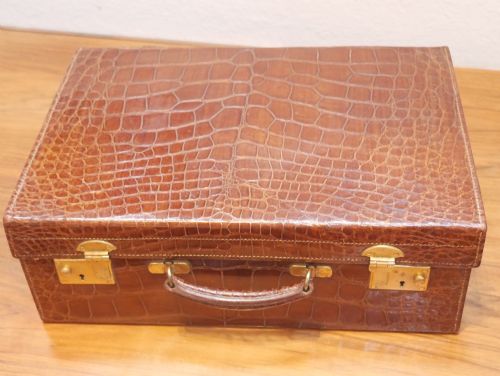
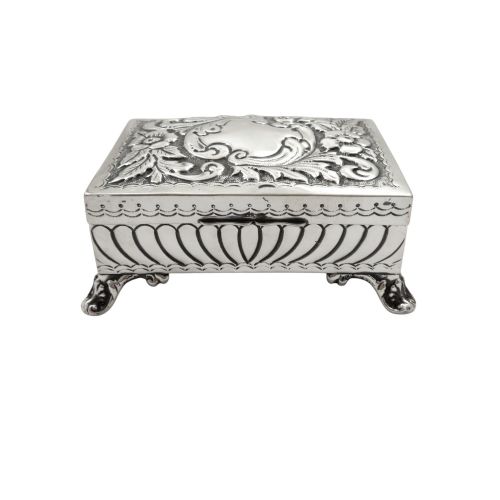
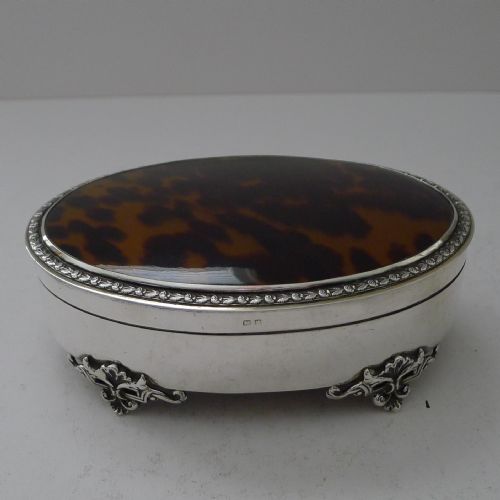
An edwardian dressing case brings together fitted travel containers, vanity sets, and desktop boxes designed to hold grooming implements, jewellery, and personal items. These pieces span the late nineteenth century through to the early twentieth century, reflecting the travel habits and dressing rituals of the period.
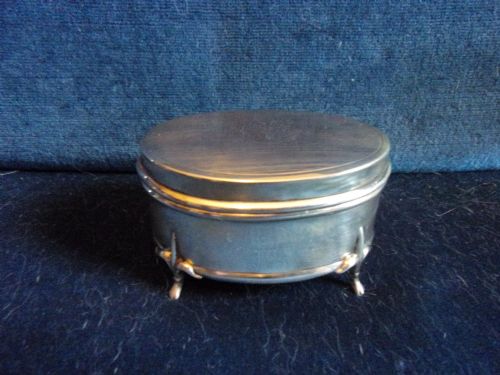
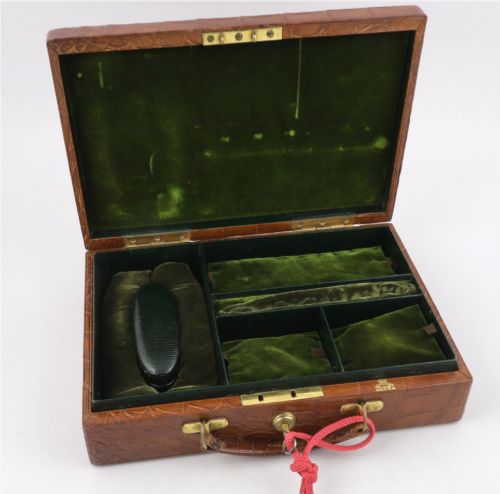
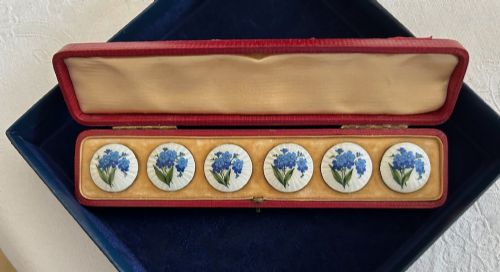
The selections available range from compact leather jewellery boxes and crocodile skin cases to larger gentleman's valet suitcases and fitted dressing table boxes. Alongside these, related small items such as silver and enamel buttons, pocket watches, and cased sets appear frequently within the category.
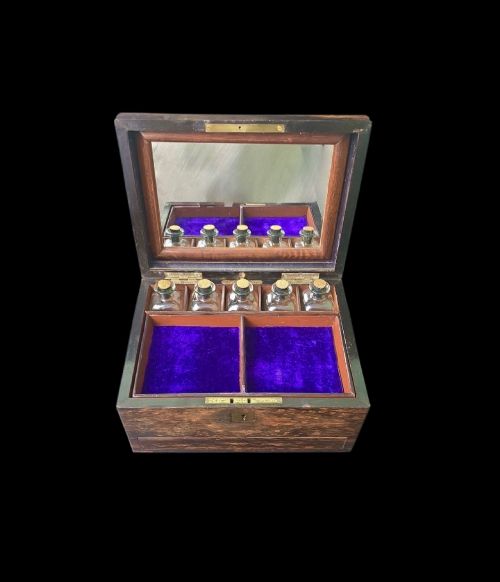
Makers such as Mappin & Webb, Harrods, J C Vickery, and James Deakin & Sons emerge in the broader records of these fitted boxes and travelling sets. Construction relies heavily on sturdy wooden carcasses or leather shells lined with velvet, housing fitted compartments for silver-mounted bottles, brushes, and instruments.
Materials and Construction
Frameworks utilise timbers such as coromandel, walnut, and satinwood, often encased in sturdy leather, crocodile skin, or leatherette for travel. These outer shells protect delicate interior compartments lined with velvet, silk, or satin designed to hold specific grooming tools.
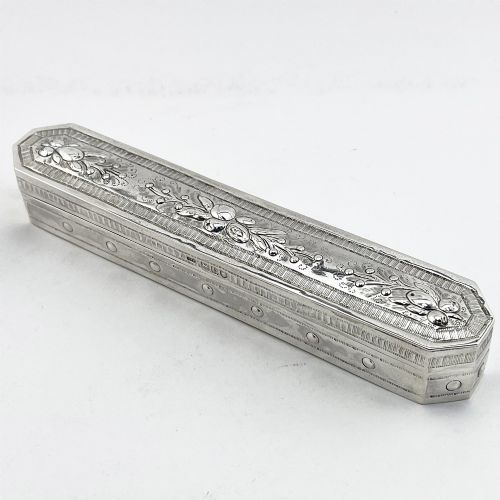
Metalwork relies on sterling silver for mounts, brushes, and container lids, frequently hallmarked for London, Chester, or Birmingham. Details incorporate tortoiseshell, enamel, and brass hardware to secure the complex folding trays and locking mechanisms.
Edwardian Dressing Case Retail Price Guide 2026
Typical asking prices for edwardian dressing case among the pieces listed under this phrase on Sellingantiques today, from the lower quarter to the upper quarter. They describe what is for sale here now, not the wider market.
Markers of Quality
Superior examples distinguish themselves through the completeness and originality of their fitted interiors, retaining matched sets of silver-topped jars, razors, and brushes. The integration of luxury skins like crocodile alongside exotic woods such as coromandel signals a higher tier of production.
Workmanship shows in the precision of the internal partitioning, the quality of the silver hallmarks, and the durability of the locking mechanisms. Pieces bearing signatures from established retailers or makers hold a distinct level of finish compared to unbranded utilitarian travel luggage.
Mappin & Webb·J C Vickery·Harrods·James Deakin & Sons
The Edwardian Dressing Case Glossary
- Fitted interior
- An internal arrangement of partitions, trays, and pockets specifically built to hold glass jars, brushes, and instruments securely during transit.
- Sterling silver
- An alloy of silver containing 92.5 percent pure silver and 7.5 percent other metals, commonly used for the brush backs, jar lids, and fittings found in dressing cases.
- Coromandel
- A dense, heavy timber from Asia featuring dark brown and black grain patterns, utilised for high-end Victorian and Edwardian boxes.
- Hallmark
- An official stamp applied by an assay office indicating the purity of the metal, the maker, and the year of manufacture.
- Valet case
- A specialised form of travel luggage organised specifically for a gentleman's grooming gear, spare collars, and shaving apparatus.
Edwardian Dressing Case: Frequently Asked Questions
What fits inside an Edwardian dressing case?
These cases hold fitted compartments for silver-topped glass bottles, hairbrushes, mirrors, and razors alongside spaces for jewellery and collars.
Larger travel suitcases incorporate dedicated trays and leather straps to secure each grooming implement firmly in place during a journey.
How do I care for antique leather cases?
Leather and crocodile exterior surfaces require gentle cleaning with specialised wax or conditioner to prevent the material from drying and cracking over time.
Internal velvet or silk linings should be kept away from direct sunlight and moisture to preserve their colour and texture.
How do I identify the date of a case?
Silver mounts and container lids carry hallmarks that reveal the specific assay office and year of manufacture for the metal components.
Stylistic cues such as the transition from Victorian heavy embellishment to cleaner Edwardian lines also help narrow down the period of production.
Were these cases meant for travel?
Many examples function as portable luggage intended for railway journeys and steamship travel, featuring robust leather or crocodile outer shells.
Other lighter variations remain strictly stationary, acting as dressing table boxes designed to stay permanently in a bedroom or dressing room.