
Edwardian Drawer Table
An edwardian drawer table brings functional storage and refined timber character to domestic interiors.
How They Were Made
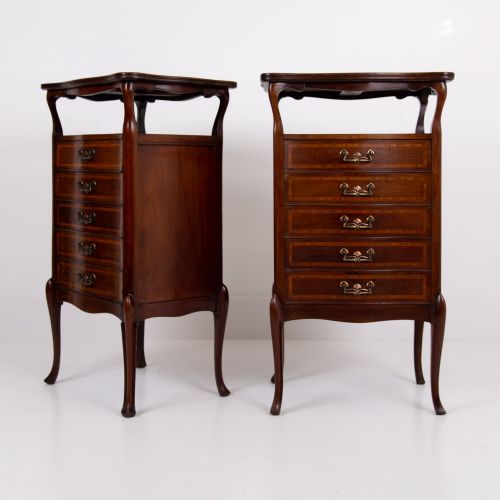
Cabinet makers of the Edwardian era relied heavily on solid hardwoods and choice veneers, constructing carcases and framing from mahogany, oak, walnut, and satinwood, frequently enhanced by contrasting banding and decorative stringing.
Drawer construction typically involved traditional hand-cut dovetail joints for durability, paired with secondary timbers like pine for drawer linings and internal framing.
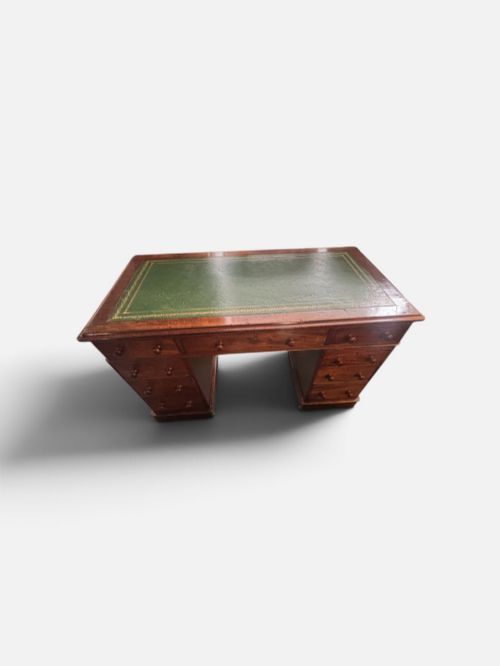
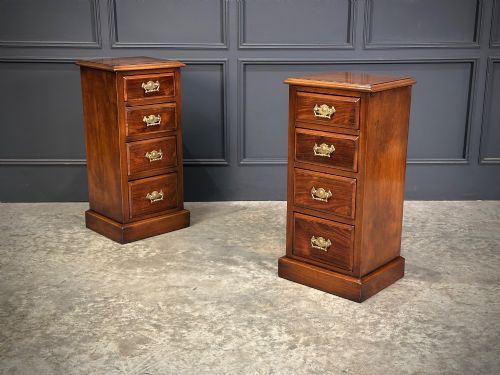
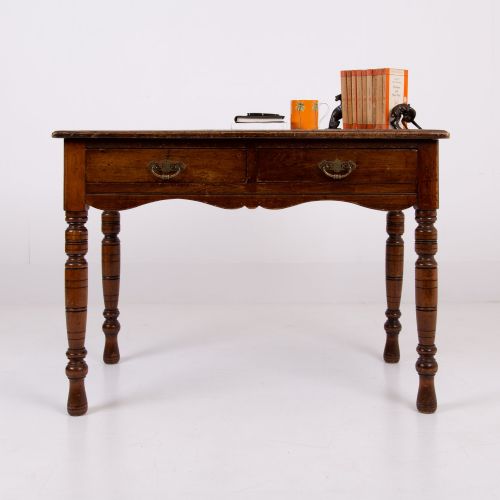
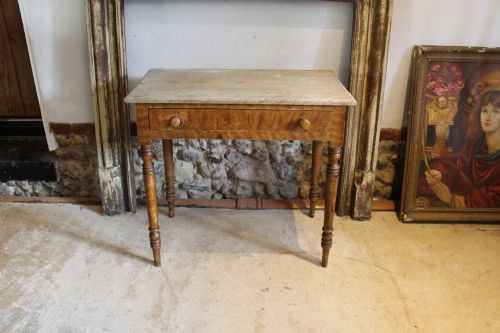
Surfaces were finished with wax or polish to highlight the natural grain of the timber, while specialist variants incorporated brass hardware, leather writing inserts, and turned or tapering legs.
What Varies in Quality
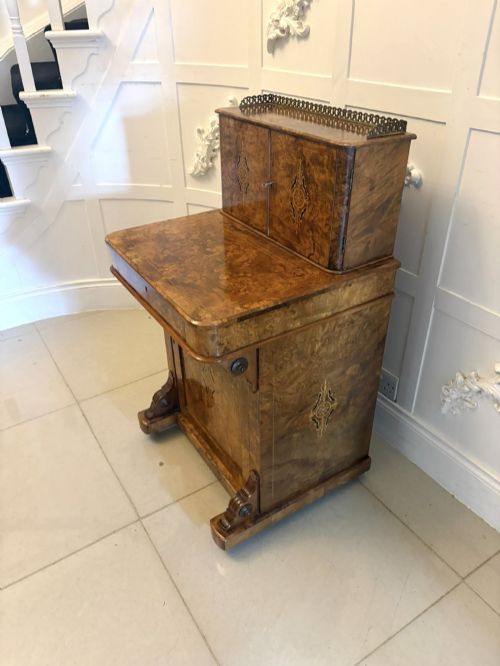
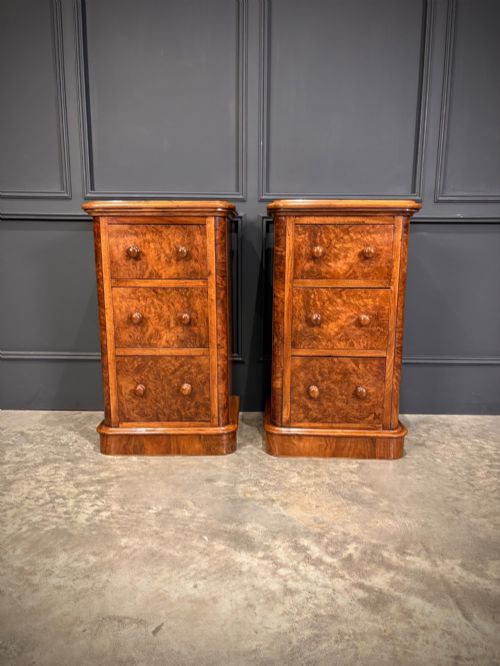
The distinction between standard commercial production and finer cabinet work rests largely on the selection of timber figures and the precision of decorative inlay. Pieces utilising burr walnut, figured mahogany, or delicate satinwood banding indicate a higher grade of workshop output.
Structural refinement also separates workshop tiers, visible in the tightness of dovetail joints, the smoothness of drawer operation, and the retention of original brass handles or leather inserts rather than later replacements.
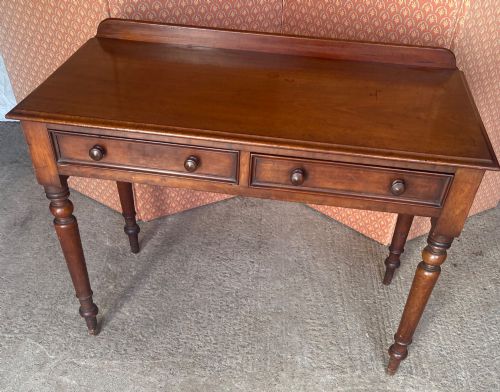
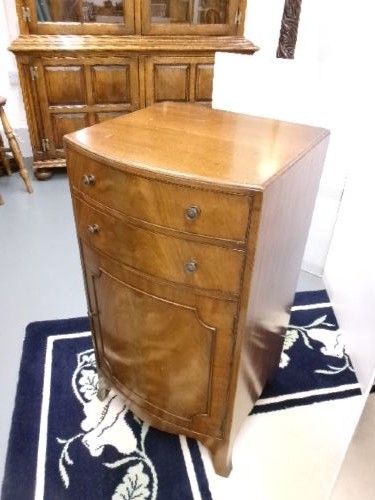
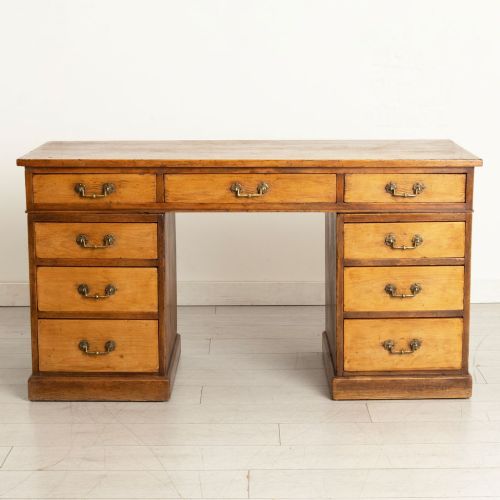
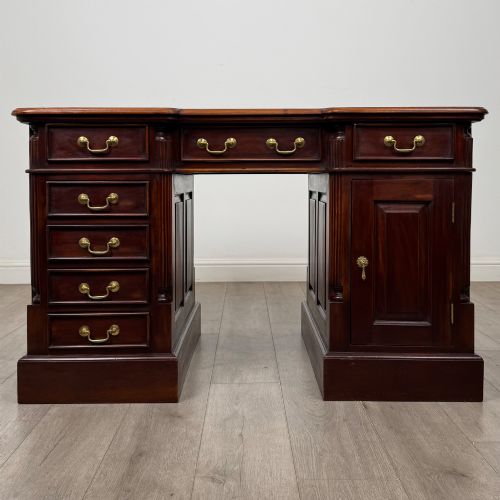
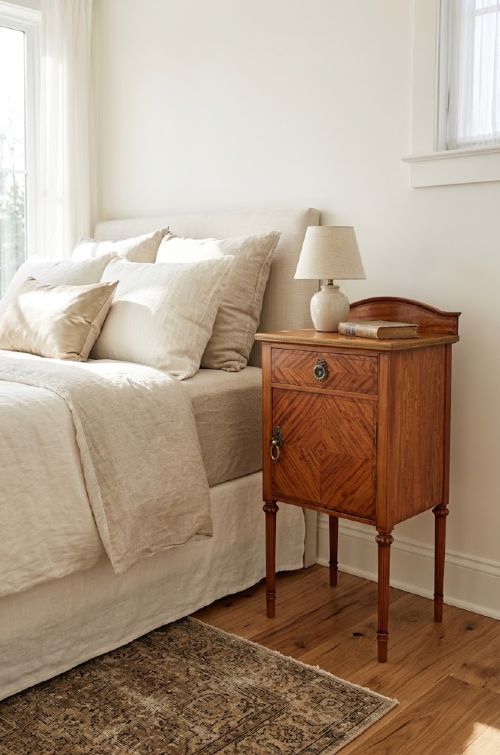
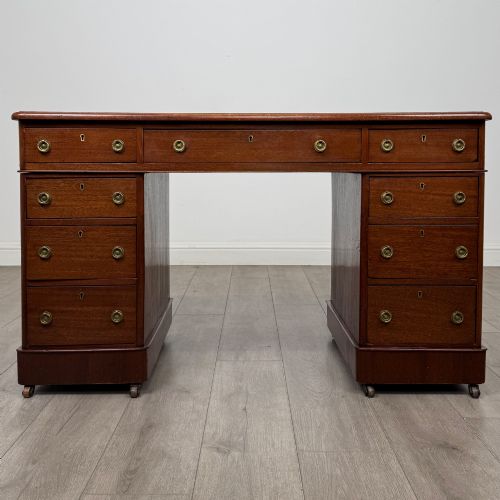
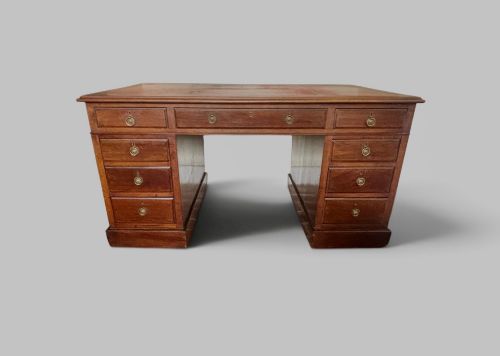
Listings feature writing tables, bedside cabinets, and pedestal desks constructed primarily in mahogany, oak, satinwood, and walnut.
Heal and Son·Edwards and Roberts·Warings Liverpool
The Edwardian Drawer Table Glossary
- Frieze drawer
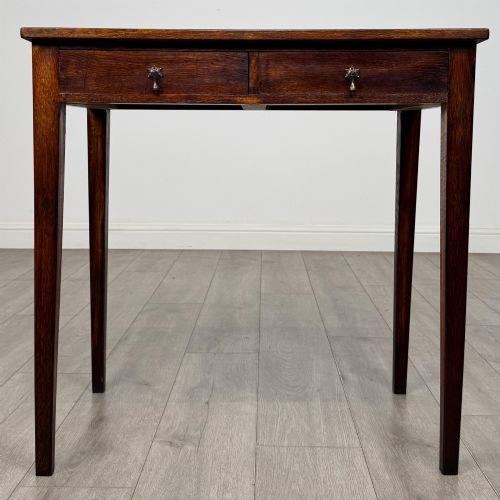
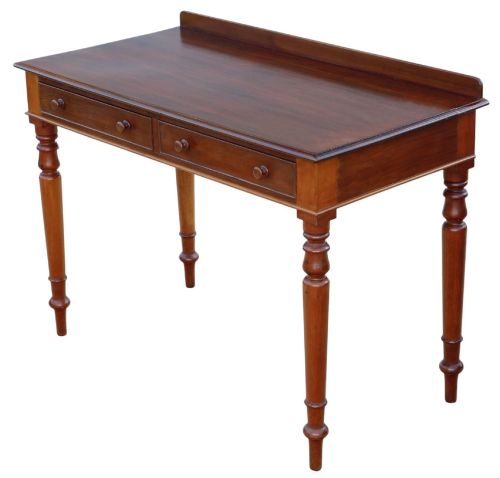
- A drawer integrated directly beneath the main tabletop within the structural frame. This feature is common on Edwardian writing and side tables.
- Satinwood
- A lustrous, fine-grained yellow timber utilised for high-status cabinet work and decorative veneers. It often appears in polished paneling or contrasting stringing.
- Dovetail
- A traditional interlocking joint formed by interlocking wedge-shaped fingers. This method secures drawer corners against lateral pull.
- Inlay
- The technique of embedding contrasting strips or pieces of wood into a surface to create geometric or floral patterns. Edwardian examples frequently feature Sheraton-style motifs.
- Kneehole
- A recessed central space beneath a desk or table top designed to accommodate the user's legs. It is flanked by pedestals or banks of small drawers.
Edwardian Drawer Table: Frequently Asked Questions
What is an edwardian drawer table used for?
These tables served various domestic functions, acting as writing desks, hallway consoles, or bedside storage units depending on their specific form. Their built-in drawers provided convenient spaces for correspondence, household ledgers, or personal items.
In modern settings, they easily adapt to similar roles as compact workstations, dressing surfaces, or decorative accent tables in living spaces.
How do I identify an Edwardian piece?
Edwardian furniture generally exhibits lighter proportions, simpler lines, and brighter timber tones than heavier Victorian precedents. Common indicators include satinwood banding, Sheraton-style inlay, and tapered legs.
Construction details such as machine-sawn timber or specific hardware styles also help distinguish pieces manufactured around nineteen hundred from earlier nineteenth-century antiques.
Are these tables made of solid wood?
Most examples utilise a combination of solid framing timbers and quality veneers applied to stable secondary woods like pine or mahogany. Veneering allowed makers to display highly figured grains, such as burr walnut or flame mahogany, without warping.
Inspecting drawer linings, table edges, and undersides reveals the construction methods and primary woods employed by the original maker.
How should I care for an antique table?
Maintenance involves protecting the polished wooden surfaces from direct sunlight, excessive heat, and moisture to prevent the timber or veneer from drying out. Routine dusting with a soft, dry cloth preserves the finish.
Applying a traditional wax polish occasionally helps nourish older wood and maintains the natural lustre of the grain without building up heavy residue.