


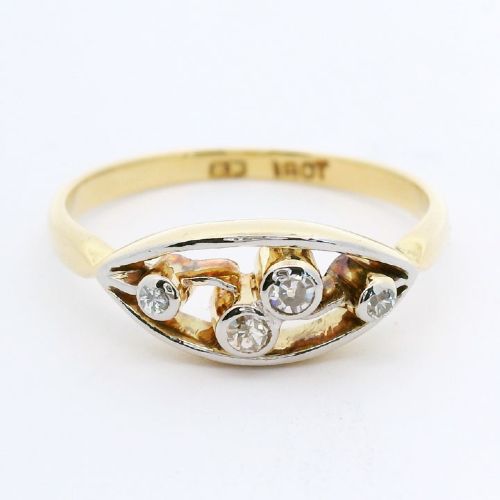
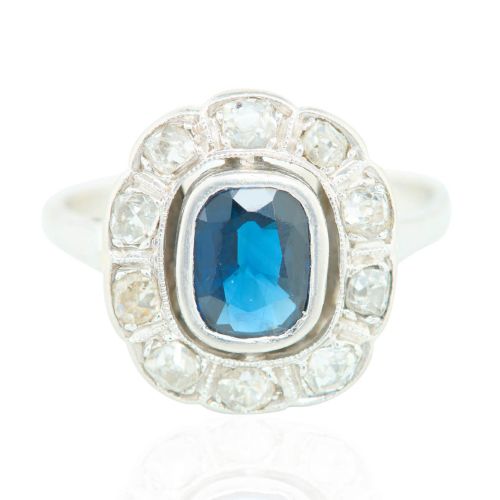
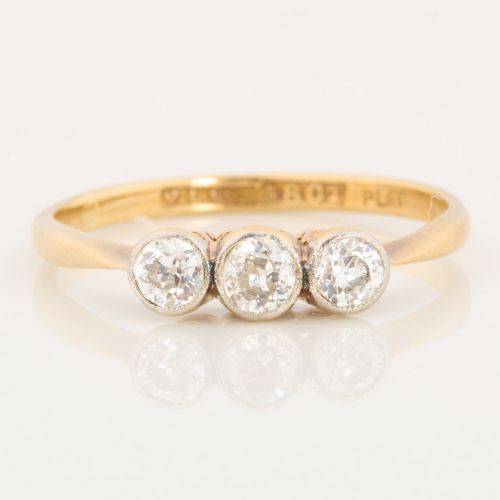


Edwardian Diamond Bezel Ring
An edwardian diamond bezel ring brings together delicate platinum settings and old cut stones that catch the candlelight.
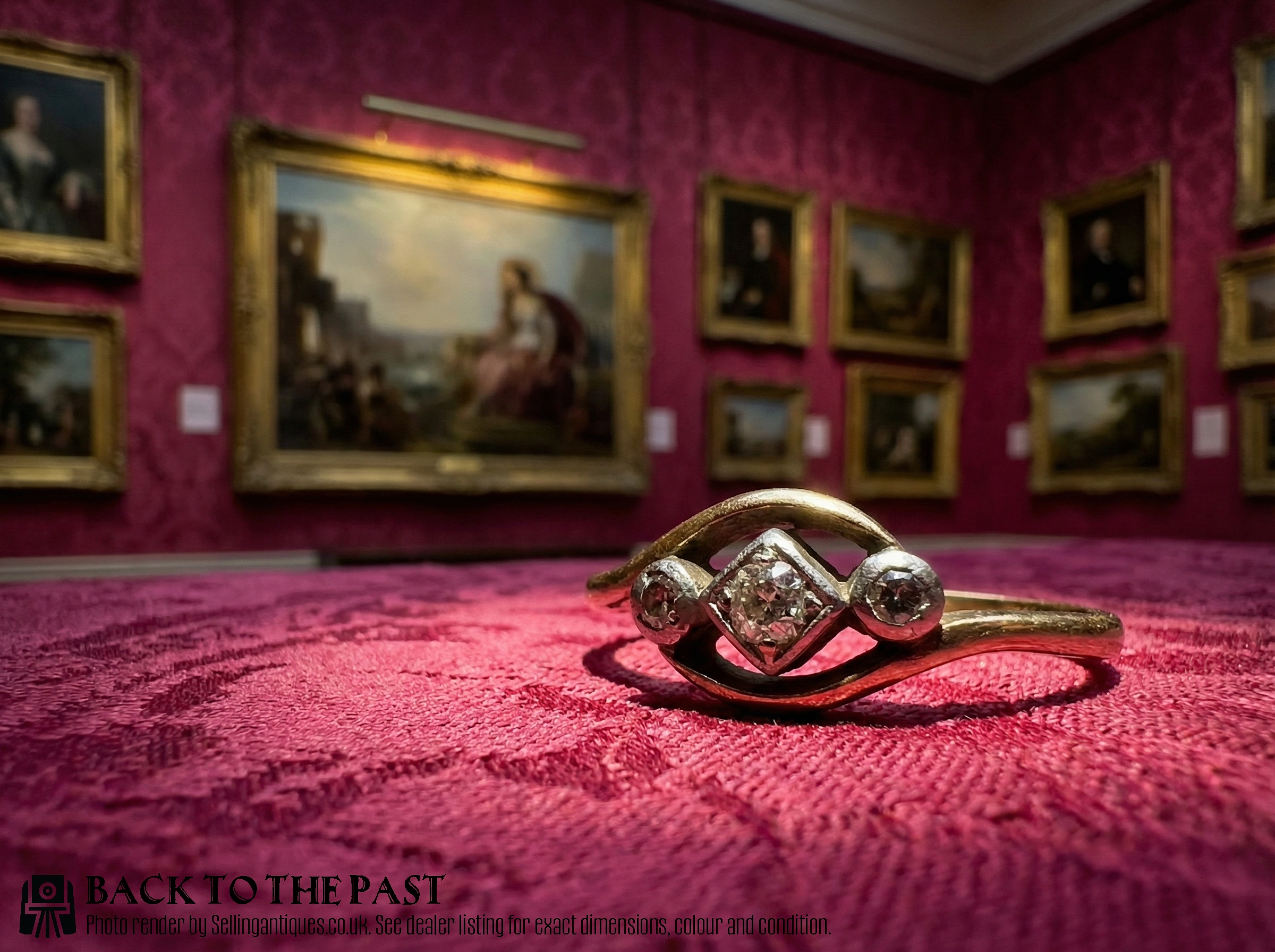
Edwardian Diamond Bezel Ring
An edwardian diamond bezel ring is a piece of jewellery designed to sit low on the finger with stones encircled by a thin collar of metal. These rings span periods from the early twentieth century through to later decades, capturing floral daisy motifs alongside geometric layouts.
The selection here includes cluster rings, multi-stone trilogy pieces, and solitaire engagement designs. Buyers encounter yellow gold, rose gold, white gold, and platinum frameworks framing diamonds, sapphires, rubies, and amethysts.
How they were made
Goldsmiths utilised platinum and various carats of yellow, white, and rose gold to construct these mountings. Platinum gained favour during this era for its strength, allowing intricate wirework and secure rubover settings without excessive bulk.
Diamonds within these pieces are predominantly old cuts, including old European cuts shaped by hand rather than modern machinery. Stones are secured closely by the metal rim of the bezel, sometimes accompanied by delicate millegrain edging along the platinum borders.
What varies in quality
The standard of an edwardian diamond bezel ring depends heavily on the precision of the metalwork and the character of the central stones. Finer examples display even millegrain beading and flush bezels that hold the diamond securely without obscuring its facets.
Proportion and stone matching also dictate the appeal of multi-stone and cluster variations. Pieces where the supporting diamonds or coloured gems balance the primary stone demonstrate superior design harmony.
The Edwardian Diamond Bezel Ring Glossary
- Bezel
- A method of setting where a thin strip of metal wraps entirely around the girdle of a gemstone to hold it in place. This technique offers a smooth profile that catches less on fabric.
- Old Cut
- A diamond cut by hand before modern symmetrical standards were established in the twentieth century. These stones typically feature smaller tables and higher crowns.
- Millegrain
- A decorative technique creating a fine border of tiny raised metal beads along the edges of a setting. It adds a soft texture to platinum and gold mounts.
- Cluster
- An arrangement of multiple gemstones grouped tightly together to create the visual impact of a larger single stone. Floral daisy motifs are a common expression of this layout.
- Trilogy
- A three-stone ring design representing the past, present, and future. The central stone is usually flanked by two smaller matching gems.
Edwardian Diamond Bezel Ring: Frequently Asked Questions
What is a bezel setting?
A bezel setting surrounds the gemstone with a continuous collar of metal rather than holding it with prongs. This secures the stone firmly and creates a sleek, snag-free profile on the hand.
Jewellers often finish these rims with delicate millegrain texturing to soften the transition between the metal and the skin.
How do I care for an antique ring?
These delicate pieces benefit from gentle cleaning with warm soapy water and a soft brush rather than harsh ultrasonic machines. Regular checks by a jeweller ensure the bezel remains tight around the stones.
Removing the ring during heavy manual work protects the antique gold and platinum from unnecessary wear.
Are these rings suitable for daily wear?
Most of these designs function well for everyday use because the low bezel setting protects the diamond girdle from knocks. Platinum and eighteen carat gold provide durable foundations for daily rotation.
Very fine antique wirework or softer coloured stones like amethyst require slightly more mindful handling.
What defines an old cut diamond?
Old cut diamonds feature hand-faceted surfaces shaped to capture ambient light rather than the precise mathematical angles of modern brilliant cuts. They often display smaller tables and open culets visible through the back.
This historical cutting style gives each stone a unique, softer sparkle under low lighting conditions.