



Edwardian Decorative Metalwork
Edwardian decorative metalwork encompasses tactile, utility-focused objects in copper, brass, pewter, and bronze that showcase fluid Arts and Crafts and Art Nouveau designs.
Edwardian Decorative Metalwork
When you search for edwardian decorative metalwork, you are looking at domestic items created around the turn of the twentieth century that combined utility with artistic design. The pieces most commonly met on this page include repousse copper trays, pewter bowls, and brass or bronze vessels reflecting the dominant styles of the period.
The selection ranges from British Arts and Crafts and Art Nouveau creations to continental and imported items such as Japanese cloisonne enamel and Imperial Russian cast iron. Forms span from decorative chargers and wall mirrors to letter racks, flagons, and ashtrays, capturing the breadth of domestic metalcraft of the era.
These items were produced during a period when design reform movements valued hand-worked surfaces and natural motifs over industrial uniformity. Whether utilitarian objects like flagons or purely decorative plates, the surviving pieces demonstrate the era's preoccupation with texture and form.
Materials and techniques
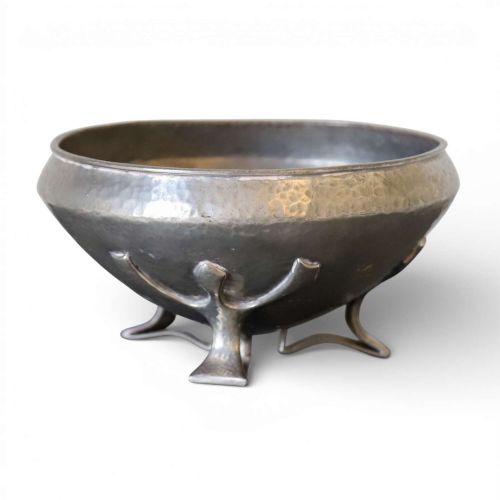
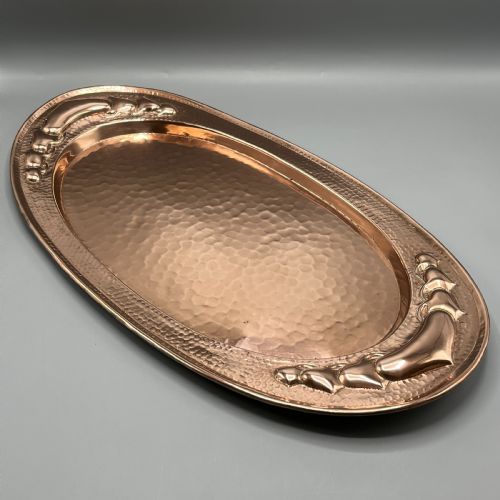
Makers utilised non-ferrous metals such as copper, brass, and pewter, often shaping them through hammering and repousse work to create raised patterns and tactile surfaces. Pewter alloy allowed for the fluid, organic lines favoured by Arts and Crafts designers, while copper provided a canvas for deep embossing and patination.
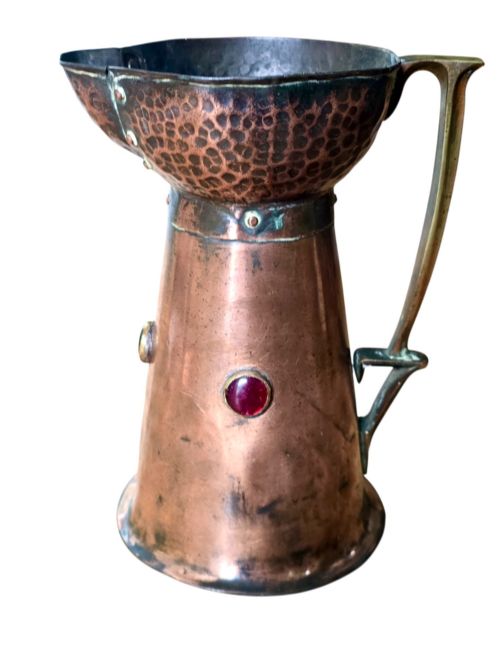
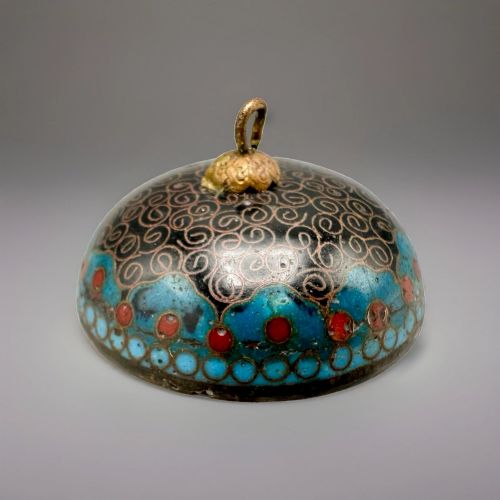
Enamel enrichment, including cloisonne and cabochon settings, added vibrant colour to metal bases, contrasting sharply with the subdued tones of hammered bronze and cast iron. Techniques ranged from British workshop hand-hammering to Japanese cloisonne wirework and Russian iron casting.
Edwardian Decorative Metalwork Retail Price Guide 2026
Typical asking prices for edwardian decorative metalwork among the pieces listed under this phrase on Sellingantiques today, from the lower quarter to the upper quarter. They describe what is for sale here now, not the wider market.
Elephants feature at the base of a bronze bell, adding an unexpected touch of global exploration to the inventory.
Assessing quality
Quality in these pieces is dictated by the crispness of the hand-working, the depth and control of repousse hammering, and the integrity of applied details like enamel cabochons. Superior examples display deliberate tool marks and harmonious proportions rather than flat, machine-stamped uniformity.
The sophistication of design distinguishes finer workshops from mass production, seen in the balance of a vessel's silhouette or the intricate precision of cloisonne cells. Maker attribution also influences standing, with documented pieces from established studios commanding greater recognition.
Liberty and Co·Oliver Baker·Kasli Foundry
The Edwardian Decorative Metalwork Glossary
- Repousse
- A metalworking technique where the metal is hammered from the reverse side to form a raised design in relief on the front. This method was widely used by Arts and Crafts metalworkers to create textured trays and chargers.
- Cloisonne
- An ancient enamelling technique where metal wire is soldered to a metal base to form compartments, which are then filled with glass paste and fired. Japanese examples frequently utilise this decorative method.
- Cabochon
- A polished, convex gem or piece of glass cut without facets, often set as a decorative accent into metalwork. These cabochons add spots of colour to pedestal bowls and boxes.
- Flagon
- A large vessel with a handle and spout, used for holding liquids. Metal flagons from this era often feature sturdy copper construction and riveted handles.
Edwardian Decorative Metalwork: Frequently Asked Questions
What is Tudric pewter?
Tudric was a trade name used by Liberty and Co for a range of pewterware introduced in the early twentieth century. These pieces often featured distinct Arts and Crafts and Art Nouveau motifs designed by artists such as Oliver Baker.
The alloy contained a high proportion of silver, giving the metal a brighter finish and a heavier feel than standard domestic pewter.
How do I care for antique copper and brass?
Antique metalwork benefits from minimal intervention to preserve its historic patination and surface character. Dusting with a soft cloth is usually sufficient for daily maintenance.
Harsh chemical cleaners strip away the aged tones accumulated over a century, so polishes should be avoided unless strictly necessary to prevent active corrosion.
Were these items purely decorative?
Many objects from this period served a practical function in Edwardian households, from holding correspondence to serving drinks. Items like letter racks, ashtrays, and flagons were intended for daily use.
Even decorative chargers and wall mirrors combined visual appeal with a designated place in the home, reflecting the era's belief in functional art.