


Edwardian Cut Glass Jug
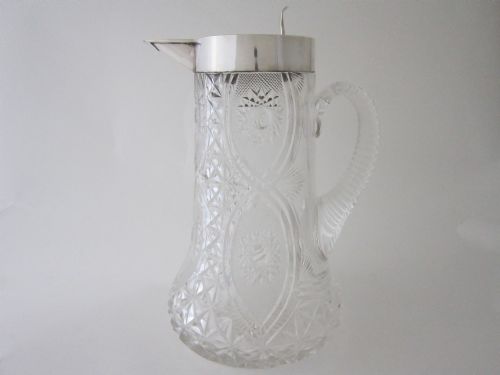
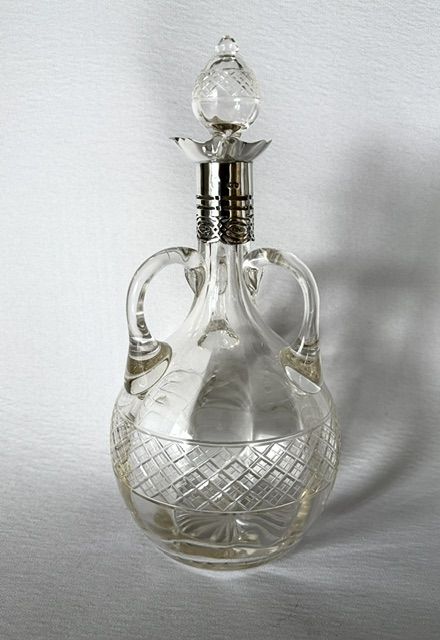
When seeking an Edwardian cut glass jug, collectors find heavy lead crystal vessels paired with gleaming silver mounts for formal dining tables.
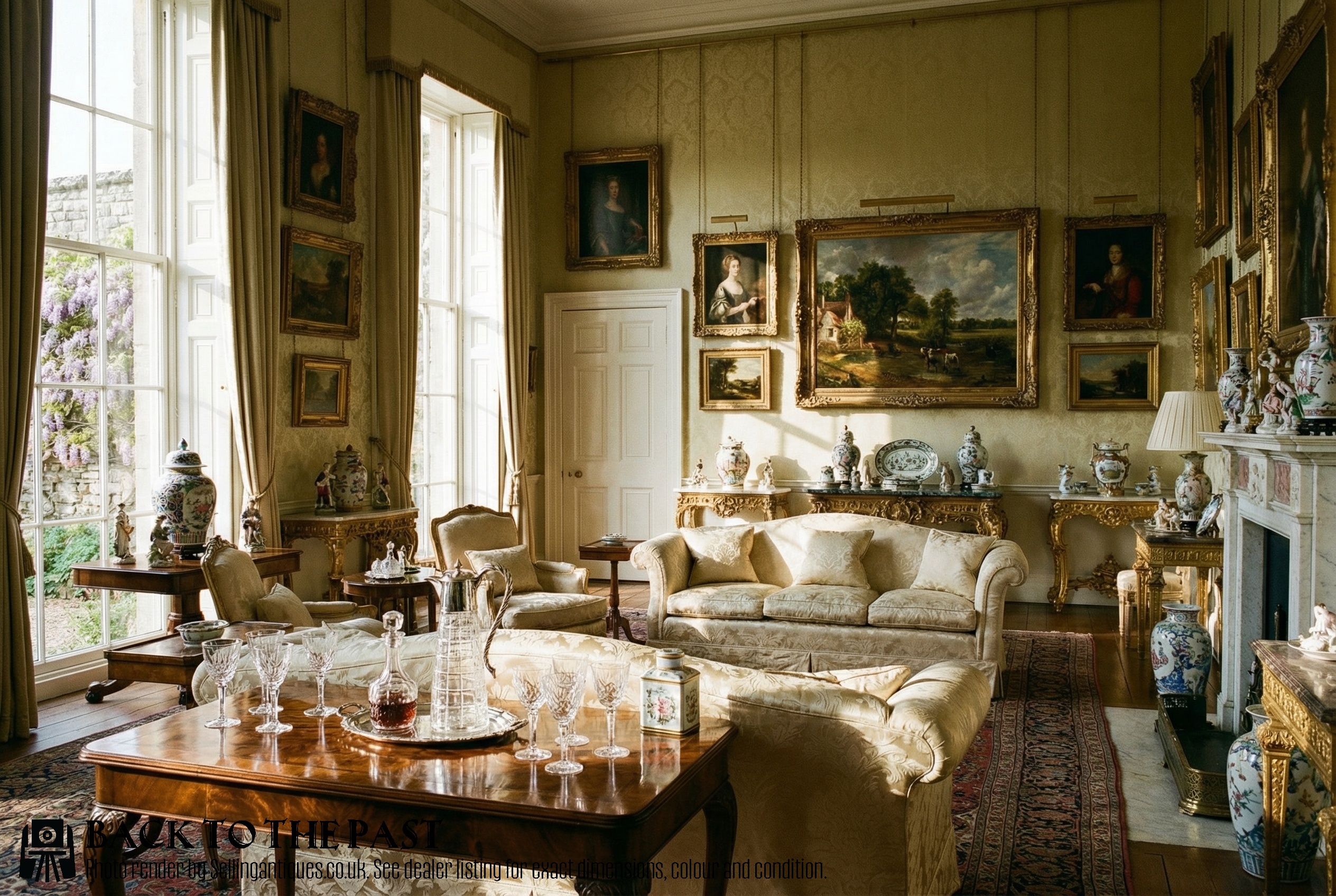
Edwardian Cut Glass Jug
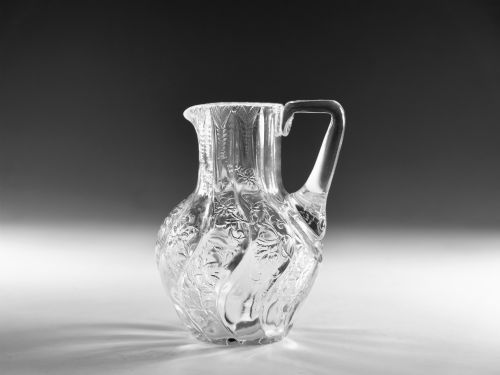
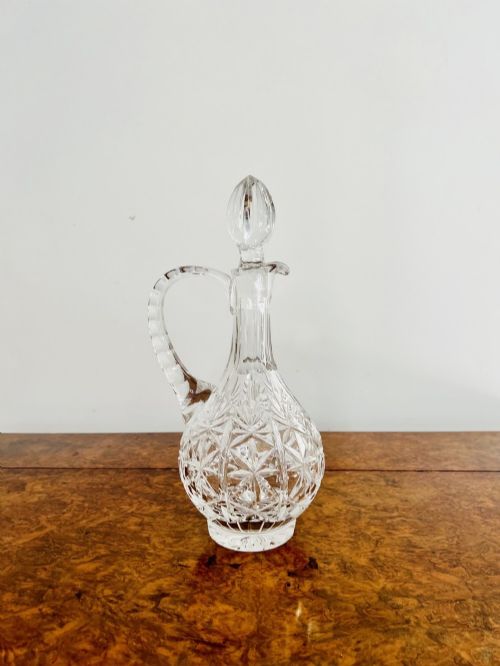
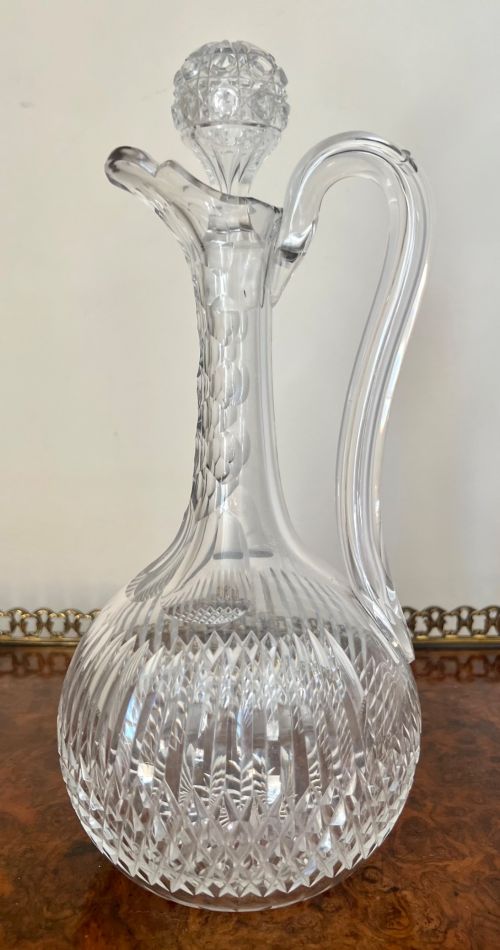
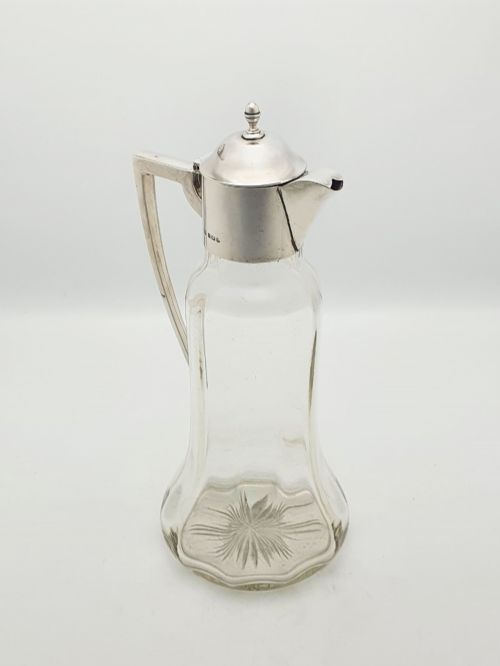
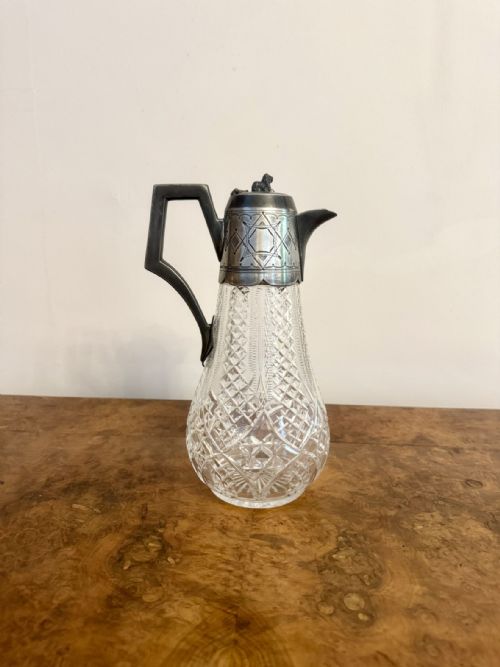
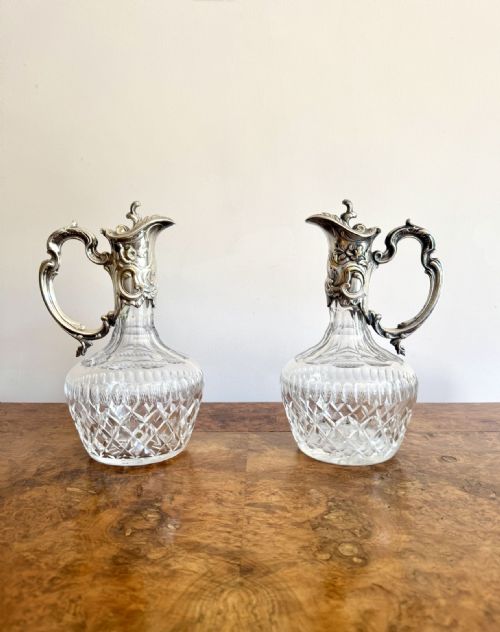
An edwardian cut glass jug functions primarily as a serving vessel for wine, water, lemonade, or whisky at the dining table. The listings frequently feature claret jugs, ewers, and smaller whiskey noggins designed for domestic hospitality.
Most examples originate from the Edwardian period or the broader Victorian era, spanning several decades of glass production and metalworking. Forms range from large bulbous water pitchers to slender, panel-cut decanters.
The objects combine glass bodies with mounts, handles, and hinged lids fashioned from sterling silver or silver plate. Makers often incorporated matching labels or stands to complete the serving set.
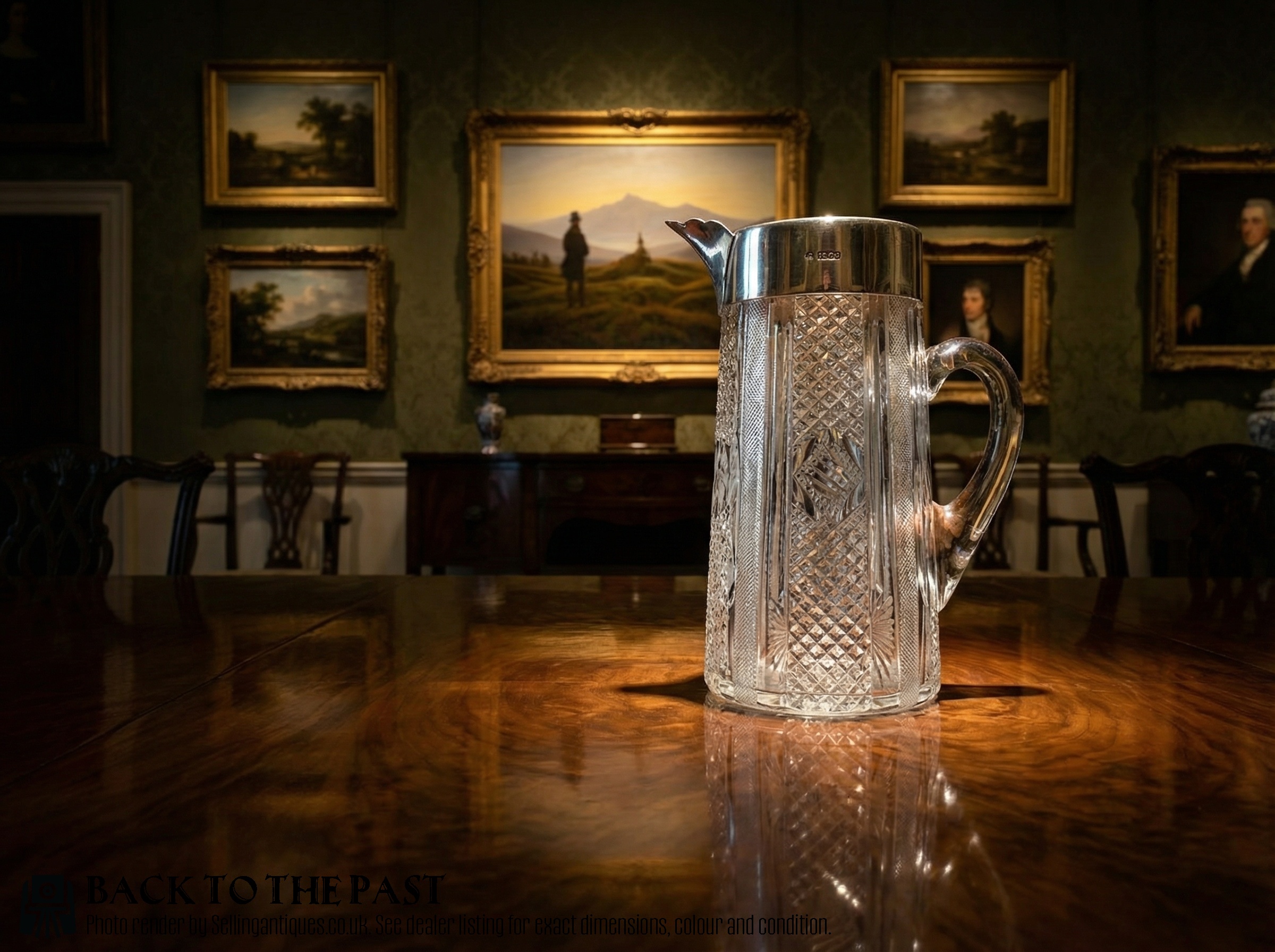
How they were made
Craftsmen shaped the vessels from lead crystal or standard glass, applying deep geometric or floral cuts across the body to catch the light. Intaglio engraving and etching provided alternative surface decoration on specific pitcher designs.
Silversmiths and electroplaters constructed the mounts, collars, and hinged covers separately before securing them tightly to the glass necks. Hallmarks on sterling silver components record the assay office, city, and year of manufacture.
Edwardian Cut Glass Jug Retail Price Guide 2026
Typical asking prices for edwardian cut glass jug among the pieces listed under this phrase on Sellingantiques today, from the lower quarter to the upper quarter. They describe what is for sale here now, not the wider market.
What varies in quality
Depth and crispness of the glass cutting distinguish finer vessels from simpler production pieces. Sharp, clean facets reflect light intensely, whereas worn or shallow cutting lacks visual weight.
The weight and thickness of the metal mounts signal the grade of the piece, with solid sterling silver commanding higher regard than silver plate. Maker attribution also elevates certain examples, particularly those bearing the marks of established silversmiths or glasshouses.
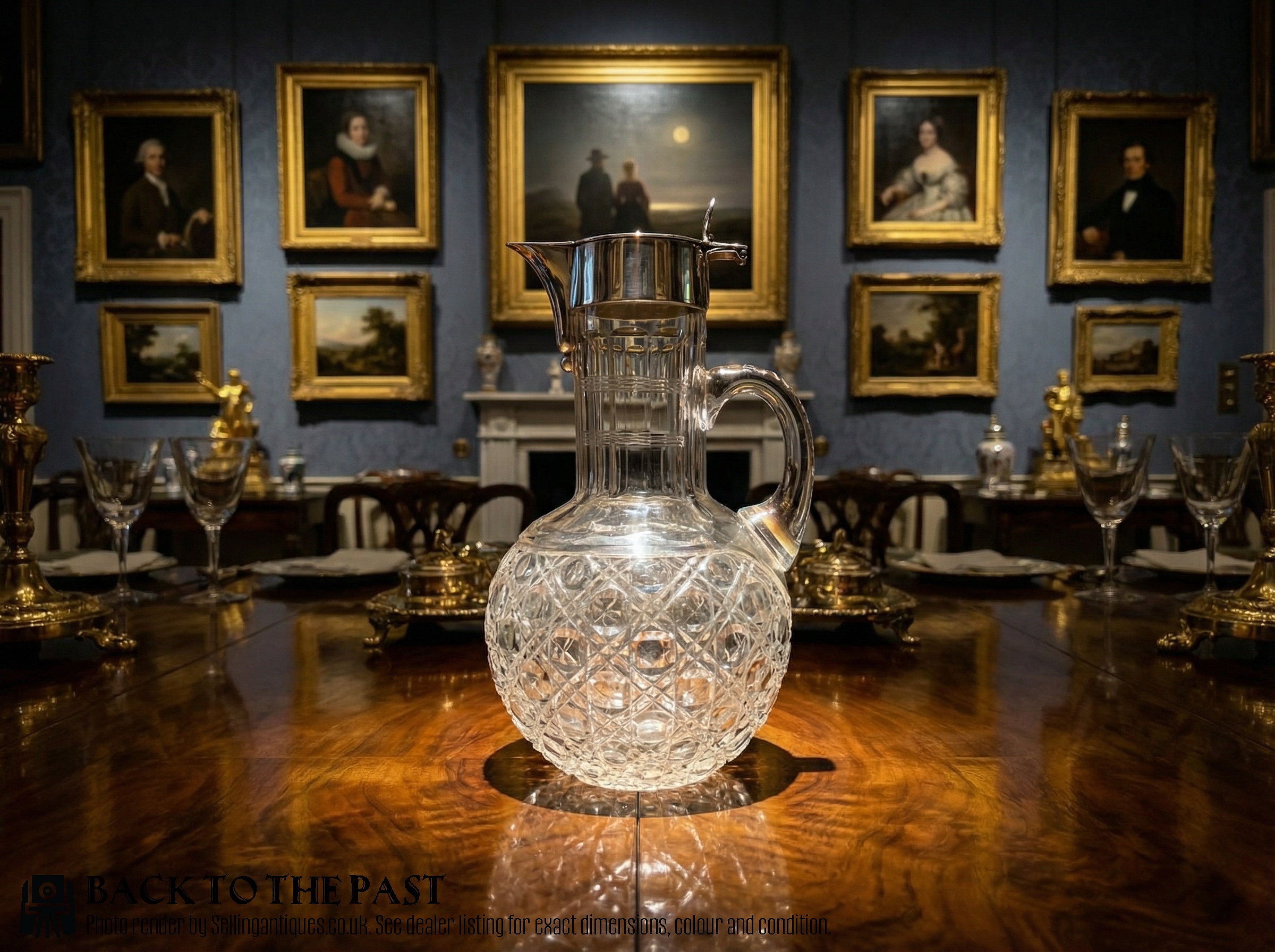
Stevens and Williams·Webb Corbett·Hukin and Heath·Elkington and Co·William Davenport·Daniel and Arter
The Edwardian Cut Glass Jug Glossary
- Claret Jug
- A specialised pouring vessel designed specifically for serving red wine at the table. These pieces typically feature a hinged silver lid and an integrated handle.
- Ewer
- A large jug with a wide spout and an ornate handle, historically used for water or wine service. Victorian and Edwardian examples often pair heavy glass bodies with silver plate.
- Noggin
- A small drinking vessel or mug, frequently used for serving spirits such as whisky. Examples often include a fitted silver top and a matching decanter label.
- Lead Crystal
- Glass containing a high lead content that increases brilliance, weight, and clarity. This material allows for deeper and sharper facet cutting.
- Silver Plate
- A base metal coated with a thin layer of silver through electroplating. This technique provided the appearance of solid silver at a lower production cost.
Edwardian Cut Glass Jug: Frequently Asked Questions
What is an edwardian cut glass jug used for?
These vessels were primarily utilised for serving beverages such as claret, water, lemonade, or whisky during formal meals and gatherings.
Hosts placed them on dining tables or sideboards, using the hinged silver lid to keep contents secure during pouring.
How do I clean an antique cut glass jug?
Wash the vessel gently by hand using warm water and a mild detergent, avoiding harsh scrubbers that might scratch the delicate crystal surface.
Dry the silver mounts immediately with a soft cloth to prevent tarnishing and water spots.
Are silver mounts marked on these jugs?
Solid sterling silver mounts typically bear hallmarks indicating the assay office, date letter, and maker's mark.
Silver-plated examples generally feature manufacturer stamps or plate marks rather than official government hallmarks.
How can I tell the period of the glass?
Stylistic indicators such as heavy geometric cutting, specific handle shapes, and accompanying metal mounts help distinguish Victorian pieces from Edwardian items.
Assay office date letters stamped on the silver components provide the exact year of manufacture for the mounts.