





Edwardian Crystal Dish
When you search for an edwardian crystal dish, you are looking at heavy cut glass pieces mounted in silver, silver plate, or bronze from the early twentieth century.
Edwardian Crystal Dish
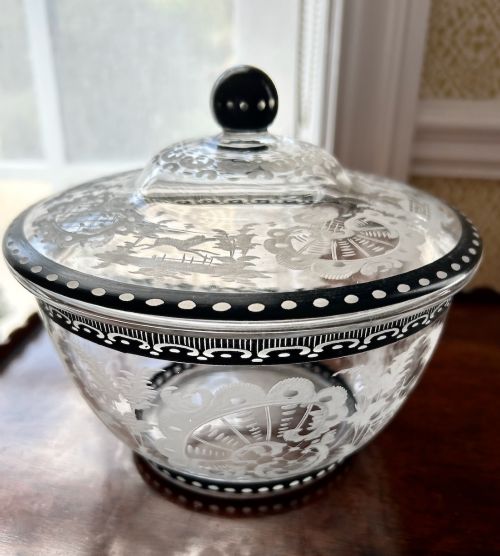
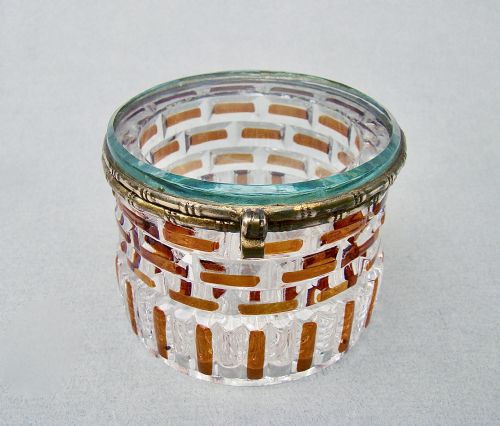
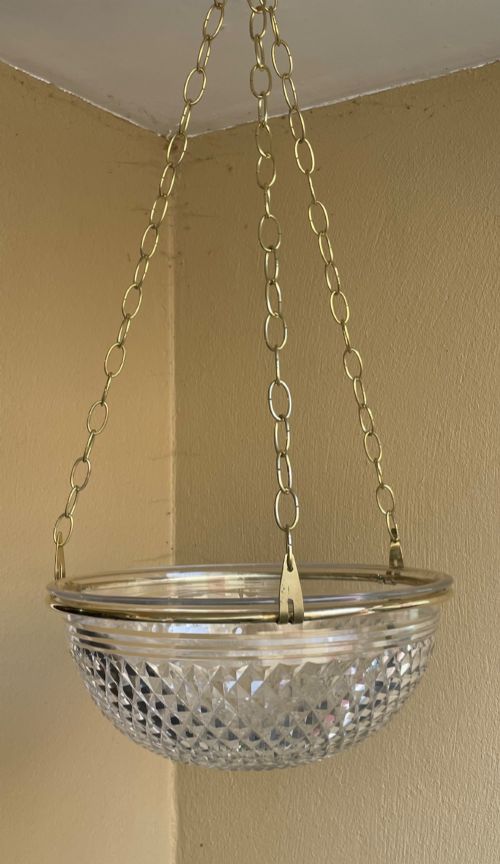
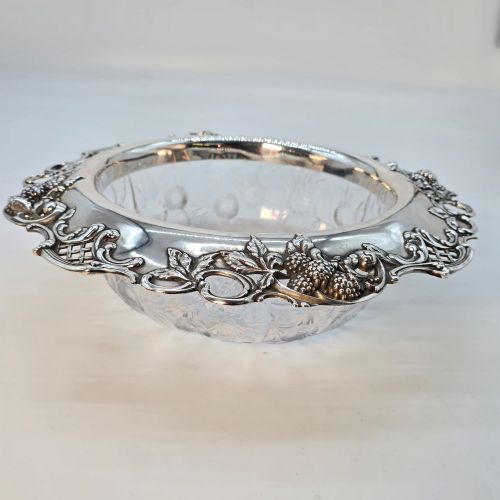
An edwardian crystal dish encompasses decorative bowls, trinket boxes, and serving vessels created around the start of the twentieth century. The selection ranges from small dresser boxes to large fruit bowls and hanging light fittings made of glass.
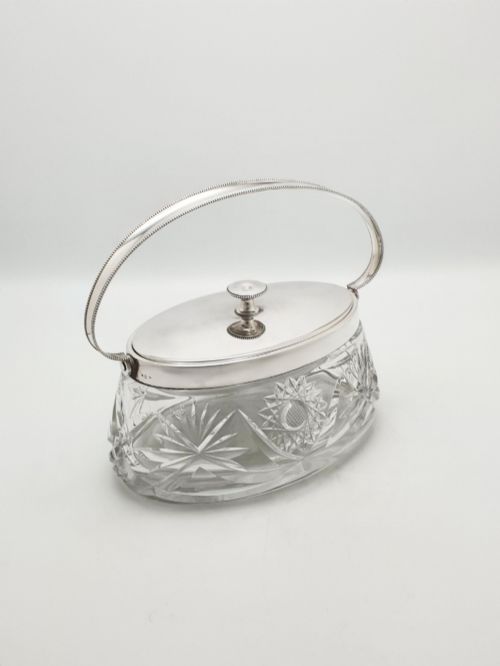
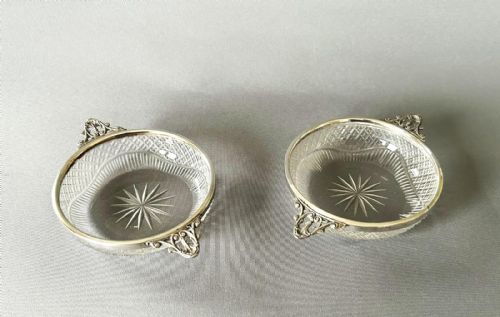
Most examples date from the Edwardian period or closely adjacent years, combining dense glass with metal mounts. Forms include lidded biscuit barrels, handled baskets, and low dishes designed for the table or dressing room.
How they were made
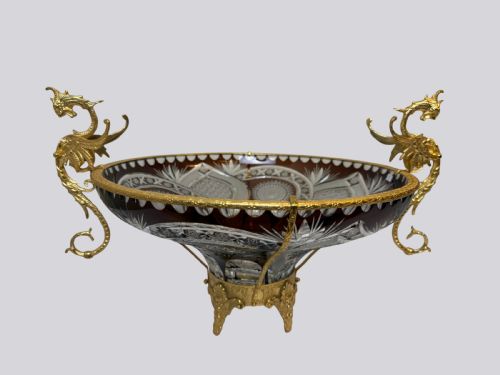
The primary materials combine heavy lead crystal or cut glass with sterling silver, silver plate, brass, and gilt bronze mounts. Glass bodies feature deep wheel-cut patterns that catch the light, paired with cast or stamped metal hardware.
Maker techniques involve blowing or moulding the glass before intensive hand-cutting and polishing, then securing the piece into fitted metal frames, rims, handles, or swing lids.
Edwardian Crystal Dish Retail Price Guide 2026
Typical asking prices for edwardian crystal dish among the pieces listed under this phrase on Sellingantiques today, from the lower quarter to the upper quarter. They describe what is for sale here now, not the wider market.
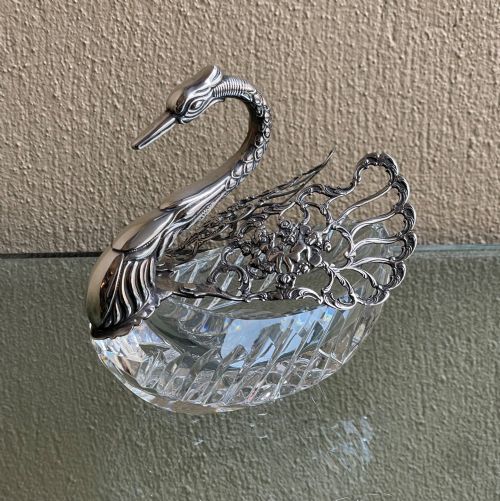
Swans made a surprising splash in the period, appearing as cut glass dishes with silver necks and wings designed to hold sweets or trinkets.
What varies in quality
Quality rests on the depth and crispness of the glass cutting, the weight of the metal components, and the integration between the two materials. Thicker crystal with sharply defined facets distinguishes finer output from simpler pressed glass.
The presence of hallmarked sterling silver mounts rather than basic silver plate or brass elevates the standing of an item. Superior pieces also retain original matching covers, handles, and fitted hardware.
Tiffany and Co.·William Comyns
The Edwardian Crystal Dish Glossary
- Cut Glass
- Glass shaped and patterned by holding it against a rotating abrasive wheel. This technique produces sharp facets and geometric designs across the surface of the bowl.
- Sterling Silver
- A silver alloy containing a fixed proportion of pure silver and other metals for durability. Items bearing sterling marks show official assay office hallmarks.
- Silver Plate
- A base metal such as copper or brass coated with a thin layer of silver. This method offered the appearance of solid silver at a lower cost.
- Gilt Bronze
- Bronze that has been treated with a micro-thin layer of gold applied to the surface. It provides a rich, warm metallic finish that resists tarnishing.
- Plafonnier
- A bowl-shaped ceiling light fixture suspended close to the ceiling. These fixtures frequently utilise cut glass or crystal bowls mounted in metal frames.
Edwardian Crystal Dish: Frequently Asked Questions
What is an edwardian crystal dish used for?
These glass vessels served various domestic purposes on dining tables, sideboards, and dressing rooms. Many held butter, sugar, bonbons, or potpourri, while others functioned as trinket boxes for jewellery.
Today, they suit similar decorative roles in the home, functioning as table centerpieces, serving bowls, or small containers for desk accessories.
How do I identify an edwardian piece?
Dating relies on stylistic cues, hallmarks on the silver mounts, and period manufacturing traits. Edwardian items often feature specific floral motifs, bright cut glass, and sterling silver components assayed around the first decade of the twentieth century.
Comparing the specific cutting style and metal mounts with dated examples helps confirm the production era.
How should I clean antique crystal?
Wash the glass by hand in warm water using mild soap, avoiding harsh scrubbing brushes or abrasive cleansers. Take care with pieces featuring metal mounts to keep moisture away from joins and silver surfaces.
Dry the glass thoroughly with a lint-free cloth to restore the clarity of the cut facets.