





Edwardian Crystal Decanter Set
These pieces for an edwardian crystal decanter set bring period hospitality to life with cut crystal bottles housed in fitted frames.
Edwardian Crystal Decanter Set
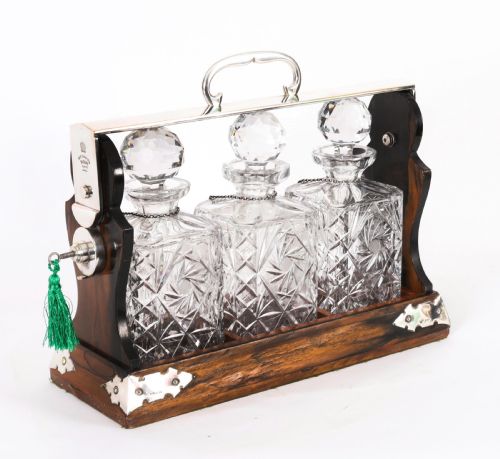
An edwardian crystal decanter set brings together matching cut crystal bottles and containers designed for serving spirits and wine in the home. You will frequently encounter robust oak or satin wood tantalus frames alongside silver plated stands that secure the bottles under lock and key.
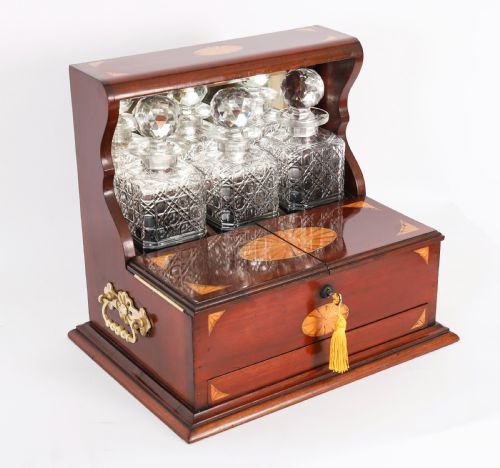
The objects span from late Victorian periods through to the Edwardian era and early twentieth century. Many examples integrate games compendiums or dry bar storage, combining drinking vessels with boxes for cards and counters.
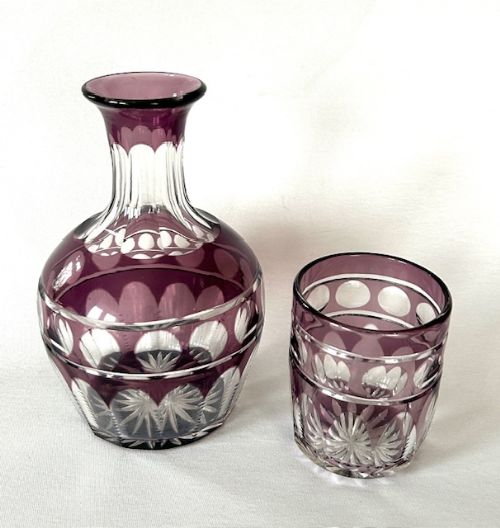
Compositions range from pairs of optically blown crystal decanters to comprehensive service sets featuring multiple decanters, carafes and matching glasses. Frameworks rely heavily on oak, walnut and coromandel to house the glass securely.
Materials and Construction
Makers shaped the bottles using lead crystal and cut glass, applying deep geometric cuts and hobnail patterns to catch the light. Frames combine structural timbers such as oak, walnut and satin wood with brass mounts and silver plated hardware.
Locking mechanisms and carrying handles utilise cast brass and silver plating to secure the bottles within wooden frames. Engraved details and intaglio techniques decorate the surfaces of specific crystal services.
Some sets included card tables and counters so guests could gamble away their inheritance while supervised by locked whisky.
Quality Variations
The calibre of an edwardian crystal decanter set rests on the weight and clarity of the crystal alongside the precision of the glass cutting. Superior sets feature heavy lead crystal bottles that match the exact contours of their fitted wooden housing.
Cabinetwork differentiates the standard examples from the exceptional ones, with fine timbers like coromandel and satin wood indicating higher production standards. Integrated locking mechanisms and complete original hardware elevate the sophistication of the piece.
Betjemann·James Powell·Mappin & Webb·Hukin and Heath·Webb Corbett
The Edwardian Crystal Decanter Set Glossary
- Tantalus
- A locking wooden frame designed to hold spirit decanters securely while displaying their contents. The locking bar prevents removal of the bottles without a key.
- Hobnail cut
- A faceted glass cutting pattern featuring rows of raised pyramidal points across the surface. This technique creates tactile texture and intense light refraction on crystal bottles.
- Optically blown
- A glassblowing method where molten metal is inflated inside a ribbed or patterned mould to create uniform internal optical effects. The resulting vessels display subtle repeating patterns within the clear walls.
- Intaglio
- A decorative technique where designs are carved into the surface of glass rather than raised in relief. Webb Corbett utilised this method for detailed drinking services.
- Coromandel
- A dense and heavily figured exotic timber utilised for luxury Victorian and Edwardian boxes and cabinetwork. Its rich dark grain patterns enhance the appearance of fitted decanter stands.
Edwardian Crystal Decanter Set: Frequently Asked Questions
What is a tantalus?
A tantalus is a locking wooden frame that holds decanters securely. It gained its name because the contents remain visible behind the locking bar yet out of reach.
These devices kept expensive spirits safe from domestic staff while displaying the glass bottles on sideboards and in studies.
How do I date an Edwardian decanter set?
Dating relies on combining the timber styles, hardware designs and glass-cutting techniques present in the piece. Edwardian examples often feature quarter-sawn oak frames paired with hobnail cut crystal.
Maker's marks on silver plated mounts and hallmarks on locking bars provide precise chronological markers for verification.
Were these sets used for wine or spirits?
These sets served both wine and spirits depending on the configuration of the bottles and the accompanying glassware. Specific bottles carry engraved labels such as brandy or whisky.
Larger compendiums integrated games equipment alongside the spirit decanters to accommodate evening entertaining in period drawing rooms.
How should I clean antique cut crystal?
Cleaning requires lukewarm water and mild soap applied with a soft bottle brush to avoid scratching the historical glass. Harsh detergents and sudden temperature changes can damage lead crystal.
Wooden frames and silver plated mounts must be kept dry and polished separately from the glass components.