
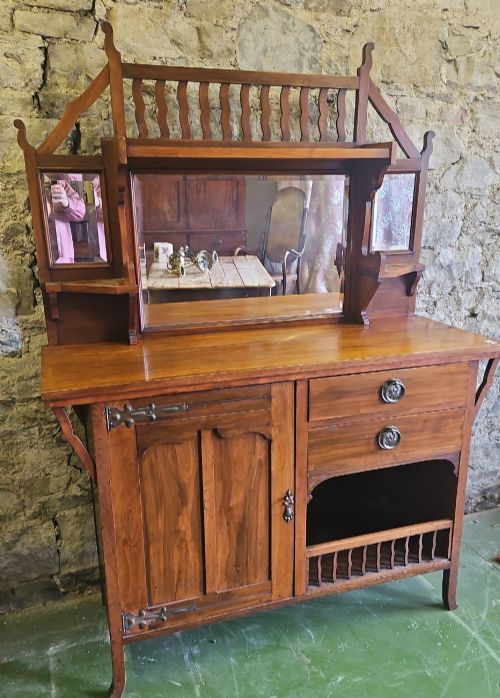
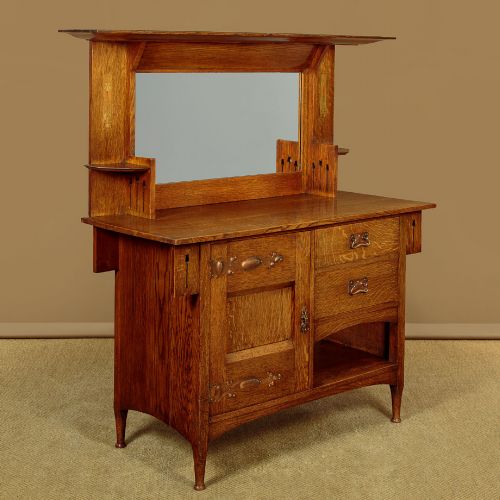

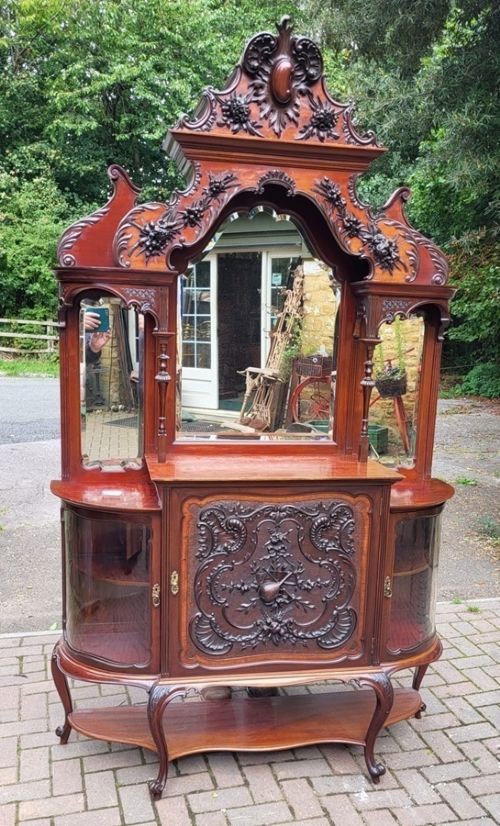
Edwardian Credenza Mirror
An Edwardian credenza mirror brings glass, polished timber, and reflective depth into a room, serving as a functional centrepiece of period design.
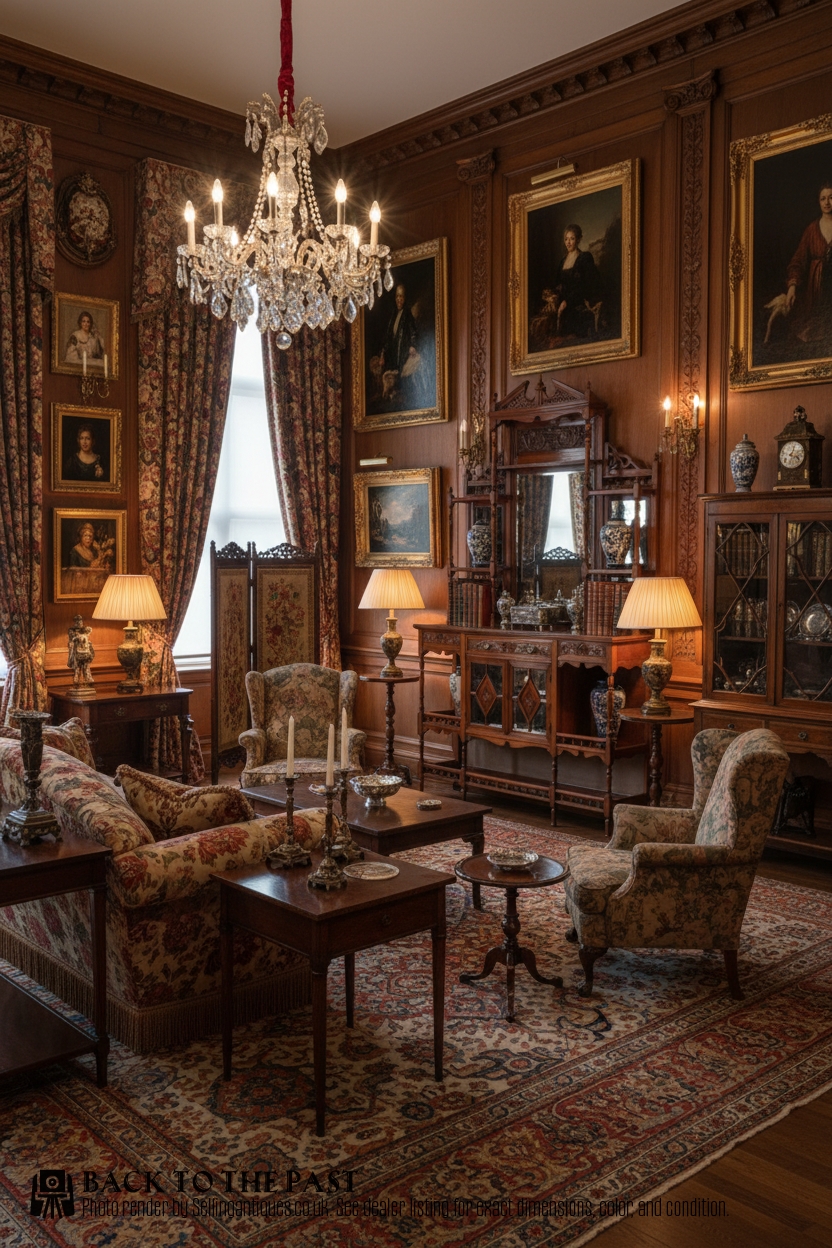
Edwardian Credenza Mirror
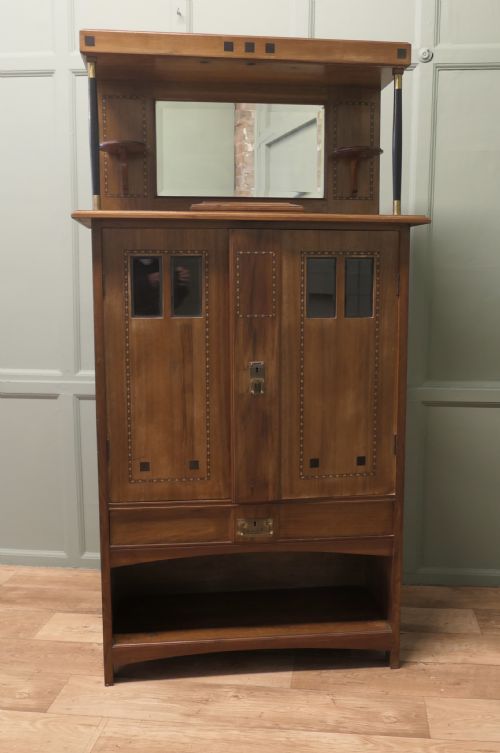
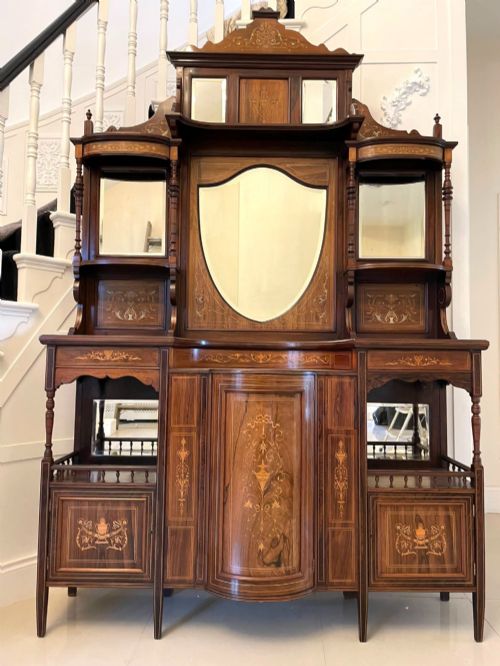
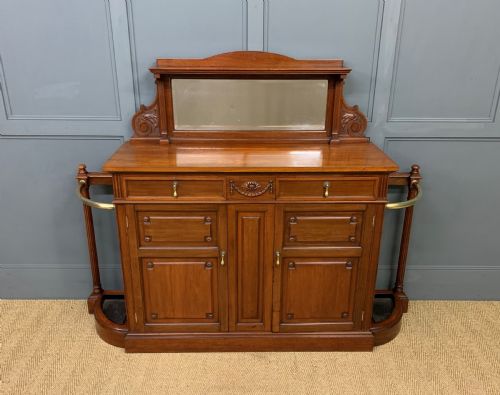
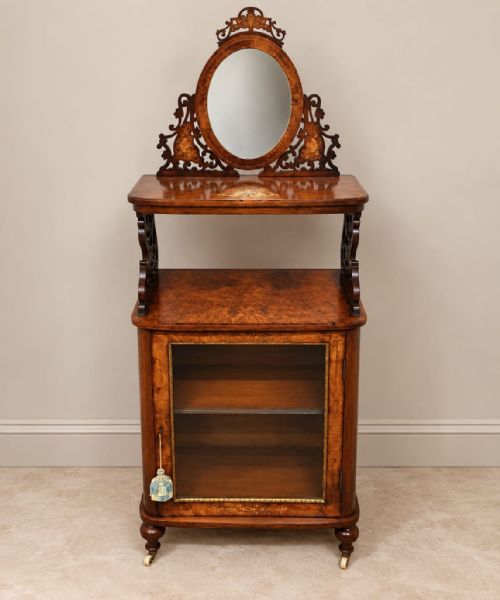
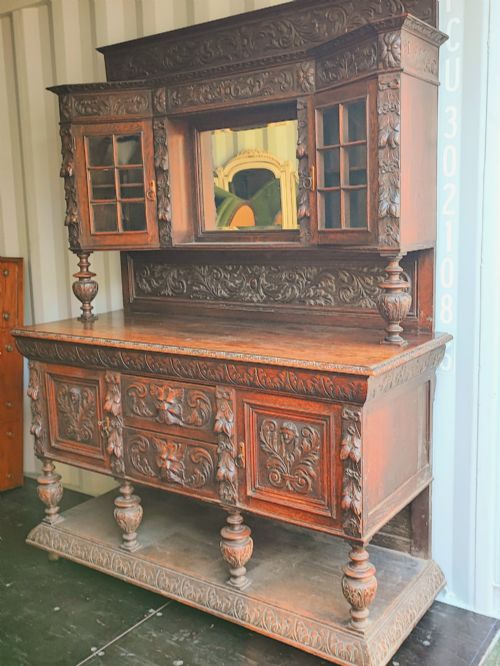
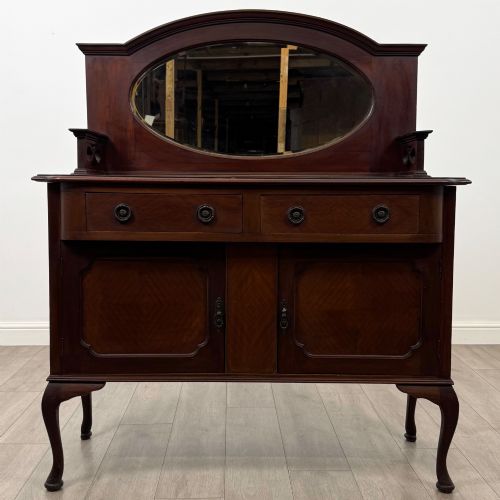
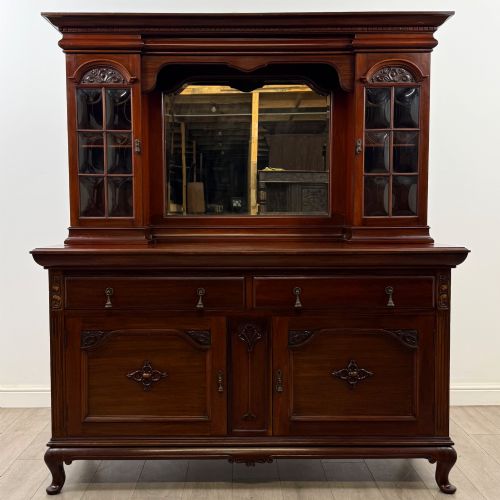
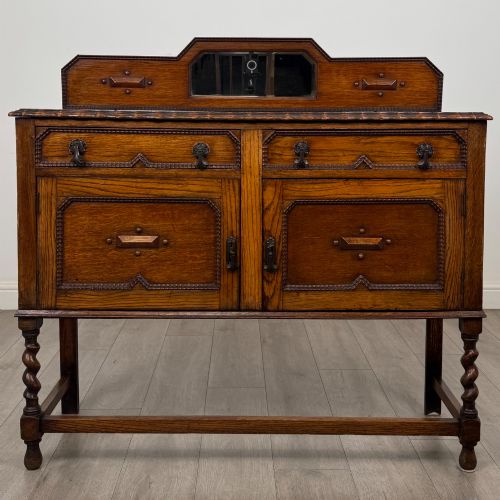
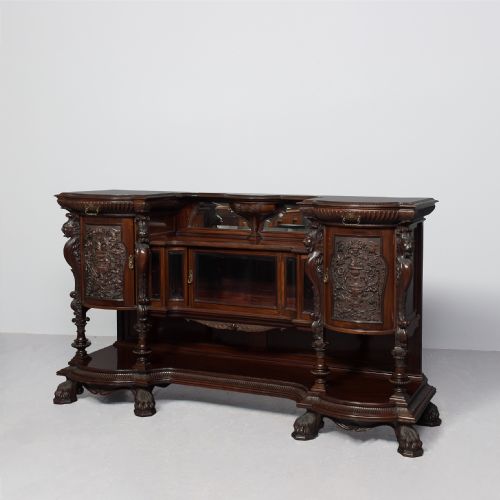
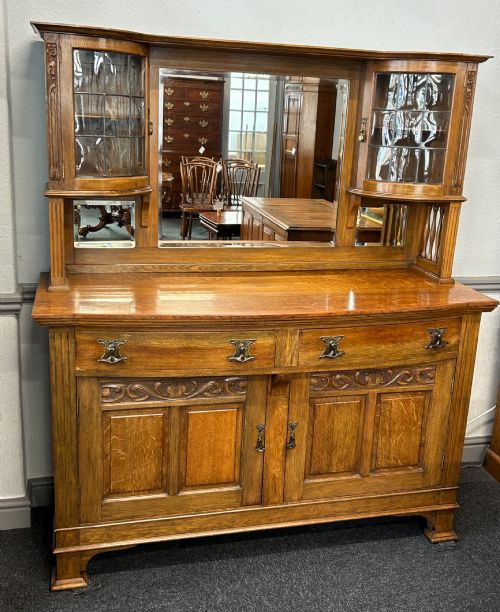
When you search for an edwardian credenza mirror, you encounter pieces that combine cabinetry with mirrored glass from the Victorian, Edwardian, and nineteenth-century periods. The items listed on this page span sideboards, side cabinets, display cabinets, and credenzas.
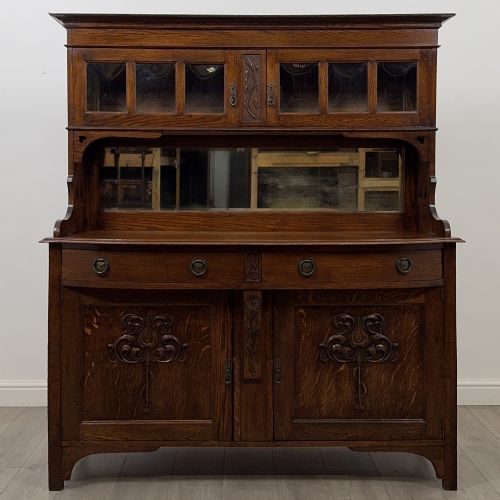
The versions you meet most frequently incorporate mirror glass set above wooden sideboards or cabinets. These forms draw on Edwardian, Victorian, Arts and Crafts, Art Nouveau, and Secessionist styles.
Makers utilised woods such as oak, mahogany, rosewood, walnut, and burr walnut. Brass hardware frequently accompanies these timbers to complete the construction.
Markers of distinction
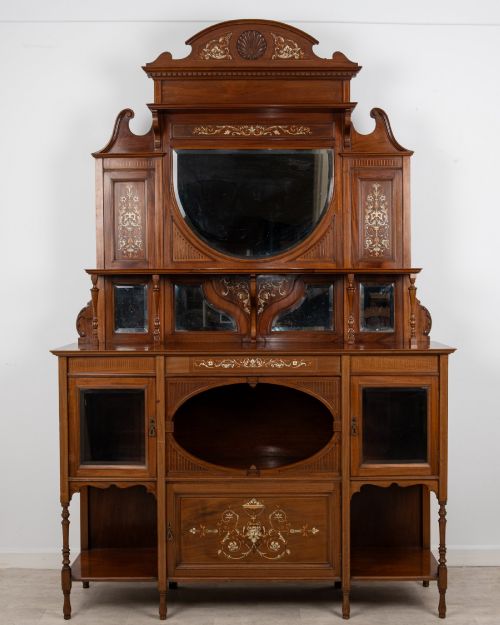
The selection of timber dictates the visual weight and finish of each piece, with burr walnut and rosewood offering complex grain patterns compared to standard oak or mahogany. Marquetry work ranges from simple stringing to elaborate, densely detailed floral or geometric marquetry.
Carving depth and the integration of mirror glass distinguish standard cabinet work from exhibition pieces. The quality of the brass fittings and the crispness of applied mouldings separate workshop output from mass production.
The listings feature pieces spanning the Victorian and Edwardian periods, constructed from oak, mahogany, rosewood, walnut, and brass.
Shoolbred & Co.·T Simpson and Son·Shapland & Petter
The Edwardian Credenza Mirror Glossary
- Credenza
- A sideboard or cabinet designed for storage and display. It frequently includes a raised mirror section in nineteenth-century and Edwardian examples.
- Marquetry
- Decorative woodwork where thin slices of coloured veneers are assembled to form pictorial patterns. This technique appears across rosewood and walnut cabinets.
- Mirror back
- An upright mirror section attached to the rear of a sideboard or credenza. It reflects light and objects placed on the surface below.
- Secessionist
- A stylistic movement emerging around nineteen hundred that favoured geometric forms and simplified lines. It represents a departure from traditional Victorian ornamentation.
- Chiffonier
- A compact sideboard or cabinet equipped with shelving and drawers. These pieces often feature a mirror or small superstructure.
Edwardian Credenza Mirror: Frequently Asked Questions
What is an edwardian credenza mirror?
An edwardian credenza mirror is a cabinet or sideboard combined with an integrated mirror back, produced around the turn of the twentieth century.
These pieces combine storage compartments and display surfaces with reflective glass, using woods like mahogany, oak, and rosewood.
How were these mirrors used?
They functioned primarily in dining rooms and parlours for storing tableware, serving food, and displaying decorative items.
The mirror component served to brighten rooms by reflecting natural and artificial light while adding visual depth to the interior.
How do I distinguish Edwardian from Victorian styles?
Victorian pieces tend to feature heavier proportions, darker finishes, and profuse carving or burr walnut veneers. Edwardian examples often display lighter oak or mahogany and cleaner, more restrained lines.
Arts and Crafts or Secessionist influences frequently appear in Edwardian items, emphasising honest construction and simplified geometric decoration.
What woods were used in these cabinets?
Craftsmen utilised a variety of hardwoods including oak, mahogany, walnut, rosewood, and burr walnut. Golden oak and polished mahogany appear frequently in Edwardian variants.
Inlays of contrasting timbers and marquetry panels were frequently added to enhance the surface appearance of rosewood and walnut credenzas.