
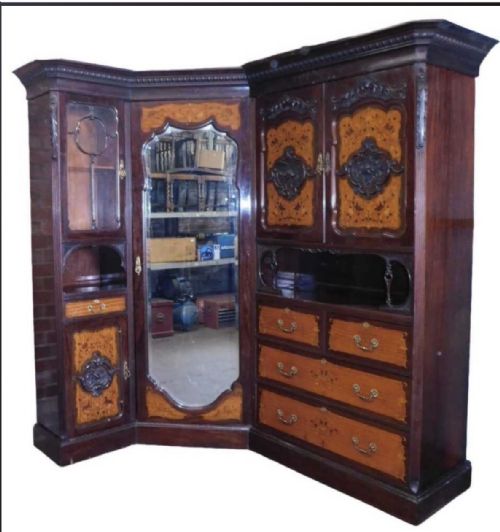


Edwardian Corner Furniture
Edwardian corner furniture gathers compact display cabinets, whatnots and cupboards that turn unused angles of a room to practical account.
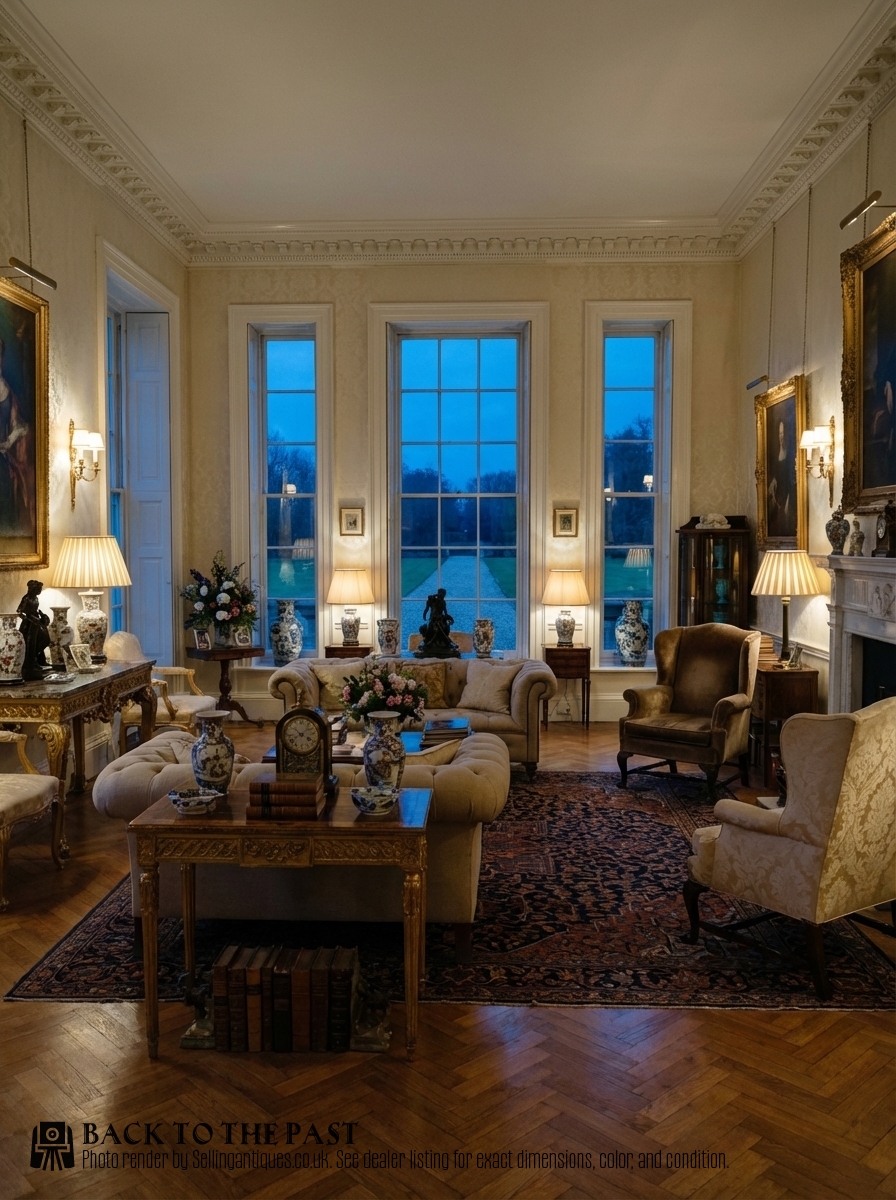
Edwardian Corner Furniture
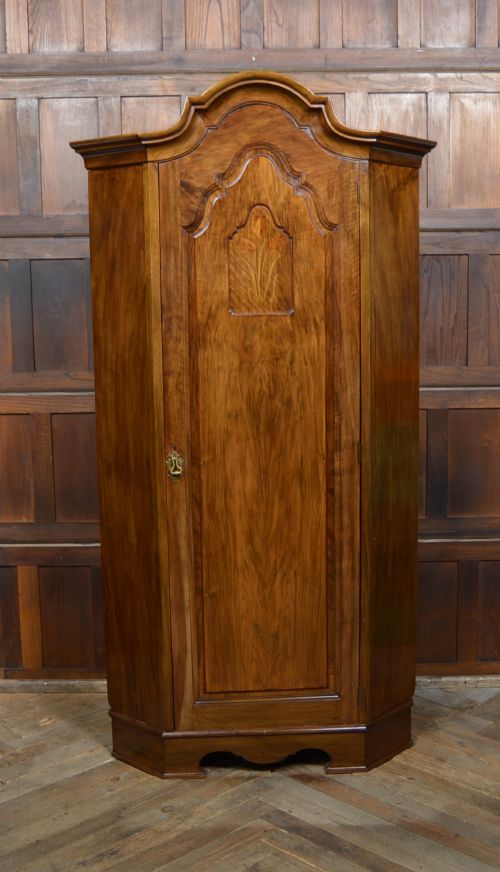
Edwardian corner furniture encompasses standing display cabinets, wall-hanging cupboards and multi-tiered whatnots designed to fit snugly into room angles. These pieces draw on earlier Victorian and Sheraton Revival forms, utilising the diagonal layout to save floor space while offering surface area or storage.
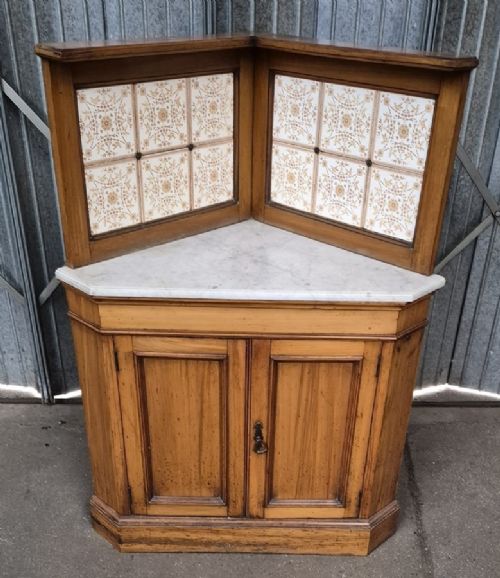
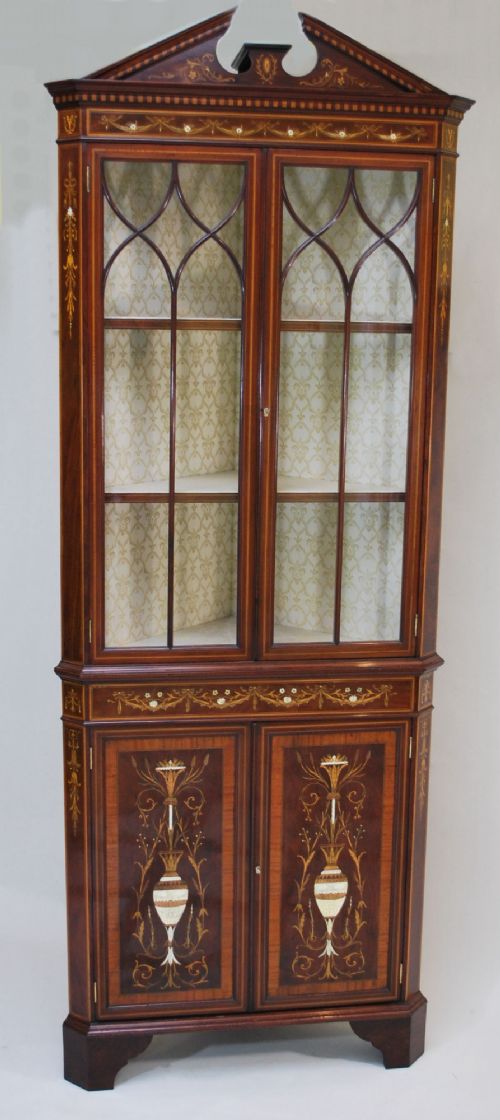
The pieces appearing on this page span the Edwardian period, the late nineteenth century and the early twentieth century. Cabinets with glazed doors and inlaid satinwood details sit alongside open walnut shelves and oak cupboards.
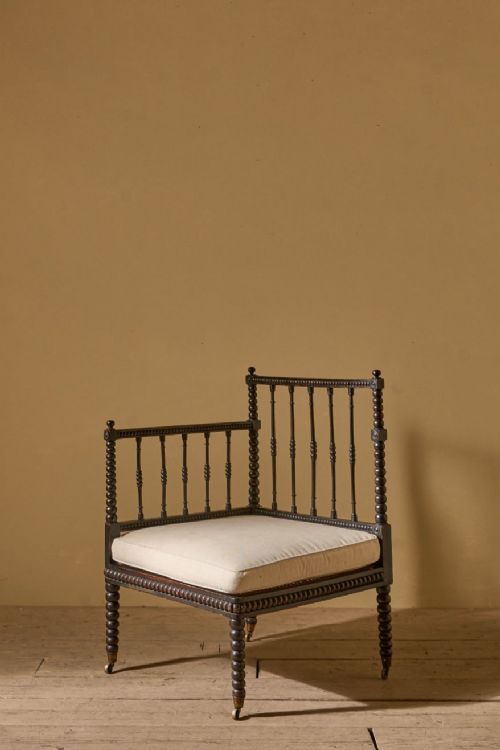
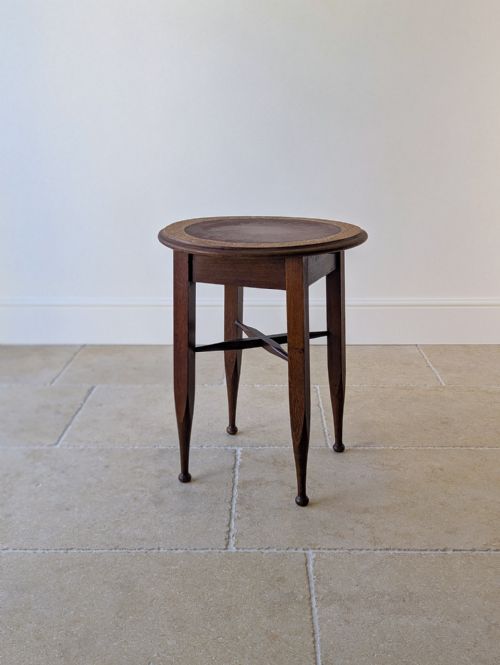
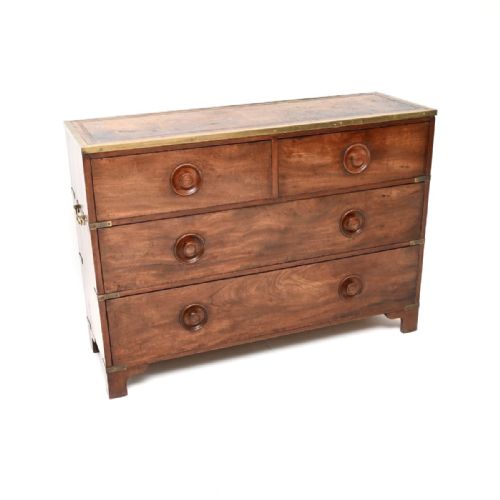
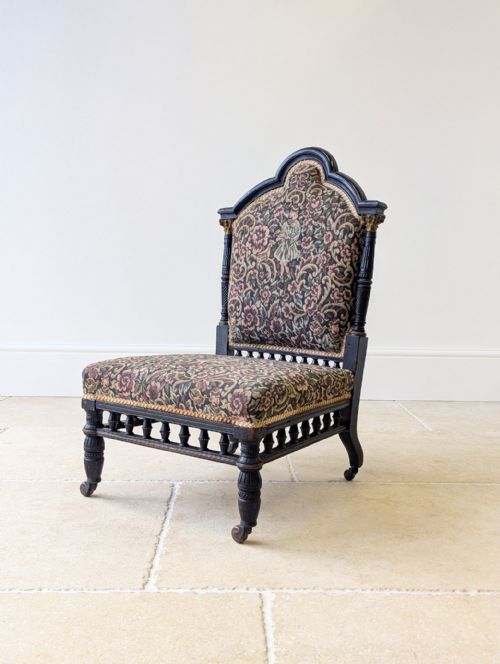
While corner cabinets and display cases predominate, related forms such as occasional tables, chairs and chests also emerge in the listings. These objects reflect a domestic interior design that valued orderly corners and decorative display.
Materials and construction methods
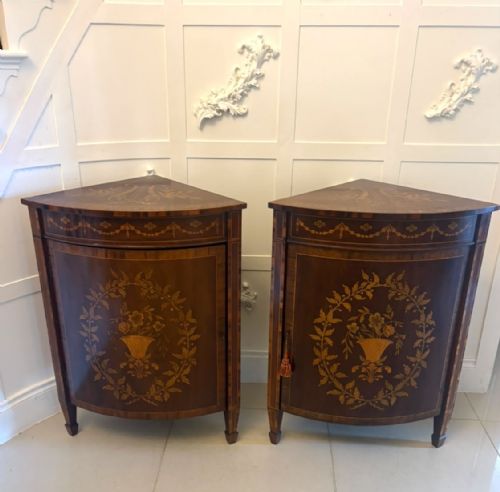
Makers constructed these corner pieces primarily in mahogany and walnut, frequently incorporating satinwood inlay and marquetry for surface enrichment. Secondary timbers like oak and beech provide structural stability within carcasses and internal shelving.
A solitary folding clothes hanging rack sneaks into the corner lineup, proving that Edwardian domestic practicality knew no bounds.
Assessing quality and craftsmanship
Quality in these corner pieces rests on the precision of the cabinetmaker's joints and the choice of timber figure. Finer examples display carefully matched grain patterns, crisp marquetry inlay and well-fitted doors that hang true on their hinges.
The distinction between standard production and superior workshop output appears in details like serpentine shaped fronts, bowed glass doors and refined brass fittings. Greater attention to interior linings and secondary woods indicates a higher tier of manufacture.
Walker And Sons·Goodhall Lamb And Heighway·Edwards And Roberts
The Edwardian Corner Furniture Glossary
- Marquetry
- Decorative woodwork where pieces of veneer are fitted into a ground to form geometric or floral designs. This technique decorates the surface of many Edwardian cabinets.
- Whatnot
- An open shelving unit designed for displaying ornaments and books. These tiers stand in corners or against flat walls.
- Compactum
- A large fitted wardrobe combining hanging space with drawers and shelves. This form offers multi-purpose storage within a single footprint.
- Campaign
- Furniture built in sections with brass mounts and recessed handles for military transport. Pieces of this type use durable timbers like teak and mahogany.
Edwardian Corner Furniture: Frequently Asked Questions
How do I place a corner cabinet in a small room?
A corner cabinet occupies the dead space where two walls meet, making it an efficient choice for rooms with limited floor space. It draws the eye upward without blocking walkways or natural light from windows.
Measure the depth of the corner and the diagonal span of the cabinet before buying. Standing models need level flooring to sit flush against both walls.
How do I clean and maintain inlaid mahogany surfaces?
Dust mahogany and satinwood inlay regularly with a soft, dry cloth to prevent dirt build-up in the grain. Avoid chemical sprays and keep the timber away from direct sunlight and heat sources.
Apply a microcrystalline wax occasionally to nourish the wood and protect the veneer. Buff gently with a clean cloth to maintain a natural lustre.
How can I tell an Edwardian piece from a Victorian one?
Edwardian furniture generally exhibits lighter proportions, simpler lines and brighter mahogany or satinwood tones than earlier nineteenth-century work. Victorian pieces often use darker burr walnut, heavier carving and denser structural mass.
Look at the secondary timbers, hardware styles and construction marks for further clues. Overlaps occur as Victorian workshops continued producing items into the early twentieth century.