




Edwardian Copper Stand
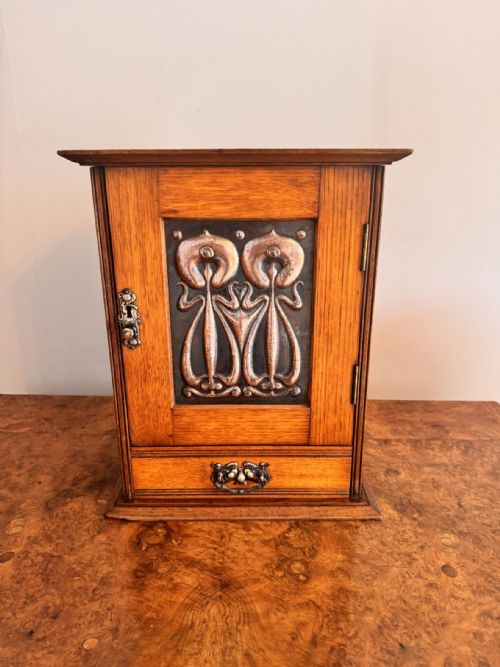
An edwardian copper stand brings tactile warmth and hammered texture to a hallway or reception room through enduring Arts and Crafts design.
Edwardian Copper Stand
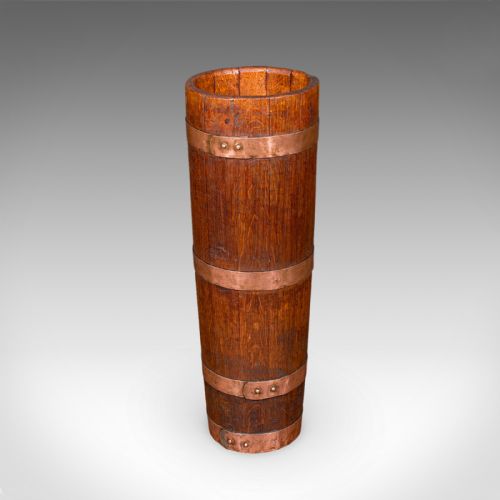
When you search for an edwardian copper stand, you encounter functional household metalwork designed during the late nineteenth and early twentieth centuries. These pieces encompass umbrella and stick stands, plant holders, and kettles raised on metal or wooden frames. The material reflects an era that prized handcrafted utility over industrial uniformity.
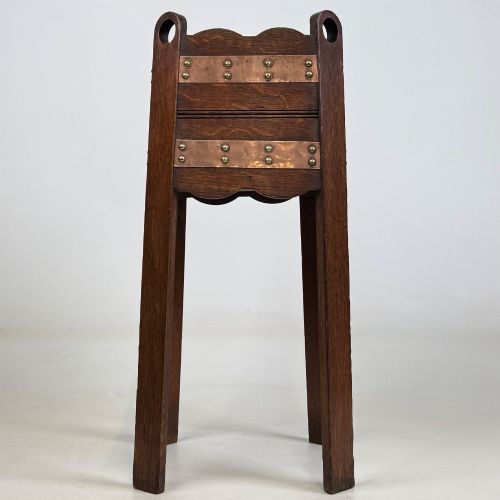
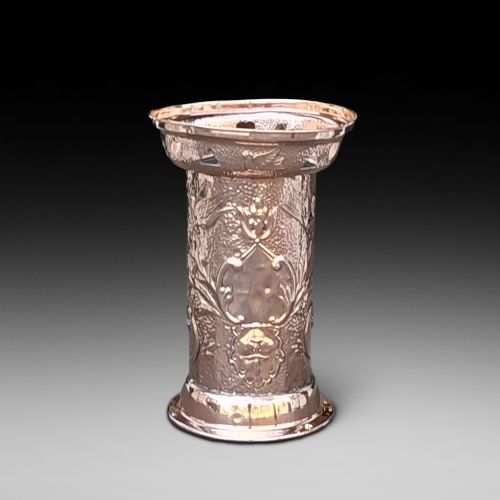
The most common survival from this period is the copper stick or umbrella stand, frequently paired with brass trim or supported by wrought iron frames. Many items align with the Arts and Crafts and Art Nouveau movements, displaying organic motifs and honest construction. Oak and mahogany components occasionally accompany the metalwork to anchor the taller floor-standing forms.
Materials and construction methods
Makers utilised sheet copper, often worked by hand using planishing hammers to create subtle facets that caught the light. Brass was frequently introduced for collars, handles, and feet, providing a bright tonal contrast against the deeper reddish-brown copper body. Wrought iron and oak supplied sturdy structural support for heavier vessels and umbrella containers.
Frames and stands relied on riveted joints, visible screwheads, and coopered wooden staves rather than hidden adhesives. This straightforward assembly aligns with the structural honesty promoted by Arts and Crafts practitioners. Iron frames were often left with a dark, forged finish to complement the warm metallic tones above.
Several umbrella stands were once stationed outside golf clubhouses, quietly holding hickory-shafted clubs alongside rainy-day brollies.
Distinctions in standard and execution
The quality of these stands rests upon the weight of the metal gauge and the precision of the hand-beating. Thicker copper resists dents and maintains structural integrity, whereas thin sheet metal buckles easily under daily use. Superior examples display deliberate, even hammer marks rather than uniform machine stamping.
Design cohesion also separates standard output from exceptional work. Finer pieces integrate complementary metals, such as brass rivets or silver elements, with balanced proportions. The integration of supporting frames, whether carved oak or forged iron, dictates whether a stand feels balanced or clumsy in a room.
W A S Benson·Birmingham Guild of Handicraft
The Edwardian Copper Stand Glossary
- Planishing
- The process of smoothing and shaping metal with a flat-faced hammer. This technique hardens the copper and leaves a distinctive faceted texture across the surface.
- Arts and Crafts
- A design movement spanning the late nineteenth and early twentieth centuries that emphasised handcrafting, local materials, and utility. Objects from this tradition reject mass production in favour of visible workmanship.
- Art Nouveau
- An international style characterised by organic, flowing lines and plant-inspired motifs. It heavily influenced the decorative mounts and handles found on copper vessels of this era.
- Coopered
- Constructed from tapered wooden staves bound together with metal hoops, much like a barrel. This method appears in oak umbrella stands and planters.
- Standard Lamp
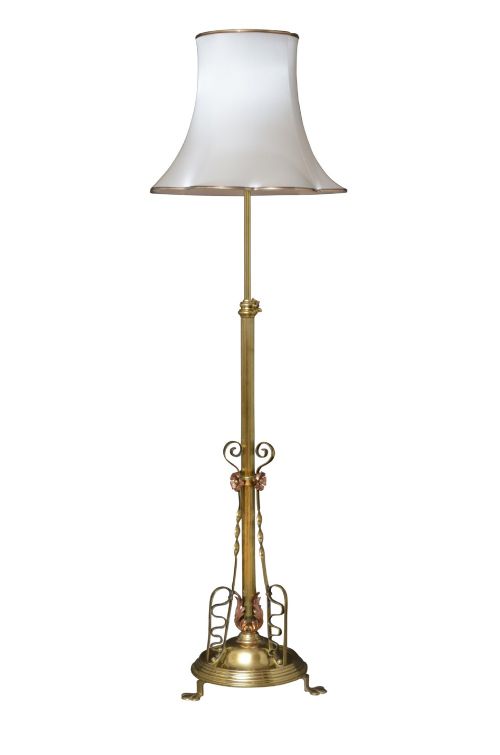
- A tall floor-standing lamp base, frequently constructed from brass and copper with telescopic adjustment. These stands often incorporate weighted bases for stability.
Edwardian Copper Stand: Frequently Asked Questions
How do I clean an antique copper stand?
Remove surface dust with a dry microfibre cloth, avoiding harsh chemical dips that strip away historical patination. Gentle application of specialist metal wax can protect the surface without creating an overly bright shine.
Allow the natural darkening process to continue, as nineteenth-century copper develops a deep, stable tone over decades. Scrubbing should be avoided entirely to preserve any original planished hammer marks.
Were these stands used for umbrellas?
Many tall cylindrical copper vessels served specifically as stick and umbrella stands in entrance halls. The metal lining helped contain rainwater from wet walking sticks and brollies.
Some designs incorporated iron drip trays at the base to protect wooden flooring from moisture damage. Other variations functioned as plant holders, log bins, or coal buckets rather than hallway receptacles.
How do I distinguish Arts and Crafts from Victorian pieces?
Arts and Crafts copper stands prioritize unpretentious construction, visible rivets, and hand-beaten textures inspired by natural forms. Victorian examples often lean towards heavier ornamentation, machine-stamped decoration, and formal symmetry.
There is considerable overlap, as the Edwardian period bridged both design philosophies. Examining the joinery and decorative motifs helps clarify the transition between the two eras.
Can I use a standard lamp safely today?
Floor-standing lamps from the early twentieth century generally require rewiring to meet modern electrical safety standards. A qualified electrician can replace old internal flex while retaining the original brass and copper fittings.
Ensure the telescopic height adjustment and weighted base remain stable before positioning the lamp in a room. Preserving the external metalwork allows the piece to function safely within a contemporary interior.