
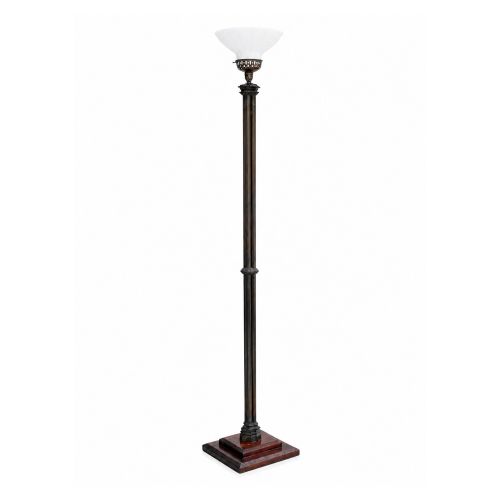
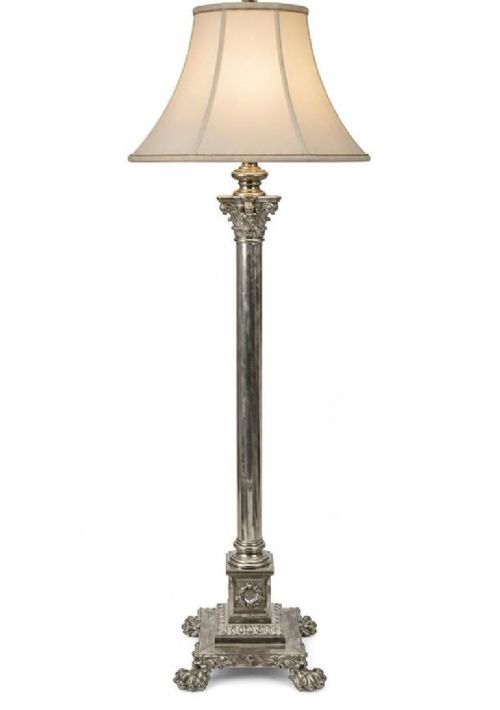
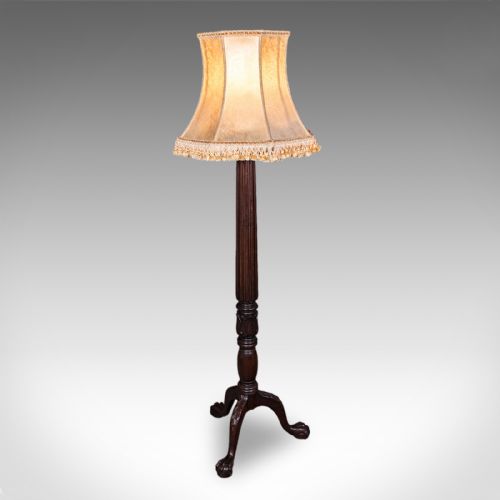
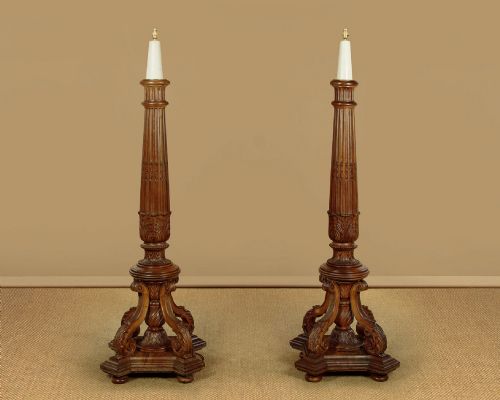



Edwardian Column Floor Lamp
An edwardian column floor lamp brings height and architectural dignity to a room, offering adjustable illumination rooted in classical design.
Edwardian Column Floor Lamp
An edwardian column floor lamp stands as a vertical pillar of light, drawing heavily upon neoclassical motifs popular at the turn of the twentieth century. These pieces serve as both functional lighting and architectural accents within traditional reception rooms and studies.
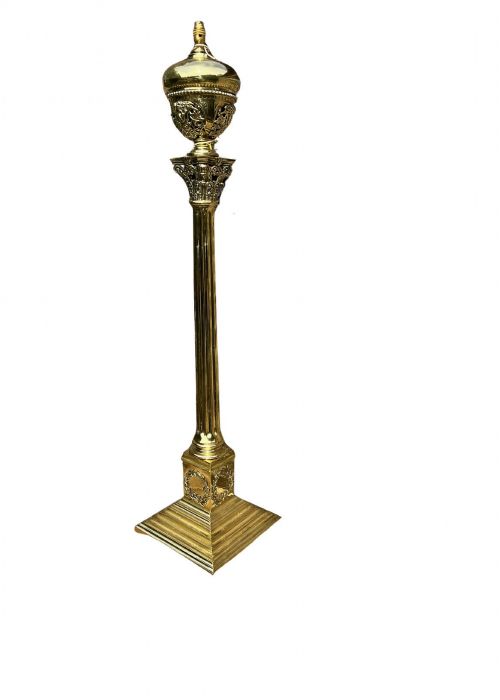
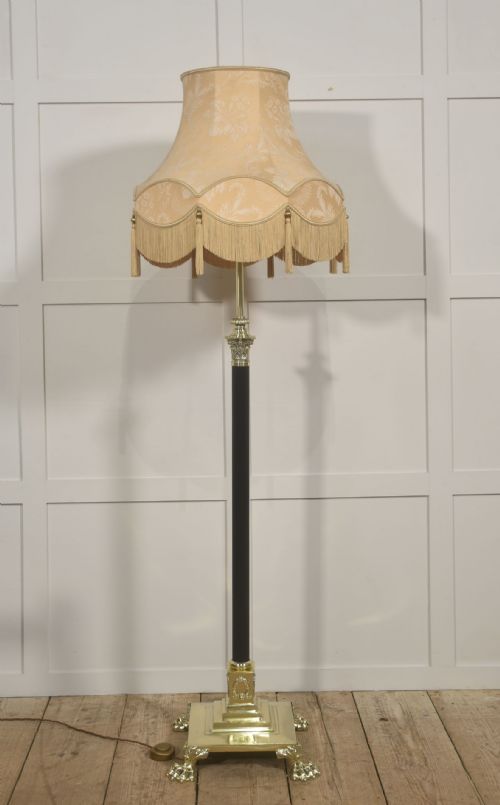
The most common incarnation on this page combines a brass fluted or Corinthian shaft with a weighted base to ensure stability. Examples frequently incorporate telescopic mechanisms, allowing the height of the standard lamp to be adjusted according to the room's proportions.
Materials and construction
Makers utilised cast and spun brass extensively for the columns, often pairing metal shafts with heavy iron internal weights to anchor the tall structure securely. Timber varieties such as mahogany and oak also appear, sometimes finished with lacquered Chinoiserie decoration or carved details.
Telescopic brass stems rely on precision engineering to allow smooth vertical movement without slipping. Surface finishes range from polished brass and bronzed metal to silver plating and dark wood lacquering.
Listings demonstrate a strong preference for brass as a primary material, accompanied by occasional variations in mahogany, oak, walnut, and marble.
Distinctions in quality
Quality rests in the crispness of the column casting, particularly the acanthus leaves and volutes found on Corinthian capitals. Finer examples display meticulous chasing and heavy gauge metal that resists bending across the long vertical shaft.
The sophistication of the mechanical adjustments dictates the grade of the piece, where a well-engineered telescopic mechanism locks firmly and moves true. Stepped bases and heavier marble or layered metal platforms indicate superior substance and stability.
The Edwardian Column Floor Lamp Glossary
- Corinthian column
- A classical architectural order featuring an ornate capital decorated with rows of carved acanthus leaves. This motif is frequently cast in brass for tall floor lighting.
- Telescopic standard lamp
- A lighting fixture with a sliding central shaft that permits physical height adjustment. This mechanism allows the overall stature of the floor light to be altered.
- Neoclassical revival
- A design movement drawing inspiration from classical Greek and Roman art and architecture. It manifests in these lights through straight columns, stepped plinths, and classical detailing.
- Standard lamp
- A traditional British term for a floor-standing lamp designed to illuminate a room from a vertical post. These fixtures are typically paired with fabric shades.
Edwardian Column Floor Lamp: Frequently Asked Questions
How do I adjust a telescopic floor lamp?
Many period floor lamps feature a central brass key or collar that loosens the inner shaft. Turning this mechanism allows the upper section to rise or descend smoothly to the desired height.
Once positioned, tightening the screw secures the stem in place. Care should be taken to support the weight of the fitting while making adjustments.
Where should I place an edwardian column floor lamp?
These tall architectural lamps suit the corners of drawing rooms, beside reading armchairs, or framing fireplaces. Their vertical emphasis draws the eye upward, complementing high ceilings and period cornicing.
Because many include adjustable stems, they adapt well to both ambient room lighting and direct task illumination.
How do I distinguish Edwardian from Victorian examples?
Victorian floor standards often favour heavier, ornate ornamentation with robust copper and brass combinations or Gothic Revival influences. Edwardian pieces frequently lean towards slender neoclassical proportions and lighter forms.
Both periods overlap considerably around the turn of the twentieth century, sharing similar telescopic brass technology and Corinthian capitals.
What kind of shades do these lamps require?
Traditional floor standards generally take large fabric shades supported by a shade carrier attached to the bulb holder. The scale of the shade should balance the height and girth of the column.
Silk, fringe-trimmed, or pleated fabric styles reflect the historical period of the bases while diffusing the light effectively.