
Edwardian Cluster Engagement Ring
An edwardian cluster engagement ring brings together a central gemstone encircled by smaller stones, offering the unmistakable sparkle of early twentieth-century design.
Edwardian Cluster Engagement Ring
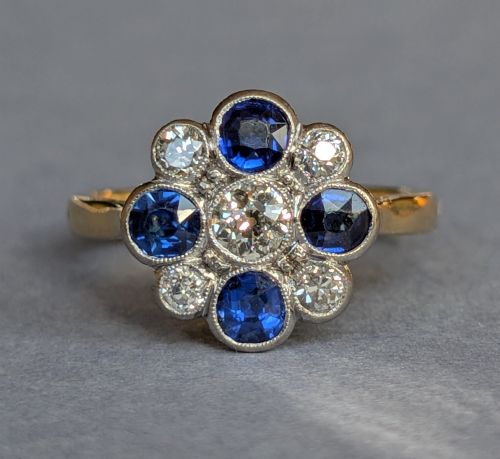
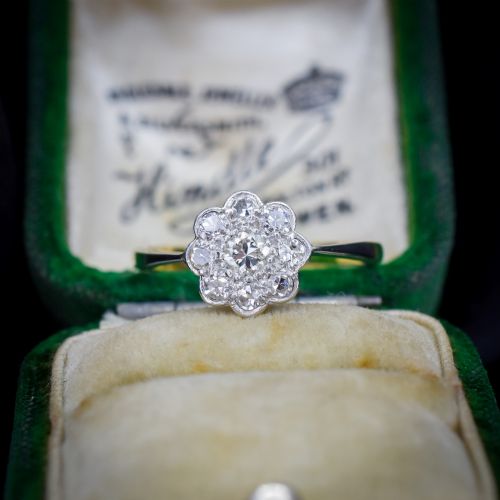
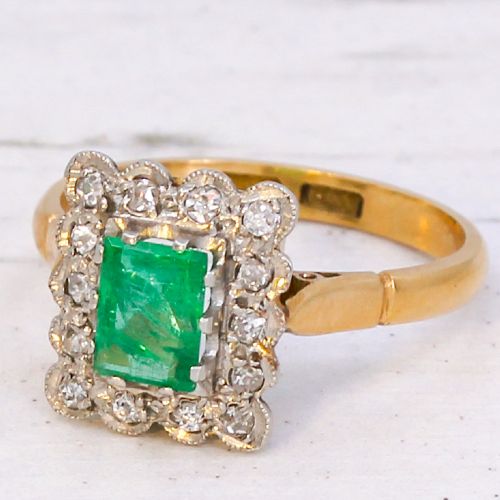
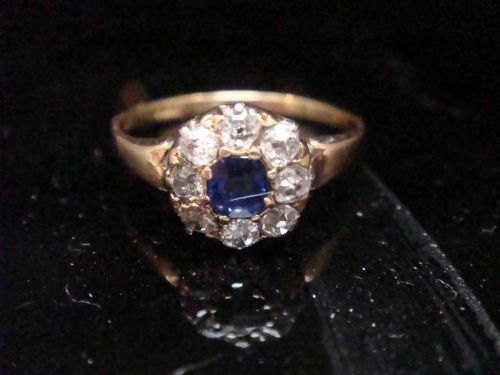
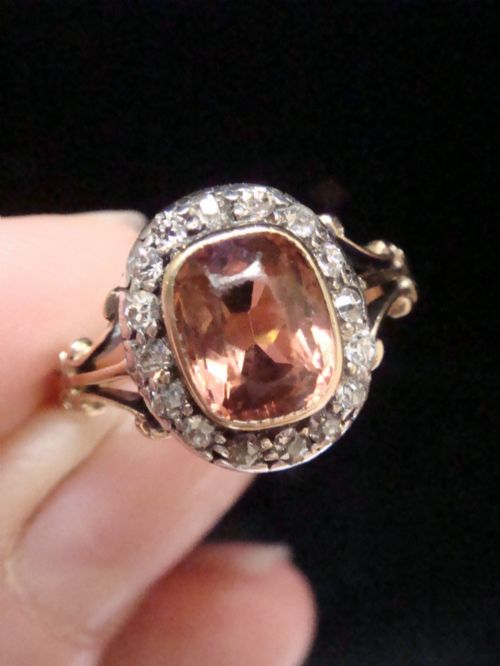
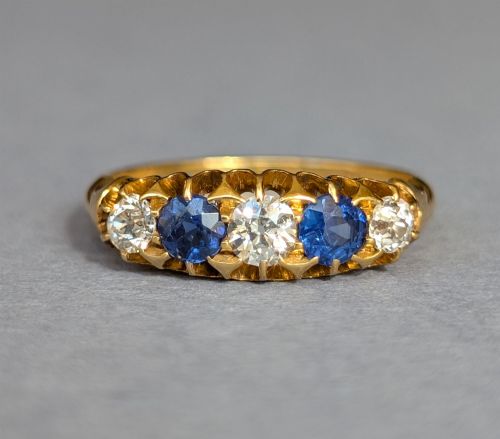
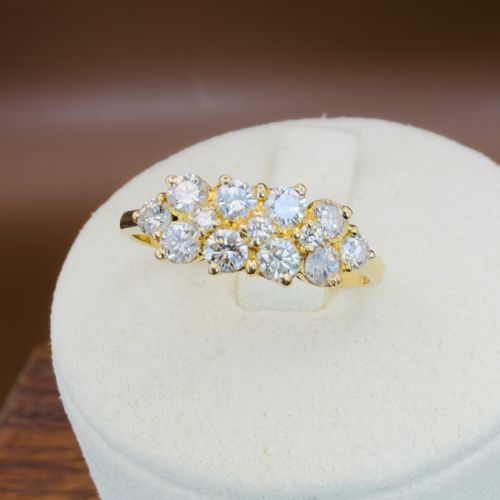
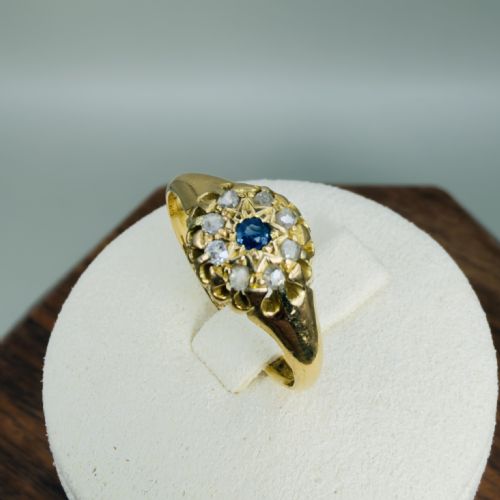
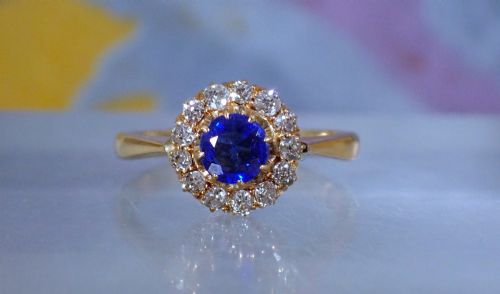
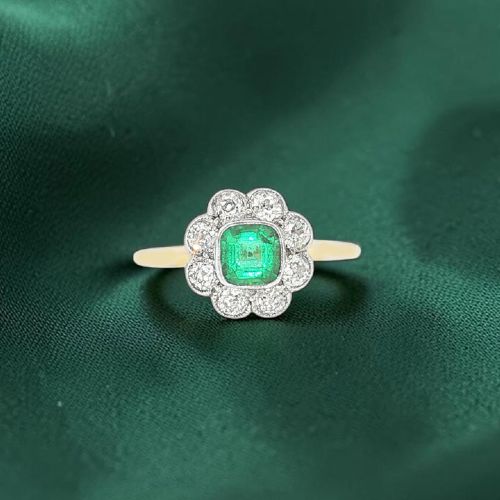
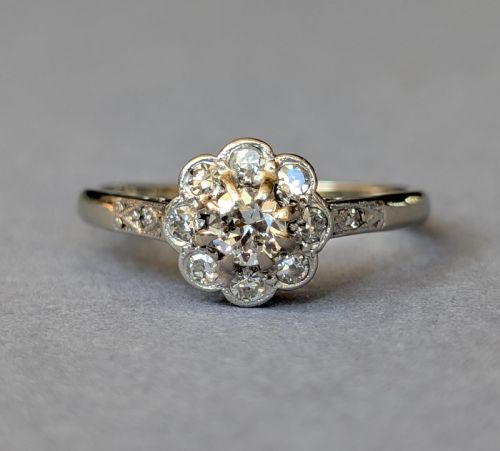
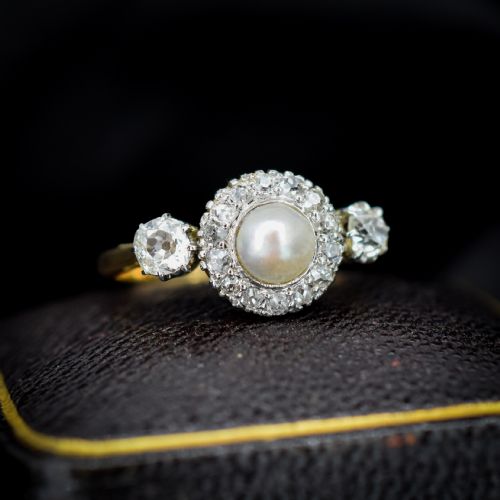
An edwardian cluster engagement ring centres on a bright gemstone, most often a diamond, sapphire, emerald or ruby, surrounded by a border of smaller matching or contrasting stones. These rings span periods from the early twentieth century alongside later Art Deco and mid-century interpretations, yet the core form remains anchored in floral and daisy motifs.
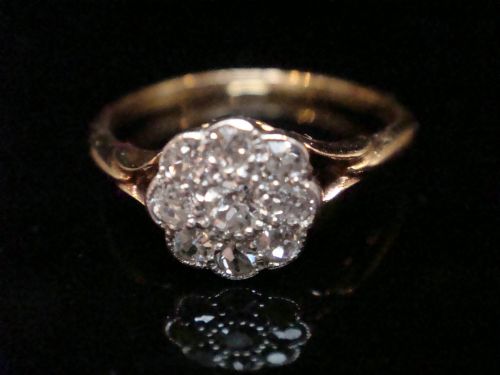
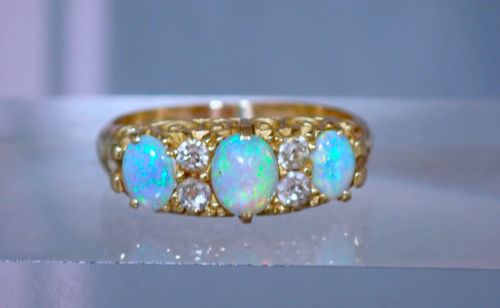
The version most commonly met on this page pairs a central old cut diamond or coloured gemstone with smaller accent diamonds in an arrangement mounted on a slender band. While the primary focus rests on genuine Edwardian examples, related pieces from Victorian and later decades share the signature cluster silhouette.
How they were made
Master jewellers constructed these pieces using combinations of 18ct yellow gold, white gold and platinum, frequently pairing gold shanks with platinum settings to enhance the whiteness around the stones. Hand-fabrication techniques allowed artisans to shape intricate settings that maximise the entry of light into old cut diamonds and coloured gems.
Gemstones such as sapphires, emeralds and rubies were secured using precise claw and bezel methods, while diamonds received hand-cut facets designed to catch candlelight and early electric illumination alike.
Some daisy cluster rings are constructed with a double twist band, giving the illusion of two vines embracing the finger.
What varies in quality
The distinction between tiers of these rings depends upon the natural calibre of the central gemstone and the precision of the hand-cut diamonds in the surrounding cluster. Untreated coloured stones and finely proportioned old mine or old European cuts elevate a piece significantly above standard commercial equivalents.
Proportion and symmetry dictate the visual harmony of the cluster, where balanced spacing and original claw work reveal the touch of a skilled workshop rather than mass production.
The Edwardian Cluster Engagement Ring Glossary
- Cluster ring
- A ring featuring a prominent central stone framed by a ring of smaller surrounding gemstones. This arrangement maximises visual impact and perceived size.
- Old cut
- A diamond cut by hand before modern machinery standardised proportions, characterised by high crowns, small tables and deep pavilions. These stones produce a distinctive softer candlelight gleam.
- Navette
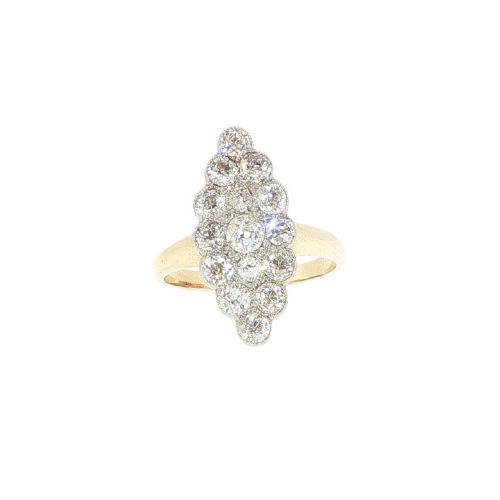
- A boat-shaped gemstone setting that tapers to sharp points at either end. This elongated form sits gracefully along the length of the finger.
- Daisy cluster
- A floral ring design comprising a central round gemstone encircled by circular petal stones. It remains a quintessential Edwardian wedding choice.
Edwardian Cluster Engagement Ring: Frequently Asked Questions
How do I care for an old cluster ring?
Clean these delicate pieces gently using warm soapy water and a soft brush, avoiding harsh ultrasonic cleaners that can loosen antique settings.
Store them separately in a lined box to prevent the older gold and platinum from scratching against modern jewellery.
Can these rings be resized easily?
Most gold and platinum bands permit traditional sizing by a skilled jeweller who understands antique shank construction.
Care must be taken near the gallery and cluster shoulders to protect the integrity of the original claw work.
What defines the Edwardian style?
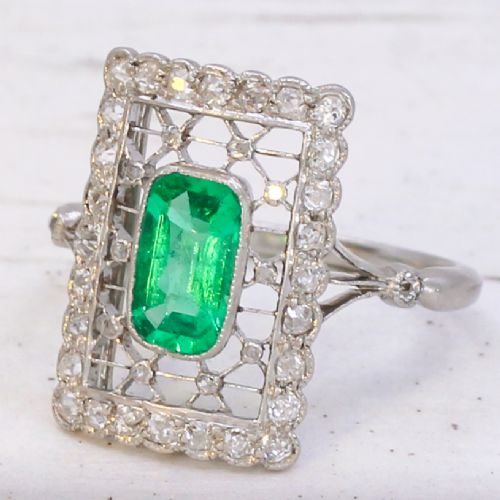
Lightness, grace and intricate openwork metal fabrication define the aesthetic, often utilising platinum to create lace-like supports for diamonds.
Floral motifs and symmetrical geometric arrangements dominate the period's output.
Are the gemstones treated?
Many fine emeralds, sapphires and rubies from the early twentieth century feature minimal or no heat treatment, which adds to their collector appeal.
Documentation often notes whether stones remain unheated or retain natural origin characteristics.