



Edwardian Chippendale Dining Chairs
Edwardian chippendale dining chairs combine eighteenth-century revival styling with the solid craftsmanship of the early twentieth century.
Edwardian Chippendale Dining Chairs
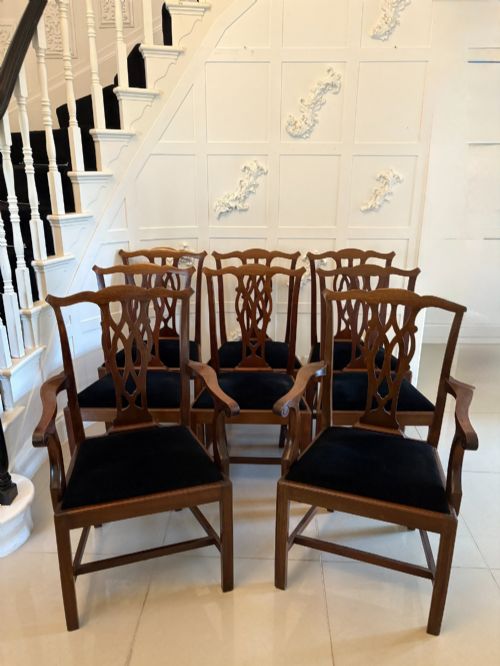
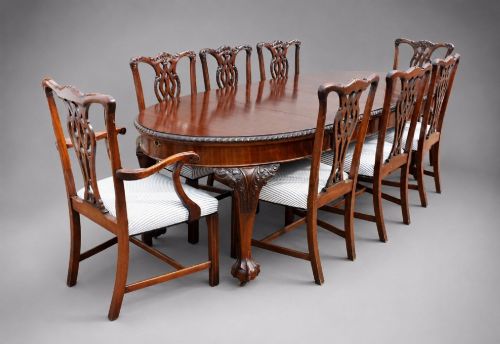
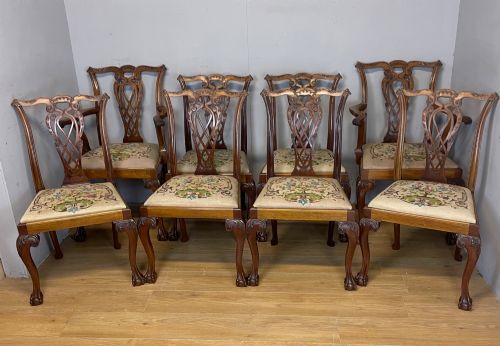
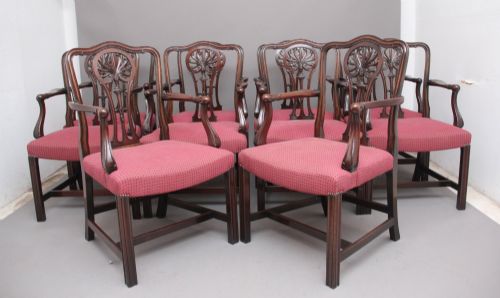
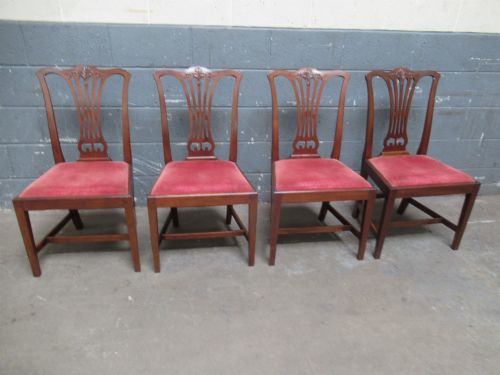
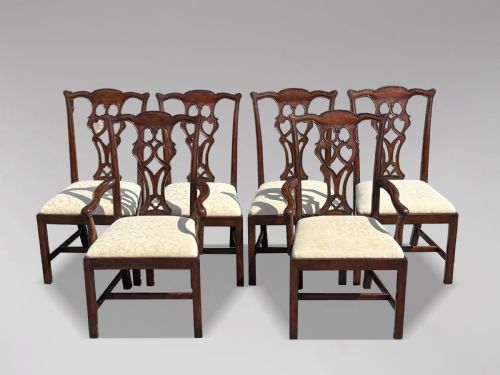
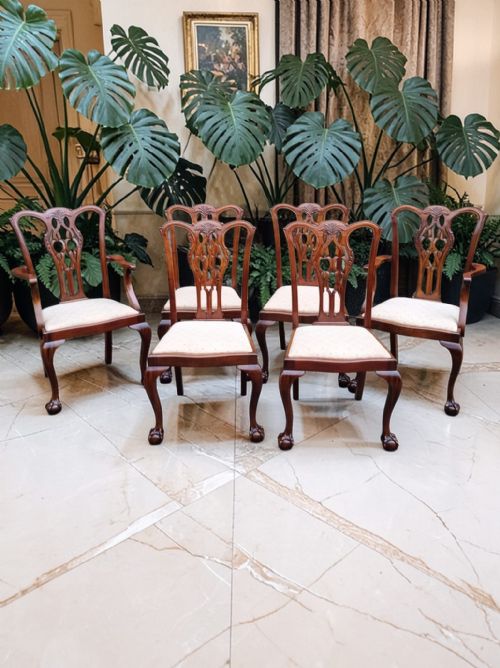
Edwardian chippendale dining chairs revive the distinctive carved splats, serpentine top rails, and sturdy underframes popularized by Thomas Chippendale during the Georgian era. Buyers searching for edwardian chippendale dining chairs typically encounter matching sets ranging from four to twelve pieces, frequently including armchairs or carvers alongside single side chairs.
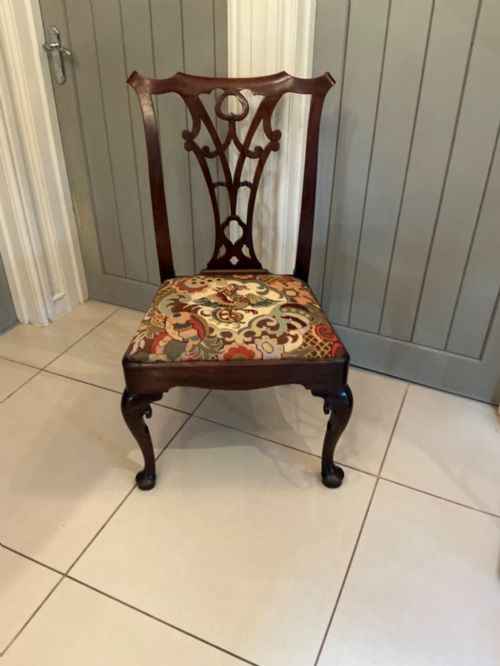
The surviving examples bridge the nineteenth and twentieth centuries, drawing heavily on revival aesthetics that favor decorative piercing on chair backs and ball and claw feet. Most pieces date from around 1900 to 1910, reflecting a period of high demand for formal dining furniture rooted in historical design vocabulary.
How they were made
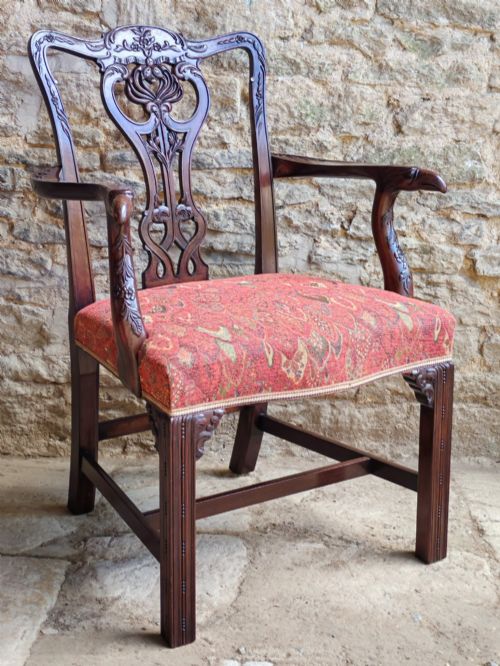
Cabinetmakers constructed these pieces primarily using solid mahogany, selected for its dense grain and capacity to hold crisp, intricate hand-carved details along the top rails and splats. Joinery relied on traditional mortise and tenon techniques to ensure structural stability under daily use in formal dining rooms.
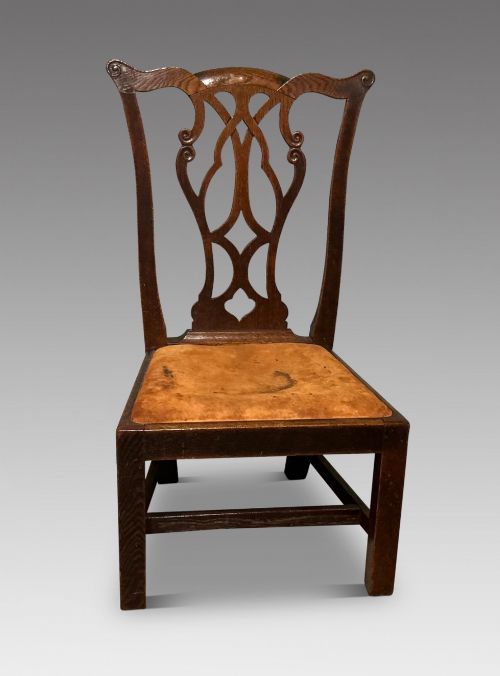
Upholstered drop-in seats and fixed pads incorporate traditional textile coverings such as leather, velvet, damask, tapestry, and standard fabric upholstery, secured with brass tacks or studs.
The inventory spans the Edwardian era alongside nineteenth-century revival pieces and Georgian designs.
What varies in quality
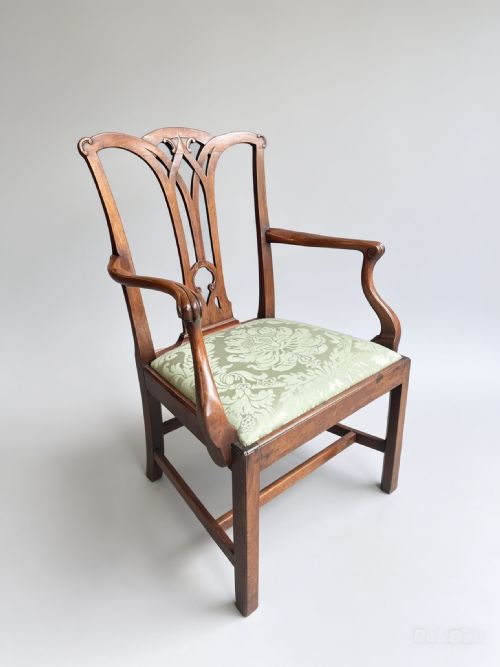
The caliber of these chairs depends largely on the depth and precision of the wood carving, particularly the execution of pierced splats and sculpted knuckle arms on carvers. Superior sets demonstrate consistent timber selection and matching grain patterns across every chair in the group.
Scale and proportion also dictate standing, with higher-tier examples offering more robust framing and well-balanced proportions that mirror genuine eighteenth-century models without appearing overly heavy or clumsy.
Howard and Sons·Warings·Alfred Allen of Birmingham·Trollope and Colls Ltd·H. Samuel
The Edwardian Chippendale Dining Chairs Glossary
- Chippendale Revival
- A late nineteenth and early twentieth-century style movement that recreates the distinct chair backs, cabriole legs, and ornate carving associated with eighteenth-century designer Thomas Chippendale. These pieces adapt historical forms for Edwardian dining spaces.
- Carver
- An armchair designed specifically for the head of a dining table, featuring supportive elbow rests. They usually accompany a larger set of single side chairs.
- Splat
- The vertical wooden strip down the centre of a chair back that provides structural support and decorative carving. In this category, splats frequently feature elaborate pierced ribbon or ladder designs.
- Ball and claw
- A furniture foot carved to resemble a bird's talon gripping a ball. This classical motif appears frequently on the cabriole legs of revival dining chairs.
- Elbow chair
- An alternative term for an armchair with supportive arms flanking the seat. These often match the design language of the associated dining set.
Edwardian Chippendale Dining Chairs: Frequently Asked Questions
What is a carver chair?
A carver chair is an armchair intended for the head or foot of a dining table, featuring wooden elbow rests that match the accompanying side chairs. These pieces often pair with single chairs in sets of six, eight, or twelve.
Cabinetmakers designed them to offer additional comfort while maintaining the unified aesthetic of the dining room set.
How do I spot revival pieces?
Revival pieces display machine-sawn timber characteristics alongside hand-finished carving, typically utilising Edwardian hardware and construction methods beneath eighteenth-century stylistic motifs. The wood colour and polish generally reflect early twentieth-century finishing techniques rather than Georgian age patina.
Examining the underside of the seat frame often reveals the specific period joinery and secondary woods characteristic of the 1900s.
Are large sets common?
Large sets of eight, ten, or twelve chairs survive because formal Edwardian dining rooms required extensive seating arrangements for entertaining. Finding an entire matched group from this period remains a significant advantage for collectors.
These larger groupings usually include a combination of single side chairs and matching armchairs.
What woods were used?
Mahogany serves as the predominant timber for these dining chairs, chosen for its strength and rich reddish-brown tone. Oak also appears occasionally in specific regional interpretations of the style.
Upholstery materials range from leather and velvet to tapestry textiles and damask.