



Edwardian Champagne Cooler
An edwardian champagne cooler commands the table with heavy silver plate, coopered oak, and gleaming brass made for serious entertaining.
Edwardian Champagne Cooler
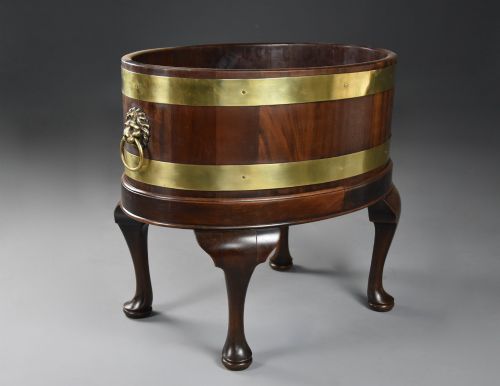
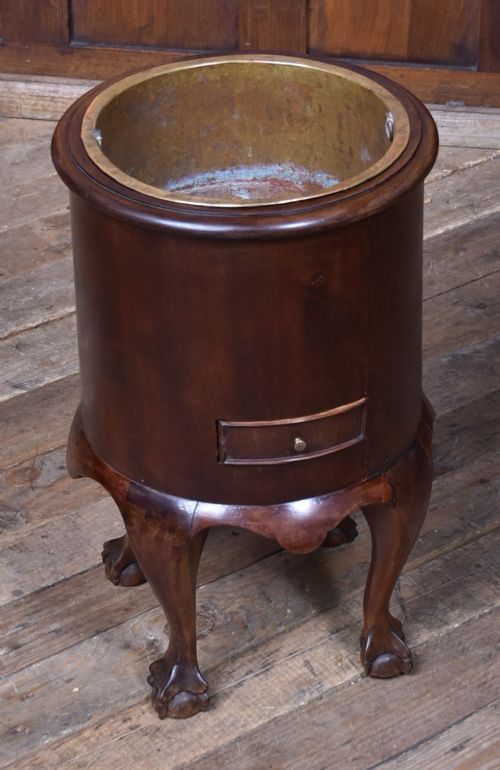
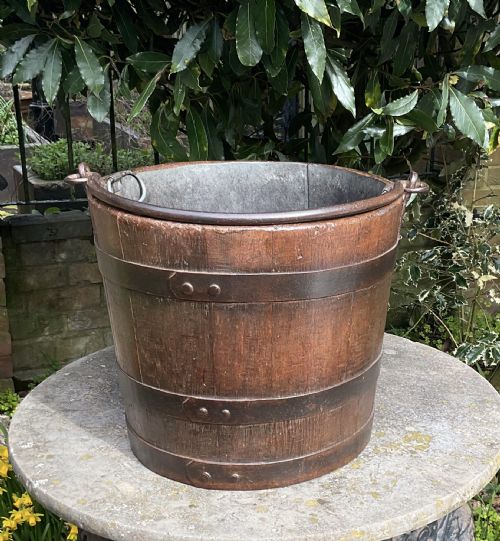
An edwardian champagne cooler brings substance and formal hospitality to the dining room, taking the form of coopered buckets, twin-handled vessels, and standing bowls. The pieces seen on this page span heavy oak and mahogany bound with brass alongside silver plate and ceramic-lined ice pails.
While the search points to the Edwardian decade, the selection broadens to include Late Victorian, Georgian, and later periods up to nineteen-thirty. Buyers encounter wine coolers, barware, and ice buckets that served both domestic dining and maritime service.
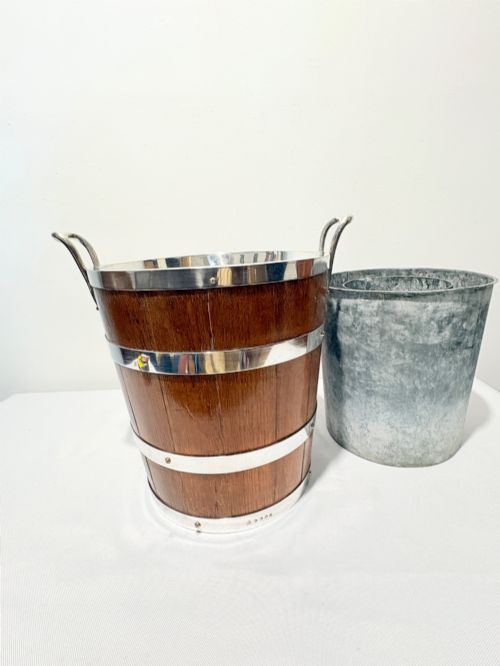
Most examples rely on robust timber construction like oak and mahogany, paired with durable metal linings of zinc, iron, or silver plate. Form follows function closely, resulting in deep cylindrical buckets designed to hold ice and bottles securely through a long evening.
How they were made
The construction of these vessels combines traditional carpentry with metalworking trades, utilising coopered staves of oak or mahogany held together by tight brass bands. Woodworkers shaped timber staves to form watertight barrels and buckets before adding metal liners.
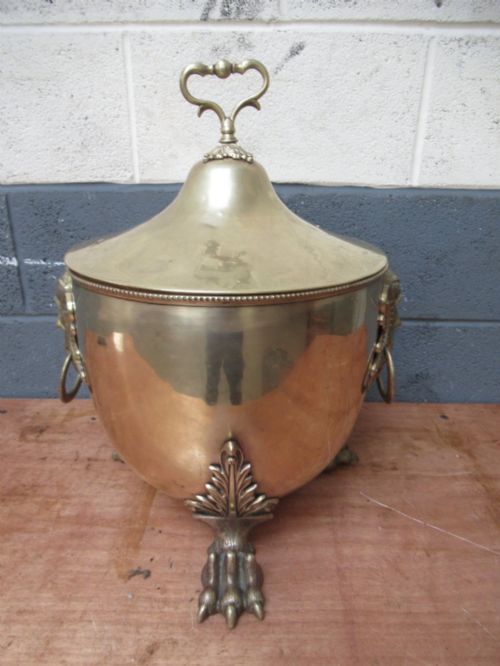
Silversmiths and electroplaters applied silver plate over base metals to create bright reflective surfaces for dining rooms, while brass and copper were beaten, spun, or cast into decorative bowls and stands. Makers also incorporated ceramic creamware liners inside wooden buckets to maintain temperature.
Edwardian Champagne Cooler Retail Price Guide 2026
Typical asking prices for edwardian champagne cooler among the pieces listed under this phrase on Sellingantiques today, from the lower quarter to the upper quarter. They describe what is for sale here now, not the wider market.
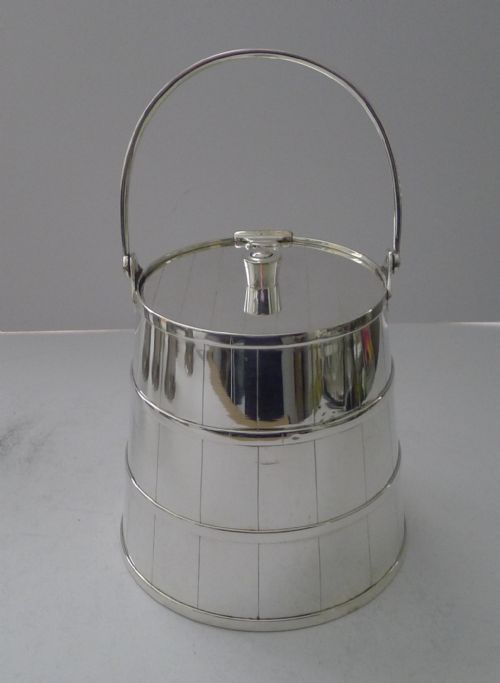
Some Edwardian drinkers kept their biscuits as cold as their champagne by employing novelty silver-plated boxes that doubled as ice pails.
What varies in quality
Quality rests upon the integrity of the materials and the precision of the assembly, distinguishing heavy timber staves with tight joints from simpler turned vessels. The weight and thickness of the silver plate or the gauge of the brass determine durability over decades of use.
Design ambition separates standard barware from superior presentation pieces, seen in matched stands, maker marks, and novelty forms like biscuit boxes shaped as ice pails. Finer examples retain original ceramic liners, secure handles, and well-fitted metal inserts.
Christofle·Dawson·James Dixon And Sons
The Edwardian Champagne Cooler Glossary
- Coopered
- Built from curved wooden staves bound together with metal hoops, much like a traditional barrel. This technique ensured liquid containment before modern seamless vessels.
- Silver Plate
- A thin layer of silver fused or electroplated to a base metal such as copper or nickel brass. It provided the luxurious appearance of solid silver at a lower cost.
- Creamware
- A fine-grained, cream-coloured earthenware developed in Staffordshire during the eighteenth century. It was frequently used for internal liners in ice buckets and coolers.
- Barware
- Utensils and vessels intended for the storage, preparation, and serving of drinks. This category includes ice pails, wine holders, and presentation bowls.
Edwardian Champagne Cooler: Frequently Asked Questions
How were these coolers used?
These vessels were filled with ice and water to chill wine and champagne bottles during formal meals and receptions. They sat either directly upon the dining table or on dedicated mahogany stands nearby.
Servants used them to keep bottles at the correct temperature throughout long dinner parties. Some smaller versions doubled as ice pails or biscuit boxes for parlour use.
Are original liners important?
Original ceramic creamware or metal liners add significantly to the authenticity and completeness of a piece. They were designed to protect the wooden staves from moisture and thermal shock.
When a cooler retains its correct period liner, it preserves the original intended function of the object. Replacements are common due to the fragile nature of early ceramics.
How do I date an Edwardian cooler?
Dating relies on stylistic cues, hallmarks, and construction methods recorded across the piece. Edwardian examples often share design traits with Late Victorian and Belle Epoque pieces.
Maker marks and registration numbers stamped into the silver plate provide precise chronological anchors. Timber choice and joinery style also help distinguish Georgian revivals from early twentieth-century manufacture.
How do I care for silver plate?
Silver plate requires gentle cleaning with non-abrasive cloths and dedicated silver polish to preserve the thin metallic layer. Excessive scrubbing removes the plating and exposes the base metal underneath.
Keeping the pieces dry after use prevents tarnishing and protects wooden elements from water damage. Storing them away from direct heat sources maintains the stability of the wood and metal bonds.