




Edwardian Chair Back Settee
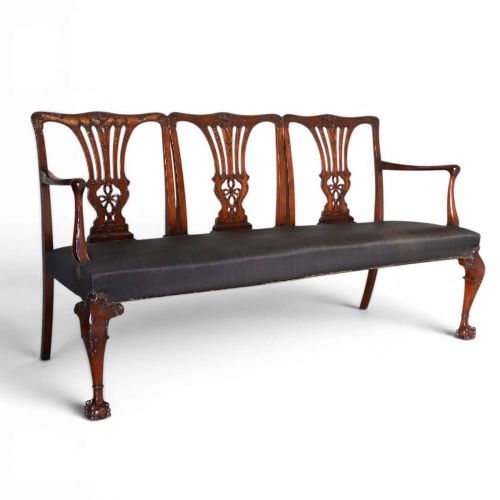
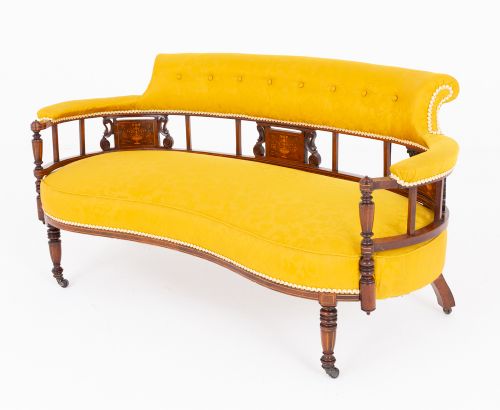
These Edwardian chair back settee examples bring together pierced splats and elongated seating, offering a refined focal point for a formal drawing room.
Edwardian Chair Back Settee
An edwardian chair back settee combines the modular aesthetic of adjoining dining chairs into a continuous timber framework designed for parlour seating. These pieces emerge predominantly from the Edwardian era and the late nineteenth century, spanning Sheraton Revival, Hepplewhite, and Chippendale styles.
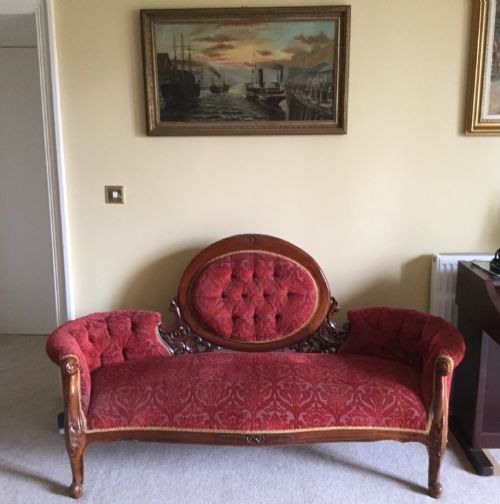
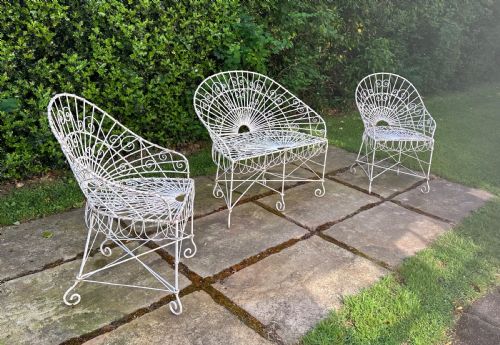
The form frequently appears alongside matching salon suites, garden sets, and double ended sofas upholstered in damask, velvet, or brocade. Buyers encountering this phrase will find mahogany and satinwood frames, often detailed with intricate inlay work and caned panels.
Makers utilised resilient hardwoods to support multi-chair backrests, creating elongated seating arrangements intended for drawing rooms and formal reception spaces. The pieces bridge the gap between individual parlour chairs and full Chesterfield or salon suites.
What Varies in Quality
The refinement of the timber carving sets superior examples apart, particularly where Chippendale or Hepplewhite Revival motifs are executed with depth and precision. Crisp lines in satinwood inlay and balanced proportions across multiple chair backs indicate higher workshop standards.
Structural integrity depends on the quality of the timber joints within the extended framework and the preservation of original caning or frame polish. Finer pieces demonstrate careful selection of figured mahogany and rosewood veneers that complement the overarching style.
Edwardian Chair Back Settee Retail Price Guide 2026
Typical asking prices for edwardian chair back settee among the pieces listed under this phrase on Sellingantiques today, from the lower quarter to the upper quarter. They describe what is for sale here now, not the wider market.
Current listings feature pieces spanning the Victorian and Edwardian periods, constructed primarily from mahogany, rosewood, and satinwood.
James Shoolbred
The Edwardian Chair Back Settee Glossary
- Satinwood inlay
- A decorative technique where contrasting light-toned satinwood is fitted into recesses within a darker mahogany or rosewood surface. This creates geometric or floral patterns across the crest rails and back splats.
- Chair back settee
- A long seat whose backrest is constructed to mimic a row of joined chairs, often featuring distinct individual splats. This design draws directly on eighteenth-century Hepplewhite and Chippendale chair geometries.
- Double ended sofa
- An upholstered seating form featuring scrolled or raised ends of equal height, allowing a person to recline from either side. These pieces frequently feature sprung bases and deep pile upholstery.
- Salon suite
- A matching grouping of parlour furniture usually comprising a settee and several complementary armchairs or side chairs. They share uniform timber types, inlay patterns, and upholstery fabrics.
- Chippendale revival
- A nineteenth and early twentieth-century design movement that reinterpreted Thomas Chippendale's mid-eighteenth-century furniture styles. It is recognised through pierced splats, carved ribbon motifs, and cabriole legs.
Edwardian Chair Back Settee: Frequently Asked Questions
What is an edwardian chair back settee?
An edwardian chair back settee is a formal piece of seating furniture featuring a continuous backrest styled to resemble a row of adjoining dining or parlour chairs.
These settees were built primarily during the late nineteenth and early twentieth centuries, drawing heavily on Sheraton and Chippendale revival aesthetics for their decorative pierced splats and inlaid timbers.
How were these settees used originally?
These pieces served as formal seating in drawing rooms, parlours, and reception halls where guests gathered for conversation. Their elongated frames provided ample seating while maintaining the neat visual appearance of individual chairs.
Owners often placed them against prominent walls or paired them with matching salon chairs to create a cohesive interior decorative scheme.
How do I care for inlaid satinwood?
Inlaid satinwood requires gentle dusting with a soft, dry cloth and protection from direct sunlight to prevent the decorative veneers from fading. Keeping the timber away from extreme temperature fluctuations preserves the integrity of the glued inlays.
Applying occasional appropriate furniture wax maintains the lustre of the mahogany and satinwood surfaces without damaging the historic finish.
How can I tell the period of a settee?
Dating relies on examining the timber species, upholstery construction methods, and stylistic revival cues visible in the frame. Edwardian examples often feature lighter satinwood inlay and refined Sheraton revival lines, whereas Victorian versions tend to utilise heavier walnut or mahogany frames.
Looking closely at the joinery and the type of springs or webbing used in the base provides further clues regarding the manufacturing decade.