



Edwardian Cased Barometer
When you want an edwardian cased barometer, you are looking for a precision weather instrument housed in a timber or brass container built to last.
Edwardian Cased Barometer
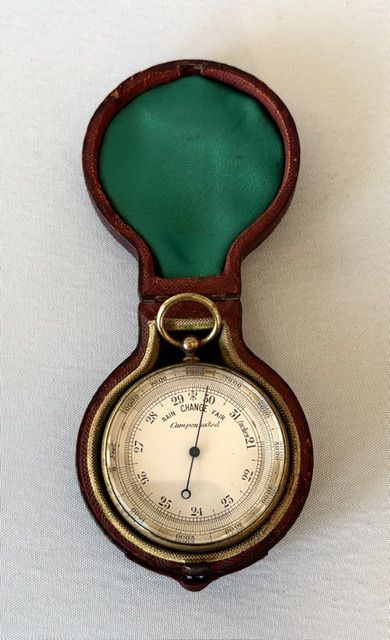
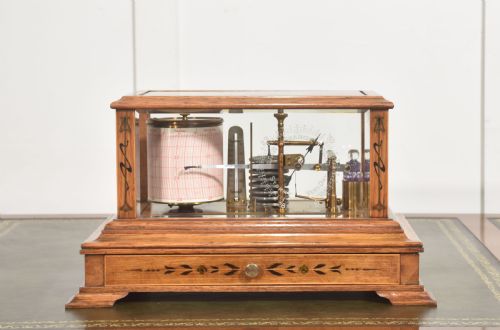
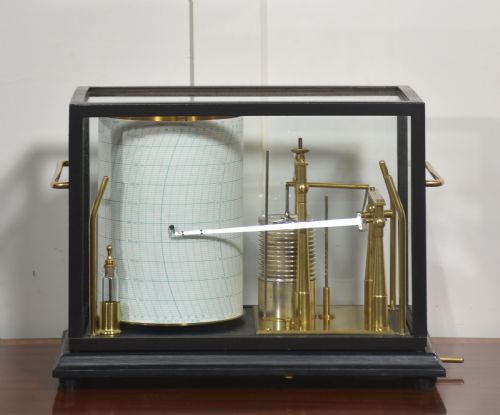
An edwardian cased barometer is a scientific instrument designed to measure atmospheric pressure, often taking the form of a barograph recording trends on paper charts. These pieces originate primarily from the Edwardian period and the early twentieth century, alongside Victorian and later nineteenth-century examples. The selection spans pocket altimeters, stick barometers, weather stations, and multi-glass recording instruments.
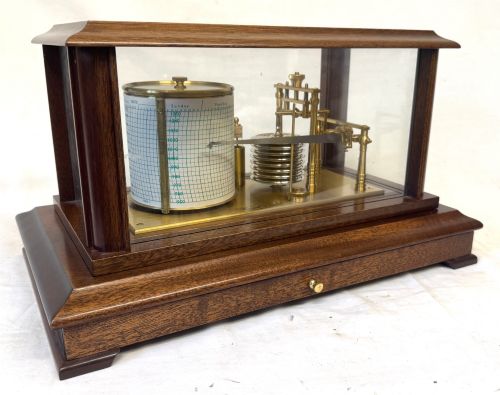
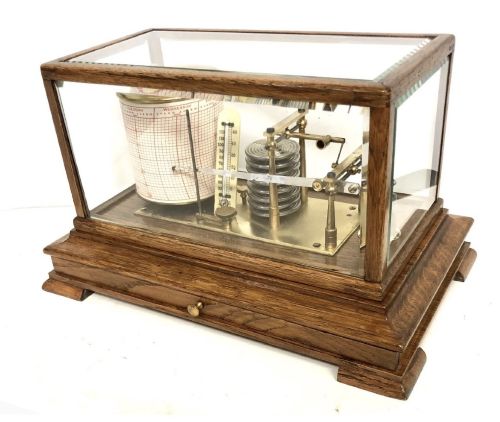
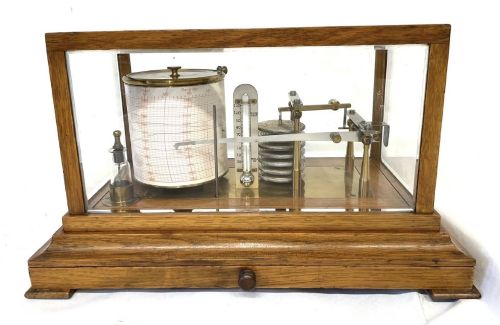
The most common version met on this page is the oak or mahogany cased barograph housed beneath bevelled glass panels with a dedicated chart drawer below. Such models frequently incorporate a thermometer alongside the main recording drum and feature makers such as Short & Mason or Negretti & Zambra. Variations range from plain light oak boxes to elaborately inlaid Art Nouveau designs and larger shop display pieces.
How they were made
The enclosures rely predominantly on solid oak and mahogany, occasionally complemented by walnut, brass, and glass. Woodworkers constructed these glazed five-glass cases and cabinets with dovetailed joints and fitted brass hinges to protect the delicate mechanisms within. Internal frames hold metal vacuum chambers, steel springs, and paper drums that rotate via clockwork movements.
Dials and scales utilise engraved brass, paper, and card, marked with atmospheric readings and maker details. Surviving examples frequently retain original paper charts, leather fittings, and specialised movements supplied by makers like Gluck or housed in cases retailed by firms such as Harrods.
Edwardian Cased Barometer Retail Price Guide 2026
Typical asking prices for edwardian cased barometer among the pieces listed under this phrase on Sellingantiques today, from the lower quarter to the upper quarter. They describe what is for sale here now, not the wider market.
Typhoon barometers included onboard calculations for mariners facing sudden tropical storms at sea.
What varies in quality
Quality rests in the precision of the mechanical movement and the crispness of the maker signatures engraved on the brass beds or paper scales. Instruments signed by notable makers such as Short & Mason, Negretti & Zambra, or Casella demonstrate superior machining and reliability compared to anonymous workshop output. The complexity of the combination - such as adding a thermometer, barometer dial, or survey equipment - elevates the standard.
Cabinetwork distinguishes the grade of an instrument just as much as its internal mechanics. Finely figured mahogany or oak timbers, integrated chart drawers, bevelled glass panes, and inlaid Art Nouveau decoration signify high-tier production. Simpler utility boxes represent the more utilitarian end of the same period.
Russell Norwich·Hezzanith·Short And Mason·Negretti And Zambra·Alexander Wright·Casella London·Baines Harrogate·R Fuess·Harrods Of London·Robson Of Newcastle·Jules Richard·Aitchison·Depree And Young Ltd Exeter·Admiral Fitzroy·Dobbie Son And Hutton London
The Edwardian Cased Barometer Glossary
- Barograph
- A self-recording barometer that graphs barometric pressure over time onto a rotating paper chart. It typically uses an airtight metal box connected to an inked arm.
- Aneroid barometer
- A barometer that measures pressure without liquid, using an expanding and contracting metal capsule. These movements form the basis of most cased barographs.
- Bevelled glass
- Glass panes with angled edges fitted into the wooden case. This technique adds depth and light reflection to the viewing windows of the instrument.
- Chart drawer
- A small storage compartment built beneath the base of a barograph to hold spare recording papers and ink supplies. It keeps necessary maintenance items directly with the instrument.
Edwardian Cased Barometer: Frequently Asked Questions
How do I operate a barograph?
Place the instrument on a stable, level surface away from direct heat and drafts to ensure accurate pressure readings. Wind the clockwork drum gently and secure a fresh paper chart around the cylinder before adjusting the pen.
Check that the arm rests lightly on the paper without applying excess pressure that might restrict movement. The drum will rotate slowly over a weekly cycle, tracking atmospheric changes as the vacuum chamber expands or contracts.
Where should I place a cased barometer?
Position the instrument in a principal living room or hallway where ambient temperature remains relatively constant. Avoid placing wooden cases near radiators, open fires, or direct sunlight to prevent timber warping and glass stress.
Ensure the location offers enough clearance to open the bevelled glass lid or access the chart drawer easily. Proper placement protects the delicate internal brass and steel components from environmental shock.
How do I clean the glass case?
Wipe the wooden exterior gently with a dry microfiber cloth to remove dust from the oak or mahogany surfaces. Avoid applying liquid polishes or moisture directly near the joints and brass hinges.
Clean the bevelled glass panes using a mild glass cleaner applied to a cloth rather than the instrument itself. Take care not to spray moisture near the internal paper charts or the open recording mechanism.
Are these barometers still accurate?
Many historic aneroid barometers and barographs retain their sensitivity and continue to track local weather patterns accurately. Regular calibration against known atmospheric measurements helps maintain their functional reliability over time.
Minor adjustments can be made via the internal linkage screws if the pointer deviates from local readings. Professional servicing may be required if the clockwork movement or vacuum chambers lose their responsiveness.