
Edwardian Carved Wine Table
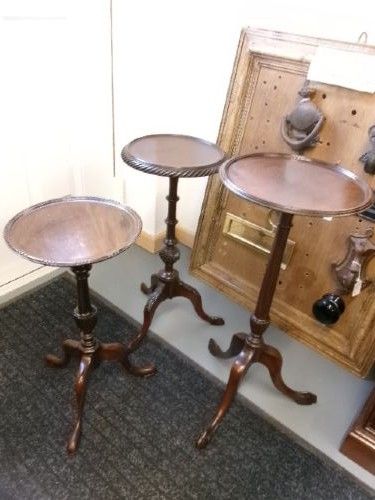
An Edwardian carved wine table is a compact pedestal piece designed for holding glasses or lamps, bringing compact utility and decorative carving to a room.
Edwardian Carved Wine Table
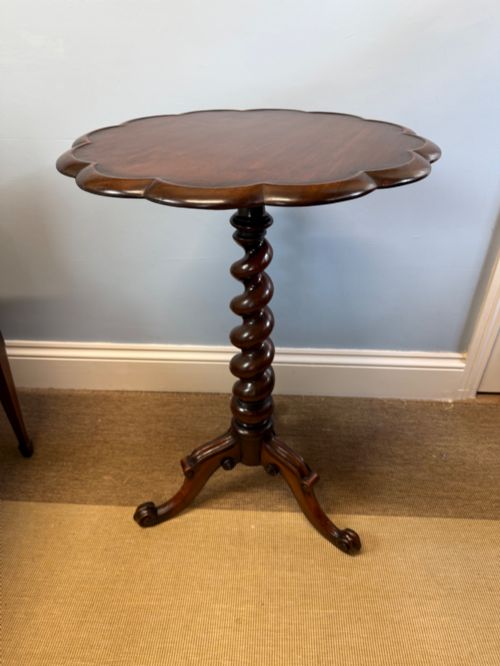
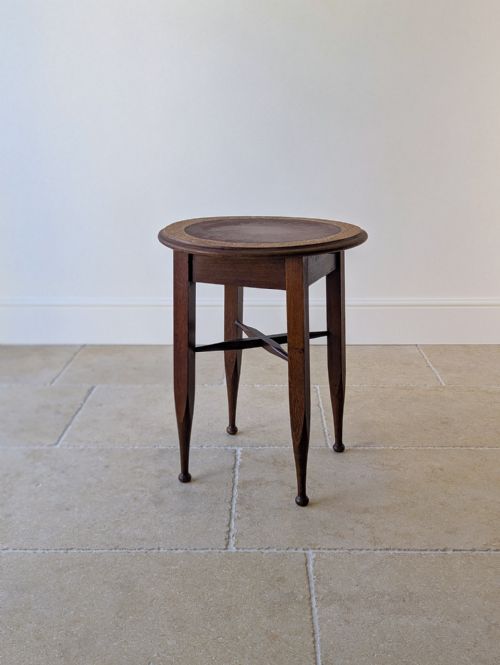
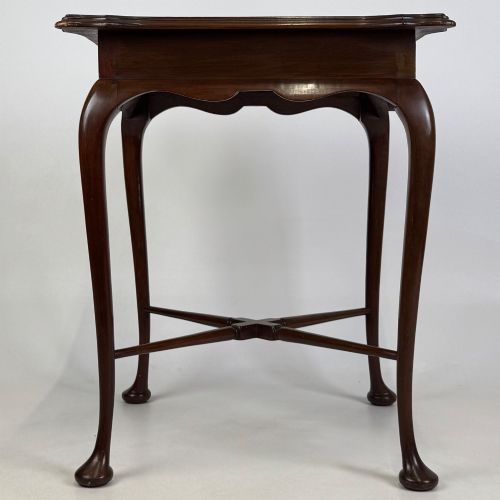
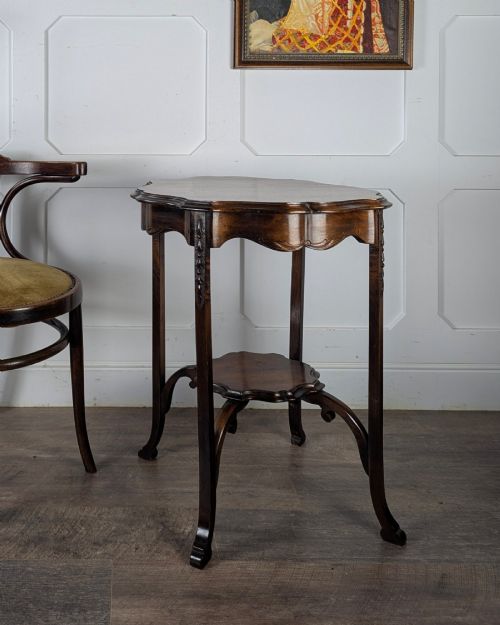
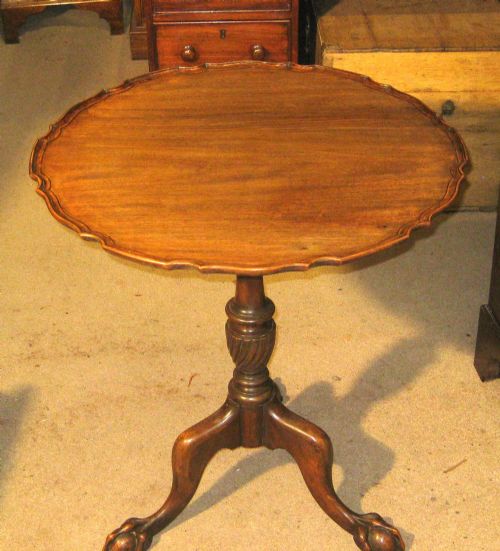
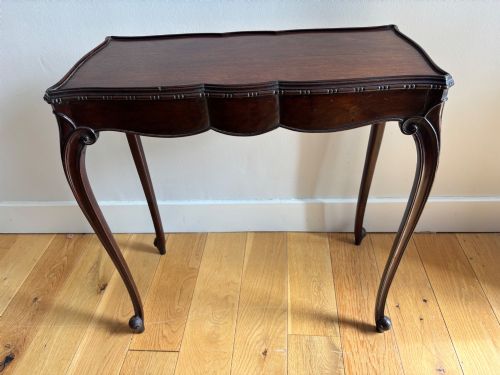
An edwardian carved wine table is fundamentally a small pedestal piece, most frequently appearing from the Edwardian period or in Edwardian style alongside Victorian and early twentieth-century examples. The selection on this page centres heavily on mahogany, walnut, and oak occasional tables, tripod tables, and side tables.
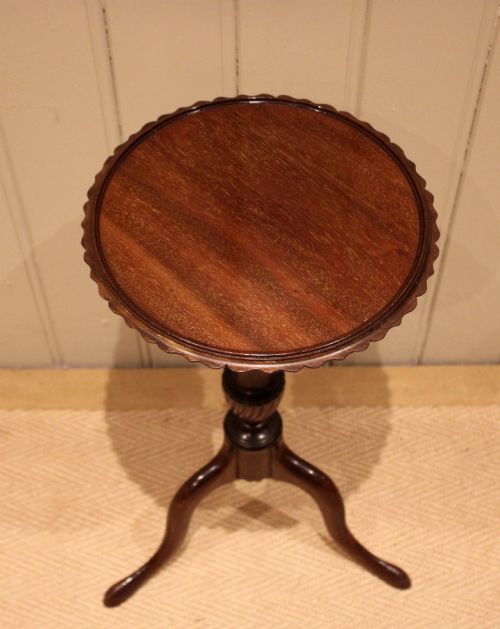
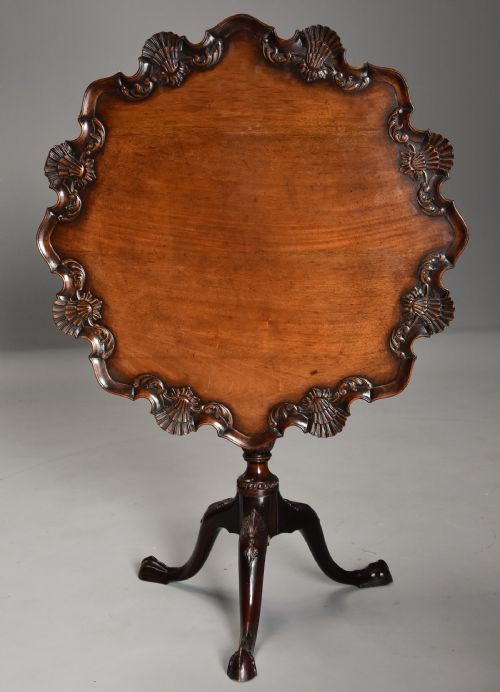
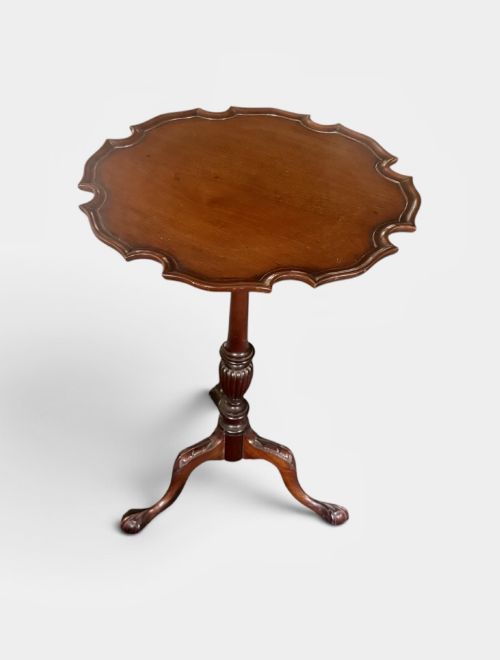
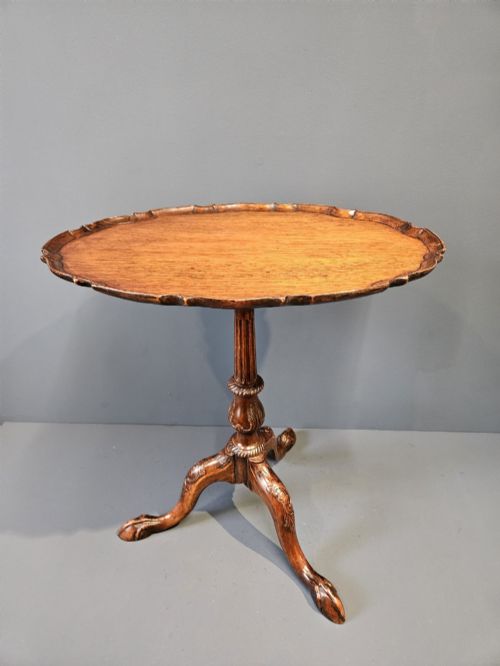
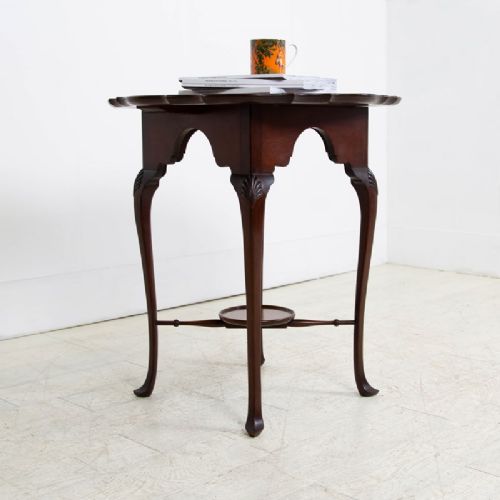
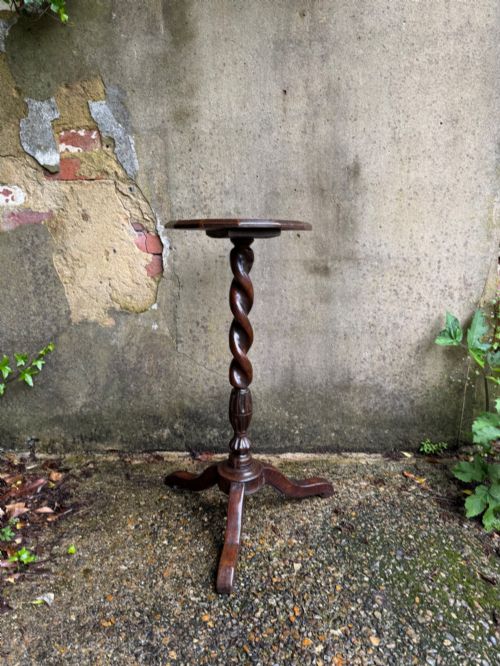
The primary forms you encounter are small circular or oval tops supported by tripod legs, often featuring shaped rims such as piecrust edges. These tables serve utility beside armchairs or sofas, acting as lamp tables, wine tables, or small occasional surfaces rather than central dining furniture.
How they were made
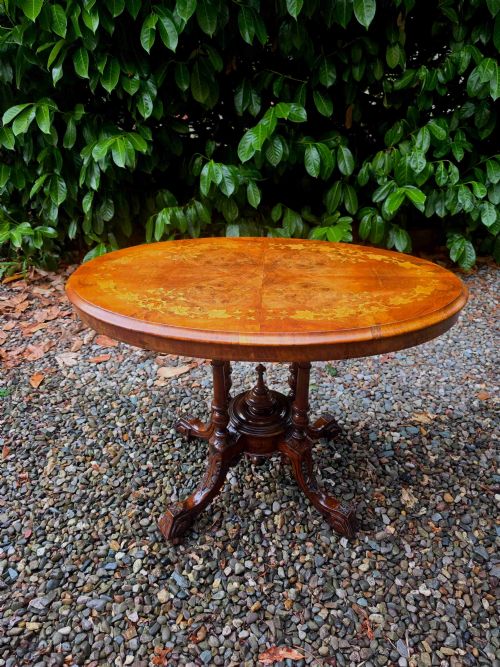
The construction relies predominantly on dense hardwoods like mahogany, walnut, and oak, occasionally incorporating burr walnut veneers for decorative surfaces. Joinery methods connect turned or carved central pillars to tripod legs, frequently employing tilt-top mechanisms using brass catches.
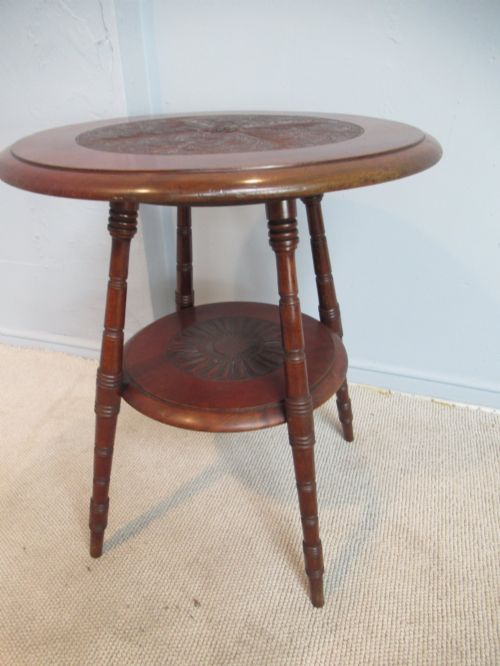
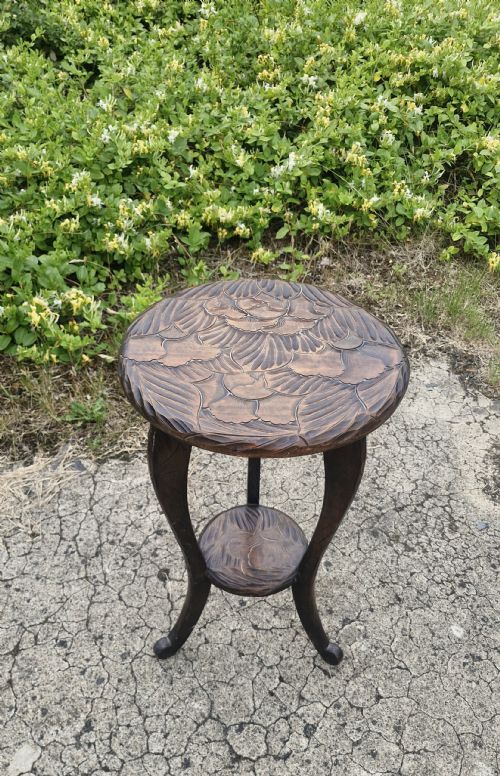
Carving and shaping are executed by hand on the table rims and pillar shafts, utilising techniques such as piecrust moulding, piecrust edging, and detailed tripod leg profiling. Lighter decorative touches include inlay work on the table surfaces, as seen in various Edwardian lamp and occasional tables.
The selection here spans from mid-nineteenth-century Victorian pieces through Edwardian designs up to nineteen-thirties examples, predominantly rendered in mahogany, walnut, and oak.
What varies in quality
Quality rests significantly on the crispness of the hand carving along the rim and the turning of the central column. Superior examples display sharp, well-defined piecrust edges and balanced tripod bases that sit firmly without wobble.
The choice of timber creates a distinct division, where finely figured mahogany or burr walnut veneers elevate a piece far above standard utilitarian beech or basic oak. The integration of functional elements, such as a smooth tilt-top mechanism, further separates standard production from finer cabinet work.
Shapland and Petter·Liberty's·Liberty of London·Waring and Gillow
The Edwardian Carved Wine Table Glossary
- Tripod table
- A small circular or oval table supported by a central pillar resting on three legs. This construction keeps the surface stable on uneven floors.
- Piecrust table
- A table featuring a raised, carved, and scalloped edge resembling pastry work. This decorative rim prevents glasses from sliding off.
- Tilt-top
- A hinged table top that pivots vertically to allow storage against a wall when not in use. It usually locks into the horizontal position with a small brass catch.
- Occasional table
- A small, movable table designed for specific, intermittent use in a room rather than permanent placement. They function commonly as lamp or side tables.
- Chippendale style
- A decorative design inspired by eighteenth-century cabinet maker Thomas Chippendale, characterised by carved tripod bases and shaped rims. Revival pieces from the Edwardian era emulate these classic proportions.
Edwardian Carved Wine Table: Frequently Asked Questions
Where do you put a wine table?
These compact tables fit easily beside armchairs, sofas, or in small empty corners where a large surface does not fit. They provide a convenient spot for a drink, a book, or a small lamp without crowding the room.
Because they take up very little floor space, you can move them easily between rooms depending on where you need an extra resting surface.
What is a tilt top used for?
The tilting mechanism allows the table top to pivot ninety degrees so the piece can stand flat against a wall when not in use. This practical feature saved floor space in period homes.
In modern rooms, tilting the top also lets you display the carved wooden surface and grain of the timber as a decorative wall feature.
How do you tell Edwardian from Victorian?
Edwardian tables generally display lighter framing, brighter mahogany or inlaid decoration, and simpler lines reflecting the turn-of-the-century shift away from heavier Victorian styles. Victorian pieces tend to use darker, denser timber with more robust, solid proportions.
Looking underneath the top or inside the joints often reveals construction methods and timber choices characteristic of each specific era.
Are wine tables sturdy enough for daily use?
Tripod tables offer surprising stability on even flooring due to the three-point contact of their legs. However, their light frame means they suit holding smaller items like cups, glasses, or lamps rather than heavy loads.
Treating the joint where the pillar meets the legs with care ensures the table remains firm and secure over years of regular use.