


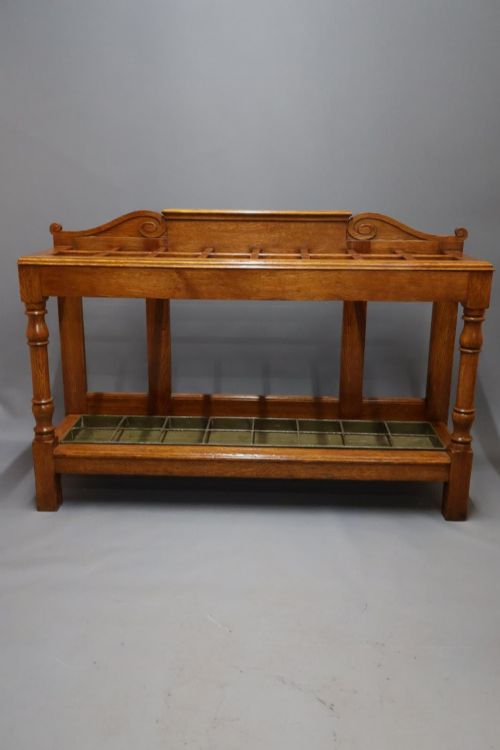
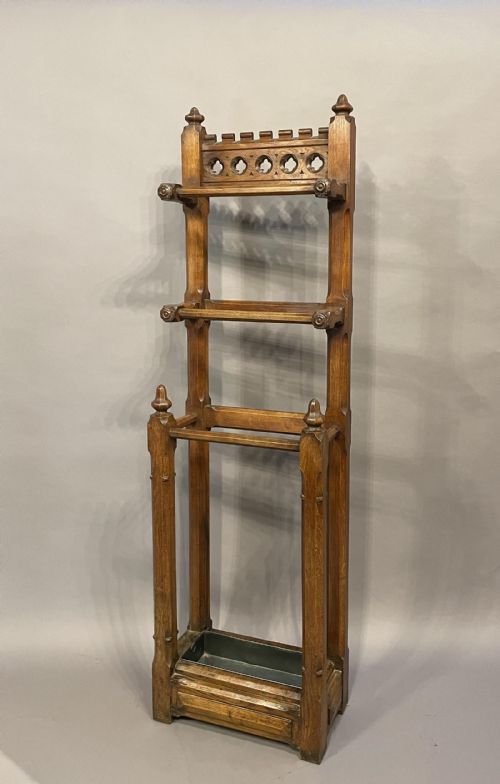


Edwardian Carved Oak Stick Stand
An Edwardian carved oak stick stand is a practical piece of hallway furniture built to hold wet umbrellas and walking sticks.
Edwardian Carved Oak Stick Stand
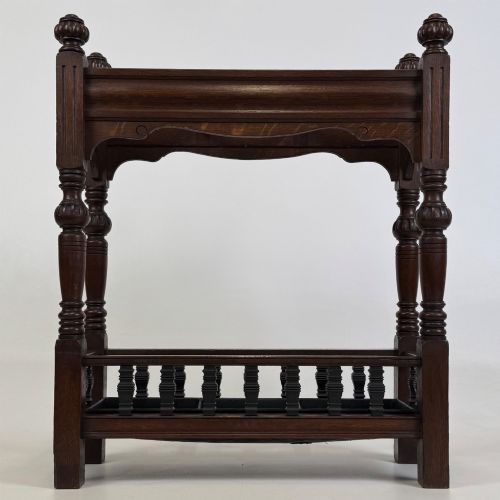
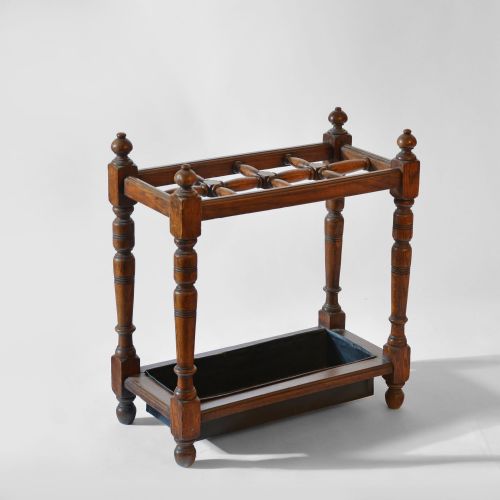
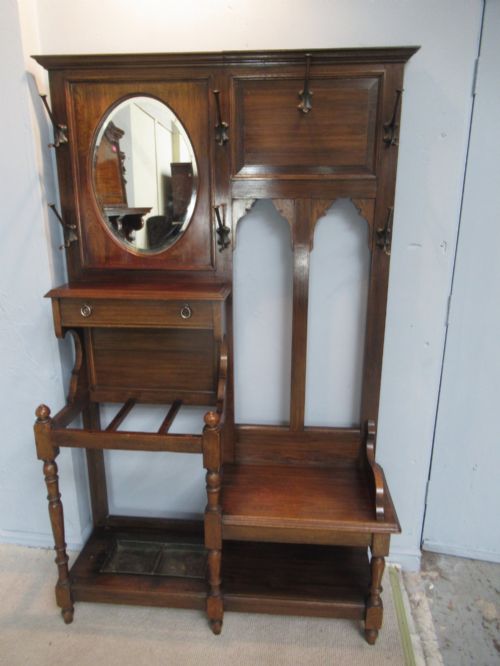
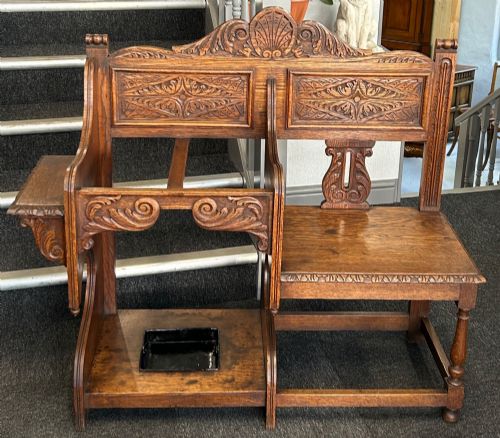
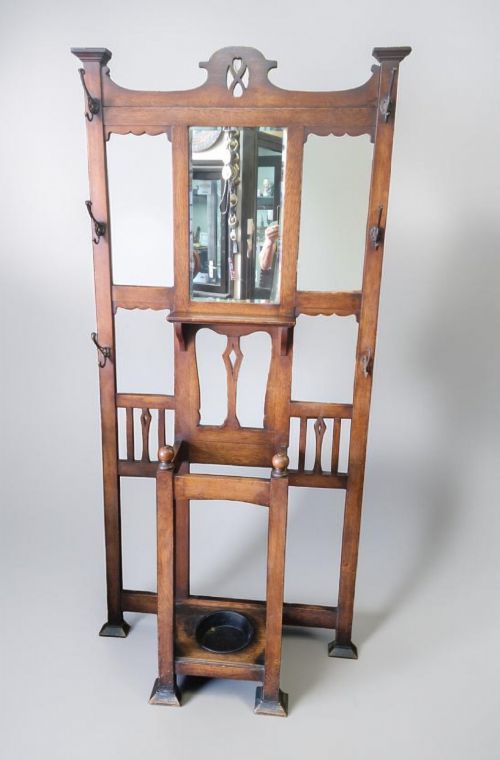
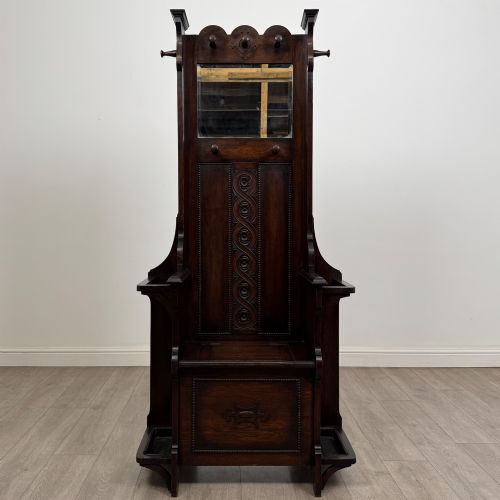
An edwardian carved oak stick stand is designed to organise and display walking sticks and umbrellas in a domestic entrance hall. Most examples take the form of dedicated umbrella and stick stands or larger multi-purpose hall stands incorporating mirrors, hat hooks and seats.
The pieces appearing on this page span the Victorian, Edwardian and early twentieth century periods, alongside revivalist movements such as Gothic, Jacobean and Arts and Crafts. Oak remains the primary material across the selection, often enriched with carved details and accompanied by metal drip trays.
Buyers will find standalone umbrella stands alongside hall furniture that combines stick storage with seating or coat hooks. These items reflect the domestic requirements of country houses and town residences from the late nineteenth century onwards.
What varies in quality
Quality in these pieces is determined by the depth and crispness of the timber carving and the architectural ambition of the frame. Robust construction using solid oak throughout distinguishes substantial country house examples from lighter domestic items.
The presence of original metal drip trays and integrated hardware such as brass hooks contributes significantly to the integrity of a piece. Finer examples display thoughtful proportion, balanced joinery and decorative detailing aligned with specific styles like Art Nouveau or Gothic Revival.
Object forms range from narrow standalone umbrella racks to large architectural hall stands with integrated mirrors and seats.
J Parker of Woodstock
The Edwardian Carved Oak Stick Stand Glossary
- Green Man
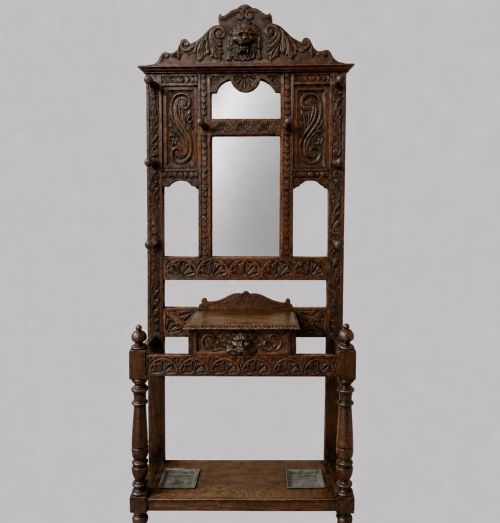
- A sculptural architectural motif depicting a human face disgorged from foliage. This carved detail appears frequently on nineteenth-century oak hall furniture.
- Drip tray
- A removable metal basin placed at the base of a stick stand to catch water from wet umbrellas. These trays are commonly fabricated from brass, zinc or cast iron.
- Bergere
- A woven cane panel used for backrests and inserts in seat furniture and hall stands. It provides a lighter textural contrast to heavy oak framing.
- Barley twist
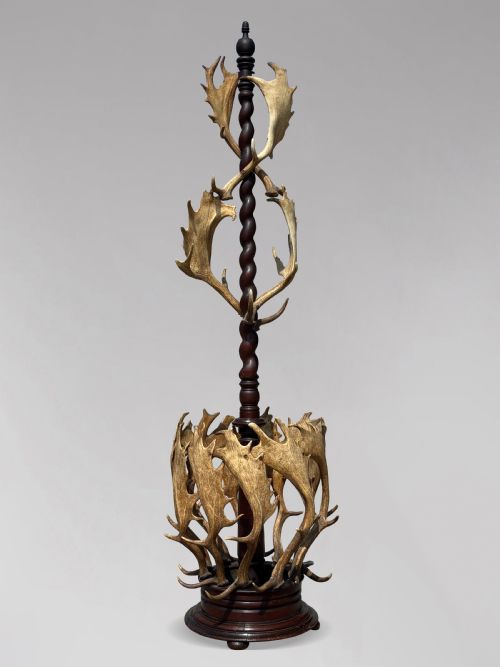
- A type of turning shaped like a helix, used for the vertical supports and legs of hall stands. This decorative joinery technique gained popularity during revivalist periods.
- Demi-lune
- A half-moon shape used for the footprint of corner or wall-mounted hall furniture. This curved profile allows the stand to fit neatly against an entryway wall.
Edwardian Carved Oak Stick Stand: Frequently Asked Questions
Where do you put a stick stand?
These stands belong in an entrance hall, porch or boot room where people enter the house from the outdoors.
Positioning the piece near the front door allows family and guests to store wet umbrellas and walking sticks immediately upon arrival.
How do you protect oak from wet umbrellas?
Original metal drip trays positioned inside the base catch runoff water and prevent moisture from rotting the timber floorboards.
Emptying and drying these metal trays regularly preserves the condition of the surrounding oak frame.
What is the difference between a hall stand and a stick stand?
A dedicated stick stand holds only umbrellas and walking sticks within a compact frame.
A hall stand is a larger multi-functional piece that combines stick storage with coat hooks, hat racks, mirrors and sometimes a bench seat.
How do I identify an Edwardian stick stand?
Edwardian pieces date from the early twentieth century and often exhibit lighter proportions and cleaner lines than their Victorian predecessors.
They frequently incorporate Arts and Crafts or Art Nouveau decorative motifs while retaining solid oak construction.