

Edwardian Carved Mahogany Dining Chairs
Edwardian carved mahogany dining chairs bring solid craftsmanship and historical revival styles to the table, making them a practical choice for period interiors.
Edwardian Carved Mahogany Dining Chairs
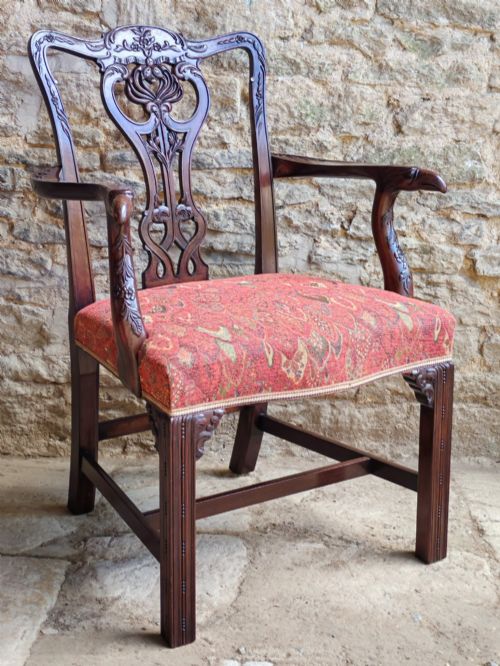
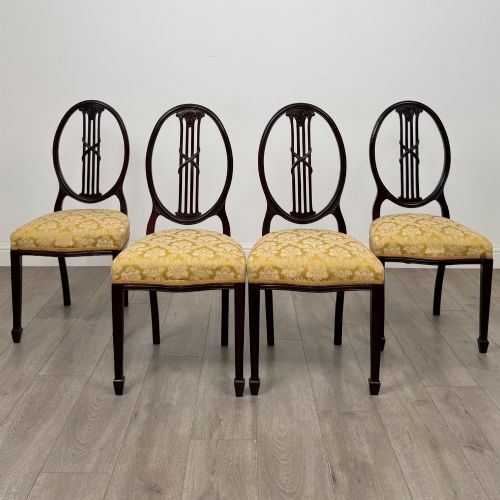
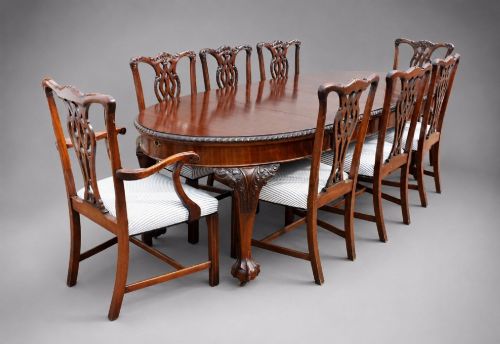
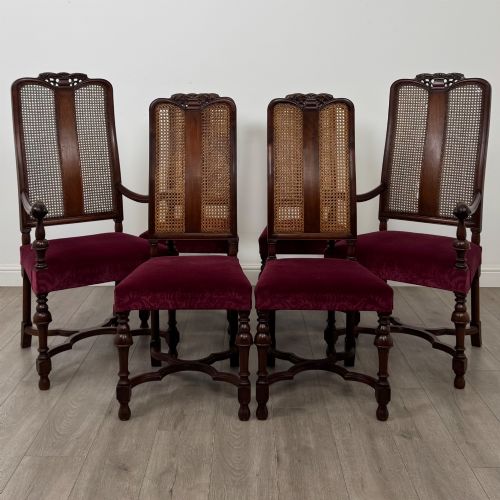
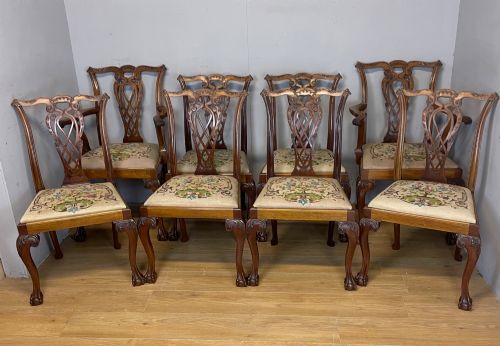
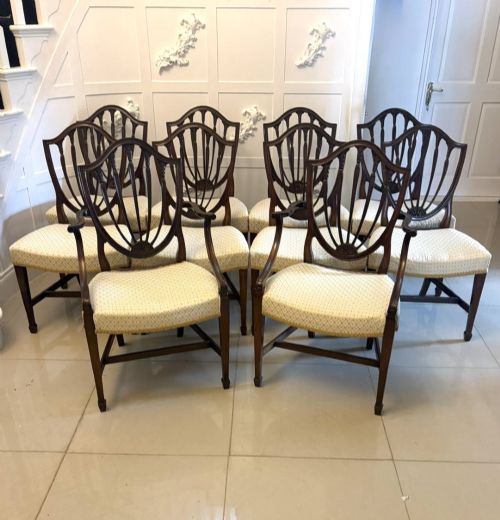
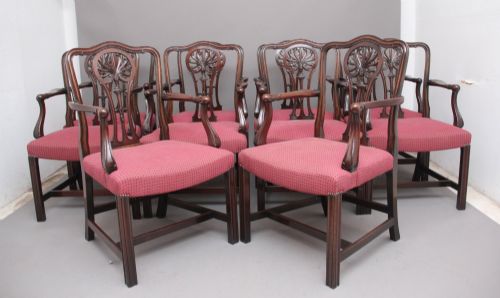
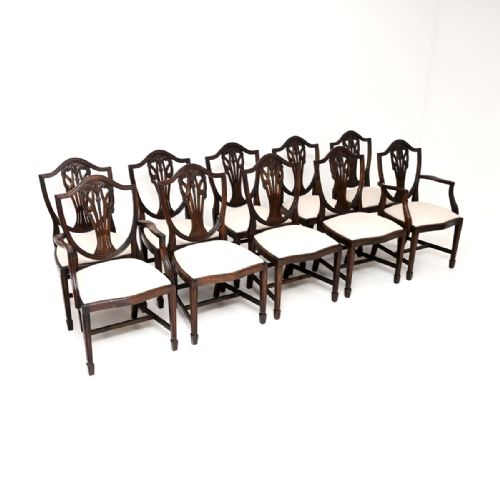
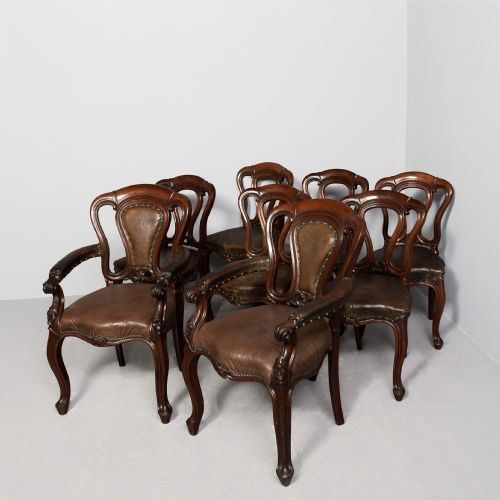
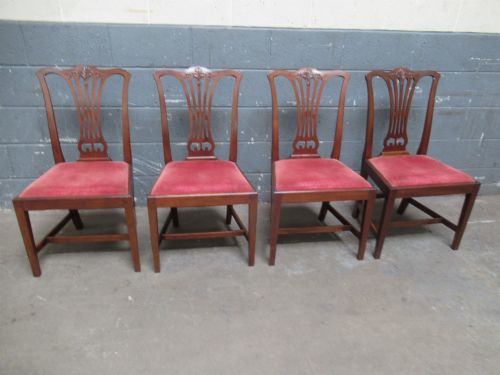
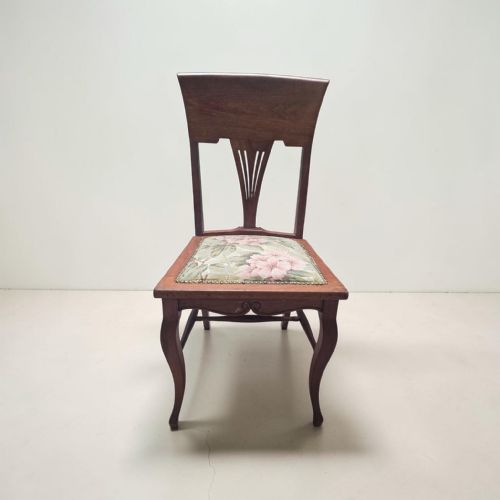
Edwardian carved mahogany dining chairs form a distinct category of seating that draws heavily on earlier eighteenth and nineteenth century designs. When searching for edwardian carved mahogany dining chairs, buyers encounter various configurations, ranging from individual carvers and side chairs to extensive matching dining sets.
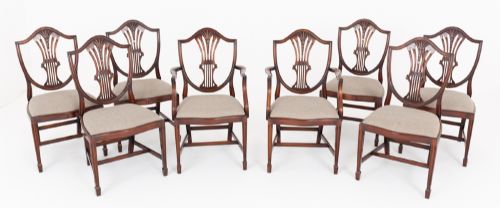
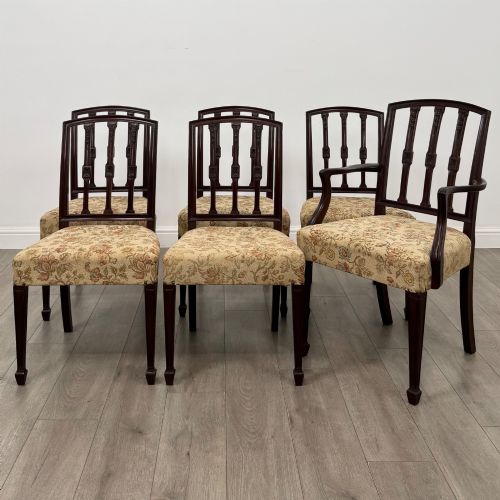
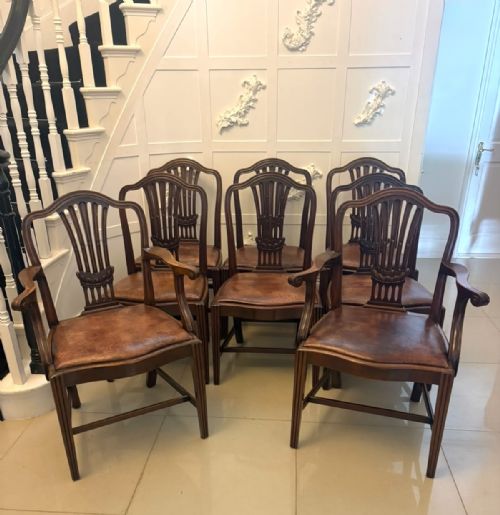
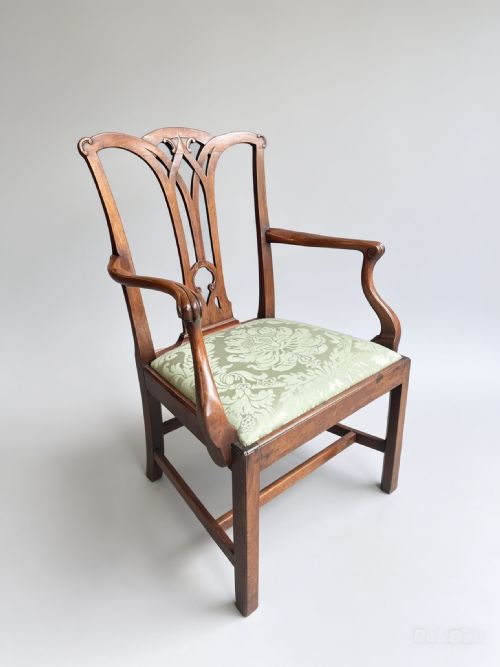
The pieces appearing on this page span several stylistic revivals, particularly Chippendale and Hepplewhite styles, alongside simpler Edwardian interpretations. Sets frequently comprise four, six, eight, or ten chairs, occasionally including armchairs alongside side chairs.
While Edwardian examples predominate, the selection also incorporates Victorian predecessors and later twentieth-century interpretations sharing the same mahogany framing and carved details. These chairs serve everyday dining purposes while retaining distinct cabinetmaking traits from their period of origin.
How They Were Made
Cabinetmakers utilised solid mahogany for the structural frames of these dining chairs, capitalizing on the wood's durability and deep grain. Skilled artisans carved decorative motifs directly into the mahogany backs and legs, often employing styles inspired by historic furniture designers.
Upholstery forms an essential component of the construction, with seats padded and covered in materials such as leather, velvet, and various traditional fabrics. Brass hardware occasionally appears in structural reinforcements or decorative nailheads securing the upholstery edges.
Dining sets appear in configurations ranging from intimate pairs to extensive groups of twelve chairs.
What Varies in Quality
Quality in these dining chairs rests primarily on the depth and crispness of the hand-carving upon the mahogany frame. Superior pieces display sharply defined splats, rails, and legs without the softening often found in mass-produced or later copies.
The integrity of the timber selection and the rigidity of the joinery further separate standard examples from finer commissions. Workshops known for high-standard cabinetmaking produced frames that remain structurally sound and tight after decades of use.
Howard and Sons·Warings·Maple and Co·Alfred Allen·Blyth and Sons·Waring and Gillow
The Edwardian Carved Mahogany Dining Chairs Glossary
- Carver
- An armchair designed with elbow rests, traditionally placed at the head of a dining table. These match the accompanying side chairs in a set.
- Cabriole Leg
- A furniture leg that curves outward at the knee and tapers inward toward an ankle or foot. It often terminates in a claw and ball or pad foot.
- Splat
- The vertical wooden slat placed centrally in the back of a chair. Carved designs are frequently applied to this component.
- Upholstery
- The materials, including padding, springs, webbing, and covering fabric, used to make a soft seat. Original leather or period fabric adds distinct character.
Edwardian Carved Mahogany Dining Chairs: Frequently Asked Questions
What defines an Edwardian dining chair?
These chairs date from the reign of King Edward VII, spanning the early twentieth century. They frequently revive eighteenth-century styles like Chippendale and Hepplewhite using solid mahogany.
Craftsmen built them with sturdy frames, often featuring carved shield backs or open slats. They balance formal historic aesthetics with practical durability for daily use.
How do I care for mahogany dining chairs?
Maintain the wood by dusting regularly with a soft cloth and applying appropriate wax polish periodically. Keep the chairs away from direct heat sources and strong sunlight to prevent the timber from drying out.
Protect the upholstered seats according to their material, using specialist leather balms or fabric cleaners as needed. Careful handling of the carved joints preserves their structural integrity over time.
Are these chairs suitable for daily use?
Mahogany offers high durability and strong structural framing, making these chairs well suited for regular dining. Edwardian cabinetmakers built them to withstand daily seating demands.
Buyers should ensure joints remain tight and upholstery is stable. Many sets have survived a century of use precisely because of their robust construction.
How can I spot a revival style?
Revival pieces copy earlier historical periods, such as Georgian or Regency designs, but were manufactured decades later. Edwardian makers frequently reproduced Hepplewhite and Chippendale chair patterns with slight modern adjustments.
Examining the wood ageing, tool marks, and construction techniques helps determine the actual manufacturing era. Timber finish and hardware often provide clues to distinguish a revival piece from an original.