
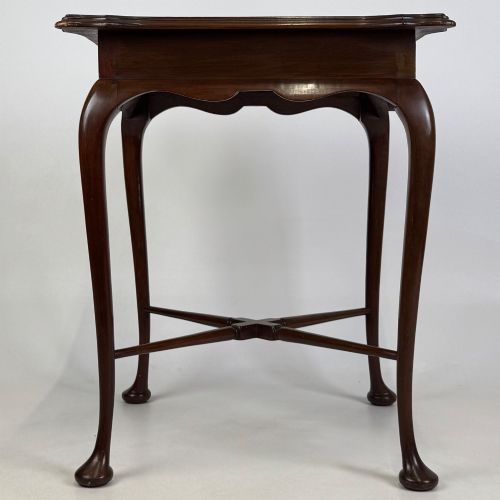
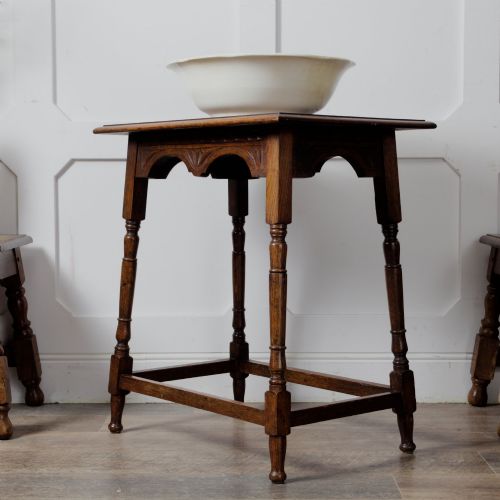
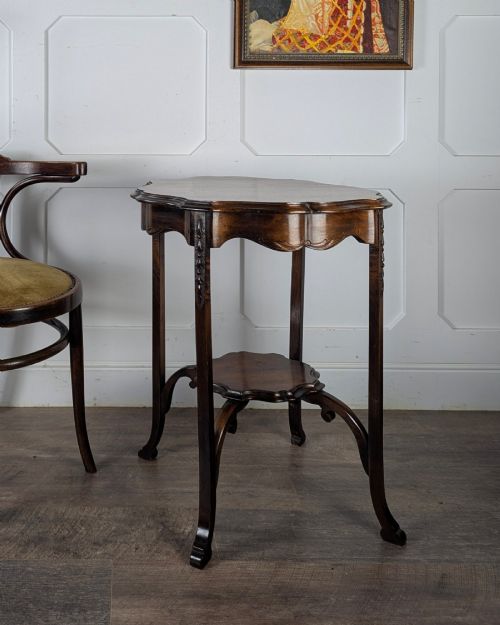
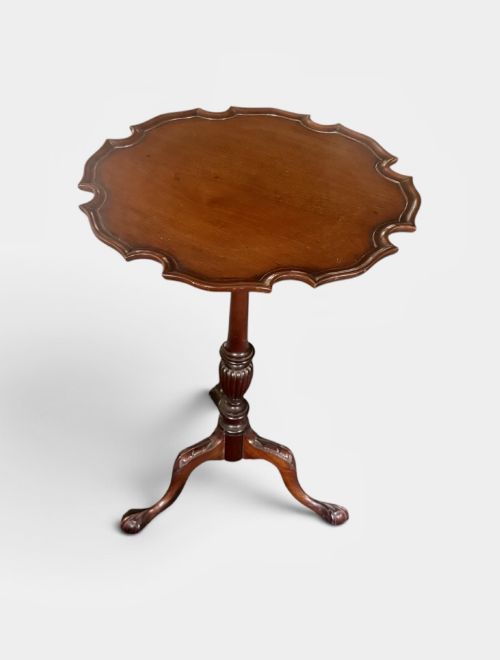
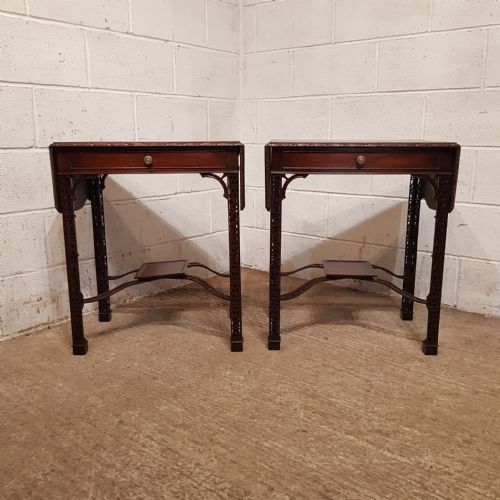
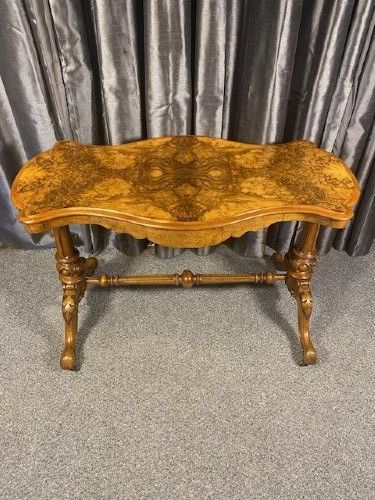
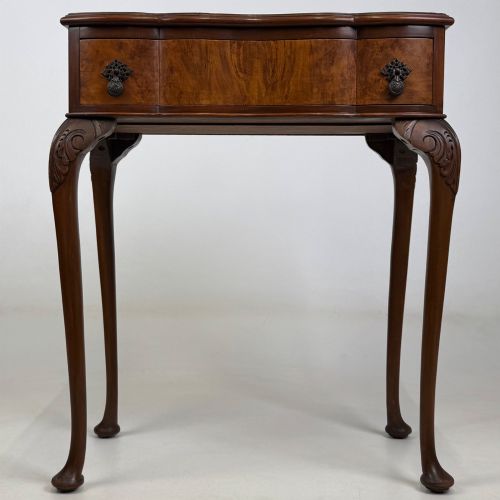
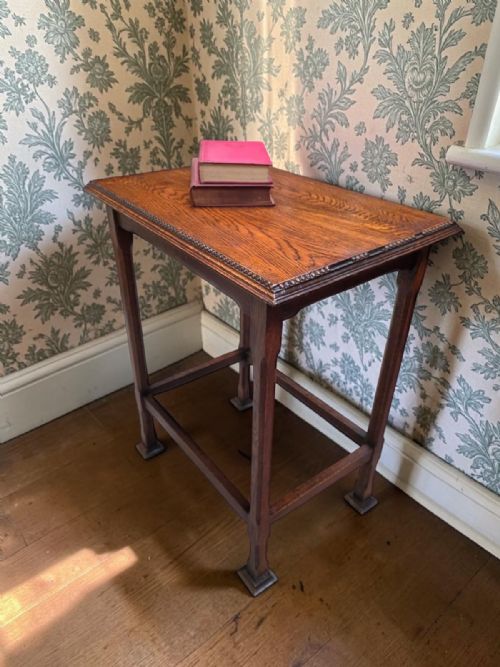
Edwardian Carved Lamp Tables
Edwardian carved lamp tables combine slender proportions with practical surface space, offering sturdy timber framing for evening lighting.
Edwardian Carved Lamp Tables
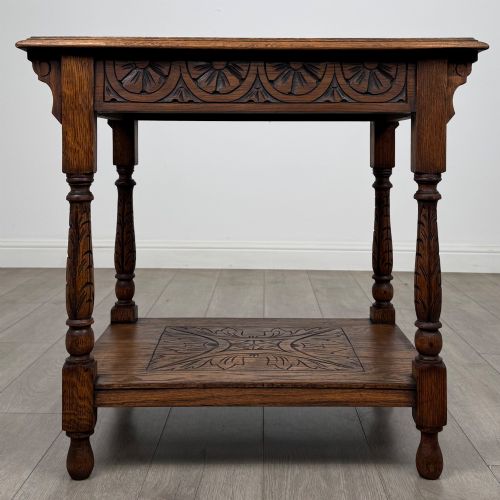
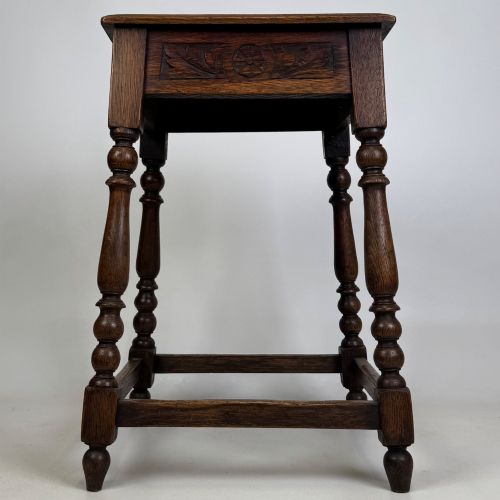
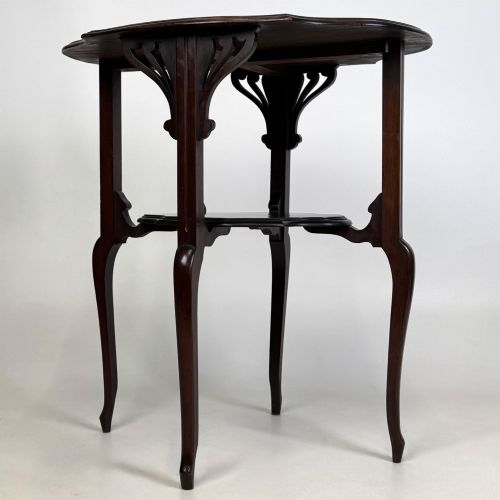
Edwardian carved lamp tables represent domestic side furniture built primarily during the early twentieth century, incorporating revival styles and utilitarian surfaces. Buyers searching for Edwardian carved lamp tables encounter occasional tables, wine tables, and side tables constructed from dense hardwoods like mahogany and oak.
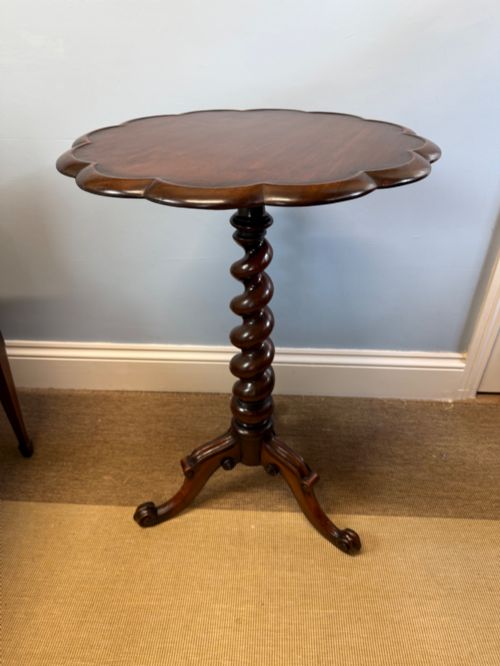
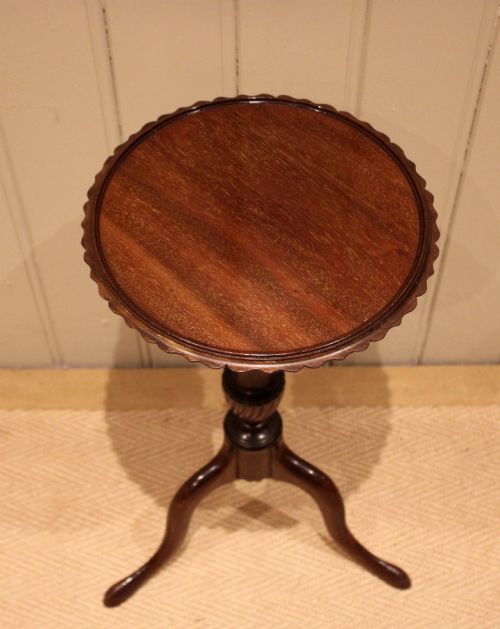
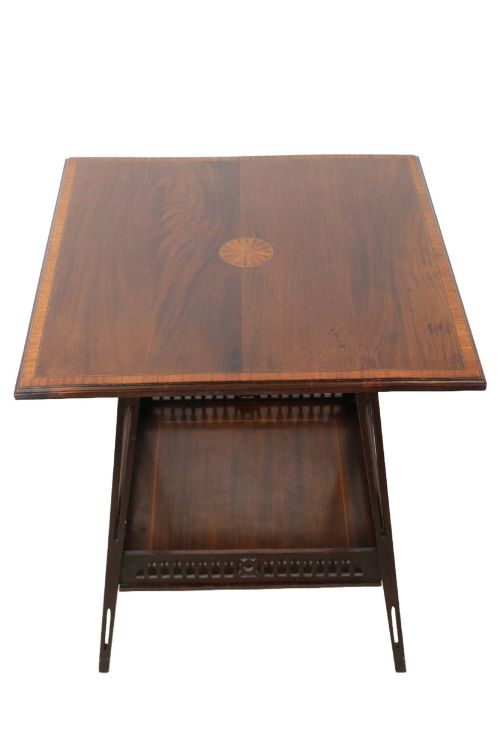
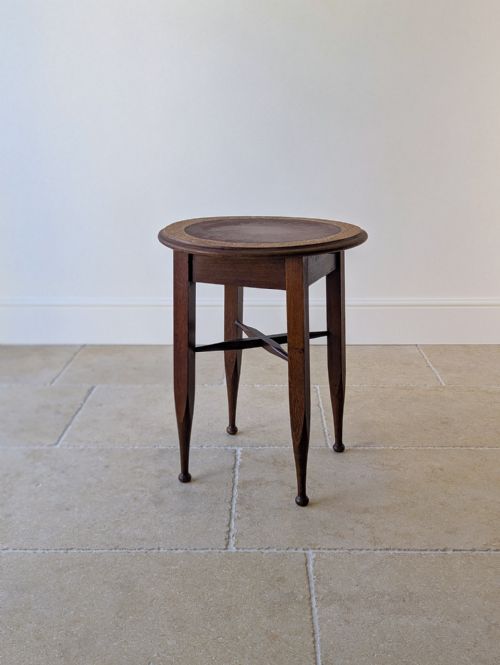
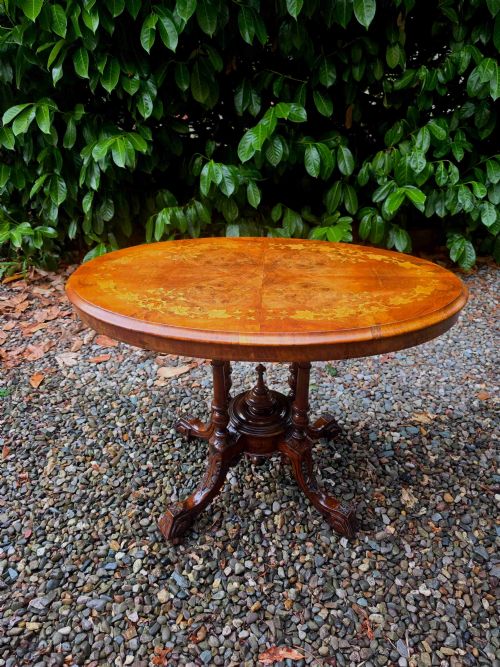
The pieces on this page lean heavily toward Edwardian production dates while drawing upon nineteenth-century traditions and revival designs such as Chippendale and Arts and Crafts. Formats range from tripod bases with shaped rims to square or octagonal occasional surfaces suitable for holding lamps.
Makers and workshops of the period produced versatile side pieces that served varied domestic functions, functioning equally well as lamp stands, wine surfaces, or display ledges in reception rooms.
Materials and Construction
Cabinet makers of the Edwardian era utilised solid and veneered timbers, predominantly mahogany, oak, walnut, and burr walnut, alongside decorative inlays of satinwood and brass details. Joinery relied on traditional mortise and tenon framing, turning, and tripod supports to ensure stability under heavy table lamps.
Surface decoration involved hand carving, crisp edge moulding, and occasional inlaid woodwork reflecting Arts and Crafts or Georgian revival influences. Secondary metals such as EPNS and brass appear on associated lighting components rather than the structural tables.
Some tables double as wine holders, proving that ancestors valued evening hydration just as much as good lighting.
Factors of Quality
Quality in these pieces rests upon timber selection, timber figure, and the crispness of the hand carving rather than surface embellishment alone. Finer examples display figured walnut or richly grained mahogany with precise joinery and well-proportioned tripod or barley twist legs.
The integrity of the structural frame, lack of warping in the top surface, and the subtlety of applied inlay distinguish superior workshop production from standard utilitarian items.
Trevor Page and Co·Liberty of London·Shapland and Petter
The Edwardian Carved Lamp Tables Glossary
- Tripod table
- A small freestanding table supported by a single central pillar resting on three spreading feet. This form allows the table to stand steady on uneven period flooring.
- Pie crust rim
- A raised, decoratively carved edge shaped in undulating curves around the perimeter of a circular table top. It prevents small items from rolling off.
- Occasional table
- A small, portable piece of furniture designed for intermittent use around a principal room. They were easily moved beside chairs to hold reading material or lighting.
- Barley twist
- A cylindrical wooden furniture leg or column carved in a spiral resembling a twisted barley sugar stick. This turning technique was popular in revival furniture.
- Inlay
- A decorative technique where contrasting pieces of wood or brass are fitted into flush recesses within the primary surface. Satinwood was frequently utilised for this purpose on dark mahogany bases.
Edwardian Carved Lamp Tables: Frequently Asked Questions
What is an Edwardian lamp table?
An Edwardian lamp table is a compact wooden surface built around the early twentieth century to support heavy oil or early electric table lamps. These pieces typically feature sturdy timber frames designed to fit beside seating.
Such tables often incorporate decorative carving or tripod legs, reflecting the popular revival styles of the period while remaining practical for daily domestic use.
How do I spot an authentic Edwardian table?
Authentication relies on examining the timber species, construction joints, and overall wear patterns consistent with early twentieth-century manufacturing methods. Look for solid hardwoods like mahogany and oak paired with traditional hand-cut joinery.
Revival motifs such as Chippendale or Arts and Crafts details alongside period hardware provide further contextual clues regarding the age of the piece.
Where should I place a lamp table?
These tables suit corners, hallways, and living rooms where a compact surface is required beside armchairs or sofas. Their modest proportions allow them to fit into tight spaces without dominating a room.
Ensure the surface area matches the base of your lamp so the piece remains stable and secure during everyday use.
Are these tables suitable for modern lamps?
These tables were originally engineered to support heavy lighting fixtures, making them robust enough for modern table lamps. The solid timber construction provides adequate weight distribution for electrical fittings.
Check the surface dimensions against your lamp base to ensure proper clearance and balance.