



Edwardian Carved Half Hoop
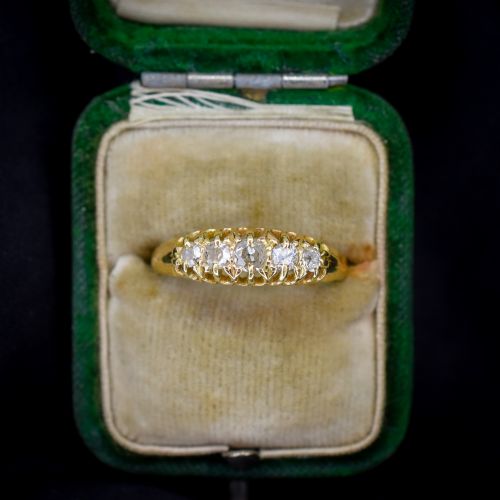
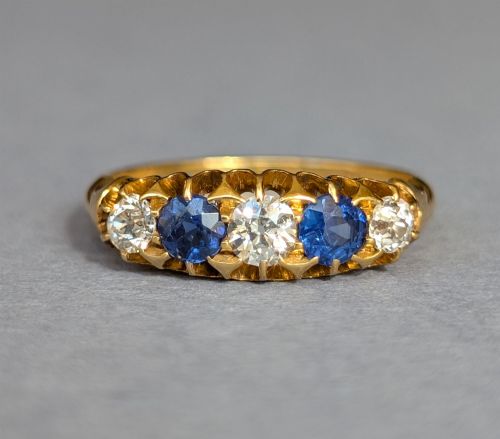
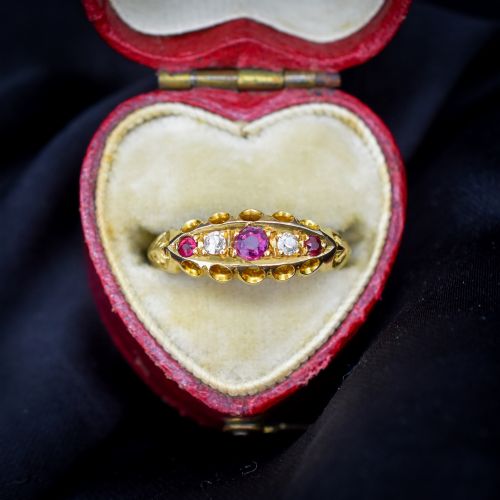
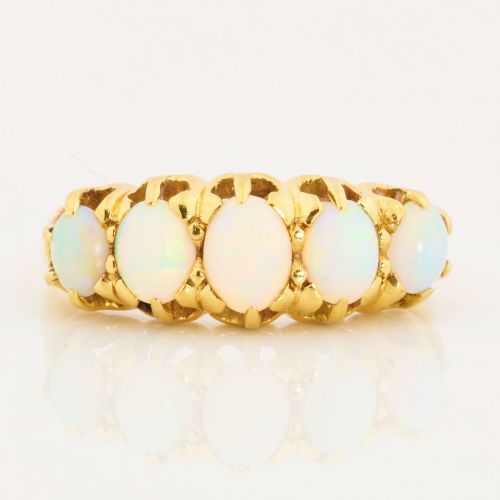
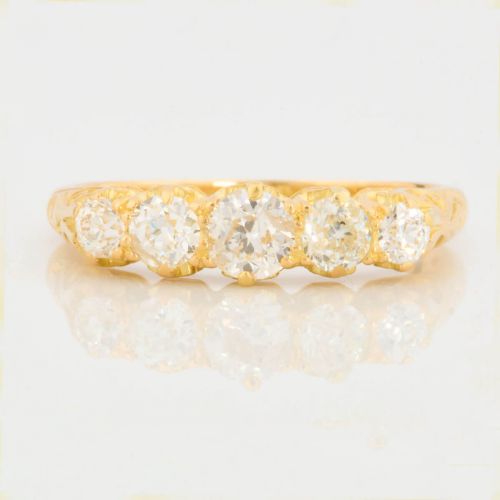
An edwardian carved half hoop sits low on the hand, offering a row of stones set in yellow gold that catches the light with every movement.
Edwardian Carved Half Hoop
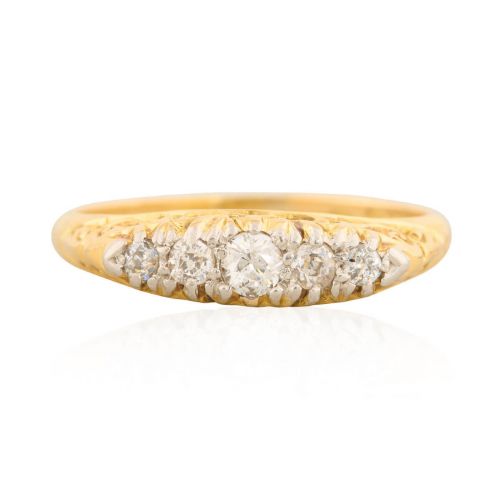
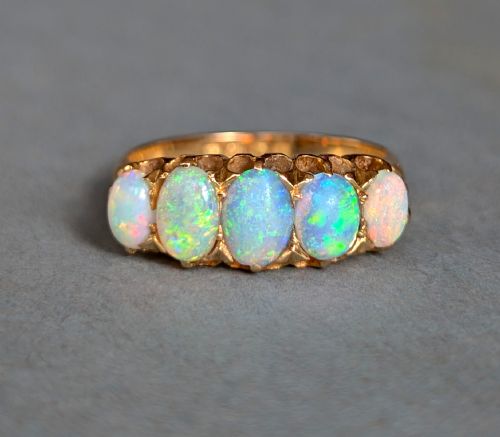
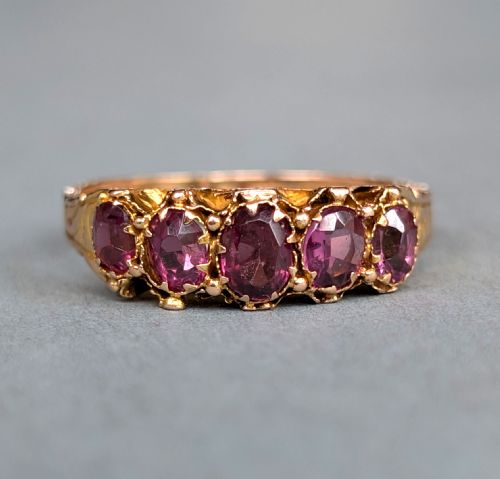
An edwardian carved half hoop ring typically presents a linear arrangement of gems mounted across the finger, often taking the form of a five stone ring or a boat shaped cluster. The pieces found here span the late nineteenth century through to the Edwardian era, alongside a few later examples, all sharing this characteristic finger-spanning silhouette.
Most entries are rendered in eighteen carat yellow gold, carrying stones such as diamonds, sapphires, rubies, and opals. These bands frequently display carved shoulders or gallery work that elevates the individual settings above the hoop itself.
While the search term points directly to the Edwardian period, the selection includes pieces bearing hallmarks from surrounding decades, reflecting the continuity of this low profile ring design.
Materials and Making
The foundation of these rings is eighteen carat yellow gold, providing a warm metal base for the claw or flush settings. Stones such as old cut diamonds, sapphires, and rubies are secured across the top band, often accompanied by smaller accent gems.
Goldsmiths of the period employed hand carving on the shoulders and settings to introduce textural detail around the stones. Hallmarks stamped into the interior of the shank frequently record assay office marks and dates from the early twentieth century.
Listings span from late Victorian examples through to Edwardian pieces hallmarked in Chester and London, using eighteen carat yellow gold.
Judging Quality
Quality in these rings rests on the crispness of the carved details along the shoulders and the structural integrity of the claw settings holding each gemstone. Finer examples retain sharp definition in their metalwork and secure stone placement without excessive thinning of the gold band.
The selection of stones also dictates the character of the piece, with matched gems or substantial old cut diamonds marking the upper tier of the range. Even wear across the gold and clear, legible hallmarks contribute to the standing of an individual ring.
The Edwardian Carved Half Hoop Glossary
- Half hoop
- A ring design where gemstones span the upper half of the band rather than encircling the entire finger. This style was popular for stacking and everyday wear.
- Old cut
- A diamond facet style pre-dating modern brilliant cuts, characterised by a smaller table, higher crown, and open culet. These stones catch candlelight warmly.
- Boat ring
- A ring setting shaped like the hull of a boat, curving upwards towards the centre stones. It sits flush and presents a tapered profile on the hand.
- Carved shoulders
- Decorative metalwork sculpted directly into the shank where it meets the central setting. This detailing often includes floral or scroll motifs.
- Trefoil
- A decorative arrangement of three stones or lobes grouped together to resemble a clover leaf. It frequently appears alongside central gems in cluster settings.
Edwardian Carved Half Hoop: Frequently Asked Questions
How do I wear an edwardian carved half hoop?
These rings suit daily wear on the finger alone or paired alongside a plain band. Their low profile helps them sit comfortably against other jewellery.
Take care to remove them during heavy manual tasks to protect the claws and softer stones like opals.
What stones appear in these rings?
Diamonds and sapphires dominate the selection, often alternating in five stone arrangements. Rubies, garnets, and opals also feature frequently.
Yellow gold serves as the primary metal setting for these colourful gemstone combinations.
How can I date an edwardian ring?
Hallmarks stamped inside the shank provide the most reliable guide to a ring's origins. Assay office marks and date letters point to specific years of creation.
Stylistic elements like carved shoulders and old cut stones also help narrow down the period.
Are these rings suitable for engagements?
Many buyers choose these antique pieces for proposals due to their distinct character and history. The five stone configuration offers a traditional alternative to solitaire designs.
Their enduring style makes them appropriate for modern milestone gifts.