


Edwardian Canine Portrait
An edwardian canine portrait captures the distinct character of individual dogs in oils, watercolours, and original etchings.
Edwardian Canine Portrait
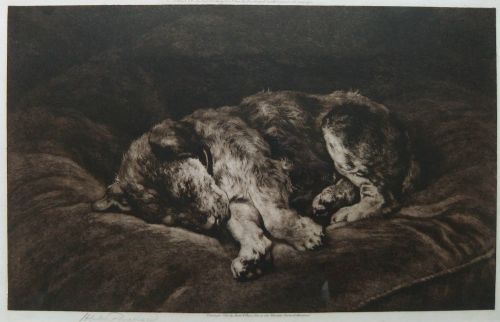
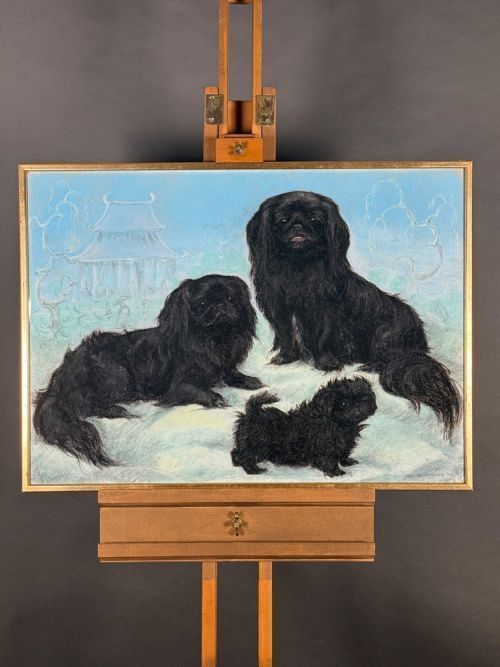
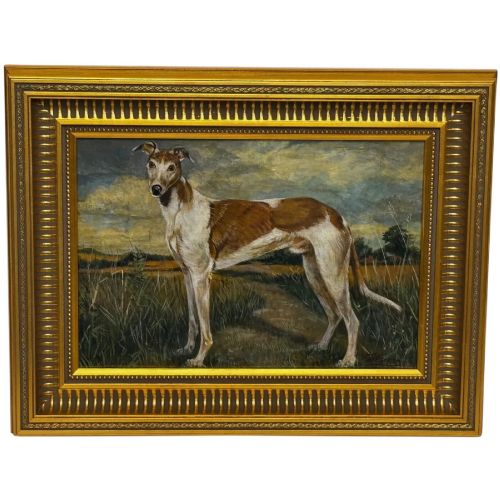
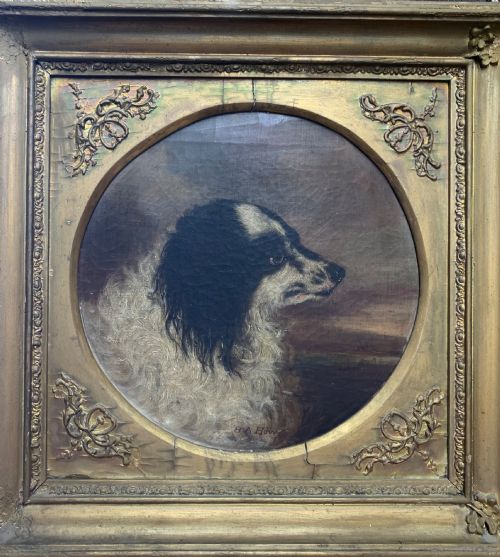
An edwardian canine portrait captures dogs ranging from working spaniels and terriers to prized greyhounds and bulldogs. These works record the presence of specific animals through painted studies or printed editions.
The selections available here span oils on canvas and board, watercolours, pastels, and original etchings. While the main concentration sits in the early twentieth century, related examples reach across the nineteenth century into the mid-twentieth century.
Works appear either as detailed studies of single breeds or as larger sporting compositions. Buyers encounter framed artworks depicting collies, pekingese, and bull dogs created by named artists and anonymous hands alike.
Materials and Methods
Artists built these images using oil paint on canvas or board, applying pigments to capture the texture of a dog coat. Watercolour and pastel on paper offer lighter, immediate alternatives for capturing animal subjects.
Printmakers utilised etching and drypoint techniques on paper, sometimes employing gold leaf within framing. These graphic works allowed multiple impressions of detailed canine studies to be produced and preserved behind glass.
Listings feature works executed in oil, watercolour, pastel, and ink, alongside original etchings on paper.
Factors of Distinction
Quality rests upon the artist's ability to render the anatomy and individual expression of the dog. Stronger works demonstrate a confident handling of brushwork or line, particularly in the rendering of fur and eye detail.
The integrity of the medium also shapes the piece, from the preservation of the canvas and oil surface to the clarity of an etching impression. Original framing and signatures by established sporting artists further elevate the standing of a work.
Herbert Dicksee·John Emms·John Trivett Nettleship·Philip Eustace Stretton·Samuel Fulton
The Edwardian Canine Portrait Glossary
- Drypoint
- A printmaking technique where an image is scratched directly onto a metal plate with a sharp needle. This method creates a rich, velvety burr that holds ink during printing.
- Etching
- A process where lines are bitten into a metal plate with acid before ink is applied and transferred to paper. It produces fine, detailed graphic lines well suited to animal portraits.
- Pastel
- A medium consisting of powdered pigment bound into a stick form for drawing on paper. It offers soft colour transitions and a matte surface.
- Sporting art
- Depictions of animals, hunting, and rural pursuits that often centre on prized dogs and horses. These works combine naturalistic observation with traditional sporting themes.
Edwardian Canine Portrait: Frequently Asked Questions
What dog breeds appear most often?
Terriers, spaniels, collies, and bulldogs form the bulk of the subjects in these canine portraits. Artists frequently recorded specific working dogs and household companions popular in the period.
Individual breeds reflect the changing preferences of owners who commissioned or purchased these artworks to celebrate their pets.
Are these works signed by the artists?
Many examples bear signatures or initials from the original painters and printmakers, while others remain attributed to specific schools or followers of known masters.
Unsigned pieces often rely on stylistic evidence and period framing to suggest their origin and date of creation.
How should I frame and display them?
Works on paper require glass protection and appropriate mounts to prevent the surface from touching the glazing. Oil paintings on canvas or board generally benefit from traditional wood framing suited to their period.
Keeping pieces away from direct sunlight protects both the pigments in oil and watercolour and the paper supports of etchings.
How do I date an antique dog portrait?
Dating relies on a combination of signature records, artist working dates, framing materials, and the style of the canvas or paper support. Clothing details or inscriptions on the reverse sometimes offer further clues.
Comparative study of similar works by documented animal painters helps narrow the decade of production.