

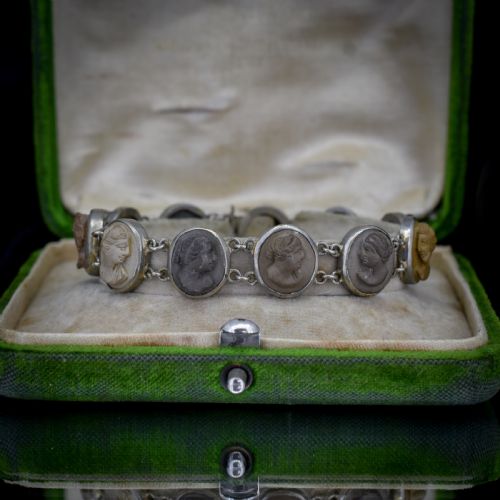


Edwardian Cameo Jewellery
Edwardian cameo jewellery brings together delicate carved portraits in shell and stone, set in gold and silver mounts to wear every day.
Edwardian Cameo Jewellery
When you search for edwardian cameo jewellery, you encounter finely carved profile portraits and classical scenes that capture the refined taste of the early twentieth century. These pieces appear primarily as brooches, rings, and earrings, reflecting the personal adornments favoured during the period.
The selections available here span shell, lava stone, and ceramic bodies, often mounted in metals ranging from nine-carat gold to silver. While many examples date directly from the Edwardian years and the adjacent decades, earlier Victorian iterations also surface in this category.
How they were made
Carvers worked by hand directly into natural materials such as conch shell and layered lava stone, exploiting the natural colour variations to create distinct contrast between the raised figure and the darker background. This subtractive technique required immense skill to maintain consistent depth and detail across miniature surfaces.
Mounts were typically fabricated from nine-carat gold, silver, or fifteen-carat gold, employing filigree work, bezel settings, and cast mounts to secure the carved centrepiece. Assay office marks and London or provincial hallmarks frequently stamp these metal housings, verifying their period manufacture.
Edwardian Cameo Jewellery Retail Price Guide 2026
Typical asking prices for edwardian cameo jewellery among the pieces listed under this phrase on Sellingantiques today, from the lower quarter to the upper quarter. They describe what is for sale here now, not the wider market.
Some nineteenth century travellers brought home carved lava stone portraits straight from Italy, turning holiday souvenirs into lasting family heirlooms.
What varies in quality
The weight and elaboration of the metal mount also distinguish finer examples, where detailed filigree or substantial gold housings complement rather than merely contain the carving. Matching the integrity of the mount to the delicacy of the central plaque defines the upper tier of these ornaments.
The Edwardian Cameo Jewellery Glossary
- Cameo
- A method of carving an object such as a engraved gem, item of jewellery, or vessel. In these pieces, the technique creates a raised relief figure from a multi-layered material.
- Conch shell
- A marine mollusc shell utilised for its distinct pinkish-orange and white layers. Carvers favoured this medium for its smooth texture and rich tonal depth.
- Lava stone
- A porous volcanic rock carved into portrait reliefs, particularly popular during the nineteenth century Grand Tour. It provides a matte finish distinct from glossy shell.
- Filigree
- Ornamental work of fine wire formed into delicate tracery. This technique frequently appears in the gold and silver metalwork surrounding the carved plaques.
- Bezel setting
- A method of holding a stone or carving in place by means of a metal rim that encircles its sides. It provides a secure border for fragile carved materials.
Edwardian Cameo Jewellery: Frequently Asked Questions
How do I wear an antique cameo brooch?
Pin these brooches securely to heavy fabrics like wool coats, structured lapels, or thick knit scarves to support their weight.
Ensure the fastening catch functions properly before wearing your piece on delicate silks or fine cottons.
Are these pieces made of real shell?
Many examples utilise natural conch shell or helmet shell, which carvers selected specifically for their contrasting natural colour layers.
Examining the reverse with a magnifying glass often reveals the organic grain and natural curvature of the original shell.
What metal is typically used for the mounts?
Makers employed a range of metals including nine-carat gold, fifteen-carat gold, and sterling silver to house the carved plaques.
British hallmarks stamped onto the mount frequently indicate the assay office and year of manufacture.
How should I clean my cameo jewellery?
Wipe shell and stone surfaces gently with a soft, damp cloth to remove everyday dust without using harsh chemical dips.
Submerging shell or lava stone in water can damage the porous material or weaken old adhesive bonds.