
Edwardian Buffet
An edwardian buffet brings practical dining room storage together with refined period craftsmanship, offering generous proportions and elegant timber surfaces for the modern interior.
Edwardian Buffet
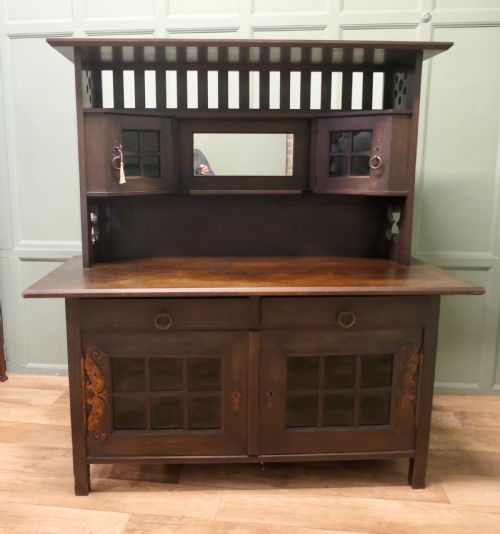
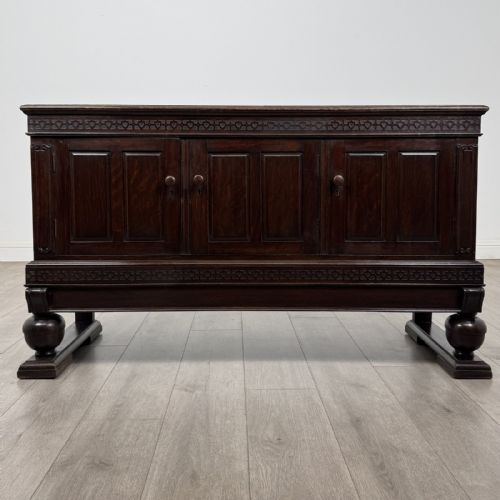
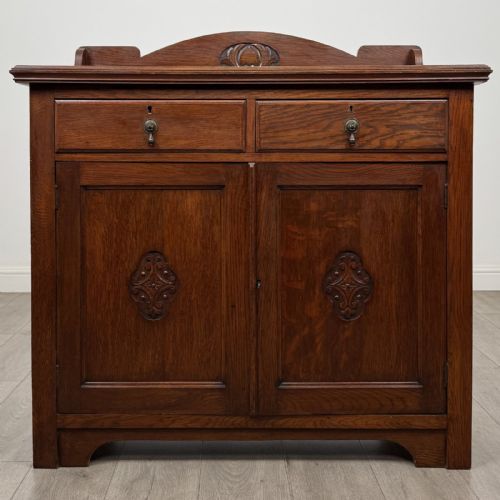
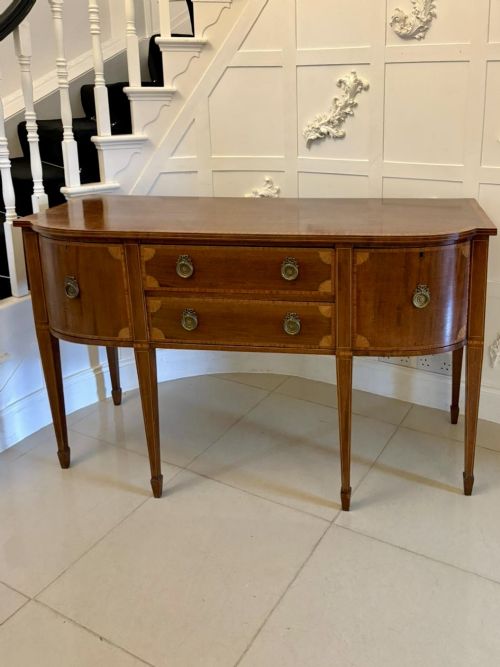
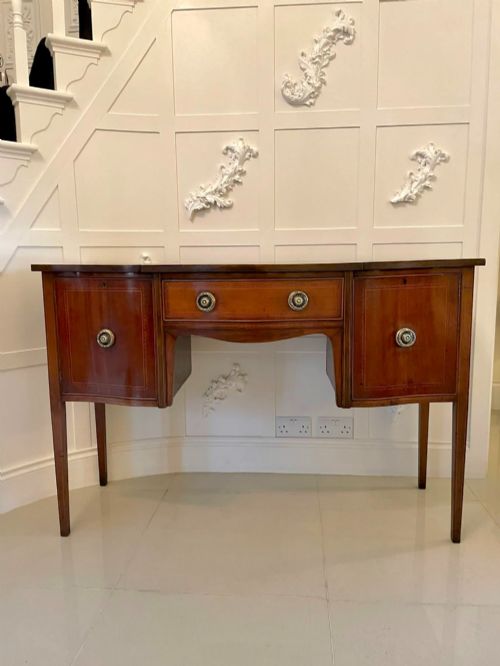
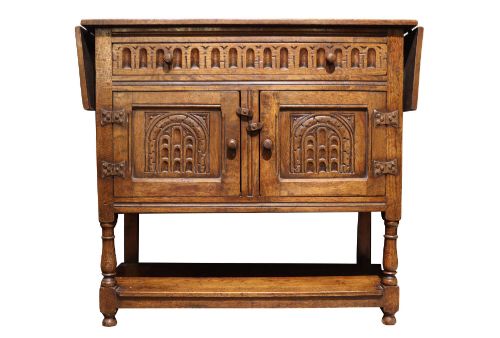
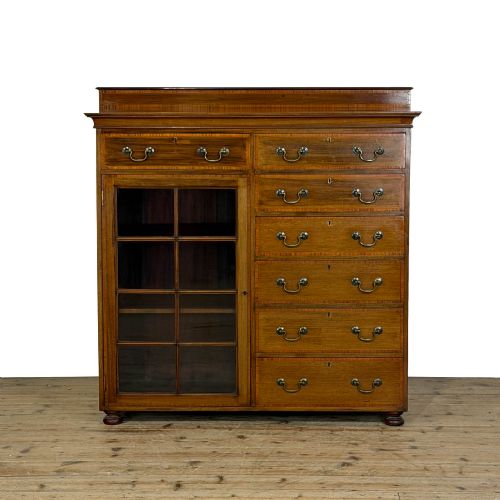
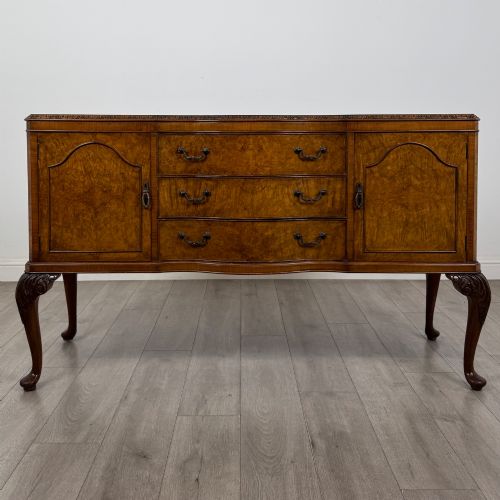
When searching for an edwardian buffet, you encounter a variety of substantial dining room furniture including sideboards, side cabinets, and serving tables from the early twentieth century. The selection leans heavily towards oak and mahogany forms produced during the Edwardian period, often incorporating revival styles such as Sheraton, Jacobean, and Adam.
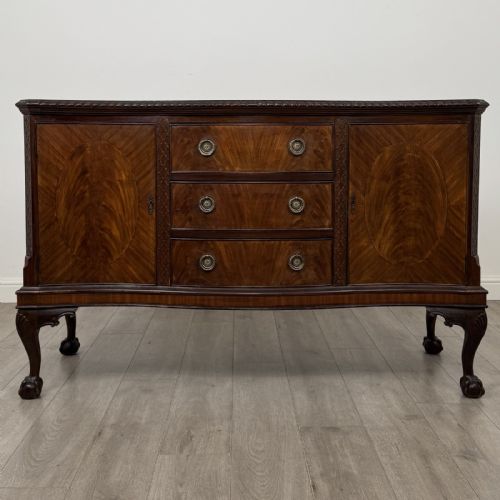
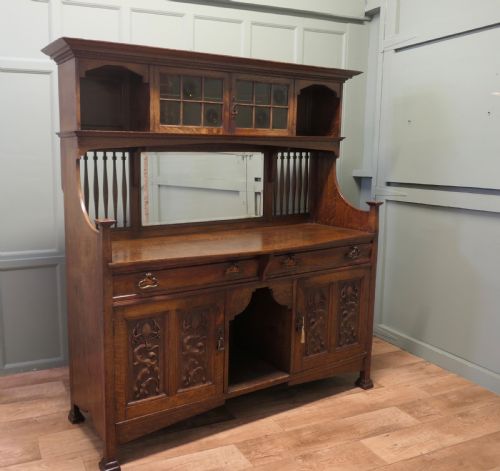
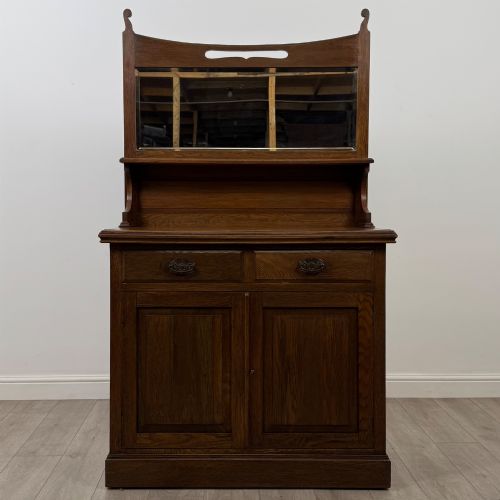
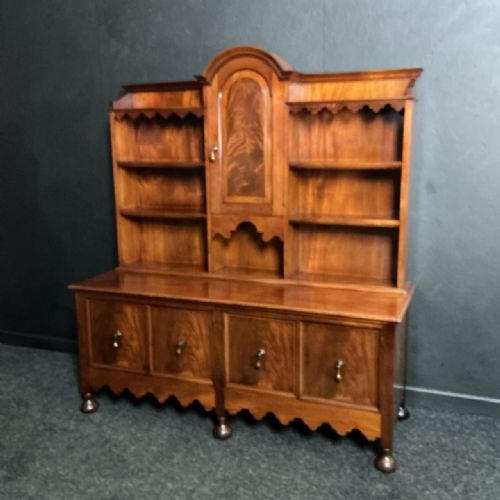
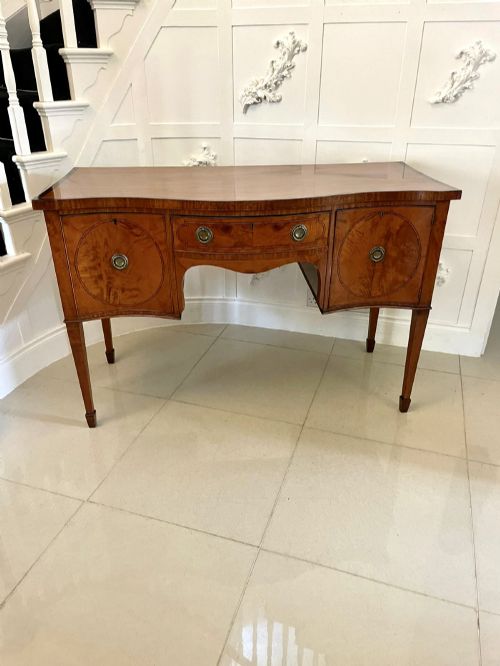
Beyond standard sideboards, the category encompasses smaller cupboards, mirror-back servers, and dresser bases suited for dining spaces of differing proportions. Pieces span from plain utilitarian oak designs to sophisticated satinwood crossbanded models with serpentine fronts.
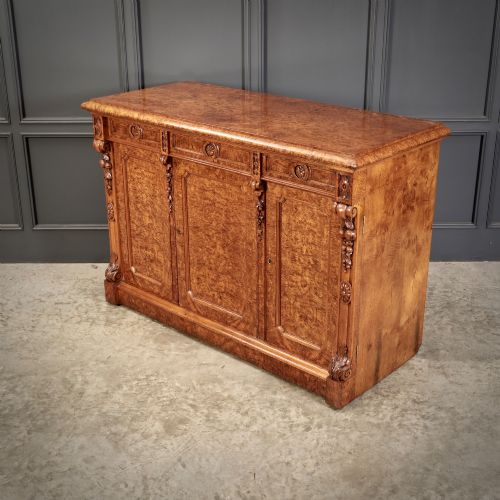
While the core inventory dates strictly from the Edwardian era, related Victorian and 1920s examples frequently appear alongside them. These serve identical functions in the dining room, providing surface space for serving dishes and enclosed storage for cutlery and linen.
Construction and Materials
Cabinet makers relied predominantly on solid oak and mahogany as the structural foundations for these dining pieces. Selected sections were often enhanced with veneers of burr walnut, satinwood, and marquetry to create decorative contrast on drawer fronts and doors.
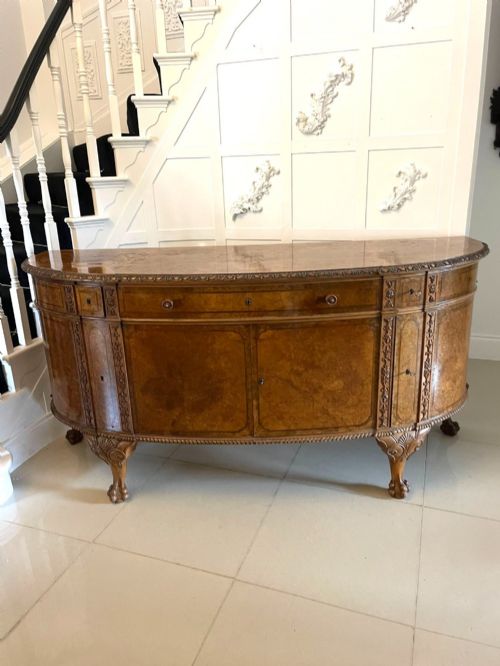
Hardware played an essential functional role, utilising cast brass handles and occasional iron fittings. Structural support came from turned legs, barley twists, cabriole legs, or carved claw and ball feet depending on the stylistic influence of the design.
Listings feature multiple timber varieties including mahogany, oak, walnut, burr walnut, and satinwood alongside brass and glass elements.
Quality Variations
Distinctions in quality rest largely upon the selection of timber figures and the precision of decorative details like inlay, marquetry, and carving. Superior pieces demonstrate careful grain matching across large surfaces such as bow fronts and serpentine shapes.
Maker attribution elevates certain examples, particularly those originating from notable workshops or designed by prominent figures of the Arts and Crafts movement. The integration of specialised internal fittings, such as dedicated cutlery sets, also separates standard utility items from finer productions.
Leonard Wyburd for Liberty & Co.·Shapland and Petter·Hewetsons London·Ambrose Heal for Heal & Son·Edward Barnsley·Whytock and Reid
The Edwardian Buffet Glossary
- Serpentine
- A curved front shape with a convex centre flanked by concave ends. This contour requires advanced carpentry skills to execute smoothly across drawer fronts.
- Crossbanding
- A narrow strip of veneer applied to the border of a panel with the grain running at right angles to the central wood. It creates a neat framing effect on tabletops and cabinet doors.
- Marquetry
- Decorative patterns formed by fitting together thin slices of various coloured woods into a veneer. The technique adorns the surfaces of more elaborate cabinets and sideboards.
- Gallery
- A raised wooden border running along the back or sides of a surface. It prevents items from sliding off the top during use.
- Dumbwaiter
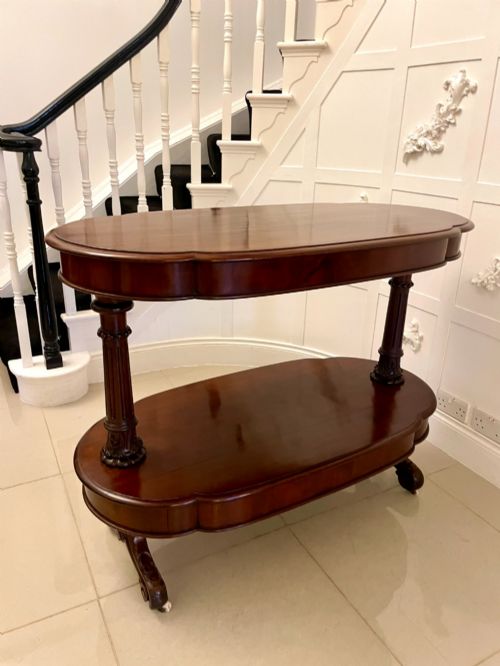
- A multi-tiered serving piece designed to hold dishes and cutlery beside a dining table. These tables provide accessible tier storage without taking up floor space.
Edwardian Buffet: Frequently Asked Questions
What is an edwardian buffet used for?
These pieces function primarily as dining room storage for tableware, linen, and serving dishes. The flat top surface also serves as a sideboard for presenting food during meals.
Historically, they supported the organisation of formal dining rooms by keeping serving utensils close to the table. Today, they adapt easily to living spaces as credenzas or media consoles.
How do I identify an Edwardian piece?
Edwardian furniture typically dates from the reign of Edward VII between 1901 and 1910, though the style extends slightly either side. Look for lighter timbers, refined inlay work, and Sheraton or Adam revival motifs.
Construction methods bridge late Victorian mass production and hand-finished Arts and Crafts ideals. Stamped maker marks inside drawers or on the backboards provide definitive proof of origin.
Are these buffets suitable for small rooms?
Sizes vary considerably, ranging from long breakfront sideboards to compact single-door cabinets and narrow console tables. Measuring your floor space carefully ensures you find a scale that does not overwhelm the room.
Compact variations like mirror-back sideboards or low dresser bases offer useful surface areas and storage while maintaining an open feel.
How do I care for antique timber?
Maintain the wood by applying natural beeswax periodically to nourish the grain and protect the finish. Avoid placing furniture in direct sunlight or near heat sources to prevent the timber from splitting.
Dust surfaces regularly with a soft, dry cloth rather than using silicone-based polishes. Proper humidity control in the room keeps drawers and doors operating smoothly.