




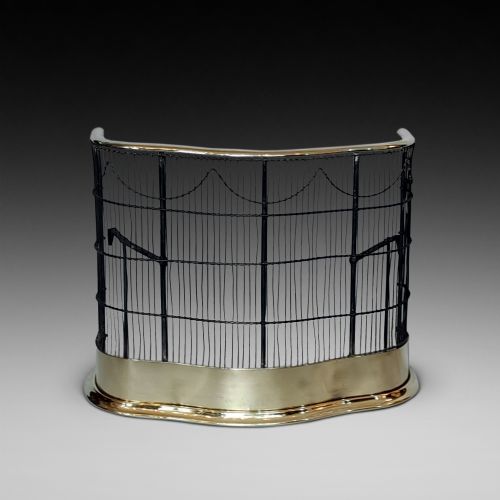


Edwardian Brass Screen
An edwardian brass screen brings a warm, metallic glow to an empty hearth while keeping stray fireplace sparks safely contained.
Edwardian Brass Screen
An edwardian brass screen is a protective hearth accessory designed to sit before a fireplace, appearing in various forms across this selection from the Victorian period through to the 1920s. Buyers searching for an edwardian brass screen will encounter objects described as fire screens, fireguards, and nursery fenders, originating from eras such as 1880, 1900, 1910, and 1920.
The versions most commonly met on this page combine a sturdy metal framework with decorative panels, ranging from plain mesh spark guards to elaborate folding designs. Many pieces incorporate aesthetic movements of their day, showing distinct Arts and Crafts or Art Nouveau styling alongside simple brass framing.
Materials and Construction
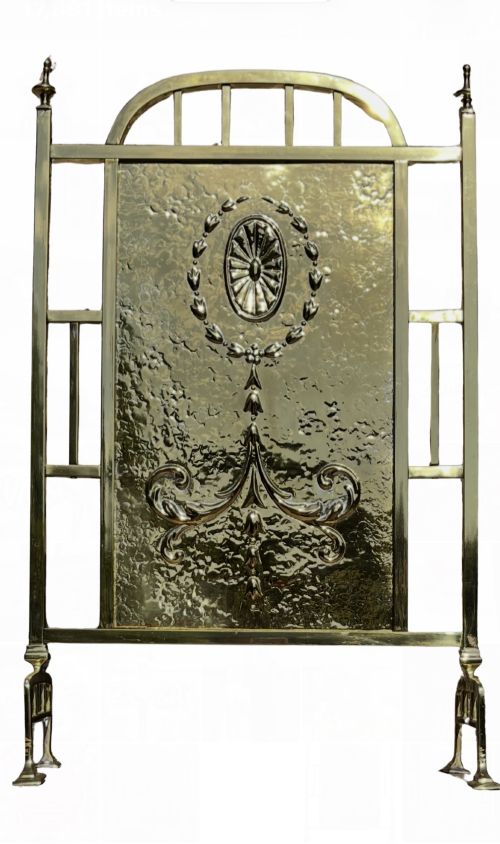
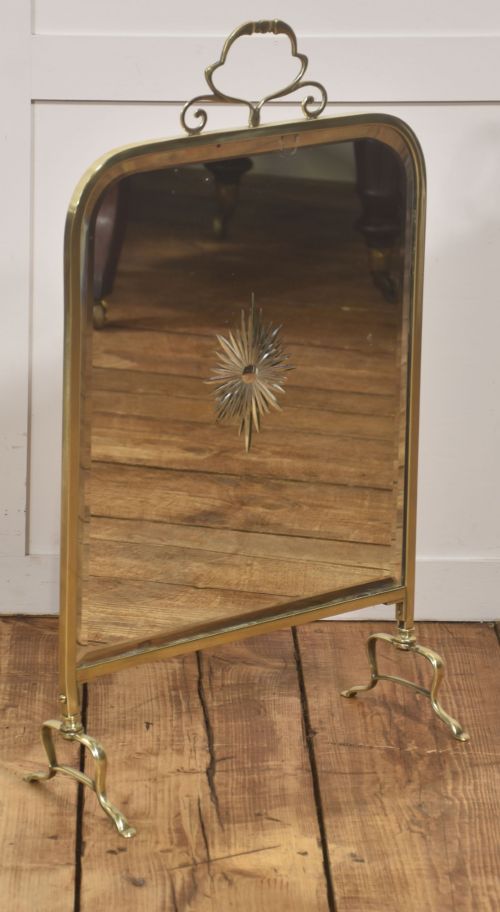
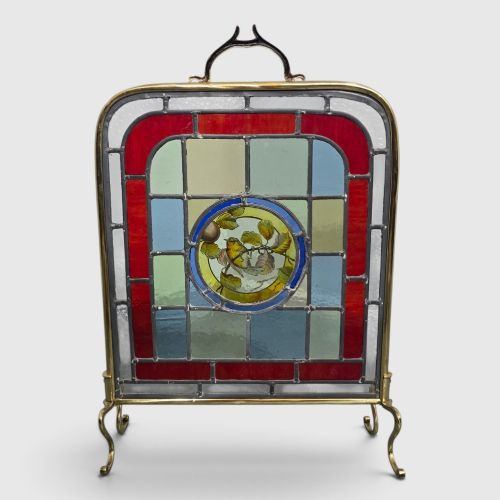
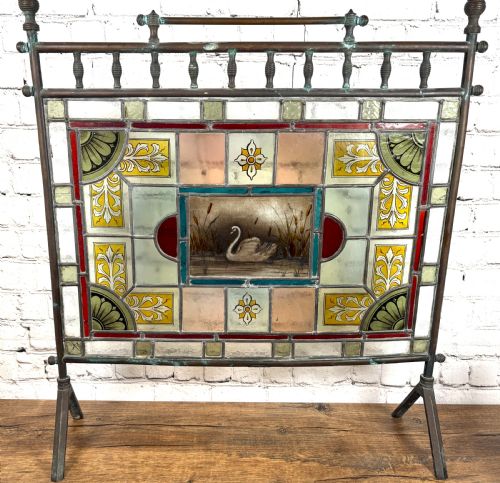
These screens are constructed primarily from brass, copper, and iron, utilising metal sheet, wire mesh, and lead to build robust frames and protective barriers. Artisans incorporated glass panels, mirror glass, cut glass, and stained glass into the metal structures to catch the light of the room.
Some examples feature textile elements like parrot tapestry or embossed sheet metal work, fixed securely into the metal surrounds. Folding mechanisms and gate fronted configurations allowed functional movement in domestic hearth settings.
Edwardian Brass Screen Retail Price Guide 2026
Typical asking prices for edwardian brass screen among the pieces listed under this phrase on Sellingantiques today, from the lower quarter to the upper quarter. They describe what is for sale here now, not the wider market.
Several screens feature a remarkably chatty parrot tapestry gazing out from the brass frame to supervise the hearth.
Distinctions in Quality
The distinction between standard items and superior examples lies in the complexity of the materials and the intricacy of the decorative execution. Pieces featuring integrated mirrors, stained glass, or detailed Art Nouveau and Arts and Crafts motifs represent a higher tier of workmanship than plain wire mesh guards.
Subtleties in metalwork, such as embossed brass panels or heavy folding frames, elevate a utilitarian hearth guard into an expressive decorative object for the room.
The Edwardian Brass Screen Glossary
- Fire screen
- A decorative barrier placed in front of a fireplace opening when the fire is not lit. It serves to block draughts and hide an empty grate during warmer months.
- Spark guard
- A protective mesh screen designed to catch flying embers while a fire is burning. These often feature fine wire mesh and folding sides for stability.
- Nursery fender
- A low metal barrier enclosing the hearth area to keep children and pets at a safe distance from the fire. They occasionally include integrated clothes rails.
- Art Nouveau
- A design style characterised by flowing, organic lines and floral motifs, frequently seen on the brass frames and panels of these screens.
- Arts and Crafts
- A movement prioritising traditional craftsmanship and simple, honest construction, often reflected in the hand-worked copper and brass panels of the period.
Edwardian Brass Screen: Frequently Asked Questions
What is an edwardian brass screen used for?
These screens serve primarily to shield the room from stray sparks or to dress an unused fireplace during the warmer months.
They also act as a decorative focal point in the room, reflecting light from the hearth and windows.
How do I clean a brass fire screen?
Dust the metal gently with a soft, dry cloth to remove surface particles without scratching the antique finish. Avoid harsh chemical polishes that can strip the aged patina accumulated over decades.
Are these screens safe to use with an open fire?
Many designs incorporate wire mesh or spark guards specifically constructed to contain embers safely. However, glass or mirror panels are intended for decorative use when the fire is unlit.
How do I date an antique brass screen?
Dating relies on stylistic clues like Art Nouveau curves or Arts and Crafts hammering techniques, alongside materials such as stained glass and copper. Construction methods like riveted joints and wire mesh types also point to periods between the late Victorian era and the 1920s.